
Image credit: Koshelyev · CC BY-SA 3.0
Walk · Repression · on foot
The Estado Novo, explained
How a dictatorship lasted 48 years: the leader, the façade, the single party, the family, work and propaganda — from São Bento to Restauradores
- Distance
- 4.6 km
- Duration
- 2 h 20 min
- Stops
- 9
- Difficulty
- Moderate
The walk, the photos and the map stay on the phone, to open anywhere.
Introduction
For 48 years, from 1926 to 1974, Portugal lived under dictatorship: first that of the military men who overthrew the Republic in the coup of 28 May 1926; then, from the 1933 Constitution onwards, the Estado Novo (“New State”) of António de Oliveira Salazar and, in its last years, of Marcelo Caetano. A single-party regime, without free elections and without freedoms, with power concentrated in the head of government.12
The political police and censorship, which held it up by force, have their own route: The machinery of repression. This one shows the rest of what made it last almost half a century — a leader who decided almost everything, a parliament that was a mere façade, a single party with its own newspaper, organisations that regimented young people, mothers and workers, laws that sent married women back home, and propaganda. At each stop, one of those pillars, in a place where it can still be seen, and what became of it after 25 April.
Women are at the centre, and on both sides: those the regime called on to regiment the others — the first women deputies, the leaders of the Women’s Portuguese Youth (Mocidade Portuguesa Feminina) and of the Mothers’ Work (Obra das Mães) — and those it wanted to silence or shut away at home: Maria Lamas and the National Council of Portuguese Women, the nurses forbidden to marry, the women teachers who needed the minister’s permission to do so.
Before you go
- Start
- Palacete de São Bento, Rua da Imprensa à Estrela — Tram 28 (Calçada da Estrela stop); Metro Rato (yellow line), ten minutes’ walk away
- Finish
- Palácio Foz, Praça dos Restauradores — Metro Restauradores (blue line); trains at Rossio
- Accessibility of the route
- From the Palacete de São Bento you go down to the Palácio de São Bento and then straight up towards Rua de O Século. From there to Rua da Misericórdia the way is almost flat; then you go down to Largo do Carmo and, along the steep, cobbled Rua do Carmo, to the Rossio — there is also the Elevador de Santa Justa, between the Carmo and the Baixa. From Largo de São Domingos you climb the very steep Calçada de Santana to the former FNAT headquarters and São José Hospital. To get back to Restauradores, the Calçada do Lavra has steps (124 of them, according to OpenStreetMap); those who want to avoid them can take the Elevador do Lavra, from Rua Câmara Pestana to Largo da Anunciada, next to Restauradores.
This walk in dates
28 May 1926
27 Apr 1928
8 Jul 1930
4 Apr 1931
34 more dates
5 Jul 1932
11 Apr 1933
23 Sep 1933
25 Sep 1933
18 Jan 1934
16 Dec 1934
11 Jan 1935
13 Jun 1935
11 Apr 1936
15 Aug 1936
24 Nov 1936
4 Jul 1937
1 Jul 1938
7 May 1940
28 May 1946
4 Jan 1947
28 Jun 1947
May 1948
21 Mar 1952
18 Mar 1963
25 Nov 1966
27 Sep 1968
26 Dec 1968
25 Oct 1969
24 Nov 1969
27 Dec 1969
27 Jul 1970
Aug 1970
25 Apr 1974
- A Assembleia Nacional reúne pela última vez, sem quórumStop 2 · The façade
- Silva Pais avisa Caetano: «a Revolução está na rua»Stop 5 · 1968–1974 — Caetano, to the end
- Spínola no Carmo; Caetano sai na chaimite «Bula»Stop 5 · 1968–1974 — Caetano, to the end
- Decreto-Lei n.º 171/74 extingue a DGS, a Legião e a Mocidade PortuguesaStop 6 · God, Fatherland, Family (Deus, Pátria, Família)
26 Apr 1974
1 May 1974
28 May 1974
27 Aug 1974
Nov 1977
Map of the walk “The Estado Novo, explained”, with 9 numbered stops. The list of stops follows the map.
The stops
Stop 1: The leader
Rua da Imprensa à Estrela, 1200-684 Lisboa (nas traseiras do Palácio de São Bento)
Today: Official residence of the Prime Minister
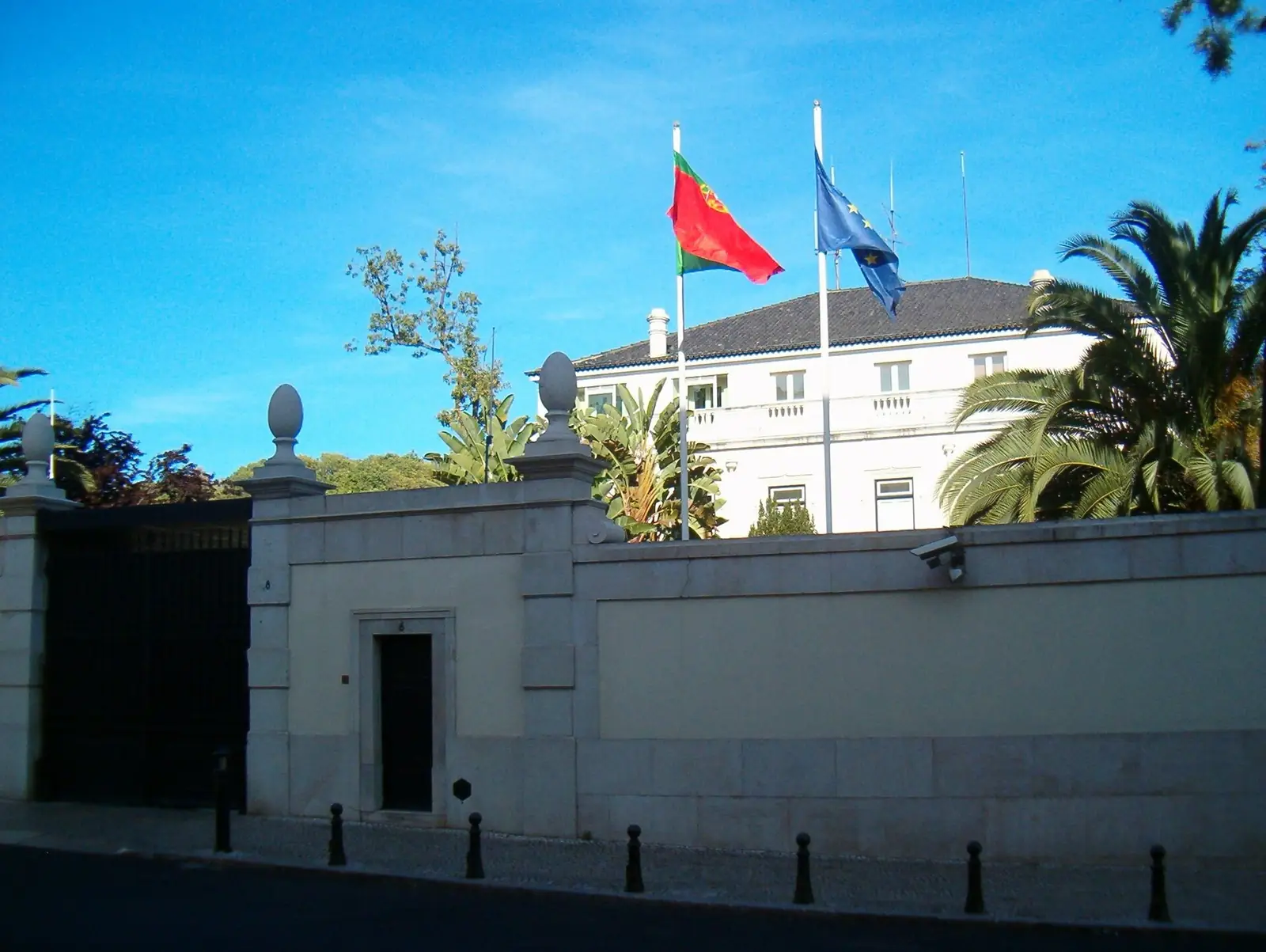
O Palacete de São Bento, residência oficial do primeiro-ministro, visto da rua, por trás do muro. Koshelyev, CC BY-SA 3.0 António de Oliveira Salazar, a professor of Economics and Finance at Coimbra, was called in by the military to put the public accounts in order: he took office as Minister of Finance on 27 April 1928, with a reputation as a “financial wizard”, and in his inaugural speech he said that he knew very well what he wanted and where he was going.34 On 5 July 1932 he became President of the Council, the head of government, and so he remained for 36 years.45 With a small group of collaborators he devised the 1933 Constitution, which gave him power: ministers answered to the President of the Council, and he answered only to the President of the Republic; the Assembly had no power at all over the Government.2
In 1937, the year in which Salazar escaped a bomb on Avenida Barbosa du Bocage, the State expropriated this mansion, behind Parliament, as the official residence of the President of the Council.67 Salazar moved in in May 1938. During the works, the architect Cristino da Silva designed a monumental staircase linking the residence’s grounds to Parliament, to make communication between the two buildings easier.7
In 1968, a fall from a chair left him unable to govern, and Marcelo Caetano replaced him. Salazar went on living here until July 1970, the month in which he died — “without ever suspecting that he was no longer President of the Council”, wrote the Diário de Notícias.578 After 25 April, the mansion remained the official residence of heads of government — in 1979–1980, that of the first woman to head one, Maria de Lourdes Pintasilgo, who did not, however, live here.79
- 27 Apr 1928Salazar takes office as Minister of Finance
- 5 Jul 1932Salazar becomes President of the Council of Ministers
- 4 Jul 1937Bomb attack on Salazar on Avenida Barbosa du Bocage
- 27 Sep 1968Marcelo Caetano succeeds Salazar as head of government
- 27 Jul 1970Salazar dies
To stop 2470 m · 5 min on footDirections
Stop 2: The façade
Palácio de São Bento, Largo das Cortes, Lisboa
Today: Assembly of the Republic
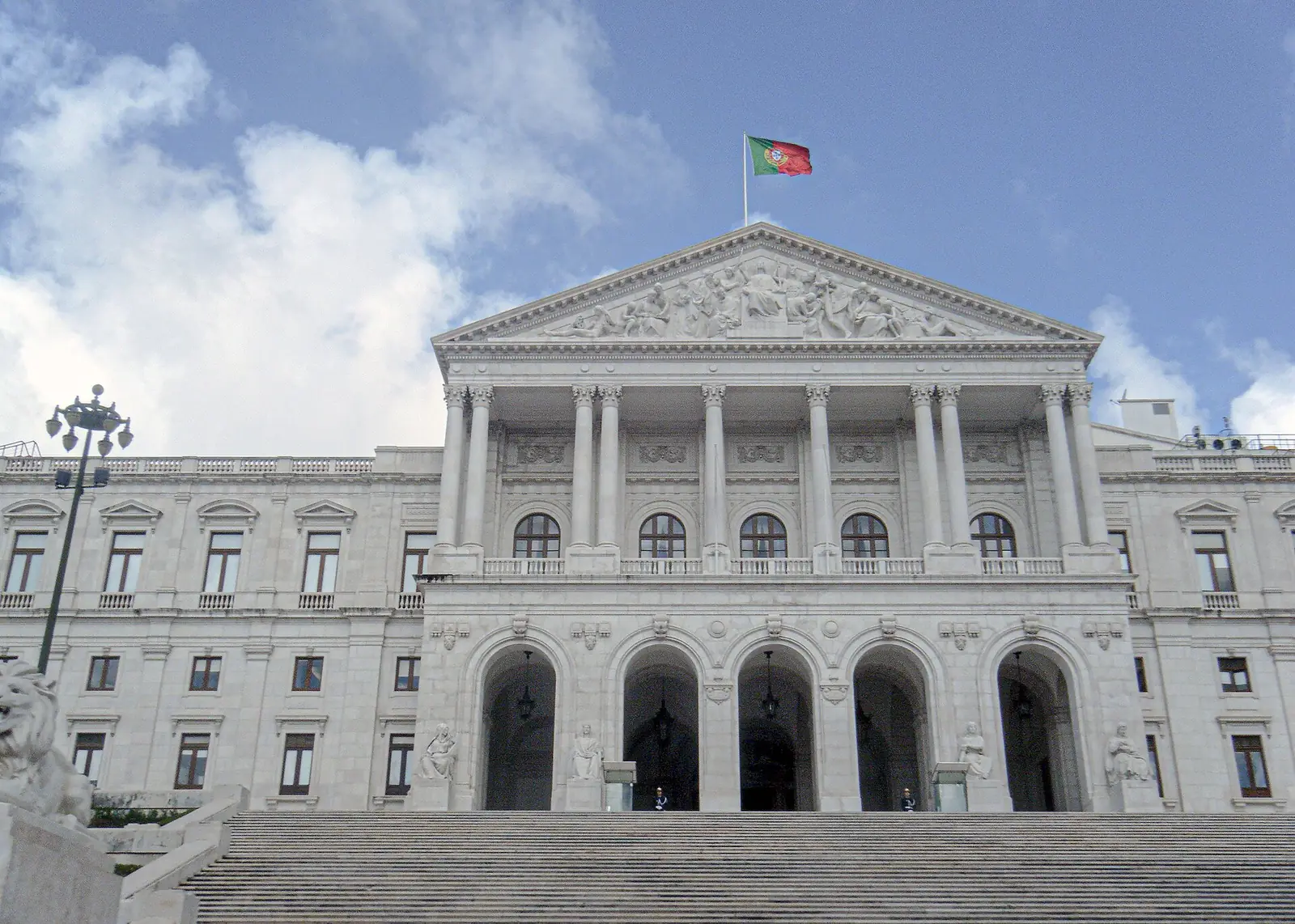
O Palácio de São Bento, sede da Assembleia da República, em junho de 2014. Albarubescens, CC BY-SA 4.0 Right after the coup of 28 May 1926, a military force commanded by Lieutenant Vilhena closed this Parliament.4 It did not meet again until January 1935, as the National Assembly of the Estado Novo. The 1933 Constitution was put to a plebiscite on 19 March: abstentions and blank votes counted as “yes”, and a “no” had to be written on the ballot paper.2 It incorporated the Colonial Act of 1930, for which it was “of the organic essence of the Portuguese Nation to fulfil the historic function of possessing and colonising overseas domains”.10 The empire has its own route, From the Padrão to the quay.
The National Assembly had a single chamber and little power. All its deputies came from the list of the National Union, the single party, and in practice the laws were made by the Government, by decree-law: in 1945, an opinion of the Corporative Chamber — the consultative body in which economic and local interests carried weight — acknowledged that “the Government is the normal legislative body and the Assembly the exceptional legislative body”.2 The National Assembly met for the last time on the morning of 25 April 1974, without a quorum. A year later, the Constituent Assembly, elected in freedom, was sitting here — it is the end of the route The days of freedom.2
It was this façade of a parliament that took in the first women. In the 1934 election, the only women who could vote were those with a special, secondary or higher education; for men it was enough, as a rule, to be able to read and write.211 In January 1935 the first three women deputies took their seats here — Domitila de Carvalho, Maria Cândida Parreira and Maria Guardiola, all of them university graduates; the regime’s women deputies sat mainly on the committees for labour, welfare and education, matters thought to be “more closely linked to women’s interests”.12 In 1946, the deputy Maria Luísa van Zeller supported the vote for married women, but without “absolute equality” with men, which would run counter to “the spirit of the policy of women’s return to the home”.13
What you can see today
Busts of two women deputies: Maria Alda Nogueira, in the cloister (CIG; sculptor António Trindade, according to Wikipedia), and Natália Correia (according to Wikipedia, the only two women deputies with a bust in the Assembly).
- 28 May 1926Military coup of 28 May ends the First Republic
- 11 Apr 1933The Estado Novo Constitution comes into force
- 8 Jul 1930Salazar has the Colonial Act enacted
- 16 Dec 1934The first three Portuguese women deputies are elected
- 11 Jan 1935The National Assembly opens, with the first three women deputies
- 28 May 1946Law No. 2015 extends the vote to some married women
- 25 Apr 1974A Assembleia Nacional reúne pela última vez, sem quórum
A short piece from Parliament’s series “Cápsula do Tempo” (Time Capsule), devoted to the women in the Constituent Assembly of 1975–1976.
Original page Licença padrão do YouTube — embed permitido pelo canal oficial da Assembleia da República
Assembleia da República, on YouTube. The player only connects to that site when you press “Watch”.
To stop 3860 m · 15 min on footDirections
Stop 3: Two ideas of womanhood
Rua de O Século, 63, 1200-433 Lisboa
Today: Palácio Lançada, Rua de O Século
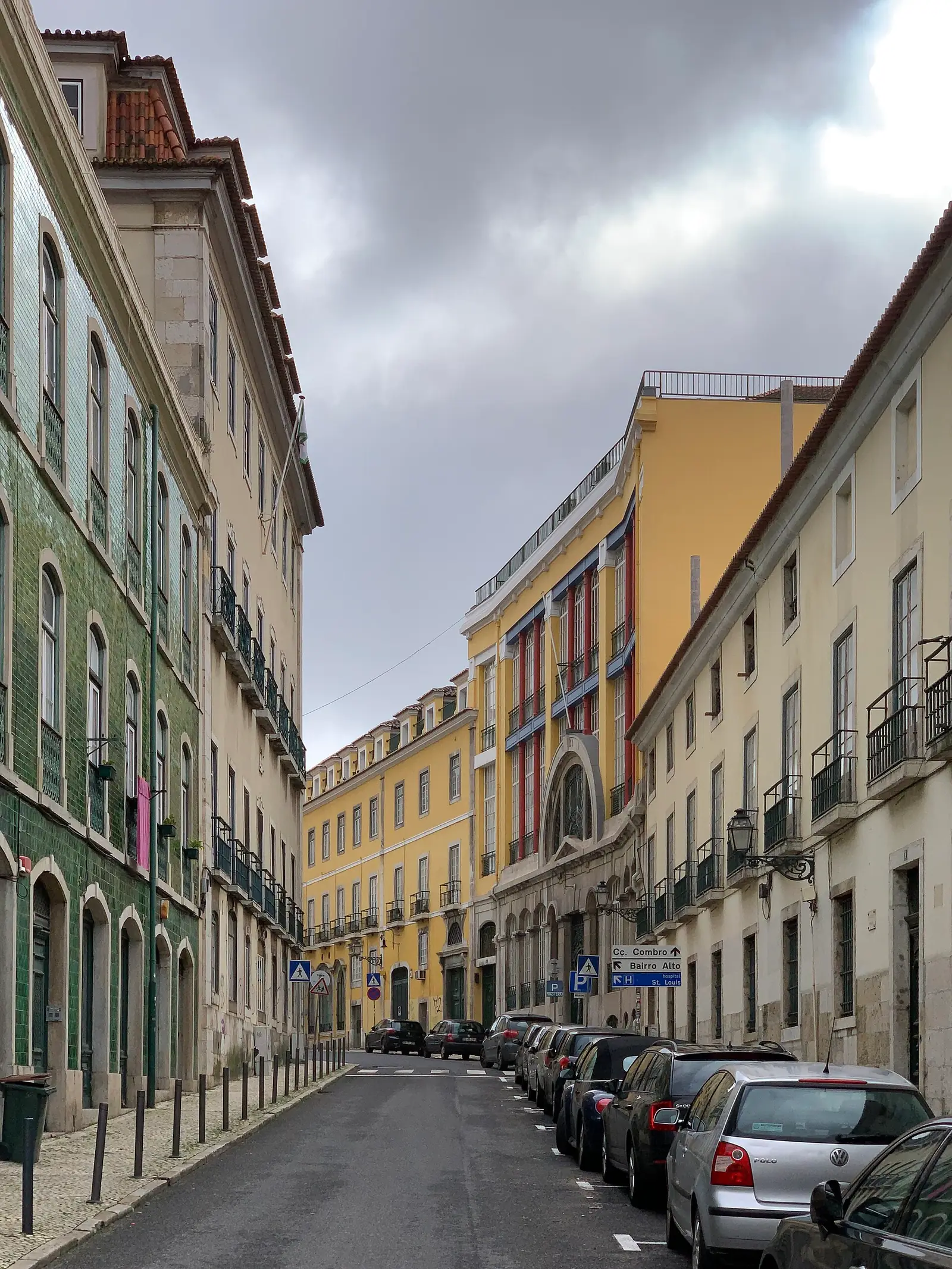
A Rua de O Século, onde funcionou a redação do jornal, em dezembro de 2019. Sergei Gussev, CC BY 2.0 For the regime, a woman’s place was the home. In 1936 it gave statutes to the Mothers’ Work for National Education, to “guide Portuguese mothers” in bringing up their children and to “defend good morals, namely as regards dress, reading and entertainment”.14 It spread the role the Estado Novo assigned to women: mothers devoted to the family and to housework, wives obedient to their husbands, the “head” of the family.15
Maria Lamas, who edited Modas & Bordados (Fashions and Embroidery), the supplement of O Século (The Century), had another idea of womanhood. In 1947, as president of the National Council of Portuguese Women, she organised an exhibition of books written by women from thirty countries; the regime did not like it, and she was forced to choose between the magazine and the Council. She chose the Council, which the police closed down in June.1617 In 1952 the Portuguese Women’s Association for Peace, which Lamas had also chaired, was dissolved.1819
After the Council was closed, Maria Lamas travelled the country for two years and published, in instalments, to get round the censors, As Mulheres do Meu País (The Women of My Country, 1948–1950): a great work of reportage on the life and work of peasant women, women of the sea, factory workers, housewives and employees.20
- 15 Aug 1936Statutes of the Mothers’ Work for National Education approved
- 4 Jan 1947Exhibition of Books Written by Women
- 28 Jun 1947The police close down the National Council of Portuguese Women
- 21 Mar 1952Dissolution of the Portuguese Women’s Association for Peace
- May 1948Publication of Maria Lamas’s “As Mulheres do Meu País” (The Women of My Country)
To stop 4650 m · 10 min on footDirections
Stop 4: The single party and its newspaper
Rua da Misericórdia, 95, 1200-271 Lisboa
Today: 25 April Association
From 1931 to 1971, the Diário da Manhã (Morning Daily) was produced here. Its first editorial called it a “republican newspaper”, but it was the semi-official organ and indoctrination vehicle of the National Union, the single party, and it gradually became a newspaper devoted to the cult of Salazar.21 The regime was “anti-party, anti-liberal and anti-parliamentary”: opposition parties were outlawed, and only the National Union put up candidates.2
Until 1945 there was never another list. In the 1942 elections, for example, ballot papers reached people’s homes by post or were delivered by the police and by the National Union itself, polling stations were open from 09:00 to 14:00, and voters could only cross names out, without replacing them; fraud served above all to inflate the number of voters.22 Opposite stood República, the opposition newspaper; and, from 1969, further up the same street, at no. 125, the censorship office, which cut with its “blue pencil” what the newspapers could say — the story is told in the route The machinery of repression.2324
Under Marcelo Caetano, the National Union was renamed National Popular Action, and in 1971 the Diário da Manhã gave way to Época (Epoch).221 On 26 April 1974, the people wrecked the headquarters of Época, of National Popular Action and of the censorship office.25 Since 2001 this building has been the headquarters of the 25 April Association, which brings together the great majority of the military who made the revolution.26
- 4 Apr 1931First issue of “Diário da Manhã”, the National Union’s newspaper
- 26 Apr 1974Assalto popular à sede da censura
To stop 5320 m · 5 min on footDirections
Stop 5: 1968–1974 — Caetano, to the end
Largo do Carmo, Lisboa
Today: GNR General Command and the National Republican Guard Museum
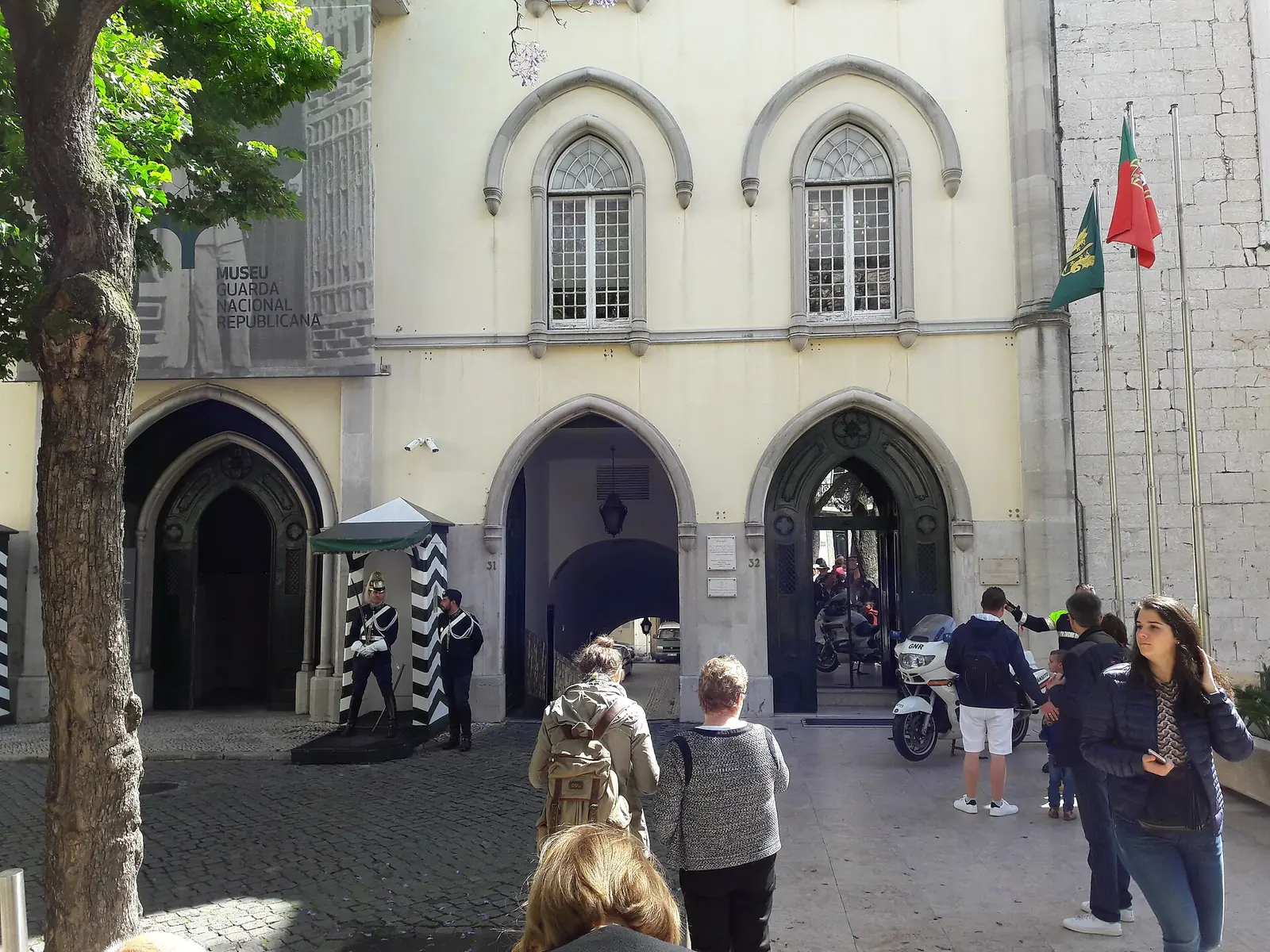
O Quartel do Carmo, comando-geral da GNR, no Largo do Carmo, em 2017. Marcin Latka, CC BY-SA 2.0 When he replaced Salazar, in September 1968, Marcelo Caetano — who in the 1940s had been national commissioner of the Portuguese Youth (Mocidade Portuguesa) — brought a “timid opening”.2728 Some changes touched women’s lives: in 1968, the law began to require the same of men and women in order to vote — being able to read and write, at a time when, in the early 1970s, one woman in three could not; in 1969, married women no longer needed their husband’s authorisation to have a passport, and women primary teachers no longer needed the minister’s permission to marry; in 1970, Maria Teresa Cárcomo Lobo became the first woman in a government.2930313233
Other things only changed their name: the PIDE became the DGS, the National Union became National Popular Action, and censorship became “Prior Examination” — Caetano kept it, citing the colonial war.34235 For the Assembly of the Republic, the attempts at change in the 1969 elections “exposed the rigidity of the regime and its inability to open up and renew itself”.2
It was here, in the GNR barracks, that Caetano took refuge in the early hours of 25 April 1974. Late in the afternoon, surrounded by Salgueiro Maia’s column and by thousands of people, he handed power to General Spínola — “so that power does not fall into the street” (assim o poder não cai na rua).3637 The regime ended in the same barracks where, in June 1926, censorship had been set up.24 The whole day is told in the route The first day.
What you can see today
One of the “Lugares de Abril” (Places of April) plaques, by Lisbon City Council and the 25 April Association, marks the square.36
- 27 Sep 1968Marcelo Caetano succeeds Salazar as head of government
- 26 Dec 1968A law sets the same voting requirements for women and men for the first time
- 25 Oct 1969Married women no longer need their husband’s permission to have a passport
- 27 Dec 1969Women primary school teachers no longer need permission to marry
- Aug 1970Maria Teresa Lobo, the first woman in a Portuguese government
- 24 Nov 1969The PIDE is renamed the Directorate-General of Security
- 25 Apr 1974Silva Pais avisa Caetano: «a Revolução está na rua»
- 25 Apr 1974Spínola no Carmo; Caetano sai na chaimite «Bula»
With the last five plaques, unveiled on 24 March 2024, Lisbon now has 25 marking the places where the Armed Forces Movement (MFA) acted on 25 April 1974 — the “Places of April” project (“Lugares de Abril”), run by the City Council and the 25 April Association. The Council singles out Largo do Carmo, “the most symbolic place” of April.
Original page Licença padrão do YouTube — embed permitido pelo canal oficial da Câmara Municipal de Lisboa
Câmara Municipal de Lisboa, on YouTube. The player only connects to that site when you press “Watch”.
To stop 6460 m · 5 min on footDirections
Stop 6: God, Fatherland, Family (Deus, Pátria, Família)
Largo de São Domingos, 10, 1169-060 Lisboa
Today: Palácio da Independência (Historical Society of the Independence of Portugal)
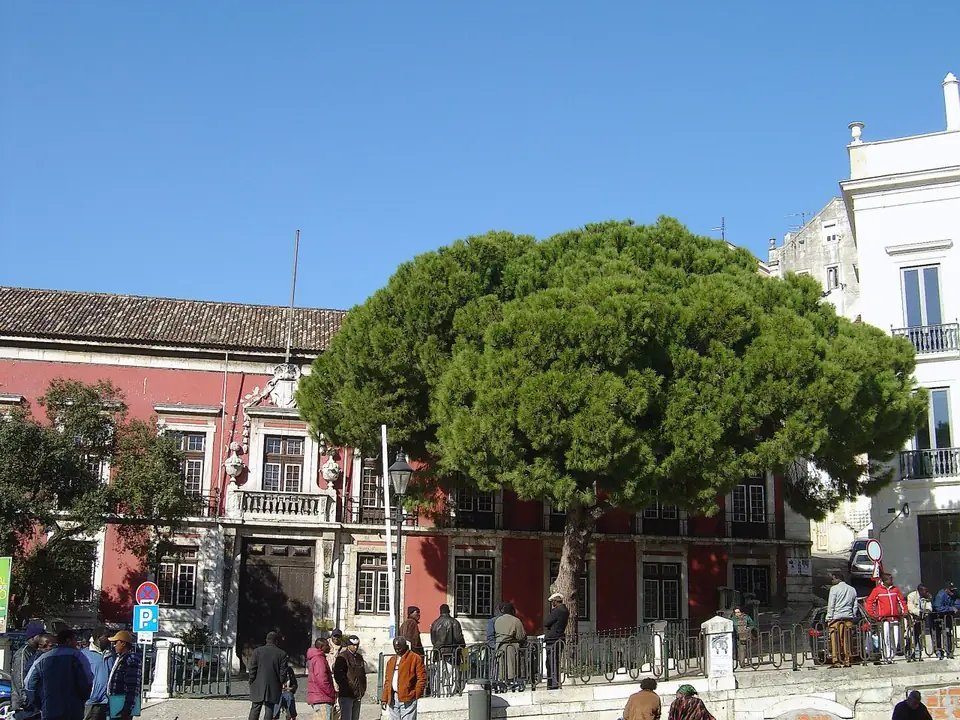
O Palácio da Independência (dos Condes de Almada), no Largo de São Domingos, em 2006. Vitor Oliveira, CC BY-SA 2.0 From 1936, boys and girls were regimented by the Portuguese Youth (Mocidade Portuguesa), which had its headquarters in this palace until 1974.3839 In primary school, enrolment was compulsory and was entered in the pupil’s school record book.40 There was physical exercise in a militaristic spirit, and discipline and respect for hierarchy were learned.15 In 1938, for the tenth anniversary of Salazar’s arrival at the Ministry of Finance, seven panels were made that served as propaganda in schools. A poster from that year, “A lição de Salazar” (Salazar’s Lesson), designed by Martins Barata, summed up the programme: “God, Fatherland, Family — the trilogy of national education” (Deus, Pátria, Família — a trilogia da educação nacional).341
Girls had their own organisation, the Women’s Portuguese Youth (Mocidade Portuguesa Feminina), which came under the Mothers’ Work and sought to form a “new woman” through “moral, civic, physical and social education”; its members gave the Roman salute. In 1940 it covered 93% of the girls in secondary schools (liceus) and technical schools, but only 5.2% of those in primary school. From 1938 to 1968 its national commissioner was Maria Guardiola, headmistress of the Liceu Maria Amália Vaz de Carvalho and a deputy; Maria Luísa van Zeller was assistant commissioner. The commissariat was on Praça Marquês de Pombal.27
The Church gave its blessing: on 13 May 1939, at Fátima, the Cardinal Patriarch of Lisbon, Manuel Gonçalves Cerejeira — a former professor at Coimbra, like Salazar — blessed the flags of the Women’s Portuguese Youth.27424 The following year, the Concordat with the Holy See took away the right to divorce from those who married in church.43 On 25 April 1974 itself, Decree-Law No. 171/74 abolished both youth organisations, and the palace was occupied, at the insistence of the Armed Forces Movement (MFA), by the Association of the Disabled of the Armed Forces.3839
- 11 Apr 1936Law No. 1941 creates the Portuguese Youth (Mocidade Portuguesa)
- 15 Aug 1936Statutes of the Mothers’ Work for National Education approved
- 7 May 1940Concordat with the Holy See bans divorce for Catholic marriages
- 25 Apr 1974Decreto-Lei n.º 171/74 extingue a DGS, a Legião e a Mocidade Portuguesa
To stop 7320 m · 5 min on footDirections
Stop 7: The corporative State
Calçada de Sant'Ana, 180, 1169-062 Lisboa
Today: Headquarters of the INATEL Foundation
On the same day in September 1933, the Government published the National Labour Statute and the laws on the employers’ guilds (grémios), the national syndicates and the Casas do Povo (People’s Houses).44 “The Portuguese State is a unitary and corporative republic”, said the Statute: property, capital and labour were to cooperate, and strikes and lockouts became punishable.44 Trade unions became “national”: only one per profession, with statutes that repudiated “class struggle” and leaderships that the Government had to ratify.45 The workers’ answer was the general strike of 18 January 1934.46
For leisure time, the regime created in 1935 the National Foundation for Joy at Work (FNAT), which was to “strengthen, educate and entertain the body and spirit of those who work”; its beneficiaries had to be members of a national syndicate, a Casa do Povo or a Casa de Pescadores (Fishermen’s House).4748 In 1946 the FNAT set up its headquarters here, in the former Palácio Camarido; it organised excursions, holiday camps, sport and shows.4948 Another poster from “A lição de Salazar” (Salazar’s Lesson), also from 1938, promised: “with the Corporative Estado Novo begins an era of dignity for labour and of social justice” (com o Estado Novo Corporativo inicia-se uma era de dignificação de trabalho e de justiça social).50
The Statute also said where women belonged: their work outside the home, and that of minors, would be regulated “according to the demands of morality, physical protection, motherhood, domestic life, education and the social good”.44 After 25 April, the FNAT stadium was renamed Estádio 1.º de Maio (May Day Stadium), strikes became a right once more and, in 1975, the FNAT gave way to INATEL, today the INATEL Foundation, which still has its headquarters in this palace.37514849
- 23 Sep 1933National Labour Statute bans strikes
- 18 Jan 1934The revolutionary general strike of 18 January 1934
- 13 Jun 1935The FNAT, the National Foundation for Joy at Work, is created
- 1 May 1974Primeiro 1.º de Maio em liberdade
- 27 Aug 1974Decreto-Lei n.º 392/74 regula o direito à greve
The third chapter of Alfredo Cunha’s film (music by Rodrigo Leão, directed by Miguel Brugo), published by the Commission on 14 February 2024, with photographs from the months that followed the revolution. In the book, this part has a text by Fernando Rosas and includes the rally of the first May Day (1 May) in freedom, at the stadium of the National Foundation for Joy at Work (FNAT).
Original page Licença padrão do YouTube — embed permitido pelo canal oficial da Comissão Comemorativa 50 Anos 25 de Abril
Comissão Comemorativa 50 Anos 25 de Abril, on YouTube. The player only connects to that site when you press “Watch”.
To stop 8520 m · 10 min on footDirections
Stop 8: The nurses who could not marry
Rua José António Serrano, 1150-199 Lisboa
Today: São José Hospital
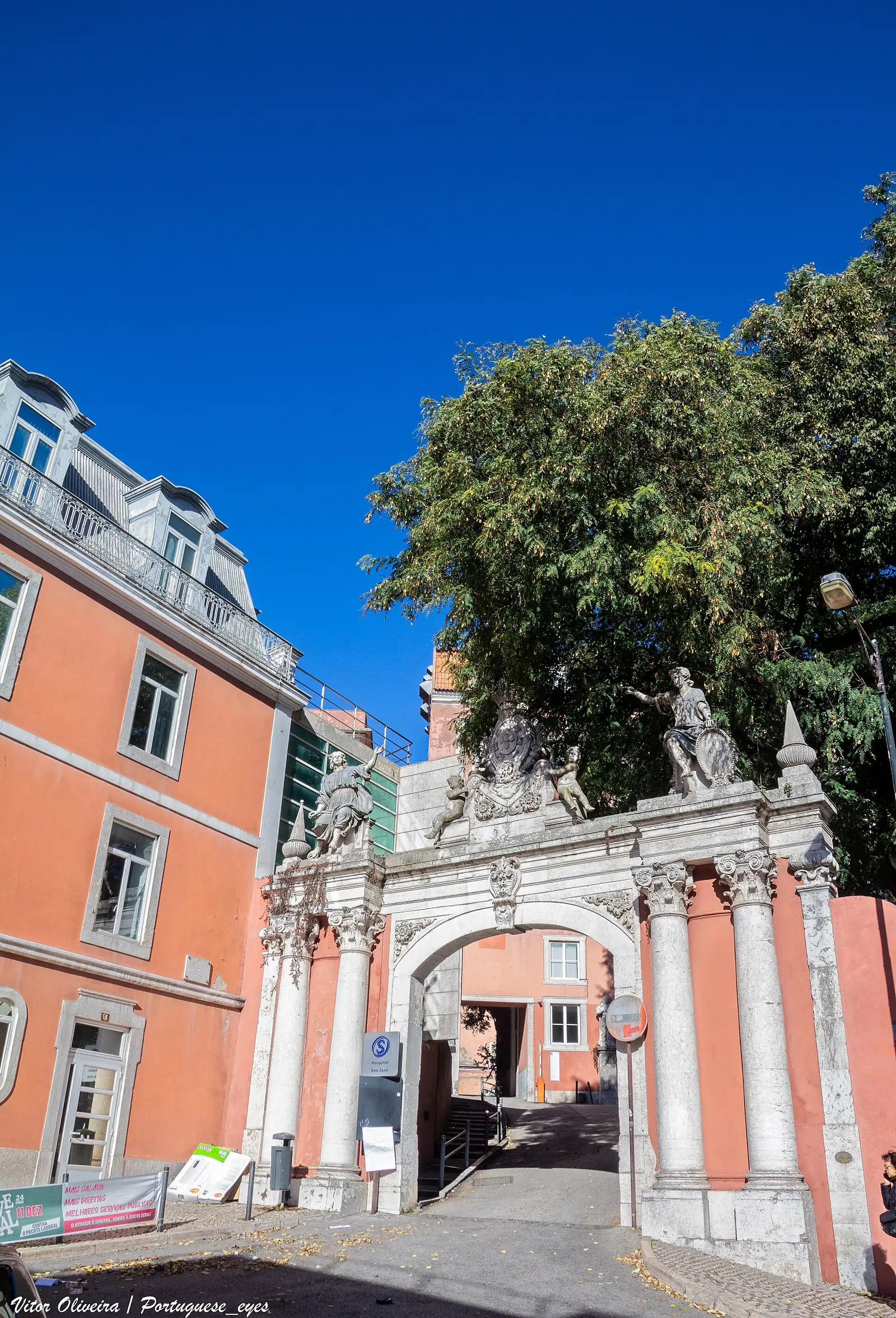
O portão barroco do Hospital de São José, em novembro de 2025. Vitor Oliveira, CC BY-SA 4.0 In 1938, a decree that reorganised the Lisbon Civil Hospitals, to which this hospital belonged, ordered that nursing and domestic service posts held by women should be filled only by “single women and widows, without children, who shall be replaced as soon as these conditions cease to be met”: a nurse who married lost her post.52 So began the nurses’ 25 years of struggle.53 In the National Assembly, the deputy Maria Luísa van Zeller argued in 1947 that nursing should be entrusted to women — “No one knows as well as a woman how to bend delicately over pain” — and a deputy later recounted that some nurses married and, so as not to be dismissed, did not record their new status on their identity cards.54
The ban only fell in March 1963, and even then the decree recalled that a married woman’s place was the home, “where the noblest mission is reserved for her”.55 Women primary teachers went through something similar: from 1936, they could only marry with the authorisation of the Minister of National Education, granted if the bridegroom had “good moral and civil conduct” and an income “in keeping with the teacher’s salary”. The requirement only ended in December 1969, with a decree of Marcelo Caetano’s that called it a “bureaucratic formality”.4032
And the 1966 Civil Code still said: “The husband is the head of the family, and it falls to him in that capacity to represent it and to decide on all acts of common married life.” Outside the liberal professions and the civil service, if he had not given his consent, a husband could end his wife’s employment contract at any time.5611 The “head of the family” only disappeared with the 1976 Constitution and the 1977 revision of the Civil Code.57
- 1 Jul 1938Decree-law requires nurses to be single or widowed
- 18 Mar 1963End of the ban on nurses marrying
- 24 Nov 1936Women primary teachers may only marry with the minister’s authorisation
- 27 Dec 1969Women primary school teachers no longer need permission to marry
- 25 Nov 1966New Civil Code keeps the husband as “head of the family”
- Nov 1977Revisão do Código Civil acaba com o «chefe de família»
A piece by Parliament on the 1977 revision of the Civil Code, which came into force on 1 April 1978 and changed women’s rights in the family and at work.
Original page Licença padrão do YouTube — embed permitido pelo canal oficial da Assembleia da República
Assembleia da República, on YouTube. The player only connects to that site when you press “Watch”.
To stop 91 km · 15 min on footDirections
Stop 9: Propaganda
Praça dos Restauradores, 25, Lisboa (fachada posterior na Calçada da Glória)
Today: Palácio Foz: public services and the National Sports Museum
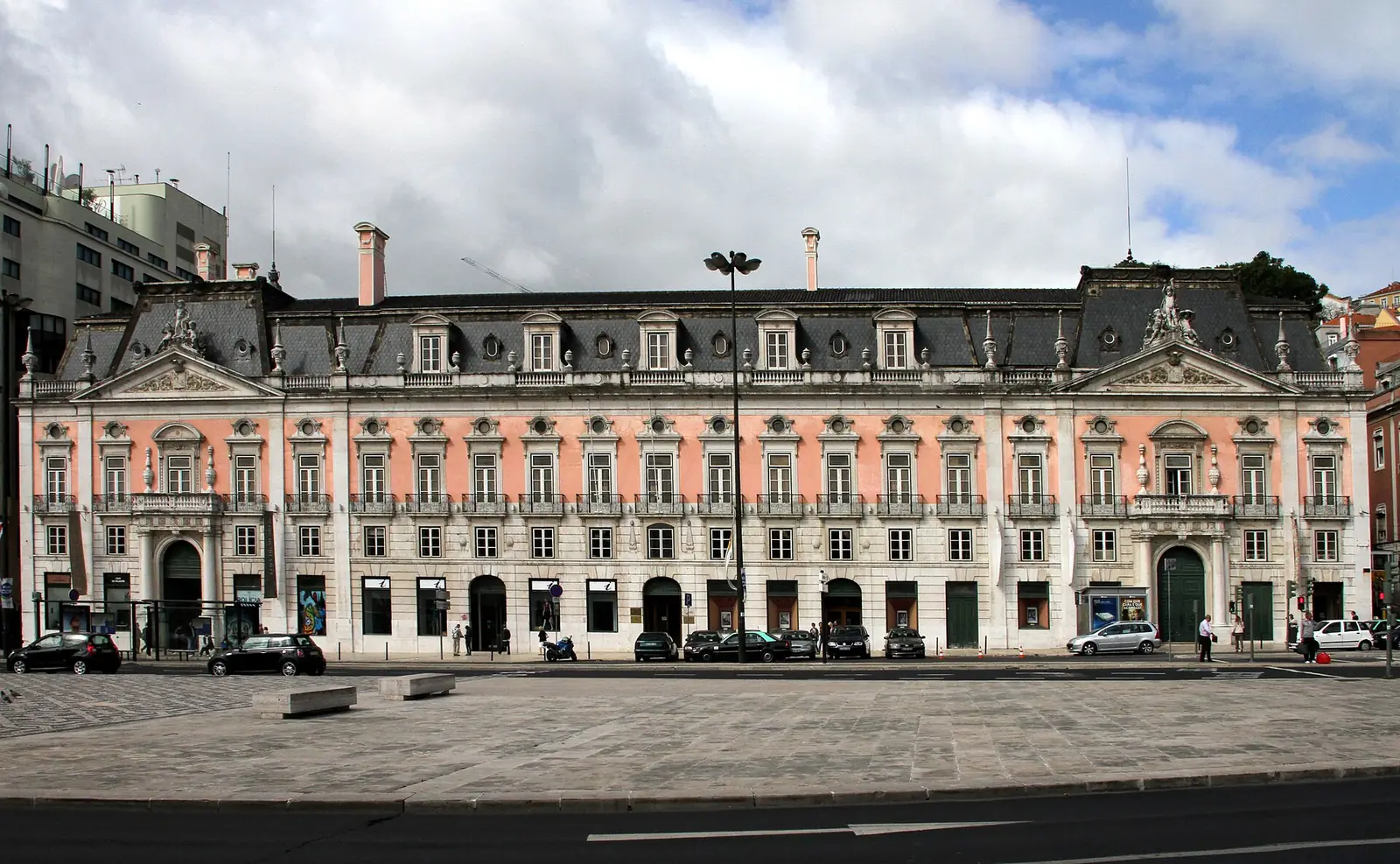
O Palácio Foz, na Praça dos Restauradores, em 2011. Gerd Eichmann, CC BY-SA 4.0 In 1933 the regime created the National Propaganda Secretariat in order, among other things, “to combat by every means within its reach the penetration into our Country of any ideas that disturb and dissolve national unity and interest”.58 It was headed until 1949 by the journalist António Ferro, who called his programme the “Policy of the Spirit” (Política do Espírito): re-educating the Portuguese according to the official ideology, with posters, radio, cinema, exhibitions and prizes, combining a modern language with the regime’s conservatism and ruralism.59 In 1940 the State bought this palace to house it; in 1944 the National Information Secretariat, which succeeded it, brought propaganda, tourism, the press and censorship together in the same hands.6061
Propaganda also spoke to women. A National Information Secretariat poster, from 1945 or 1946, said: “Portuguese woman, thanks to the Estado Novo you have the stability of the family, religious freedom…: you owe it to Salazar” (Mulher portuguesa, graças ao Estado Novo tens a estabilidade da família, a liberdade religiosa…: a Salazar o deves) — and urged: “mothers, wives, brides-to-be of Portugal, vote for Salazar” (mães, espôsas, noivas de Portugal votai por Salazar).62
On 28 May 1974, the 48th anniversary of the 1926 coup, around a hundred artists entered the courtyard of this palace and covered the statue of Salazar that stood there with a black cloth and a green and red banner. They wanted it put away in a museum: “Fascist art is bad for the eyes” (A arte fascista faz mal à vista), said the painter Vespeira.63


.jpg)
.jpg)
.jpg)
.jpg)
.jpg)
Notes on the sources2
- Whether the two “A lição de Salazar” posters cited — the one on the “trilogy of national education” and the one on the “Corporative Estado Novo” — are among the seven panels made in 1938 for the tenth anniversary of Salazar at the Ministry of Finance: the Court of Auditors speaks of the seven panels, and the National Library records the two posters, from 1938, published by “Escola Portuguesa”.
- The year in which the National Information Secretariat poster addressed to women was made: 1945 or 1946, according to the National Library.
Do you know more, or do you have a document? Tell us.
Sources
- 1Golpe Militar de 28 de maio de 1926. Museu do Aljube Resistência e Liberdade (EGEAC) — consulted on 2 October 2026
- 2O Parlamento na história constitucional – O Estado Novo (1926-1974). Assembleia da República — consulted on 2 October 2026
- 3Da ditadura nacional ao Estado Novo (exposição virtual). Tribunal de Contas — consulted on 3 October 2026
- 4Ditadura militar e ascensão do salazarismo. Comissão Comemorativa 50 Anos 25 de Abril — consulted on 2 October 2026
- 527 de Julho de 1970: Morte de Salazar — bibliografia temática. Arquivo Nacional Torre do Tombo, 2011 — consulted on 3 October 2026
- 6Atentado a Salazar. Museu do Aljube Resistência e Liberdade (EGEAC) — consulted on 2 October 2026
- 7Residência Oficial do Primeiro-Ministro — História. Governo de Portugal — consulted on 3 October 2026Página do sítio do Governo, lida na cópia do Internet Archive de 29 de novembro de 2009; inclui o quadro dos chefes de Governo que residiram no palacete.
- 8O dia em que Salazar sofreu um atentado. Diário de Notícias — consulted on 2 October 2026
- 9Exposição «Mulheres que mudaram a vida política em Portugal». Assembleia da República — consulted on 2 October 2026
- 10Ato Colonial. Museu do Aljube Resistência e Liberdade (EGEAC) — consulted on 2 October 2026
- 11A mulher portuguesa na legislação civil (Elina Guimarães), Análise Social, vol. XXII (92-93), 1986. Instituto de Ciências Sociais da Universidade de Lisboa – Análise Social — consulted on 2 October 2026
- 12Um olhar sobre a participação feminina na Assembleia Nacional: a deputada Virgínia Faria Gersão (Faces de Eva, n.º 47). Susana Fontes e Sónia Coelho / Faces de Eva (SciELO Portugal) — consulted on 2 October 2026
- 13O voto das mulheres casadas (1946). Assembleia da República — consulted on 2 October 2026
- 14Decreto n.º 26 893, de 15 de agosto de 1936 (Diário do Governo, I série, n.º 191): estatutos da Obra das Mães pela Educação Nacional. Diário do Governo (Imprensa Nacional), no Diário da República Eletrónico, 1936 — consulted on 3 October 2026
- 15Associação dos Professores de História / Mariana Lagarto, Organizações repressivas e de controlo do Estado Novo. RTP Ensina, 2021 — consulted on 3 October 2026
- 16Mulheres pela Igualdade (biografias). CIG – Comissão para a Cidadania e a Igualdade de Género — consulted on 2 October 2026
- 17Ser mulher em Lisboa: a associação que agitou o regime no século XX (Ana Sofia Paiva, 8/3/2019). FCSH+Lisboa – NOVA FCSH — consulted on 2 October 2026
- 18Associação Portuguesa Feminina para a Paz (PT/SGMAI/GCLSB/H-B/001/00114). Secretaria-Geral do MAI – Arquivo do Governo Civil de Lisboa (Archeevo) — consulted on 2 October 2026
- 19Maria Lamas, a ativista pelos direitos das mulheres (Virgínia Baptista, IHC – NOVA FCSH). RUN – Repositório da Universidade Nova de Lisboa — consulted on 2 October 2026
- 20As Mulheres do Meu País, de Maria Lamas. Comissão Comemorativa 50 Anos 25 de Abril — consulted on 2 October 2026
- 21Diário da Manhã / Garcia Pulido (coleção de imprensa). Casa Comum – Fundação Mário Soares e Maria Barroso — consulted on 3 October 2026
- 22O partido único (Haverá eleições?). Comissão Comemorativa 50 Anos 25 de Abril — consulted on 3 October 2026
- 23Associação 25 de Abril (Open House Lisboa). Trienal de Arquitectura de Lisboa — consulted on 3 October 2026
- 24Os censores da imprensa (Joaquim Cardoso Gomes), JJ – Jornalismo & Jornalistas n.º 57, jan./jun. 2014. Clube de Jornalistas (PDF no Centro de Documentação 25 de Abril, Univ. Coimbra) — consulted on 2 October 2026
- 25Acção popular (pós-25 de Abril). Associação 25 de Abril — consulted on 2 October 2026
- 26Sobre Nós. Associação 25 de Abril — consulted on 3 October 2026
- 27Helena Roldão, Mocidade Portuguesa Feminina: boletim mensal (Lisboa, 1939-1947) — ficha histórica. Hemeroteca Municipal de Lisboa, 2014 — consulted on 3 October 2026
- 28II Congresso Republicano de Aveiro. Museu do Aljube Resistência e Liberdade (EGEAC) — consulted on 2 October 2026
- 29Lei n.º 2137, de 26 de dezembro de 1968 (Diário do Governo, I série, n.º 303). Diário do Governo (Imprensa Nacional), no Diário da República Eletrónico, 1968 — consulted on 3 October 2026
- 30As Mulheres e o Trabalho. Comissão Comemorativa 50 Anos 25 de Abril — consulted on 2 October 2026
- 31Decreto n.º 49 317, de 25 de outubro de 1969 (Diário do Governo, I série, n.º 251). Diário do Governo (Imprensa Nacional), no Diário da República Eletrónico, 1969 — consulted on 3 October 2026
- 32Decreto-Lei n.º 49 473, de 27 de dezembro de 1969 (Diário do Governo, I série, n.º 301): revoga a autorização para o casamento das professoras primárias. Diário do Governo (Imprensa Nacional), no Diário da República Eletrónico, 1969 — consulted on 3 October 2026
- 33Morreu a primeira mulher a integrar um Governo em Portugal (14/12/2018). Observador — consulted on 2 October 2026
- 34Decreto-Lei n.º 49 401, de 24 de novembro de 1969 (Diário do Governo, I série, n.º 275). Diário do Governo (Imprensa Nacional), no Diário da República Eletrónico, 1969 — consulted on 3 October 2026
- 35O Marcelismo e a Liberdade de Imprensa (Imprensa e Revolução). Comissão Comemorativa 50 Anos 25 de Abril — consulted on 3 October 2026
- 36Largo e Quartel do Carmo (Lugares de Abril). Associação 25 de Abril — consulted on 2 October 2026
- 37Operação Viragem Histórica. Comissão Comemorativa 50 Anos 25 de Abril — consulted on 2 October 2026
- 38Legislação 25A – Extinção da DGS, LP e MP (Dec.-Lei 171/74 de 25 de Abril). Centro de Documentação 25 de Abril, Universidade de Coimbra — consulted on 2 October 2026
- 39Palácio da Independência. Wikipédia (ponto de partida) — consulted on 2 October 2026
- 40Decreto-Lei n.º 27 279, de 24 de novembro de 1936 (Diário do Governo, I série, n.º 276): bases do ensino primário. Diário do Governo (Imprensa Nacional), no Diário da República Eletrónico, 1936 — consulted on 3 October 2026
- 41Martins Barata (design), A lição de Salazar: Deus, Pátria, Família — a trilogia da educação nacional (cartaz, [1938]). Biblioteca Nacional de Portugal — Biblioteca Nacional Digital, 1938 — consulted on 3 October 2026
- 42O arquivo do Cardeal Cerejeira: um legado para a história da Igreja lisbonense. Patriarcado de Lisboa — consulted on 3 October 2026
- 43Acórdão n.º 423/87 (Concordata e Protocolo Adicional). Tribunal Constitucional — consulted on 2 October 2026
- 44Decreto-Lei n.º 23 048, de 23 de setembro de 1933 (Diário do Governo, I série, n.º 217): Estatuto do Trabalho Nacional. Diário do Governo (Imprensa Nacional), no Diário da República Eletrónico, 1933 — consulted on 3 October 2026O mesmo número do Diário do Governo publica os decretos-leis n.º 23 049 (grémios), 23 050 (sindicatos nacionais) e 23 051 (Casas do Povo).
- 45Sindicatos corporativos (Unidos venceremos! Protesto, greves e sindicatos no marcelismo). Comissão Comemorativa 50 Anos 25 de Abril — consulted on 3 October 2026
- 4618 de Janeiro de 1934. Museu do Aljube Resistência e Liberdade (EGEAC) — consulted on 2 October 2026
- 47Decreto-Lei n.º 25 495, de 13 de junho de 1935 (Diário do Governo, I série, n.º 134): cria a Fundação Nacional para a Alegria no Trabalho. Diário do Governo (Imprensa Nacional), no Diário da República Eletrónico, 1935 — consulted on 3 October 2026
- 48História (da FNAT à Fundação INATEL). Fundação INATEL — consulted on 3 October 2026
- 49Edifício-Sede da Fundação INATEL (Património — outras instalações). Fundação INATEL — consulted on 3 October 2026
- 50Martins Barata (design), A lição de Salazar: com o Estado Novo Corporativo inicia-se uma era de dignificação de trabalho e de justiça social (cartaz, [1938]). Biblioteca Nacional de Portugal — Biblioteca Nacional Digital, 1938 — consulted on 3 October 2026
- 51Legislação 25A – Lei da greve (Dec.-Lei 392/74 de 27 de Agosto). Centro de Documentação 25 de Abril, Universidade de Coimbra — consulted on 2 October 2026
- 52Decreto n.º 28 794, de 1 de julho de 1938 (Diário do Governo, I série, n.º 150): quadros dos Hospitais Civis de Lisboa. Diário do Governo (Imprensa Nacional), no Diário da República Eletrónico, 1938 — consulted on 3 October 2026
- 53Luta das Enfermeiras. Museu do Aljube Resistência e Liberdade (EGEAC) — consulted on 2 October 2026
- 54Celibato das enfermeiras no Estado Novo (Comunicar, junho de 2017). Assembleia da República, 2017 — consulted on 3 October 2026
- 55Decreto-Lei n.º 44 923, de 18 de março de 1963 (Diário do Governo, I série, n.º 65). Diário do Governo (Imprensa Nacional), no Diário da República Eletrónico, 1963 — consulted on 3 October 2026
- 56Decreto-Lei n.º 47 344, de 25 de novembro de 1966 (Diário do Governo, I série, n.º 274): aprova o Código Civil. Diário do Governo (Imprensa Nacional), no Diário da República Eletrónico, 1966 — consulted on 3 October 2026
- 57A revisão do Código Civil e os Direitos das Mulheres (1977). Assembleia da República — consulted on 2 October 2026
- 58Decreto-Lei n.º 23 054, de 25 de setembro de 1933 (Diário do Governo, I série, n.º 218): cria o Secretariado da Propaganda Nacional. Diário do Governo (Imprensa Nacional), no Diário da República Eletrónico, 1933 — consulted on 3 October 2026
- 59Associação dos Professores de História / André Silveira, O SPN como motor do projeto cultural do Estado Novo. RTP Ensina, 2021 — consulted on 3 October 2026
- 60Palácio Foz. Wikipédia (ponto de partida) — consulted on 2 October 2026
- 61A Censura no Salazarismo. Comissão Comemorativa 50 Anos 25 de Abril — consulted on 2 October 2026
- 62Mulher portuguesa, graças ao Estado Novo tens a estabilidade da família, a liberdade religiosa…: a Salazar o deves (cartaz do SNI, [1945-46]). Biblioteca Nacional de Portugal — Biblioteca Nacional Digital — consulted on 3 October 2026
- 63A cultura ao serviço da Revolução. Comissão Comemorativa 50 Anos 25 de Abril — consulted on 3 October 2026
Other walks

Revolution · on foot
The first day
25 April 1974 hour by hour, from the Terreiro do Paço to the Carmo and the door of the political police
- Distance
- 2.4 km
- Duration
- 1 h 30 min
- Stops
- 7 stops
- Difficulty
- Moderate

Women · on foot
Graça, the women’s hill
Seamstresses on strike, a republican propagandist, a women’s prison, a bar and a poet — Graça as they tell it
- Distance
- 1.7 km
- Duration
- 1 h 15 min
- Stops
- 6 stops
- Difficulty
- Demanding

Revolution · on foot
The figures of April
From the Aljube to São Bento, the lives of Soares, Cunhal and Salgueiro Maia — and those of Maria Barroso, Sofia Ferreira, Natália Correia and Pintasilgo
- Distance
- 3.5 km
- Duration
- 1 h 40 min
- Stops
- 6 stops
- Difficulty
- Moderate