Santa Maria Maior
Palácio Foz – National Propaganda Secretariat / National Information Secretariat (SPN/SNI)
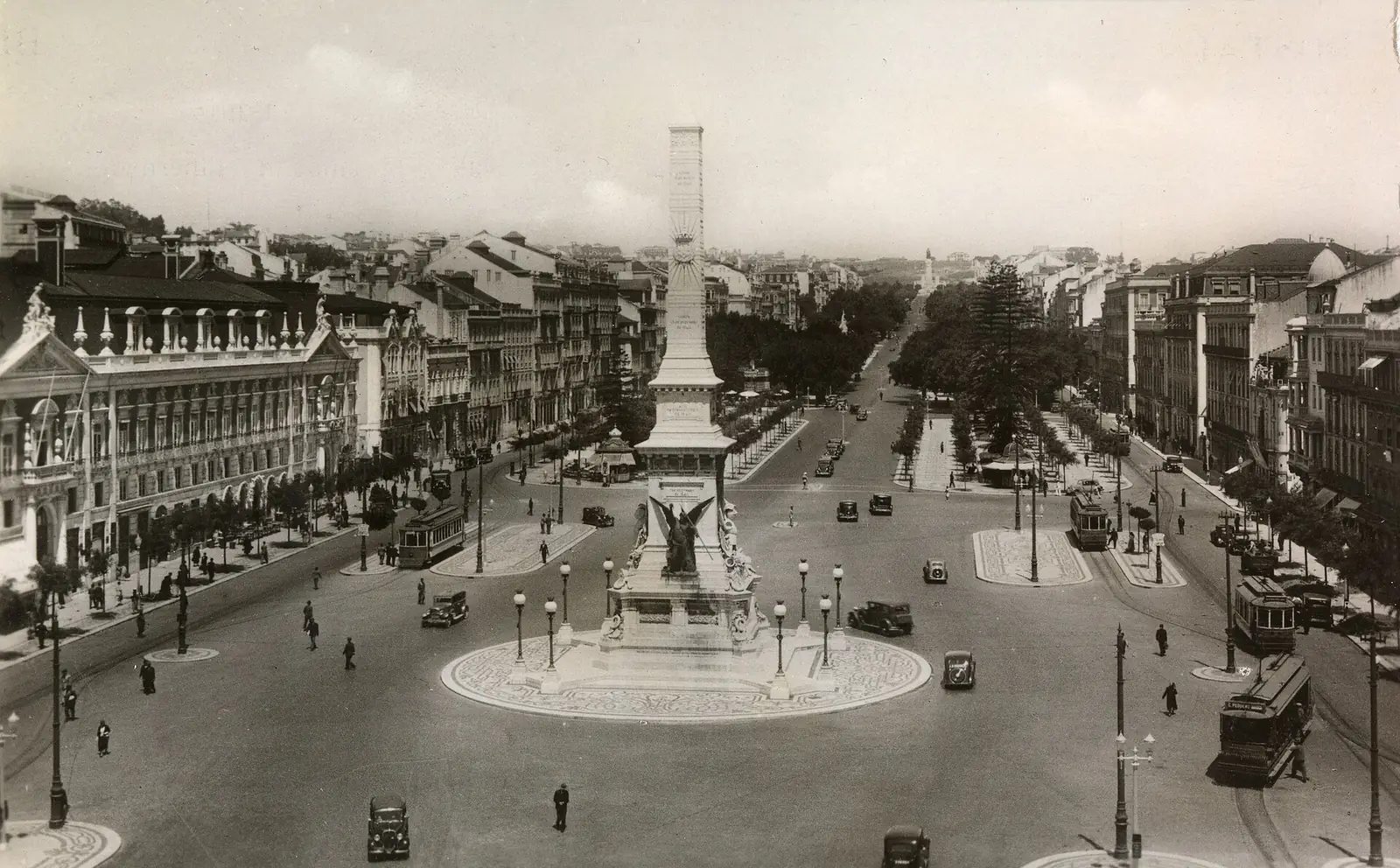
A palace on Restauradores bought by the State in 1940 for the regime’s propaganda machine (the SPN, later the SNI), headed by António Ferro. Press censorship worked in the same building, with its entrance on Calçada da Glória, between 1947/48 and 1961.
The Palácio Foz, formerly the Palácio Castelo Melhor, was built between 1777 and 1858 and has been a Property of Public Interest since 1971. In the early 20th century, after its owners’ decline, it had a number of tenants.
The National Propaganda Secretariat (SPN) was created on 25 September 1933 and headed by the journalist António Ferro; in 1944–1945 (the sources differ) it gave way to the National Information Secretariat (SNI). In 1940 the State bought the palace, evicted the tenants and made it the headquarters of the SPN, according to Wikipedia.
The building also played a direct part in the repression of the written word: according to Joaquim Cardoso Gomes, the press censorship services worked at Calçada da Glória, 9, 2nd floor, “in the Palácio Foz building”, from 1947/48 until 1961, before moving to Rua de São Pedro de Alcântara.
Nearby, by the Elevador da Glória, PIDE agents killed the worker David Almeida Reis, in front of the former Café Palladium, during the May Day demonstration on 1 May 1964 (Memória Comum). Later the Institute of Social Communication moved in (Wikipedia); today the palace houses, among others, the headquarters of Turismo de Lisboa and the National Sports Museum.
On the walks
Where it is
Map showing where Palácio Foz – National Propaganda Secretariat / National Information Secretariat (SPN/SNI) is.
Dates
25 September 1933
The National Propaganda Secretariat is created.
1940
The State buys the palace as the SPN’s headquarters (Wikipedia).
1947
Press censorship moves to Calçada da Glória, 9, in the Palácio Foz building (1947/48–1961).
1 May 1964
David Almeida Reis is killed by the PIDE by the Elevador da Glória.
1971
Listed as a Property of Public Interest.
22 Jun 1926
Press censorship moves into the Carmo Barracks28 May 1974
Artistas tapam a estátua de Salazar no Palácio Foz
Nearby
70 m · 5 min on foot
National Council of Portuguese Women
Today: Praça dos Restauradores, 13
In Adelaide Cabete’s surgery, on this square, the National Council of Portuguese Women was born in 1914 — “the most important and longest-lasting Portuguese feminist association of the first half of the 20th century”. It had its headquarters here for 32 years.
WomenRepublicOpposition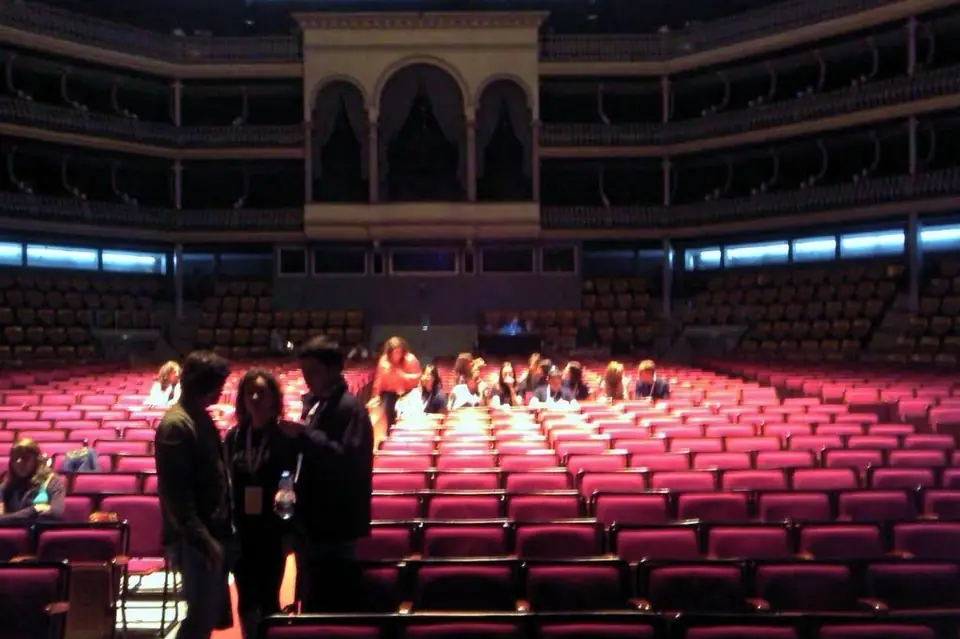
210 m · 5 min on foot
Coliseu dos Recreios
Today: Coliseu dos Recreios
On 29 March 1974, less than a month before the revolution, the 1st Portuguese Song Meeting (I Encontro da Canção Portuguesa) filled the Coliseu. Censorship had cut songs, but the audience sang “Grândola, Vila Morena” in chorus and shouted “Down with repression!” (abaixo a repressão!).
Culture and censorshipOppositionRevolution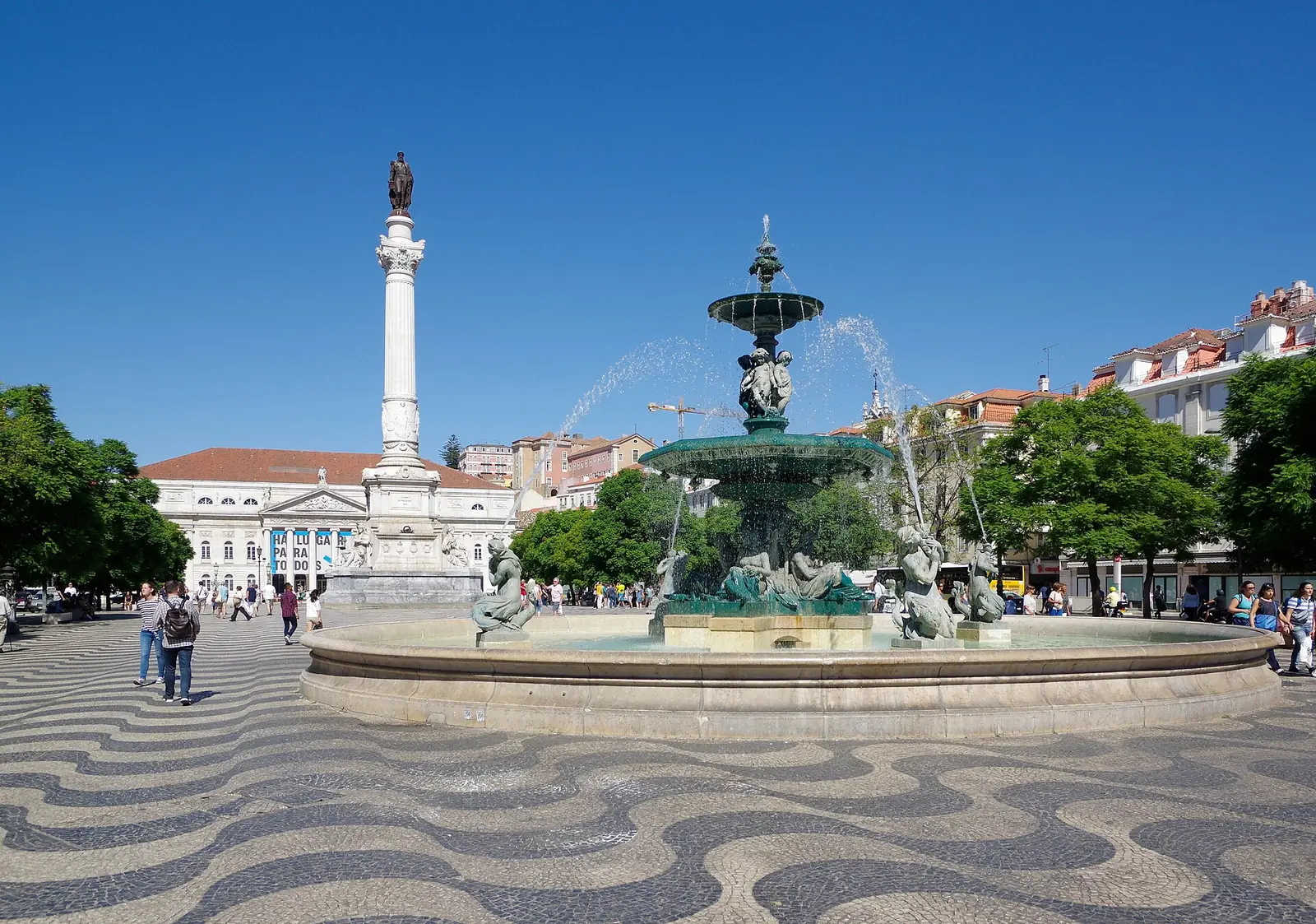
260 m · 5 min on foot
Café Gelo
Today: Gelo, a seafood restaurant since 2024
A café on the Rossio where, between 1957 and 1962, the “Café Gelo Group” of dissident poets and painters used to meet; the group was banned from entering it after May Day 1962.
Culture and censorshipOppositionRepression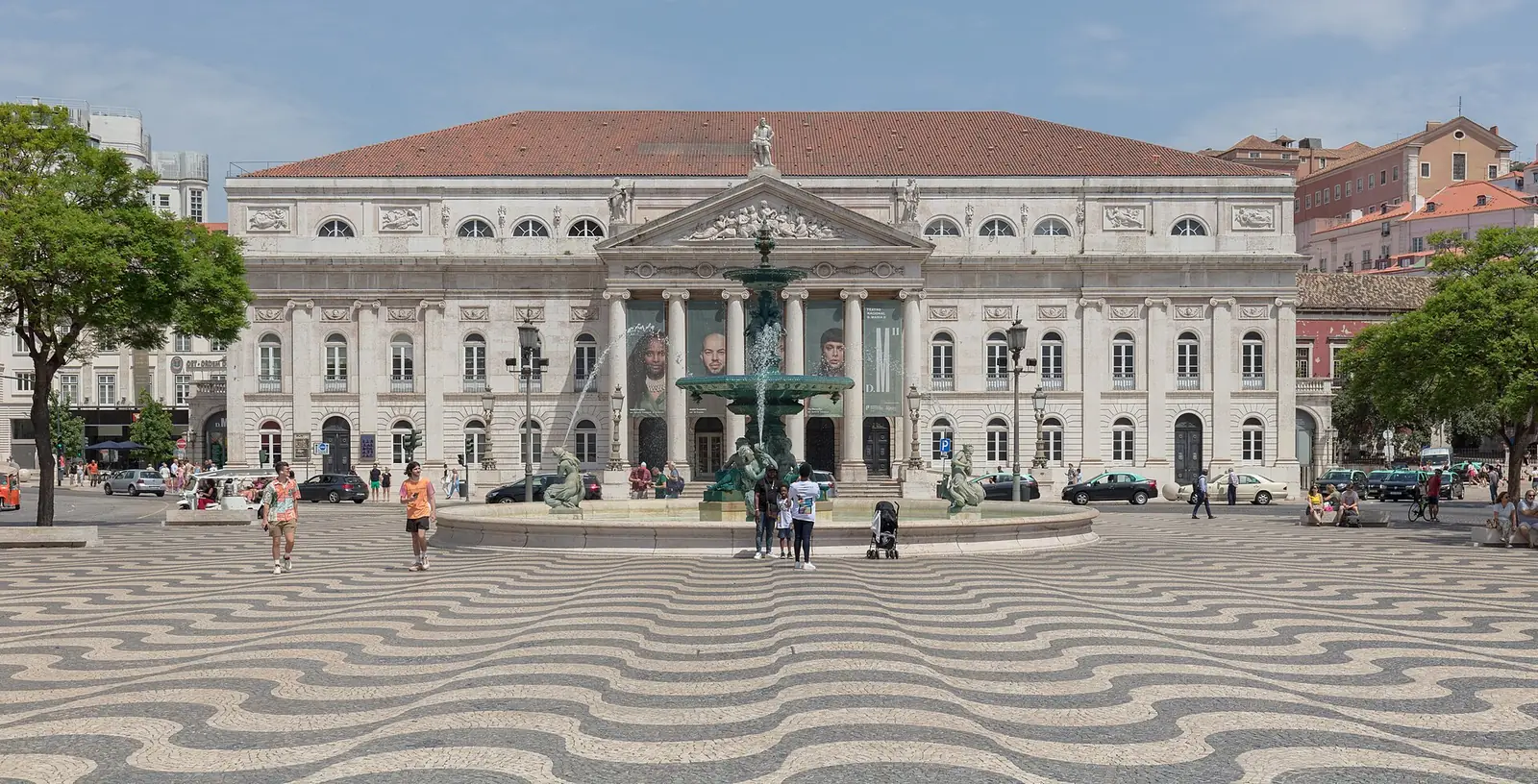
260 m · 5 min on foot
D. Maria II National Theatre
Today: D. Maria II National Theatre
The national theatre, in the Rossio. Maria Barroso made her debut here in 1944 and was José Régio’s “Benilde”; in 1948, an order from the police and the Ministry of Education took her off this stage. The company that ran it worked under censorship until the fire of 1964.
Culture and censorshipWomenRepression


.jpg)
Notes on the sources4
- The exact location of the Café Palladium in 1964 (Memória Comum says “next to the Glória lift”).
- The JJ booklet also shows the Palácio Ludovice (Rua de São Pedro de Alcântara, 45) as a building where “the SPN operated”; I have not confirmed in which years.
- Visiting hours: not checked.
- The National Sports Museum in the Palácio Foz: according to OpenStreetMap.
Do you know more, or do you have a document? Tell us.
Sources
- 1Palácio Foz. Open House Lisboa – Trienal de Arquitectura de Lisboa — consulted on 2 October 2026
- 2Palácio Foz. Wikipédia (ponto de partida) — consulted on 2 October 2026
- 3Secretariado de Propaganda Nacional. Wikipédia (ponto de partida) — consulted on 2 October 2026
- 4Os censores da imprensa (Joaquim Cardoso Gomes), JJ – Jornalismo & Jornalistas n.º 57, jan./jun. 2014. Clube de Jornalistas (PDF no Centro de Documentação 25 de Abril, Univ. Coimbra) — consulted on 2 October 2026
- 5Os que ficaram pelo caminho (lista, páginas 1 a 7). Memória Comum – Memorial aos Presos e Perseguidos Políticos — consulted on 2 October 2026
- 6Nominatim – OpenStreetMap (geocodificação). OpenStreetMap contributors (ODbL) — consulted on 2 October 2026
Coordinates: OpenStreetMap (Nominatim), consultado a 2 de outubro de 2026.