Misericórdia
Headquarters of the Censorship Services / “Prior Examination” (1969-1974)
The last headquarters of press censorship, from 22 September 1969 to 25 April 1974, opposite the offices of the newspaper “República”. Newspapers delivered their proofs here for the “blue pencil”; on 26 April the building was stormed by the people.
Prior censorship of the press lasted throughout the dictatorship and moved house several times, always along the Carmo–Bairro Alto–Restauradores axis, close to the newsrooms. The researcher Joaquim Cardoso Gomes identified its successive headquarters: the GNR’s Carmo Barracks (from 22 June 1926 to 1934); Rua Nova da Trindade, 62, first floor (1934-1943, a building that no longer exists); Largo Trindade Coelho, 9, first floor (1943-1947/48); Calçada da Glória, 9, second floor, in the Palácio Foz building (1947/48-1961); Rua de São Pedro de Alcântara, 45, second floor (11 June 1961-1968, with proofs delivered via Rua do Diário de Notícias, 150; the magazine JJ illustrates it with the Palácio Ludovice, which also housed the National Propaganda Secretariat, SPN); Rua de São Pedro de Alcântara, 81, ground floor (11 December 1968-1969); and, finally, Rua da Misericórdia, 125, first floor, from 22 September 1969.
Newspapers sent their page proofs by messenger and got them back stamped “Vetted by the Censorship” (Visado pela Censura) — the “blue pencil”, as censorship came to be known. The structure was small — some 70 to 90 censors and 30 assistants, a tenth the size of the PIDE/DGS, according to Cardoso Gomes — but it shaped all information. In 1972 the services were renamed “Prior Examination”, with no change in practice.
Many texts by women fell foul of this sieve: Diana Andringa, when she worked at Vida Mundial, had an article on the colonial war in Angola cut; Maria Teresa Horta’s Minha Senhora de Mim (My Lady of Myself, 1971) was seized by the PIDE; and the Novas Cartas Portuguesas (New Portuguese Letters, 1972) were withdrawn from circulation shortly after publication and took their authors to court. The silence imposed on the newspapers about that case was such that, at one point, not even the date and time of the hearings could be reported.
Opposite, across the street, were the offices of República, the daily most closely identified with the opposition. On 25 April 1974, the paper came out with the line “This newspaper has not been vetted by any Censorship Commission” (Este jornal não foi visado por qualquer Comissão de Censura), and the censors abandoned the premises to the crowd. On the morning of the 26th the people stormed the headquarters; shortly before, the last man in charge, Mário Bento, had advised a colonel to “stay put and keep quiet”.
On the walks
From the archives
In other archives
These can only be viewed on each archive’s own website.
Where it is
Map showing where Headquarters of the Censorship Services / “Prior Examination” (1969-1974) is.
Dates
22 June 1926
Censorship sets up in the GNR’s Carmo Barracks.
11 June 1961
Move to Rua de São Pedro de Alcântara, 45 (Palácio Ludovice).
22 September 1969
Move to Rua da Misericórdia, 125.
1972
The censorship services are renamed “Prior Examination”.
25 April 1974
“República” comes out without the censors’ stamp; the censors abandon the premises.
26 April 1974
The people storm the censorship headquarters, in the morning.
25 Oct 1973
The trial of the Three Marias begins, behind closed doors
People connected with this place

Nearby
30 m · 5 min on foot
Headquarters of the “Diário da Manhã” (Rua da Misericórdia, 95)
Today: 25 April Association
From 1931 to 1971 this was the home of the “Diário da Manhã” (Morning Daily), the semi-official newspaper of the National Union, the single party of the Estado Novo (“New State”), and then of “Época”. On 26 April 1974 the people wrecked the headquarters of “Época”; since 2001 the building has been the headquarters of the 25 April Association.
RepressionCulture and censorshipRevolution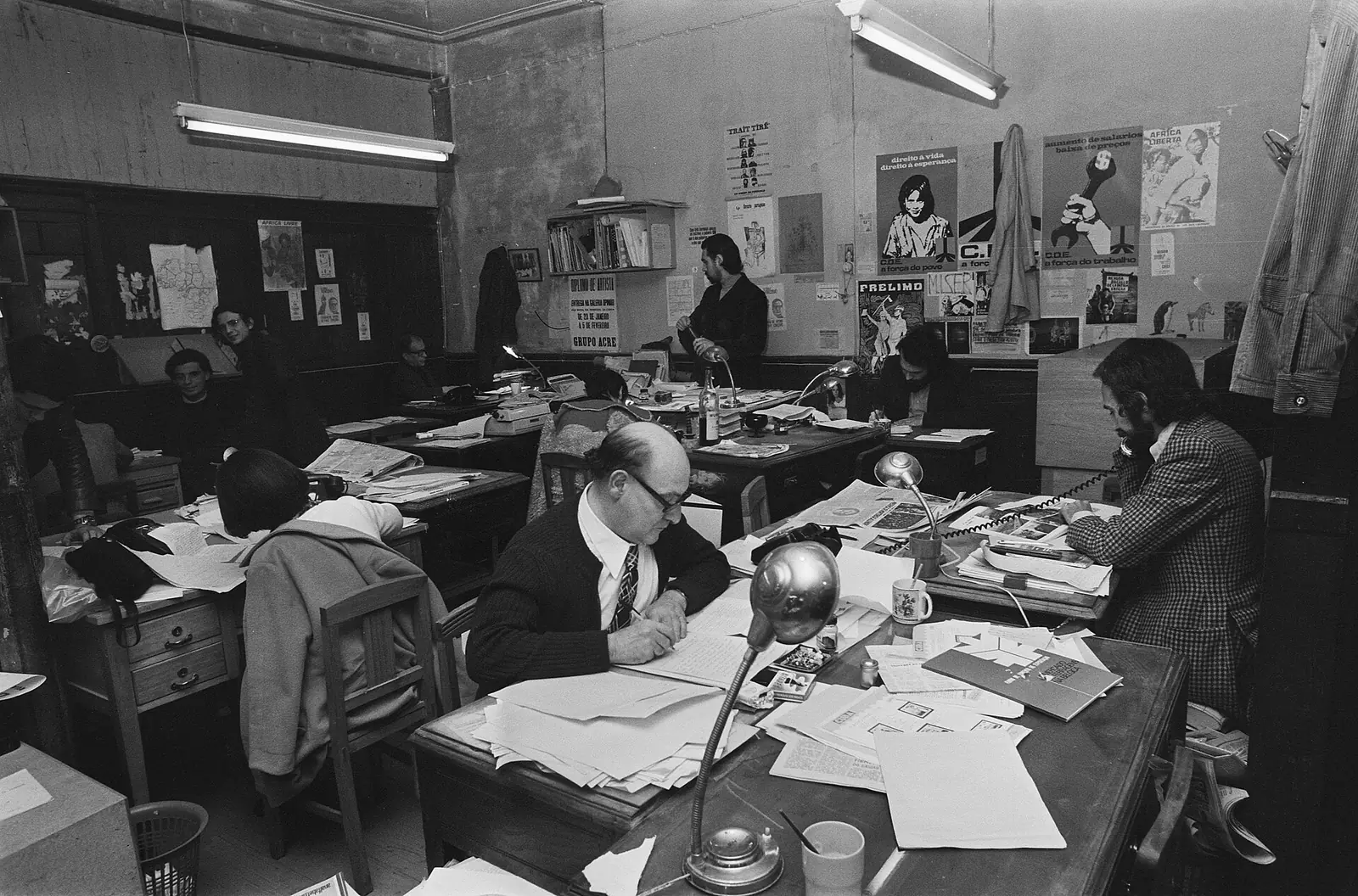
90 m · 5 min on foot
Headquarters of the newspaper República (Rua da Misericórdia)
At no. 116 stood República, the daily of the democratic opposition. It took part in the 25 April conspiracy, came out that day without going through the censors and, in May 1975, gave its name to one of the great crises of the revolution, the “República affair”.
OppositionRevolutionLabour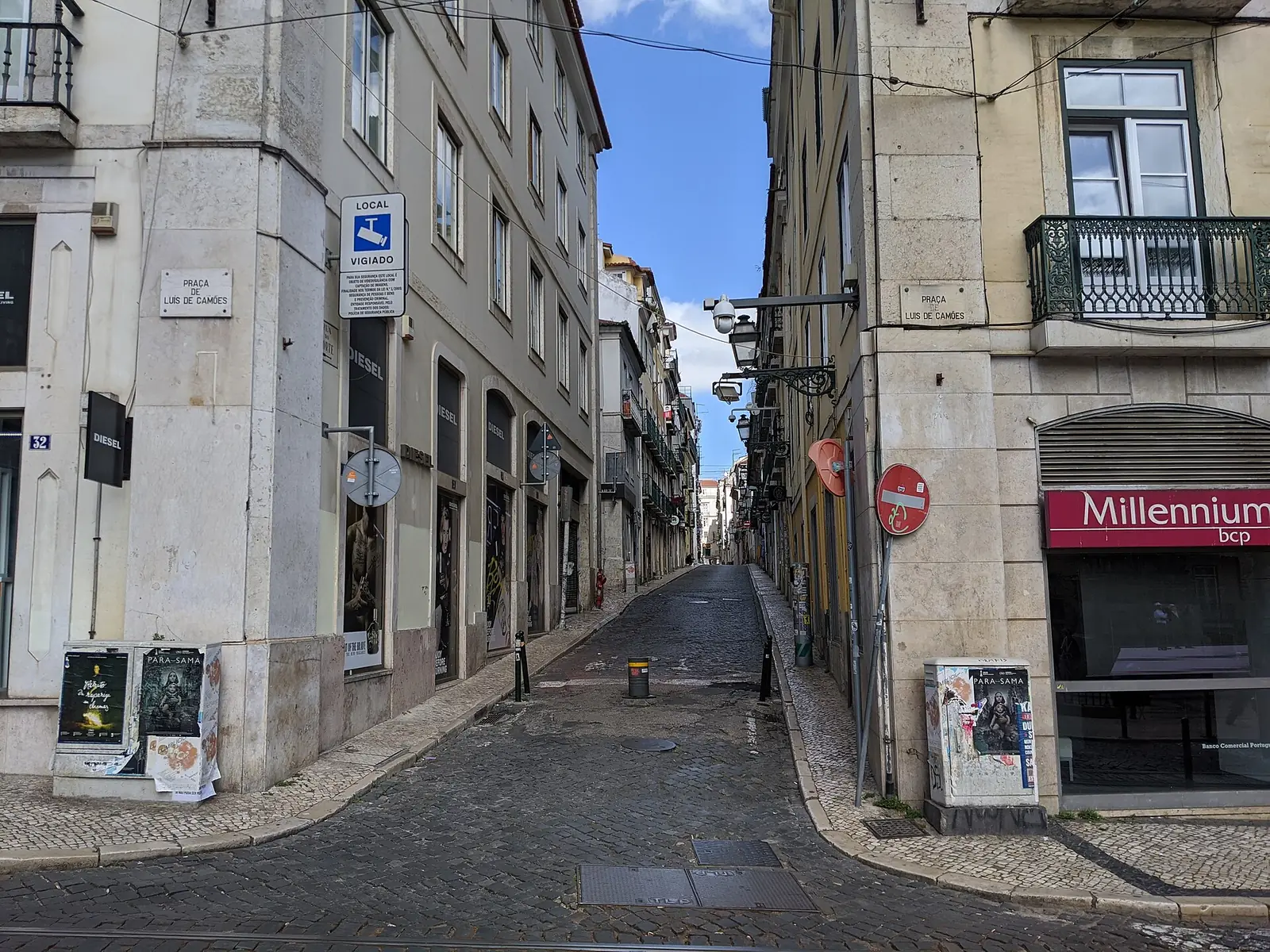
160 m · 5 min on foot
Editorial offices of the newspaper “A Capital” (Rua do Norte, 3)
At no. 3 Rua do Norte, on the corner with Praça de Luís de Camões, were the editorial offices of “A Capital”, a republican evening daily. Virgínia Quaresma, the first woman journalist in Portugal, wrote for it and lived just opposite; in 1911, the paper told the story of Carolina Beatriz Ângelo’s fight for the vote.
WomenRepublicCulture and censorship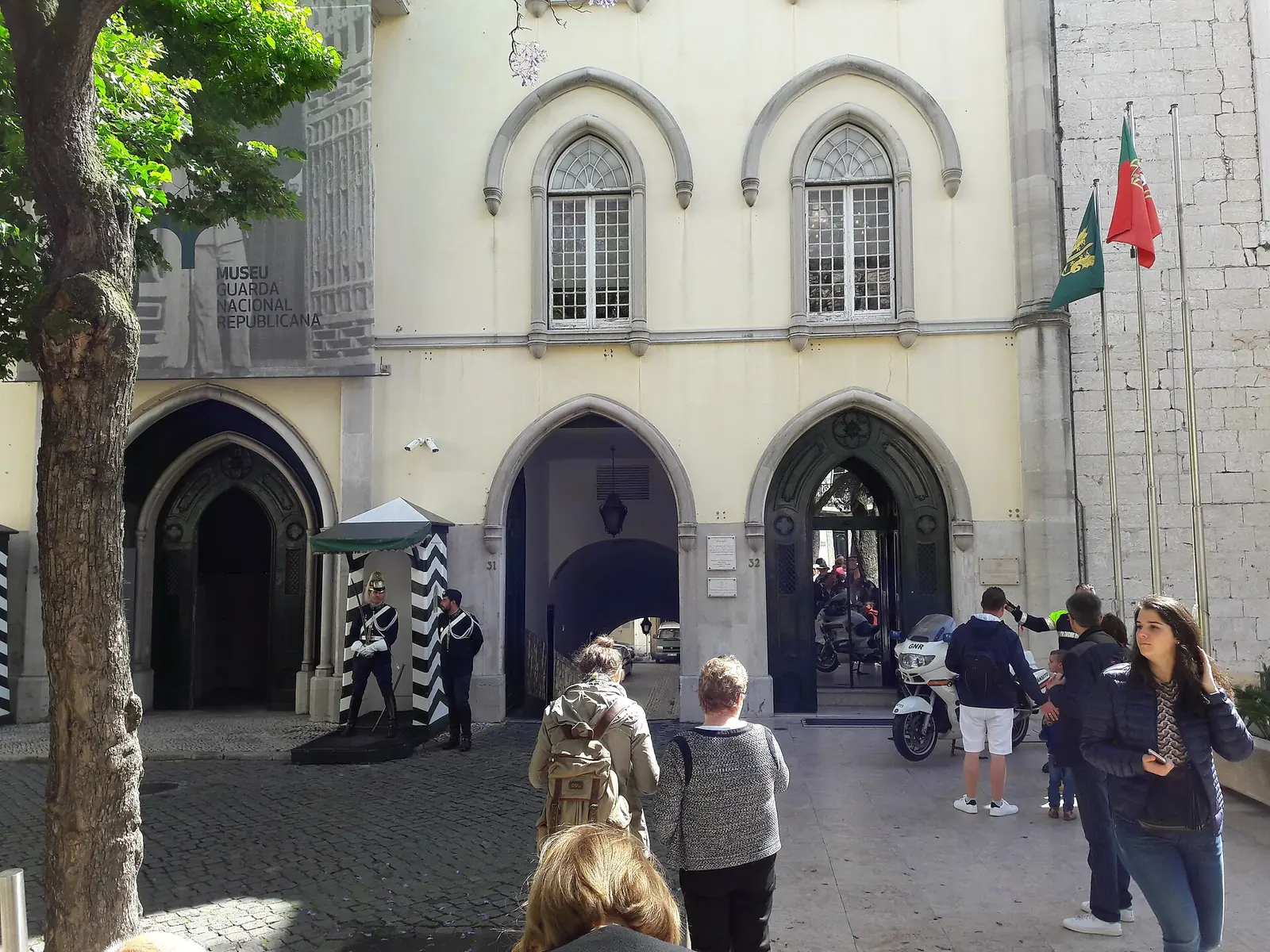
230 m · 5 min on foot
Largo do Carmo and the Carmo Barracks
Today: GNR General Command and the National Republican Guard Museum
The most symbolic of the places of April. Marcelo Caetano took refuge in the Carmo Barracks in the early hours of 25 April 1974; surrounded by Salgueiro Maia’s column and by thousands of people, he handed power to General Spínola late in the afternoon.
RevolutionRepression


.jpg)
Notes on the sources6
- Approximate coordinates (stretch of the street); no. 125 is not geocoded in OpenStreetMap.
- FCSH+Lisboa places the censorship directorate-general on Rua de São Pedro de Alcântara (without dates); this matches the 1961-1969 headquarters given by Cardoso Gomes.
- The sequence of 25-26 April: a text in “JJ” says that the censors fled Rua da Misericórdia an hour or two after “República” came out, on the 25th; Cardoso Gomes speaks of the people storming the building on the morning of the 26th. The two versions may be compatible.
- Current use of the building and whether there is a plaque: not checked.
- Date of the seizure of “Minha Senhora de Mim” (the Aljube Museum mentions its seizure by the PIDE, without a date).
- The current use of the building.
Do you know more, or do you have a document? Tell us.
Sources
- 1Os censores da imprensa (Joaquim Cardoso Gomes), JJ – Jornalismo & Jornalistas n.º 57, jan./jun. 2014. Clube de Jornalistas (PDF no Centro de Documentação 25 de Abril, Univ. Coimbra) — consulted on 2 October 2026
- 2Os censores do 25 de Abril: o pessoal político da censura à imprensa (Joaquim Cardoso Gomes). Media & Jornalismo, CIMJ / FCSH-UNL — consulted on 2 October 2026
- 3Bairro Alto, coração do jornalismo lisboeta. FCSH+Lisboa (NOVA FCSH) — consulted on 2 October 2026
- 4«As Três Marias foram absolvidas» / «Absolvição para as Novas Cartas Portuguesas» (Diário de Lisboa, 8 de maio de 1974). Hemeroteca Municipal de Lisboa – Livros que foram notícia — consulted on 2 October 2026
- 5Diana Andringa (testemunho e biografia). Museu do Aljube Resistência e Liberdade — consulted on 2 October 2026
- 6Itinerário «Novas Cartas Portuguesas». Museu do Aljube Resistência e Liberdade — consulted on 2 October 2026
- 7Nominatim – OpenStreetMap (geocodificação). OpenStreetMap contributors (ODbL) — consulted on 2 October 2026
Coordinates: OpenStreetMap (Nominatim), consultado a 2 de outubro de 2026.