
Image credit: Ardfern · CC BY-SA 4.0
Walk · Revolution · on foot
The figures of April
From the Aljube to São Bento, the lives of Soares, Cunhal and Salgueiro Maia — and those of Maria Barroso, Sofia Ferreira, Natália Correia and Pintasilgo
- Distance
- 3.5 km
- Duration
- 1 h 40 min
- Stops
- 6
- Difficulty
- Moderate
The walk, the photos and the map stay on the phone, to open anywhere.
Introduction
Salgueiro Maia, Mário Soares and Álvaro Cunhal are the names almost everyone associates with 25 April. This route follows the lives of all three through Lisbon — and, with equal weight, those of the women who lived the same history: Maria Barroso, the actress whom the regime removed from the stage and who married Soares while he was a prisoner in the Aljube;2 Sofia Ferreira, tried with Cunhal in 1950;9 Maria Lamas, Maria Antónia Fiadeiro and Natália Correia, at the newspaper O Século (The Century); Maria de Lourdes Pintasilgo, who signed opinions of the regime’s chamber with a dissenting vote and went on to become the first woman to head a government in Portugal.17
The way runs from the Aljube, the prison where Soares and Cunhal were held, to the Palácio de São Bento, where the two of them — and several of the women — sat as deputies. In between come the Boa-Hora court, the National Theatre, Largo do Carmo and O Século. The stops follow the streets, not the calendar: the text moves back and forth between 1937 and 1986.
The returns from exile, in April 1974, are told in the route The days of freedom; 25 April hour by hour, in The first day.
Before you go
- Start
- Aljube Museum, Rua de Augusto Rosa (next to the cathedral) — Tram 28 (Sé stop); Metro Terreiro do Paço (blue line) or Baixa-Chiado (blue and green lines), ten minutes’ walk away
- Finish
- Palácio de São Bento (Assembly of the Republic) — Tram 28 (Calçada da Estrela stop); Metro Rato (yellow line), ten minutes’ walk away
- Accessibility of the route
- From the Aljube you go down to the Baixa, which is flat, and up to the Boa-Hora along the steep Rua Nova do Almada; then you go back down to the Rossio. From the Rossio to Largo do Carmo you climb Rua do Carmo, steep and cobbled, which gets slippery in the rain; the Elevador de Santa Justa, which charges a fare, avoids the climb, and OpenStreetMap marks its cabins as wheelchair accessible. From the Carmo to Rua de O Século the way still climbs, through the streets of the Bairro Alto, largely on cobbles; the last stretch, to São Bento, is downhill.
This walk in dates
28 Jun 1947
1948
22 Feb 1949
25 Mar 1949
12 more dates
2 Jan 1950
2 May 1950
3 Jan 1960
25 Apr 1974
28 Apr 1974
1975
11 Mar 1975
25 Apr 1975
25 Nov 1975
29 Apr 1976
1 Aug 1979
2 Mar 1982
Map of the walk “The figures of April”, with 6 numbered stops. The list of stops follows the map.
The stops
Stop 1: 1949 — a wedding in prison
Rua de Augusto Rosa, 42, 1100-059 Lisboa
Today: Aljube Museum – Resistance and Freedom
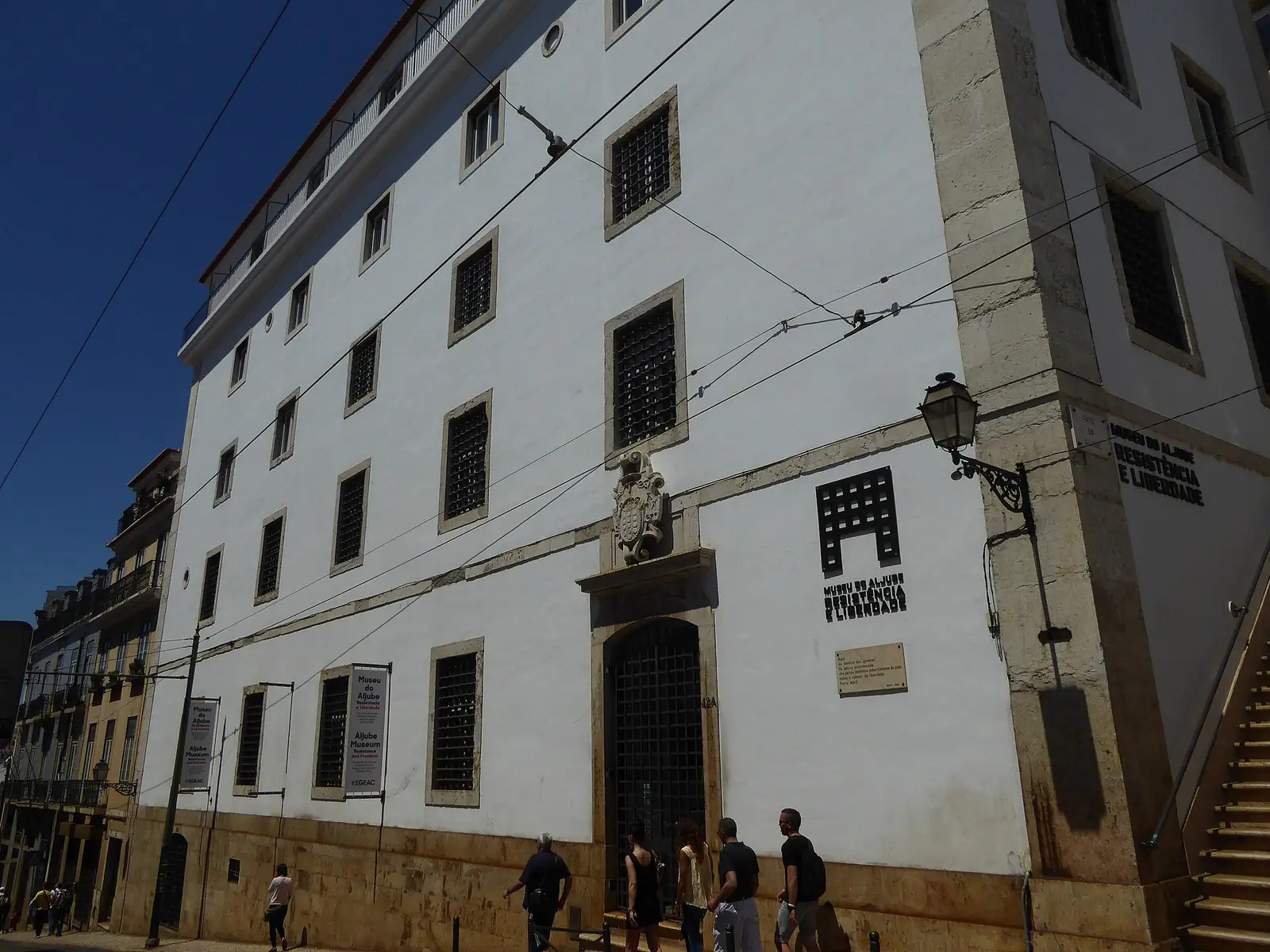
O antigo Aljube, hoje Museu do Aljube – Resistência e Liberdade, na Rua de Augusto Rosa, em maio de 2017. Ardfern, CC BY-SA 4.0 On 31 January 1948, the political police arrested the entire central committee of the Movement of Democratic Unity (MUD) and brought it to the Aljube. Mário Soares, aged 23, was put in the same cell as his father, João Lopes Soares, who had been in prison since the revolt of 10 April 1947.4 A year later he was arrested again, and it was here, on 22 February 1949, that he married Maria Barroso — by proxy, because he was in prison. One of the witnesses, Manuel Mendes, was also in custody.2
Maria Barroso knew what the dictatorship’s prisons were like: her father, an Army officer, had been arrested and deported for conspiring against the Military Dictatorship.1 Soares would be arrested twelve times, deported to São Tomé in 1968 and forced into exile in France from 1970.3 In 1961 he spent six months between the Aljube and Caxias, and at the beginning of 1962, imprisoned here once more, he wrote her a poem.42 He only returned from exile after 25 April — with her, on the train that arrived at Santa Apolónia on 28 April 1974.4
Álvaro Cunhal knew this prison too: he was brought here the first time he was arrested, in 1937, aged 23.56 In 1941, by then free, he was a study supervisor at the Colégio Moderno, at the invitation of Soares’s father, and spent time with the family and with the son, who would become his political adversary.5
What you can see today
The building itself is the museum. The main door of the former prison is closed, but kept as a testimony of the prison.
- 22 Feb 1949Mário Soares and Maria Barroso marry by proxy in the Aljube prison
- 28 Apr 1974Mário Soares chega do exílio a Santa Apolónia
A documentary edited by Sofia Gomes for the exhibition “Women and Resistance – New Portuguese Letters and other struggles” (“Mulheres e Resistência – Novas Cartas Portuguesas e outras lutas”), with excerpts from the testimonies the Aljube Museum has been recording since 2015: sixteen women talk about resistance to the dictatorship and the struggle for women’s rights. This version has Portuguese Sign Language (LGP) interpretation; the version without LGP is on the same channel (XmUbNbnHgKg, 2022).
Original page Licença padrão do YouTube — embed permitido pelo canal oficial do Museu do Aljube
Museu do Aljube Resistência e Liberdade, on YouTube. The player only connects to that site when you press “Watch”.
To stop 2720 m · 10 min on footDirections
Stop 2: 1950 — Cunhal and Sofia Ferreira in the dock
Largo da Boa-Hora / Rua Nova do Almada, Chiado, 1249-099 Lisboa (OpenStreetMap: «Convento da Boa Hora», Largo da Boa-Hora, 15)
Today: Former court, closed since 2009
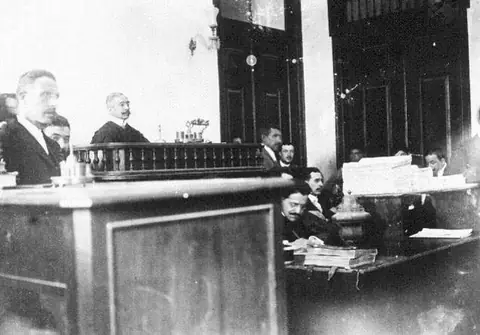
Julgamento no Tribunal da Boa-Hora, em 1909, dos acusados do incêndio da Rua da Madalena. Fotografia de Joshua Benoliel. Joshua Benoliel, Public domain In May 1950, Álvaro Cunhal and Sofia Ferreira sat here in the dock of the Plenary Court.8 They had been arrested together fourteen months earlier, in a clandestine house in Luso where they passed themselves off as a couple; the third prisoner, Militão Ribeiro, had died in prison in January, on hunger strike.7 Cunhal had spent all that time incommunicado, in a cell with no natural light where the electric light was never switched off, and he prepared his defence in that isolation.5 On 2 May, at the very start of the trial, he called it “a new form of torture”, said that Sofia and Militão had also refused to answer the police, and ended with an accusation: “if anyone is to be tried for such crimes, then let the fascists sit in the dock” (se alguém deve ser julgado por tais crimes, então que se sentem os fascistas no banco dos réus).8
Sofia Ferreira, who had spent six months in isolation, five of them without a single book or newspaper, was sentenced on 9 May to three years in prison.9 Cunhal remained in prison for eleven years in a row, eight of them in isolation. In the Lisbon Penitentiary he translated Shakespeare’s King Lear, until he was taken to Peniche, from where he escaped in 1960; the drawings he made in prison were later published as a book, Desenhos da Prisão (Prison Drawings).5
Mário Soares also knew the door of this court: on 15 February 1949 he was arrested on his way here, where the central committee of the MUD Juvenil (Youth Movement of Democratic Unity) was to be tried.4
What you can see today
No confirmed marker of the political trials. The Memorial to Political Prisoners and the Politically Persecuted approved for the square in 2021 had not been built by August 2025.
- 2 May 1950Álvaro Cunhal and Sofia Ferreira tried by the Plenary Court
- 25 Mar 1949The PIDE arrests Álvaro Cunhal, Militão Ribeiro and Sofia Ferreira
- 2 Jan 1950Death of Militão Ribeiro in the Lisbon Penitentiary
- 3 Jan 1960The Peniche escape: Álvaro Cunhal and nine other leaders break out
Diana Andringa’s testimony, recorded by the Aljube Museum on 19 April 2017. According to the museum’s keywords, she talks about the student movement, support for political prisoners, her links to the People’s Movement for the Liberation of Angola (MPLA) and the liberation struggle, her imprisonment and interrogation in Caxias, and her trial in the Plenary Court.
Original page Licença padrão do YouTube — embed permitido pelo canal oficial do Museu do Aljube
Museu do Aljube Resistência e Liberdade, on YouTube. The player only connects to that site when you press “Watch”.
To stop 3700 m · 10 min on footDirections
Stop 3: 1948 — the actress removed from the stage
Praça D. Pedro IV, 1, 1100-201 Lisboa
Today: D. Maria II National Theatre
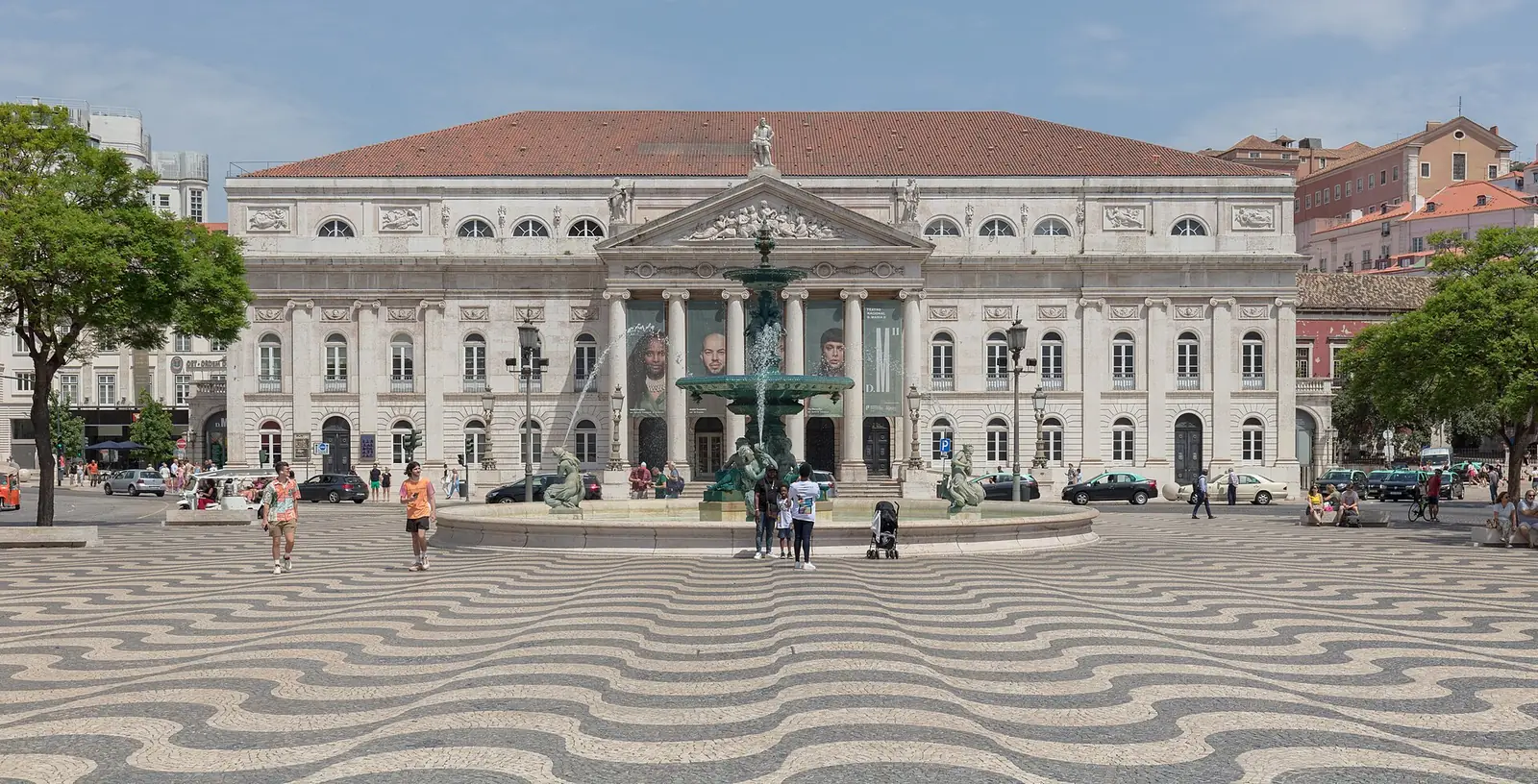
O Teatro Nacional D. Maria II, no topo norte do Rossio, em julho de 2022. Diego Delso, CC BY-SA 4.0 Maria Barroso completed the Dramatic Art course at the National Conservatory in 1943, with the highest mark of her year, and the following year made her debut on this stage, with the company of Amélia Rey Colaço and Robles Monteiro, which had run the National Theatre since 1929.210 Amélia Rey Colaço cast her as Maria de Noronha in Frei Luís de Sousa, alongside Palmira Bastos; in 1947 she played the lead in José Régio’s Benilde ou a Virgem Mãe (Benilde, or the Virgin Mother), and then Adela in García Lorca’s The House of Bernarda Alba.112
Off stage, she recited the poets of the opposition at recitals all over the country, and the political police called her in for questioning several times.12 In 1948, around the time of the third arrest of Mário Soares, whom she had met at the Faculty of Letters, an order arrived “coming from the police and the Ministry of Education”: she could no longer work at the D. Maria II. “It was heartbreaking. I felt it was an injustice,” she told her biographer Leonor Xavier. Amélia Rey Colaço saw it as a blow that struck at the heart of the theatre.11
She acted again in other theatres — she did Sophocles’ Antigone in 1965 — and in 1966 the regime banned Cocteau’s monologue The Human Voice, which she had taken to the São Luiz: it was the last time she acted on stage. In 1959 she had also been refused a licence to teach in private schools; she went on to run the Colégio Moderno, founded by her father-in-law, for decades.12
To stop 4380 m · 5 min on footDirections
Stop 4: 1974 — the captain who chose to negotiate
Largo do Carmo, Lisboa
Today: GNR General Command and the National Republican Guard Museum
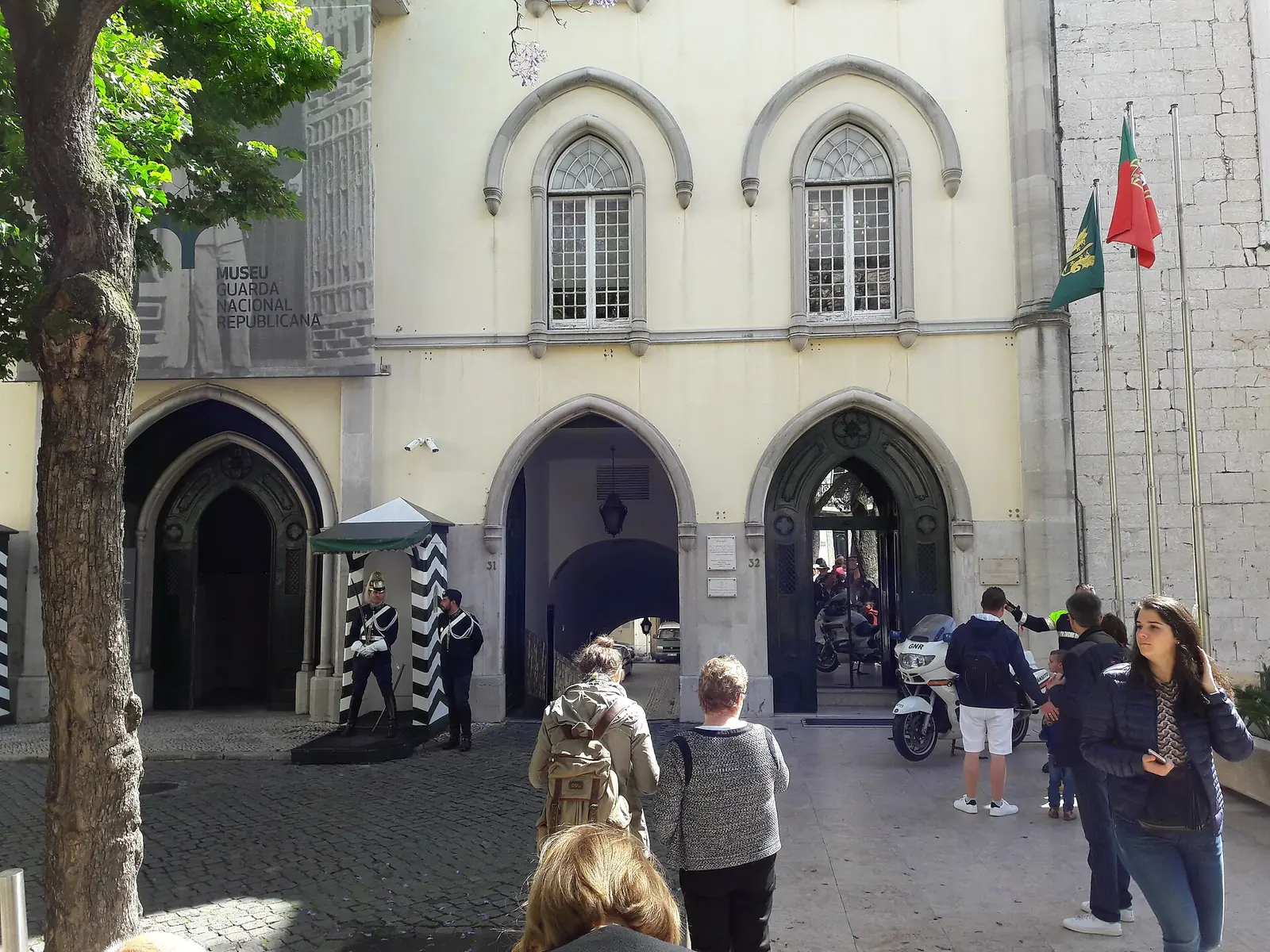
O Quartel do Carmo, comando-geral da GNR, no Largo do Carmo, em 2017. Marcin Latka, CC BY-SA 2.0 Salgueiro Maia’s column arrived here at around 12:30 on 25 April 1974, after climbing up from the Rossio along Rua do Carmo.12 It was along that way, between the Rossio and the Chiado, that Celeste Caeiro gave a soldier a carnation that morning.13 The day, hour by hour, is told in the route The first day; here, what matters is the man. He was 29, the son of a railwayman whose job took him, as a child, from Coruche to Tomar, Pombal and Leiria. He served two tours of duty in the colonial war, in Mozambique and in Guinea, where in May 1973, with his company already in Bissau waiting to go home, he was sent to relieve the besieged garrison of Guidaje. In 1969 he had enrolled at the Higher Institute of Social Sciences and Overseas Policy: “he wanted to understand the reason for what he was doing”, writes Carlos de Matos Gomes.14
In front of the barracks, with the President of the Council (head of government) inside and the crowd all around, he chose to “run the risk of parleying, of negotiating, of exposing himself” rather than attack. He received Marcelo Caetano’s surrender, witnessed the handover of power to General Spínola and made sure that the defeated left safely. He won, sums up the Commemorative Commission for the 50th Anniversary, “without causing a single death, without provoking combat, respecting the defeated”.14
He did not accept political office after 25 April.15 On 11 March and on 25 November 1975, his weight lay more in what he did not do than in what he did; in November 1976 he was taken out of the Cavalry Practical School and put on bureaucratic duties and, in March 1977, sent to the Azores. He died in 1992, aged 47.14
What you can see today
One of the “Lugares de Abril” (Places of April) plaques, by Lisbon City Council and the 25 April Association, marks the square.25
- 25 Apr 1974A coluna da EPC sobe ao Carmo e cerca o quartel da GNR
- 25 Apr 1974Celeste Caeiro e os cravos
- 25 Apr 1974Spínola no Carmo; Caetano sai na chaimite «Bula»
- 11 Mar 1975Golpe spinolista de 11 de Março falha
- 25 Nov 197525 de Novembro: fim do período revolucionário
With the last five plaques, unveiled on 24 March 2024, Lisbon now has 25 marking the places where the Armed Forces Movement (MFA) acted on 25 April 1974 — the “Places of April” project (“Lugares de Abril”), run by the City Council and the 25 April Association. The Council singles out Largo do Carmo, “the most symbolic place” of April.
Original page Licença padrão do YouTube — embed permitido pelo canal oficial da Câmara Municipal de Lisboa
Câmara Municipal de Lisboa, on YouTube. The player only connects to that site when you press “Watch”.
To stop 5840 m · 15 min on footDirections
Stop 5: 1947–1976 — three women and a newspaper
Rua de O Século, 63, 1200-433 Lisboa
Today: Palácio Lançada, Rua de O Século
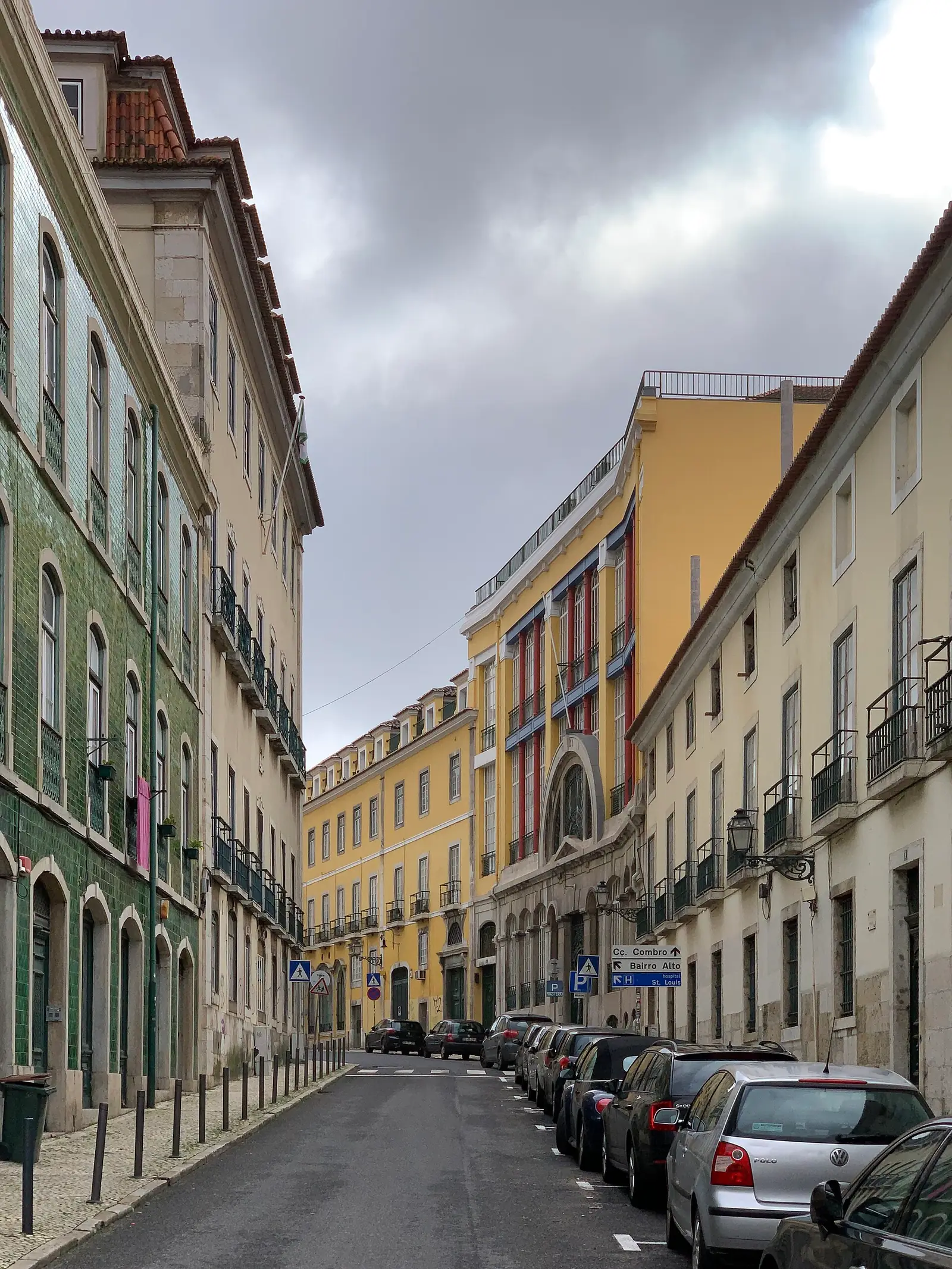
A Rua de O Século, onde funcionou a redação do jornal, em dezembro de 2019. Sergei Gussev, CC BY 2.0 Maria Lamas worked for more than twenty years at O Século (The Century), in charge of the magazine Modas e Bordados (Fashions and Embroidery). In 1947, forced to choose between the magazine and the National Council of Portuguese Women, which she chaired, she chose the Council — which the police closed down that year — and was left without a livelihood.1716 Redress came in 1975: Maria Antónia Fiadeiro, the magazine’s managing editor, invited her to be honorary editor and dedicated a special issue to her; Modas e Bordados was renamed Mulher – Modas e Bordados (Woman – Fashions and Embroidery) and took on a feminist editorial line.1617 The beginning of this story is told in the route Forbidden words.
The following year, on 20 April 1976, the paper launched a daily political supplement, O Século — Hoje (O Século — Today), edited by Natália Correia. The first issue carried the Universal Declaration of Human Rights as its editorial; the issue of 24 April, the eve of elections, came out with “Vetted by the Reflection Commission” (Visado pela Comissão de Reflexão) in red on the front page, as in the days of censorship, when newspapers carried “This issue has been vetted by the Censorship Commission” (Este número foi visado pela Comissão de Censura). On 29 April, on a proposal from President Costa Gomes, the Council of the Revolution shut the supplement down for publishing articles “offensive and slanderous towards the Council of the Revolution and the Armed Forces”. The ninth and last issue came out the following day.18
- 28 Jun 1947The police close down the National Council of Portuguese Women
- 1975Maria Lamas volta à «Modas e Bordados», como diretora honorária
- 29 Apr 1976O Conselho da Revolução extingue «O Século — Hoje», de Natália Correia
To stop 6860 m · 15 min on footDirections
Stop 6: From the regime’s chamber to the elected parliament
Palácio de São Bento, Largo das Cortes, Lisboa
Today: Assembly of the Republic
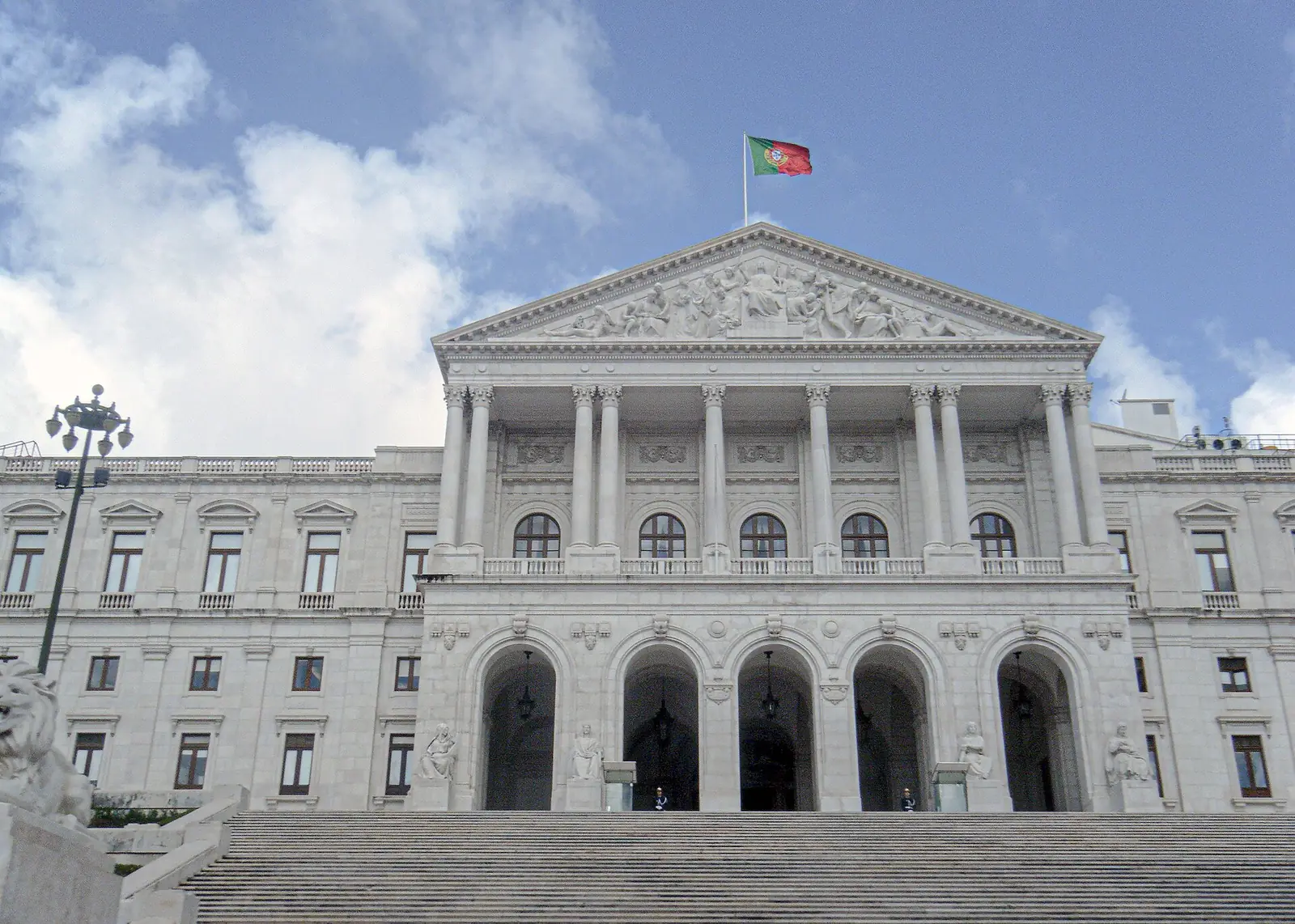
O Palácio de São Bento, sede da Assembleia da República, em junho de 2014. Albarubescens, CC BY-SA 4.0 Under the Estado Novo (“New State”), the Corporative Chamber sat in this palace, in the room that had been used by the Chamber of Peers and is today the Sala do Senado (Senate Room).19 From 1969 to 1974 Maria de Lourdes Pintasilgo, a chemical engineer, sat there: she had refused to go on the list of deputies for the National Assembly, but agreed to be a member (procuradora) of the Chamber, and she signed opinions on press freedom, the model of economic development and amendments to the Constitution with a “dissenting vote”.1720 Ten years after she first came here, she became the first woman to head a government in Portugal — and she is still the only one.17
After 1975, the palace became the seat of an elected parliament. Sophia de Mello Breyner Andresen chaired here the committee that drafted the preamble to the Constitution.21 Maria Barroso was a deputy from 1976 to 1983 and vice-chair of the parliamentary Education Committee.12 Natália Correia was a deputy from 1979 to 1983 and from 1987 to 1991, and replied with a poem to the deputy who, in the first debate on abortion, in 1982, said that the sexual act was “so that one may see the birth of a child”.2223
Álvaro Cunhal was elected a deputy to the Constituent Assembly in 1975 and to the Assembly of the Republic in the elections that followed, until 1987.24 Mário Soares, a deputy in the Constituent Assembly and later prime minister of three governments, came back here on 9 March 1986 to be sworn in as President of the Republic: the first civilian elected to the office by direct universal suffrage.34
What you can see today
Busts of two women deputies: Maria Alda Nogueira, in the cloister (CIG; sculptor António Trindade, according to Wikipedia), and Natália Correia (according to Wikipedia, the only two women deputies with a bust in the Assembly).
- 1 Aug 1979Maria de Lourdes Pintasilgo, primeira mulher primeira-ministra
- 25 Apr 1975Eleição da Assembleia Constituinte: 20 deputadas
- 2 Mar 1982Primeiro debate parlamentar sobre o aborto e o poema de Natália Correia
A short piece from Parliament’s series “Cápsula do Tempo” (Time Capsule), devoted to the women in the Constituent Assembly of 1975–1976.
Original page Licença padrão do YouTube — embed permitido pelo canal oficial da Assembleia da República
Assembleia da República, on YouTube. The player only connects to that site when you press “Watch”.


.JPG)


.jpg)
.jpg)

Notes on the sources3
- Álvaro Cunhal’s first arrest: on 20 June 1937, according to Lisbon City Council, which says he was taken to the Aljube; on 21 July, according to Memória Comum, which does not say where.
- Whether Maria Barroso was at the Aljube on the day of the wedding: the sources say only that they married by proxy in the prison, where Soares was being held.
- When and why Maria Barroso was removed from the National Theatre: in 1948, on the orders of the police and the Ministry of Education, according to the Mário Soares and Maria Barroso Foundation and the National Culture Centre; the English Wikipedia places her removal around 1946, after a performance in Coimbra.
Do you know more, or do you have a document? Tell us.
Sources
- 1Biografia de Maria Barroso. Fundação Mário Soares e Maria Barroso — consulted on 3 October 2026
- 2A vida de Maria Barroso, em momentos (cronologia). Fundação Mário Soares e Maria Barroso — consulted on 3 October 2026
- 3Biografia de Mário Soares. Fundação Mário Soares e Maria Barroso — consulted on 3 October 2026
- 4A vida de Mário Soares, em momentos (cronologia). Fundação Mário Soares e Maria Barroso — consulted on 3 October 2026
- 5Rui Mendes, Álvaro Cunhal, secretário-geral do Partido Comunista Português, 1913–2005. Câmara Municipal de Lisboa — Comissão Municipal de Toponímia, 2013 — consulted on 3 October 2026Brochura de junho de 2013, publicada quando a Câmara deu o nome de Álvaro Cunhal a uma avenida do Lumiar; colaboração da comissão do centenário do PCP.
- 6Álvaro Barreirinhas Cunhal. Memória Comum – Memorial aos Presos e Perseguidos Políticos — consulted on 3 October 2026
- 7Prisão de Álvaro Cunhal, Militão Ribeiro e Sofia Ferreira. Museu do Aljube Resistência e Liberdade (EGEAC) — consulted on 2 October 2026
- 8Julgamento de Álvaro Cunhal (70 anos do julgamento e intervenção no tribunal a 2 de maio de 1950). Partido Comunista Português — consulted on 3 October 2026Transcreve a intervenção de 2 de maio de 1950 a partir de «Álvaro Cunhal — Obras Escolhidas», tomo II; das declarações finais, de 9 de maio, só chegou um resumo.
- 9«Sofia foi uma combatente com uma enorme consciência de classe, generosa, inteligente e sagaz» (Centenário de Sofia Ferreira). Partido Comunista Português — consulted on 2 October 2026
- 10História. Teatro Nacional D. Maria II — consulted on 3 October 2026
- 11Guilherme d'Oliveira Martins, A vida dos livros, de 19 a 25 de maio de 2025 (no centenário de Maria Barroso, a partir de «Um Olhar sobre a Vida», de Leonor Xavier). Centro Nacional de Cultura (blogue e-cultura), 2025 — consulted on 3 October 2026
- 12Movimentações do dia 25 de Abril. Associação 25 de Abril — consulted on 2 October 2026
- 13Onde eu estava há 50 anos por... Celeste Caeiro. Diário de Notícias — consulted on 2 October 2026
- 14Salgueiro Maia. Comissão Comemorativa 50 Anos 25 de Abril — consulted on 2 October 2026
- 15Salgueiro Maia (n. 1944 m. 1992). Centro de Documentação 25 de Abril – Universidade de Coimbra — consulted on 2 October 2026
- 16Maria Lamas. MDM – Movimento Democrático de Mulheres — consulted on 2 October 2026
- 17Mulheres pela Igualdade (biografias). CIG – Comissão para a Cidadania e a Igualdade de Género — consulted on 2 October 2026
- 18O Essencial sobre Natália Correia (Luiz Fagundes Duarte). Imprensa Nacional, 2024 — consulted on 2 October 2026
- 19Sala do Senado (visita ao Palácio de São Bento). Assembleia da República — consulted on 3 October 2026
- 20Os Procuradores da Câmara Corporativa: Maria de Lurdes Ruivo da Silva Matos Pintasilgo (X e XI Legislaturas). Assembleia da República — consulted on 3 October 2026
- 21As mulheres na Constituinte de 1975-1976. Assembleia da República — consulted on 2 October 2026
- 22Natália Correia. Assembleia da República — consulted on 2 October 2026
- 23Natália Correia fez mesmo uma intervenção no Parlamento contra o deputado João Morgado do CDS-PP baseada neste poema?. Polígrafo (SAPO) — consulted on 2 October 2026
- 24Álvaro Cunhal (#nestedia, 10 de novembro). Museu do Aljube Resistência e Liberdade (EGEAC) — consulted on 3 October 2026
- 25Largo e Quartel do Carmo (Lugares de Abril). Associação 25 de Abril — consulted on 2 October 2026
Other walks

Revolution · on foot
The first day
25 April 1974 hour by hour, from the Terreiro do Paço to the Carmo and the door of the political police
- Distance
- 2.4 km
- Duration
- 1 h 30 min
- Stops
- 7 stops
- Difficulty
- Moderate

Women · on foot
Graça, the women’s hill
Seamstresses on strike, a republican propagandist, a women’s prison, a bar and a poet — Graça as they tell it
- Distance
- 1.7 km
- Duration
- 1 h 15 min
- Stops
- 6 stops
- Difficulty
- Demanding

Repression · on foot
The Estado Novo, explained
How a dictatorship lasted 48 years: the leader, the façade, the single party, the family, work and propaganda — from São Bento to Restauradores
- Distance
- 4.6 km
- Duration
- 2 h 20 min
- Stops
- 9 stops
- Difficulty
- Moderate