Arroios
Palácio Camarido – FNAT headquarters
In 1946 this former palace on Calçada de Sant'Ana became the headquarters of the FNAT, the National Foundation for Joy at Work, through which the corporative State filled workers’ free time. It is still the headquarters of the INATEL Foundation, which succeeded it.
The National Foundation for Joy at Work (FNAT) was created on 13 June 1935 to promote “the use of the free time of Portuguese workers” and to ensure them “the greatest physical development and the raising of their intellectual and moral level”.1 It was born as a part of the corporative organisation of the Estado Novo (“New State”): the decree said that it was not enough “to facilitate the semi-official functions of the National Syndicates and the Casas do Povo”, and the FNAT’s beneficiaries had to be members of a national syndicate, a Casa do Povo (People’s House) or a Casa de Pescadores (Fishermen’s House).12
In 1946 the FNAT set up its headquarters in this former Palácio Camarido, from the 19th century.3 It organised excursions — the first, in September 1935, was for members of the national syndicates of the Lisbon district, on the second anniversary of the National Labour Statute — holiday camps such as the one at Caparica, opened in 1938, sport and shows. In 1959 it inaugurated its stadium, in Alvalade, and in 1962 it bought the Teatro da Trindade.23
On May Day (1 May) 1974, the FNAT stadium was renamed Estádio 1.º de Maio (May Day Stadium).4 On 3 April 1975 the FNAT became INATEL, the National Institute for the Use of Workers’ Free Time, and in 2008 it gave way to the INATEL Foundation; the palace has always been its headquarters.23
On the walks
Where it is
Map showing where Palácio Camarido – FNAT headquarters is.
Dates
13 June 1935
The FNAT is created.
1946
The FNAT moves its headquarters into the Palácio Camarido.
1962
The FNAT buys the Teatro da Trindade.
3 April 1975
The FNAT is renamed INATEL.
Nearby
110 m · 5 min on foot
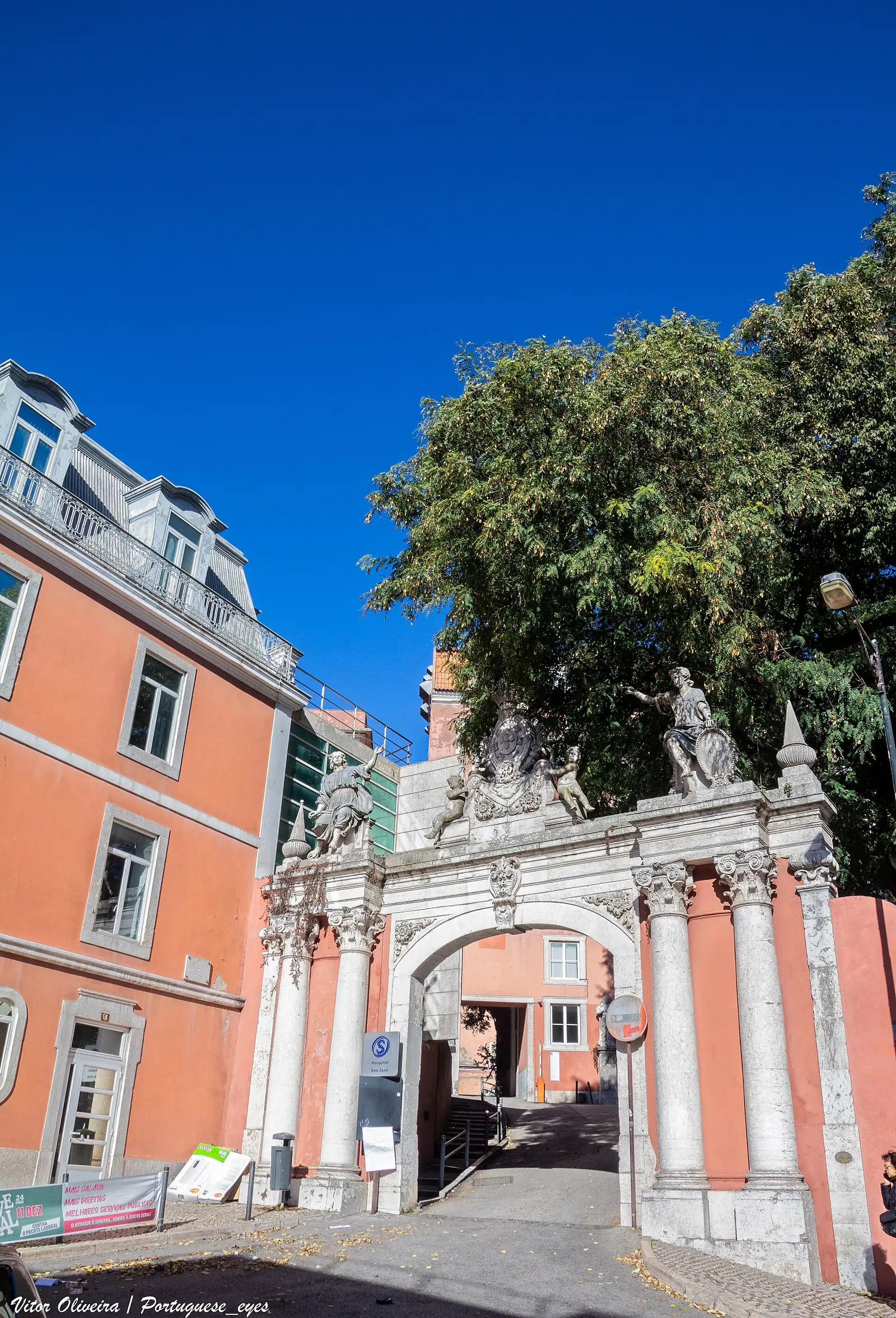
São José Hospital
Today: São José Hospital
It was in this hospital that Carolina Beatriz Ângelo became the first Portuguese woman doctor to operate. On the night of 25 April 1974, it took in those wounded by the PIDE/DGS shooting on Rua António Maria Cardoso; the student João Arruda died here.
WomenLabourRevolution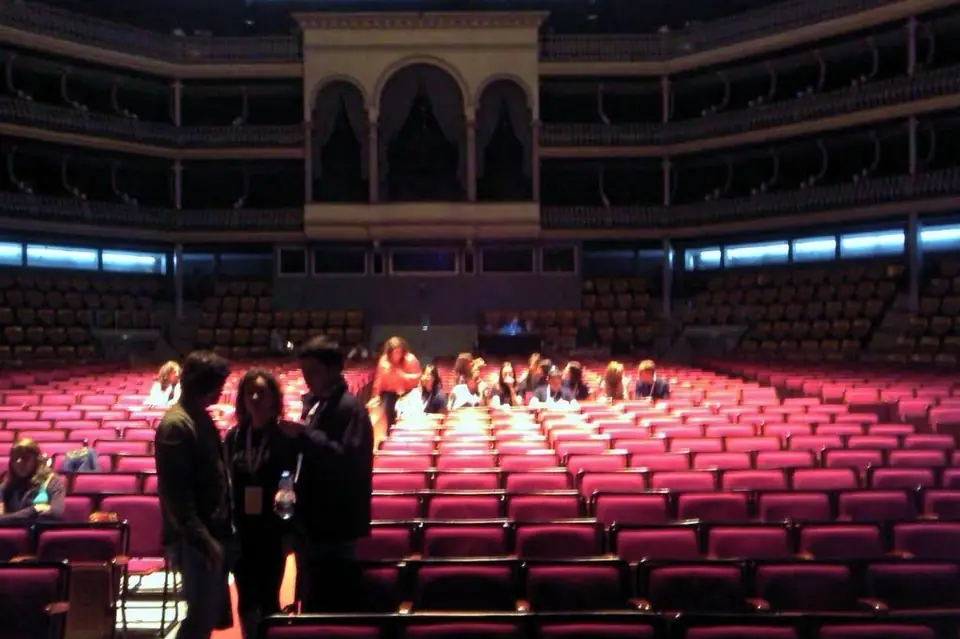
160 m · 5 min on foot
Coliseu dos Recreios
Today: Coliseu dos Recreios
On 29 March 1974, less than a month before the revolution, the 1st Portuguese Song Meeting (I Encontro da Canção Portuguesa) filled the Coliseu. Censorship had cut songs, but the audience sang “Grândola, Vila Morena” in chorus and shouted “Down with repression!” (abaixo a repressão!).
Culture and censorshipOppositionRevolution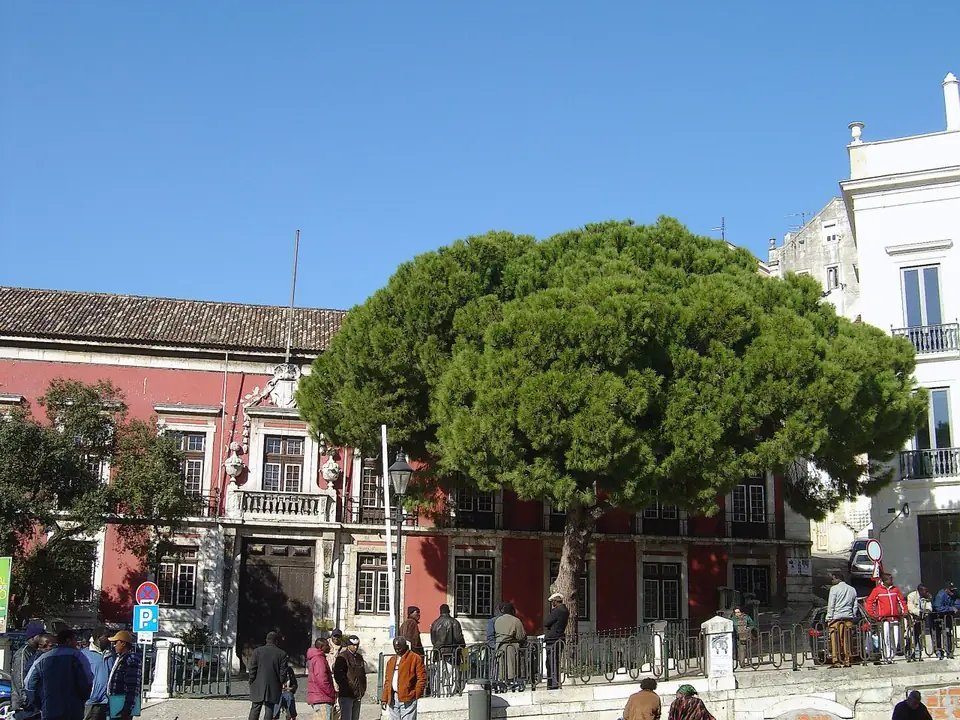
240 m · 5 min on foot
Palácio da Independência – headquarters of the Portuguese Youth (Mocidade Portuguesa)
Today: Palácio da Independência (Historical Society of the Independence of Portugal)
In the palace where the uprising of 1 December 1640 was planned, the Estado Novo set up the headquarters of the Portuguese Youth (Mocidade Portuguesa), the regime’s youth organisation. Abolished on 25 April 1974 itself, it made way for the Association of the Disabled of the Armed Forces.
Repression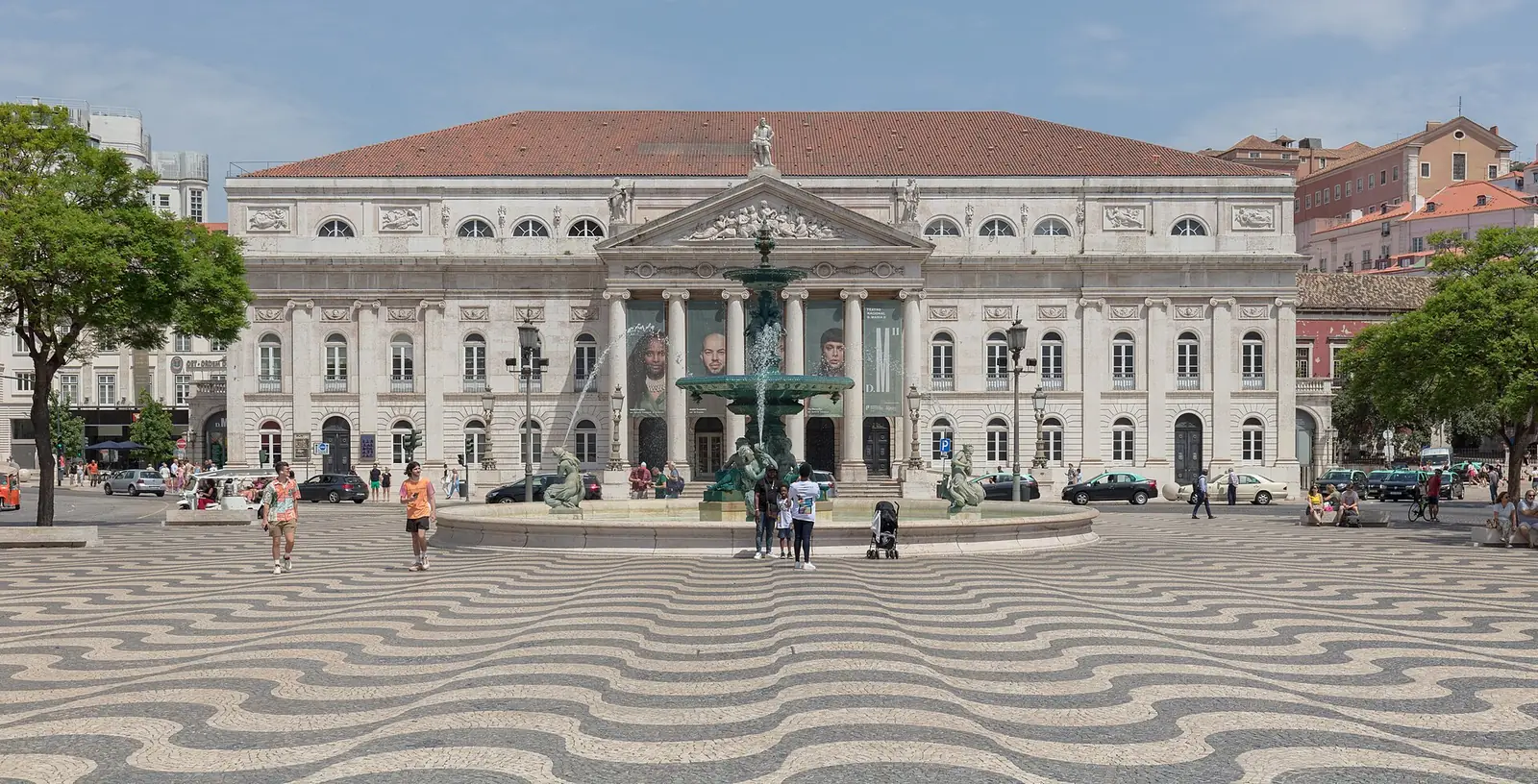
310 m · 5 min on foot
D. Maria II National Theatre
Today: D. Maria II National Theatre
The national theatre, in the Rossio. Maria Barroso made her debut here in 1944 and was José Régio’s “Benilde”; in 1948, an order from the police and the Ministry of Education took her off this stage. The company that ran it worked under censorship until the fire of 1964.
Culture and censorshipWomenRepression


Notes on the sources1
- The palace’s street number: the INATEL Foundation today gives its headquarters as Calçada de Sant'Ana, 180, and says it is the same building in which the FNAT set up in 1946; the point on the map is that of no. 164, on the same street.
Do you know more, or do you have a document? Tell us.
Sources
- 1Decreto-Lei n.º 25 495, de 13 de junho de 1935 (Diário do Governo, I série, n.º 134): cria a Fundação Nacional para a Alegria no Trabalho. Diário do Governo (Imprensa Nacional), no Diário da República Eletrónico, 1935 — consulted on 3 October 2026
- 2História (da FNAT à Fundação INATEL). Fundação INATEL — consulted on 3 October 2026
- 3Edifício-Sede da Fundação INATEL (Património — outras instalações). Fundação INATEL — consulted on 3 October 2026
- 4Operação Viragem Histórica. Comissão Comemorativa 50 Anos 25 de Abril — consulted on 2 October 2026
Coordinates: OpenStreetMap (nó 6187656289, Calçada de Santana, 164): o n.º 180 não está identificado no mapa, e o ponto é o da porta numerada mais próxima, na mesma calçada; consultado a 3 de outubro de 2026.