Walk · Revolution · on foot
The first day
25 April 1974 hour by hour, from the Terreiro do Paço to the Carmo and the door of the political police
- Distance
- 2.4 km
- Duration
- 1 h 30 min
- Stops
- 7
- Difficulty
- Moderate
The walk, the photos and the map stay on the phone, to open anywhere.
Introduction
“This is the dawn I was waiting for / The first day whole and clean” (Esta é a madrugada que eu esperava / O dia inicial inteiro e limpo), wrote Sophia de Mello Breyner Andresen about 25 April.1
This route follows that day through the streets where it was decided: Salgueiro Maia’s column arriving from Santarém before dawn, the soldiers who refuse to fire, the city that disobeys the calls to stay at home, Celeste Caeiro’s carnation, Clarisse Guerra’s voice on the radio, the siege of the Carmo and the surrender of Marcelo Caetano. It ends where the day ended badly: at the door of the political police, where four people were shot dead as night fell.
The times are those of the chronologies of the 25 April Association, the Commemorative Commission for the 50th Anniversary and the 25 April Documentation Centre. Where they do not agree with one another, we say so.
Before you go
- Start
- Terreiro do Paço (Praça do Comércio) — Metro Terreiro do Paço (blue line)
- Finish
- Rua António Maria Cardoso, in the Chiado — Metro Baixa-Chiado (blue and green lines) and tram 28
- Accessibility of the route
- The Baixa is flat. From the Rossio to Largo do Carmo you climb the steep Rua do Carmo, on Portuguese cobbles that get slippery in the rain. From the Carmo to the end the way is almost flat, with narrow pavements on Rua Capelo and Rua António Maria Cardoso.
This walk in dates
23 Apr 1974
25 Apr 1974
- A coluna de Salgueiro Maia ocupa o Terreiro do PaçoStop 1 · Dawn — the column from Santarém
- Ministros fogem por uma parede aberta à picaretaStop 1 · Dawn — the column from Santarém
- A fragata «Almirante Gago Coutinho» no TejoStop 1 · Dawn — the column from Santarém
- Ribeira das Naus: os soldados recusam dispararStop 2 · Morning — the soldiers who did not fire
- Rua do Arsenal: o brigadeiro agride o tenente AssunçãoStop 2 · Morning — the soldiers who did not fire
- Lisboa desobedece ao MFA e sai à ruaStop 3 · Midday — the city disobeys
- Celeste Caeiro e os cravosStop 4 · Celeste’s carnation
- Silva Pais avisa Caetano: «a Revolução está na rua»Stop 5 · Afternoon — the siege of the Carmo
- A coluna da EPC sobe ao Carmo e cerca o quartel da GNRStop 5 · Afternoon — the siege of the Carmo
- Uma voz de mulher lê o comunicado do cerco ao CarmoStop 5 · Afternoon — the siege of the Carmo
- Ultimato e rajadas contra a fachada do Quartel do CarmoStop 5 · Afternoon — the siege of the Carmo
- Emissários de Spínola entram no Carmo; Caetano aceita render-seStop 5 · Afternoon — the siege of the Carmo
- Spínola no Carmo; Caetano sai na chaimite «Bula»Stop 5 · Afternoon — the siege of the Carmo
- «Grândola, Vila Morena» na Rádio Renascença confirma a revoluçãoStop 6 · The midnight signal
- Disparos da PIDE/DGS matam quatro pessoas na Rua António Maria CardosoStop 7 · Night — the four dead of Rua António Maria Cardoso
26 Apr 1974
Map of the walk “The first day”, with 7 numbered stops. The list of stops follows the map.
The stops
Stop 1: Dawn — the column from Santarém
Praça do Comércio, 1100-148 Lisboa
Today: Praça do Comércio
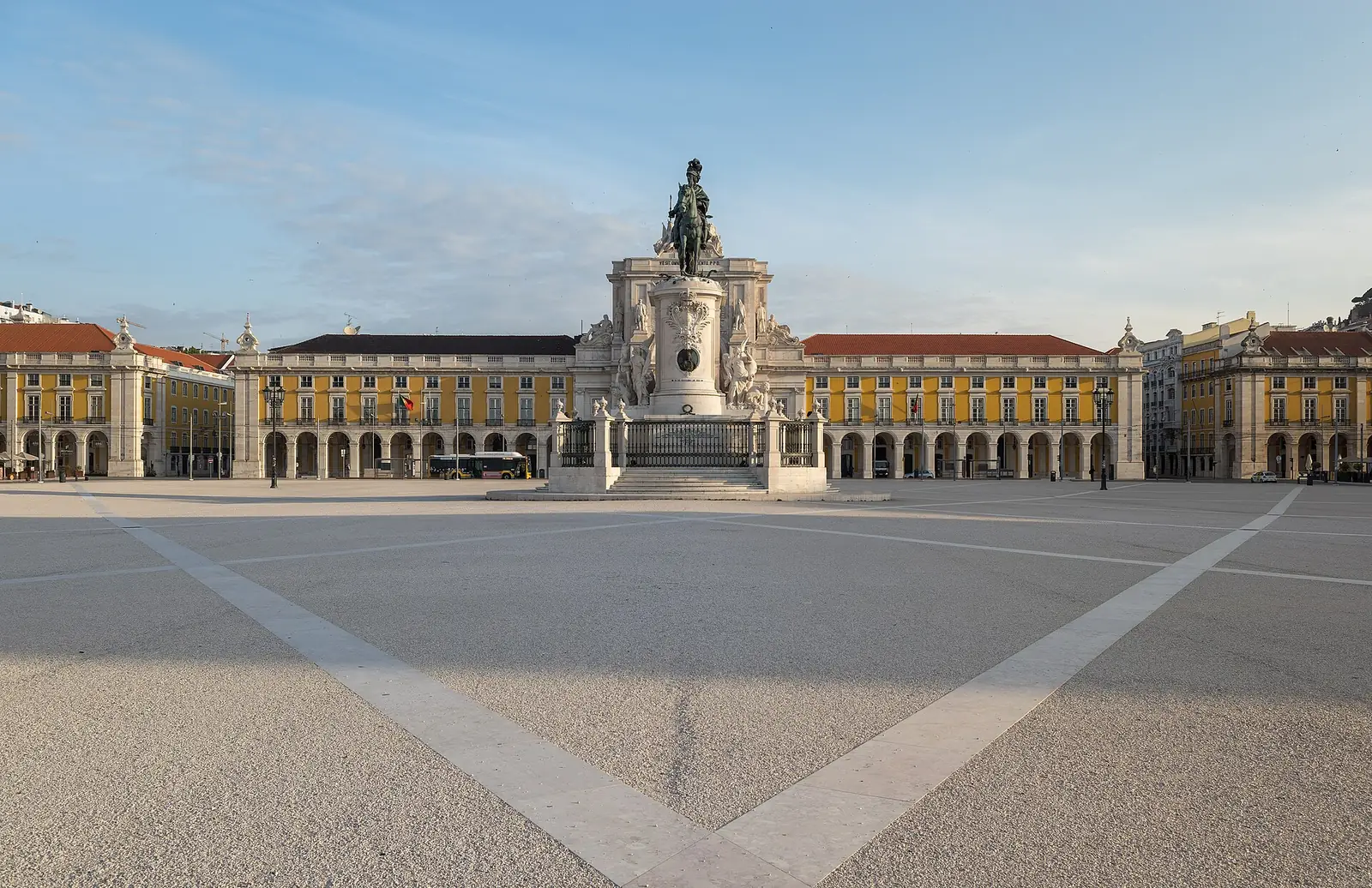
O Terreiro do Paço (Praça do Comércio) vazio, numa manhã de abril de 2020. Jules Verne Times Two, CC BY-SA 4.0 The column from the Cavalry Practical School left Santarém at 03:30, under the command of Captain Salgueiro Maia, and at around six in the morning it occupied this square, the Bank of Portugal and Rádio Marconi — “Toledo, Brussels and Vienna” in the Movement’s code. The first forces sent by the regime placed themselves under the orders of the Armed Forces Movement (MFA).2
In the ministries around the square, the Army Minister had a hole knocked through a wall into the Navy Ministry with pickaxes, and ministers and military chiefs escaped that way. On the river, at 07:30, the frigate Almirante Gago Coutinho was ordered to take up position opposite the Terreiro do Paço and open fire on the armoured vehicles. It did not fire.9
- 25 Apr 1974A coluna de Salgueiro Maia ocupa o Terreiro do Paço
- 25 Apr 1974Ministros fogem por uma parede aberta à picareta
- 25 Apr 1974A fragata «Almirante Gago Coutinho» no Tejo
To stop 2220 m · 5 min on footDirections
Stop 2: Morning — the soldiers who did not fire
Rua do Arsenal / Avenida Ribeira das Naus, 1100-038 Lisboa
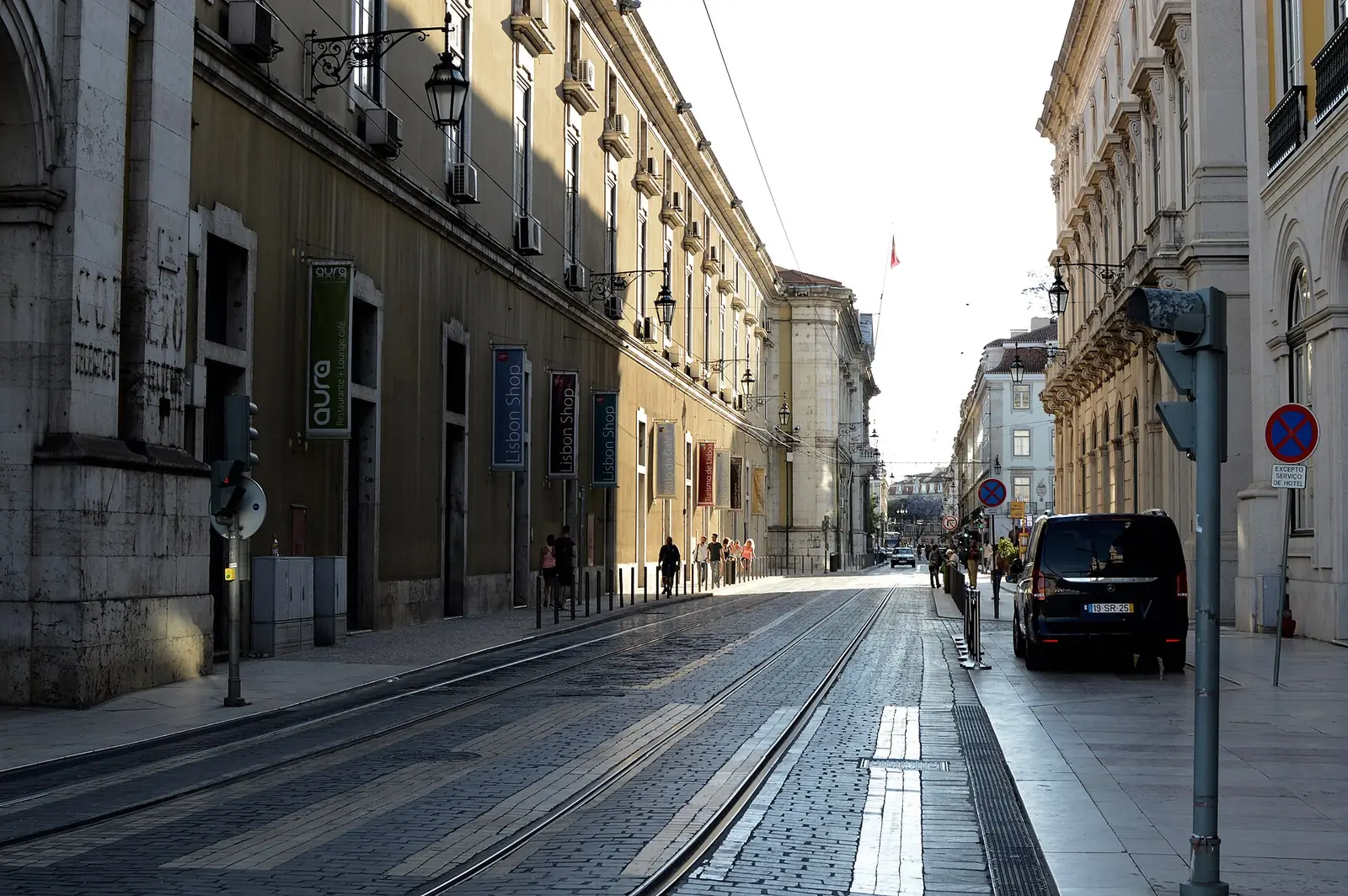
A Rua do Arsenal, junto aos Paços do Concelho, em 2017. Sam, CC BY 2.0 In mid-morning a force loyal to the regime, with M47 tanks, arrived along the Ribeira das Naus. Salgueiro Maia went to meet it with a white handkerchief in his hand. Brigadier Junqueira dos Reis ordered Officer Cadet Fernando Sottomayor to open fire on him; the cadet refused and was placed under arrest. The same order was given to the tank gunners, and they too refused. “That was where 25 April was won,” Maia would say.9
Shortly afterwards, here on Rua do Arsenal, Lieutenants Alfredo Assunção and Santos Silva tried to negotiate with the brigadier. Exasperated, he punched Lieutenant Assunção three times, and Assunção did not hit back: he saluted him and withdrew.3
- 25 Apr 1974Ribeira das Naus: os soldados recusam disparar
- 25 Apr 1974Rua do Arsenal: o brigadeiro agride o tenente Assunção
The second chapter of the film made from the photographs Alfredo Cunha took in Lisbon on 25 April 1974, with music by Rodrigo Leão, directed by Miguel Brugo, and published by the Commission on 14 February 2024. It follows the book of the same name, in which this part has a text by Adelino Gomes and pictures of the Ribeira das Naus, Rua do Arsenal and Largo do Carmo.
Original page Licença padrão do YouTube — embed permitido pelo canal oficial da Comissão Comemorativa 50 Anos 25 de Abril
Comissão Comemorativa 50 Anos 25 de Abril, on YouTube. The player only connects to that site when you press “Watch”.
To stop 3800 m · 10 min on footDirections
Stop 3: Midday — the city disobeys
Praça D. Pedro IV, 1100 Lisboa
Today: Praça D. Pedro IV
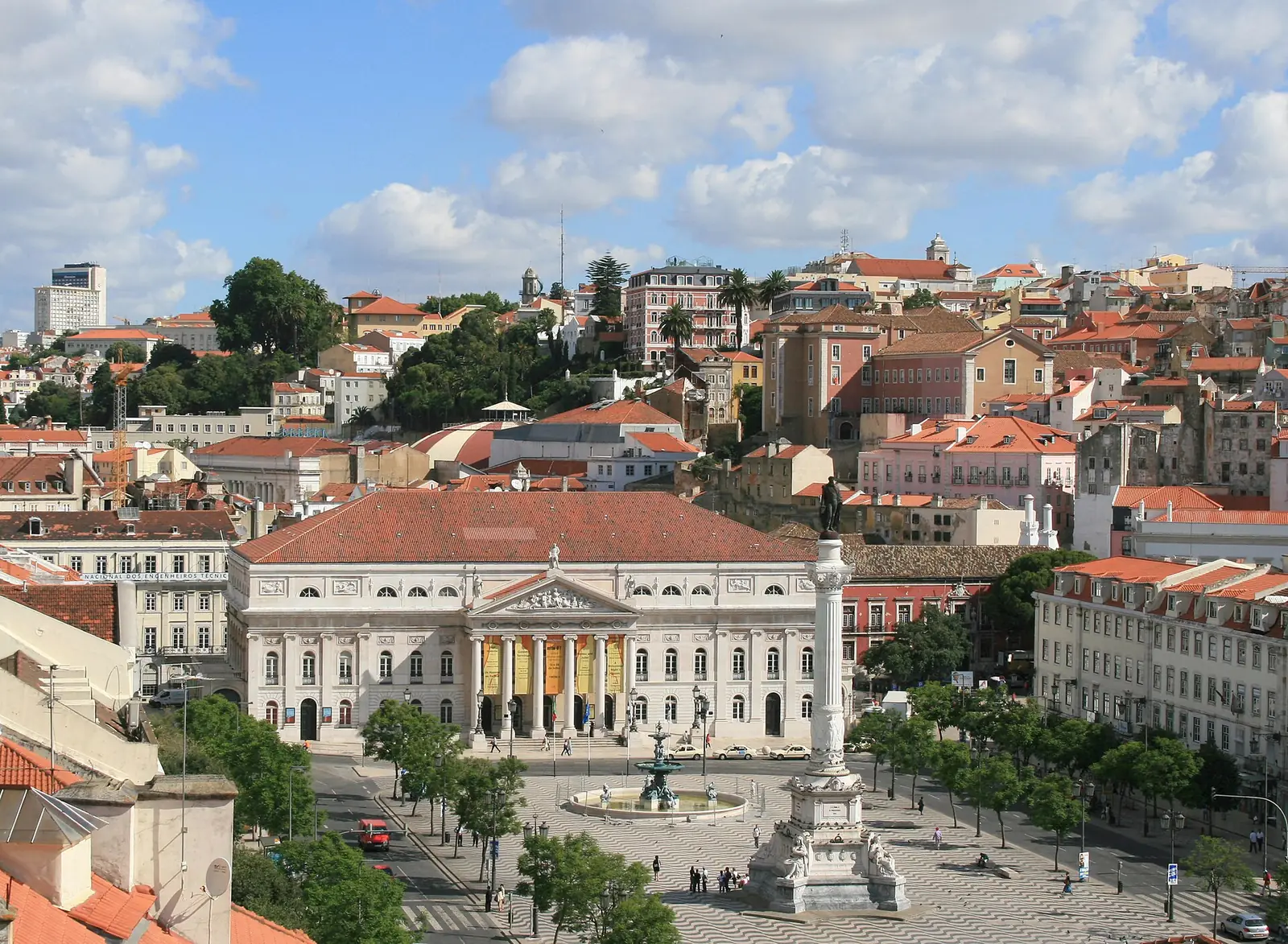
O Rossio (Praça de D. Pedro IV) visto do Elevador de Santa Justa, em 2007. Szilas, Public domain The Movement’s communiqués asked the population to stay at home. Lisbon did the opposite and took to the streets.12 At around midday the armoured vehicles left the Terreiro do Paço for the Carmo; in the Rossio, a company sent to stop them placed itself under the Movement’s orders, and the column climbed the steep streets of the Chiado among thousands of cheering people.4
What you can see today
One of the “Places of April” (Lugares de Abril) plaques of Lisbon City Council and the 25 April Association, with a QR code, unveiled on 24 March 2024.17
To stop 4290 m · 5 min on footDirections
Stop 4: Celeste’s carnation
Rua do Carmo, 1200-093 Lisboa
Today: Rua do Carmo
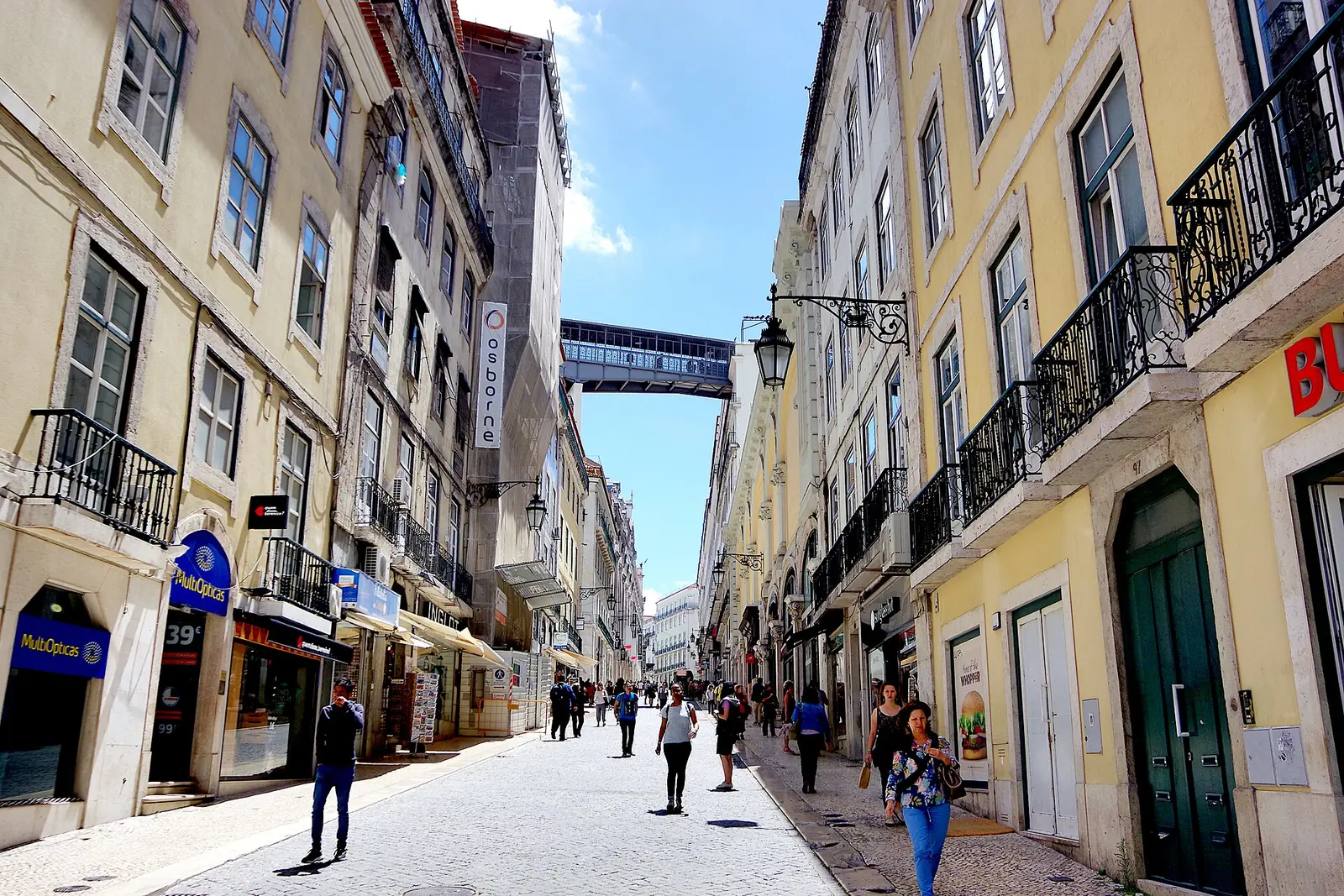
A Rua do Carmo, a subir para o Chiado, com a passagem do Elevador de Santa Justa ao fundo, em 2019. Jan Helebrant, CC0 1.0 Celeste Caeiro worked in a restaurant on Rua Braamcamp that turned one year old that day; it never opened, and the carnations bought for the women customers were given to the women on the staff.13 Celeste came down to the Baixa with her bunch of flowers. By the Chaimite armoured cars, a soldier asked her for a cigarette. She did not smoke, and gave him a carnation, which he put in the barrel of his rifle.14
Accounts disagree about the exact spot — the start of Rua do Carmo, the corner with Rua Garrett, the Rossio. They agree on the rest: the gesture was repeated across the city and gave the revolution its name.
The unveiling, at the end of Rua do Carmo, by the Rossio, of a plaque bearing the poem “Celeste em Flor” (Celeste in Bloom), by Rosa Guerreiro Dias, at the spot where Celeste Caeiro gave a carnation to a soldier who had asked her for a cigarette. The plaque marks the gesture 51 years on.
Original page Licença padrão do YouTube — embed permitido pelo canal oficial da Câmara Municipal de Lisboa
Câmara Municipal de Lisboa, on YouTube. The player only connects to that site when you press “Watch”.
To stop 5290 m · 5 min on footDirections
Stop 5: Afternoon — the siege of the Carmo
Largo do Carmo, Lisboa
Today: GNR General Command and the National Republican Guard Museum
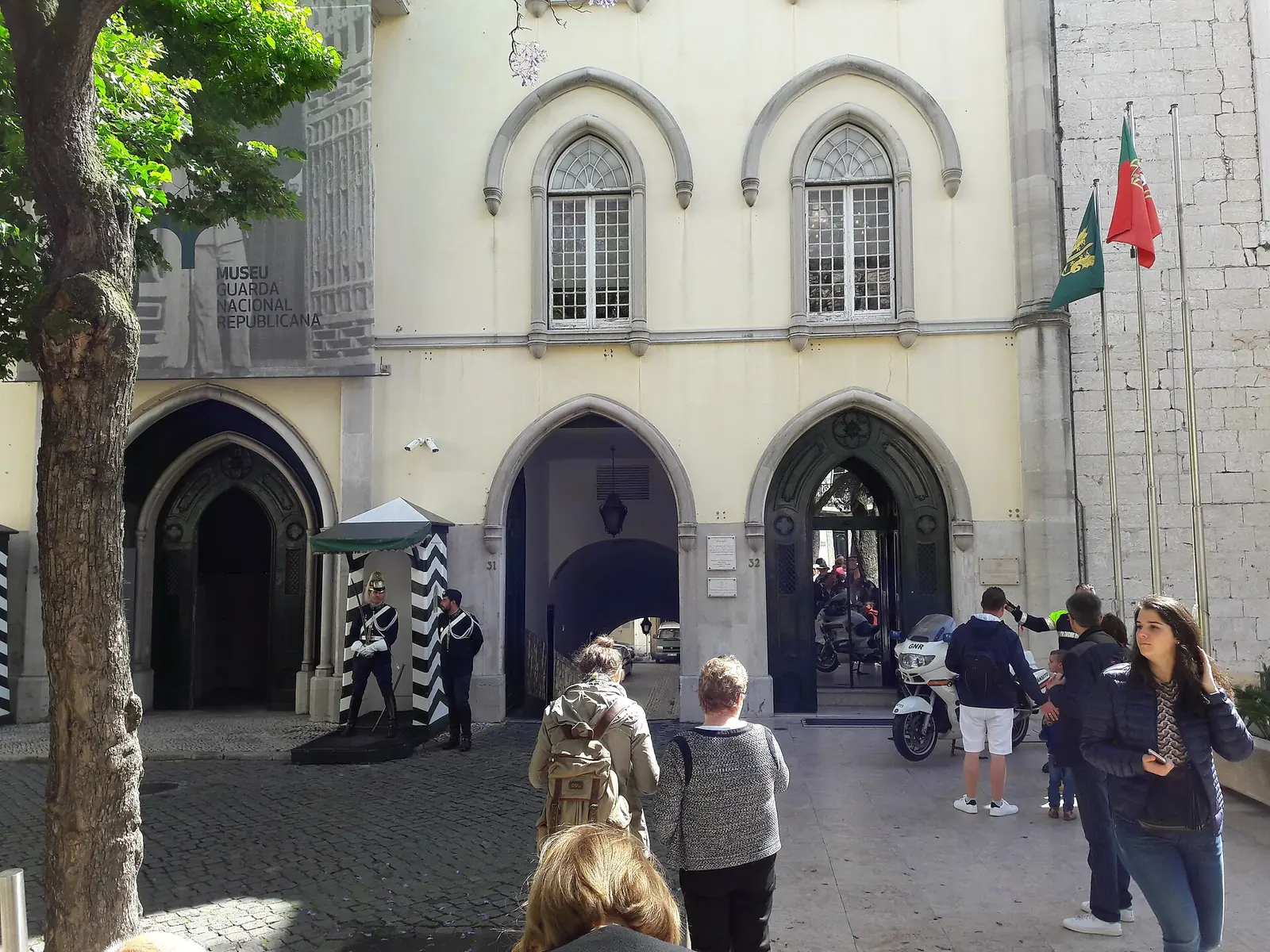
O Quartel do Carmo, comando-geral da GNR, no Largo do Carmo, em 2017. Marcin Latka, CC BY-SA 2.0 Marcelo Caetano had been here since the small hours: at five in the morning the director of the political police had telephoned him — “Mr President, the Revolution is out in the streets!” (Senhor Presidente, a Revolução está na rua!) — and advised him to take refuge in the GNR barracks.4 According to Jofre Alves’s chronology, it was Maria de Lurdes Rocha, head of cleaning and laundry at the barracks, who hurriedly made up five rooms for the besieged government.10
The column arrived at about 12:30 and surrounded the barracks; the crowd filled the square and the streets around it. At around 14:30, Rádio Clube Português broadcast an MFA communiqué announcing the siege, “now read by a woman”, Clarisse Guerra.9 At 15:10 Maia gave ten minutes for the surrender; at 15:25 a Chaimite fired bursts at the top of the façade. At 16:00 an emissary from General Spínola arrived, and Caetano agreed to surrender — “so that power does not fall into the street” (assim o poder não cai na rua) — provided it was to a general officer.5
Spínola entered the barracks late in the afternoon. At 18:30 Salgueiro Maia had the Chaimite “Bula” backed in through the main gate, and it took Caetano and two ministers to the MFA command post at Pontinha.911
What you can see today
One of the “Lugares de Abril” (Places of April) plaques, by Lisbon City Council and the 25 April Association, marks the square.5
- 25 Apr 1974Silva Pais avisa Caetano: «a Revolução está na rua»
- 25 Apr 1974A coluna da EPC sobe ao Carmo e cerca o quartel da GNR
- 25 Apr 1974Uma voz de mulher lê o comunicado do cerco ao Carmo
- 25 Apr 1974Ultimato e rajadas contra a fachada do Quartel do Carmo
- 25 Apr 1974Emissários de Spínola entram no Carmo; Caetano aceita render-se
- 25 Apr 1974Spínola no Carmo; Caetano sai na chaimite «Bula»
With the last five plaques, unveiled on 24 March 2024, Lisbon now has 25 marking the places where the Armed Forces Movement (MFA) acted on 25 April 1974 — the “Places of April” project (“Lugares de Abril”), run by the City Council and the 25 April Association. The Council singles out Largo do Carmo, “the most symbolic place” of April.
Original page Licença padrão do YouTube — embed permitido pelo canal oficial da Câmara Municipal de Lisboa
Câmara Municipal de Lisboa, on YouTube. The player only connects to that site when you press “Watch”.
To stop 6390 m · 5 min on footDirections
Stop 6: The midnight signal
Rua Capelo, 5, 2.º, 1200-224 Lisboa
Today: A hotel, The Ivens
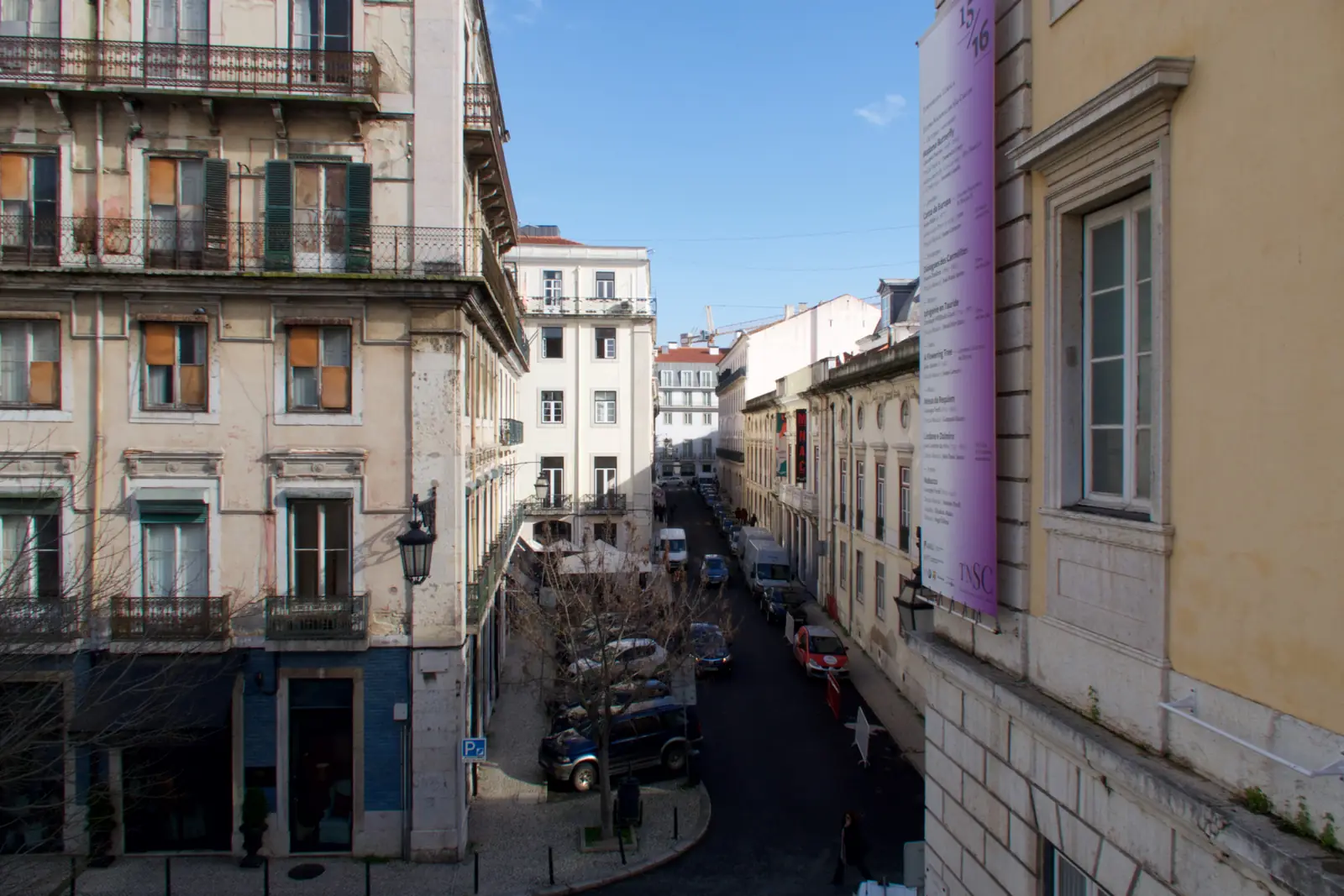
A Rua Capelo, no Chiado, vista de uma varanda do Teatro Nacional de São Carlos, em 2016. Maarten Brinkerink, CC BY-SA 2.0 Now we go back in time. Here, on Rua Capelo, stood the studios of Rádio Renascença. It was from here that, at 00:20 on 25 April, the programme Limite broadcast “Grândola, Vila Morena” (Grândola, swarthy town), by José Afonso: the second signal, the one that told the Movement’s units that operations were under way and there was no turning back.6
The song first chosen had been “Venham Mais Cinco” (Let five more come), but it was banned at Renascença; it was the journalist Carlos Albino, one of the makers of Limite, who suggested “Grândola”. The announcer Leite de Vasconcelos recorded a reading of the first verse, which went out before the song, without knowing what it was for.7
- 23 Apr 1974A «Grândola» é escolhida como senha no programa «Limite»
- 25 Apr 1974«Grândola, Vila Morena» na Rádio Renascença confirma a revolução
The Casa da Achada choir and passers-by sing “Grândola, Vila Morena” (Grândola, swarthy town) in the street, in Lisbon, on 25 April 2023. Almost half a century after it served as the signal for the revolution, José Afonso’s song is still sung in chorus every 25 April.
Original page CC BY-SA 4.0 — Contaminadas (obra própria, Wikimedia Commons)
Wikimedia Commons, on Wikimedia Commons. The player only connects to that site when you press “Watch”.
To stop 7430 m · 5 min on footDirections
Stop 7: Night — the four dead of Rua António Maria Cardoso
Rua António Maria Cardoso, 22, Lisboa (código postal do troço: 1249-101, segundo o OpenStreetMap)
Today: Residential apartment complex
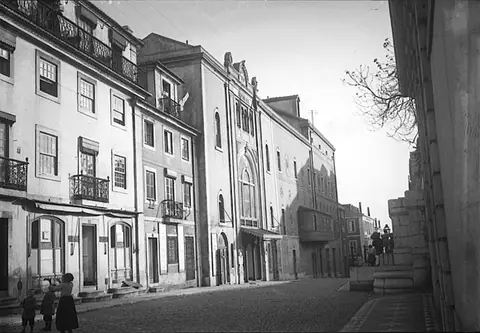
A Rua António Maria Cardoso, com o então Teatro da República (hoje São Luiz), entre cerca de 1911 e 1915. Fotografia de Charles Chusseau-Flaviens. Charles Chusseau-Flaviens, Public domain Taking the political police headquarters was not part of the MFA’s plan. Throughout the day, the crowd gathered here at the door, demanding surrender. Early in the evening, when Caetano had already surrendered, DGS agents fired from the windows on the people in the street: Fernando Carvalho Giesteira, aged 18, José James Harteley Barneto, 38, João Guilherme Rego Arruda, 20, and Fernando Luís Barreiros dos Reis, 23, were killed. Dozens were wounded, and it was never established who fired.128
The DGS did not surrender until the following morning. On the wall, a plaque remembers the four names; the first was put up in 1980 by a group of citizens.15
What you can see today
A plaque put up by citizens in 1980 reads: “Here, on the afternoon of 25 April 1974, the PIDE opened fire on the people of Lisbon and killed: Fernando C. Gesteira, José J. Barneto, Fernando Barreiros dos Reis, José Guilherme R. Arruda. Tribute from a group of citizens – 25-4-1980”.15 Removed during the building works for the apartment complex, it was put back in 2009 in an inconspicuous corner. Lisbon City Council put up a plaque in 2010 and, in April 2024, a new one, with a code that leads to the biographies of the four dead on the Aljube Museum website.18


.jpg)

.jpg)
.jpg)
.png)
.jpg)
Notes on the sources2
- The times of day vary by up to half an hour between the chronologies (the occupation of the Terreiro do Paço between 05:50 and 06:10; the DGS shooting between 20:15 and 21:00). Those of the Commemorative Commission for the 50th Anniversary and the 25 April Association have been used.
- Maria de Lurdes Rocha’s role appears only in Jofre Alves’s chronology (CD25A).
Do you know more, or do you have a document? Tell us.
Sources
- 1«25 de Abril», de Sophia de Mello Breyner Andresen. URAP – União de Resistentes Antifascistas Portugueses, 2020 — consulted on 2 October 2026
- 2Terreiro do Paço (Lugares de Abril). Associação 25 de Abril — consulted on 2 October 2026
- 3Rua do Arsenal (Lugares de Abril). Associação 25 de Abril — consulted on 2 October 2026
- 4Movimentações do dia 25 de Abril. Associação 25 de Abril — consulted on 2 October 2026
- 5Largo e Quartel do Carmo (Lugares de Abril). Associação 25 de Abril — consulted on 2 October 2026
- 6Rádio Renascença, 25/04/1974, 00:20 (Movimentações do dia 25 de Abril). Associação 25 de Abril — consulted on 2 October 2026
- 7Preparativos para a transmissão da senha, 23/04/1974 (cronologia). Associação 25 de Abril — consulted on 2 October 2026
- 8Sede da Pide/DGS (Locais de Abril). Associação 25 de Abril — consulted on 2 October 2026
- 9Operação Viragem Histórica. Comissão Comemorativa 50 Anos 25 de Abril — consulted on 2 October 2026
- 10Cronologia do 25 de Abril, por Jofre Alves (blogue Abril de Novo, 2010), na Biblioteca Digital do CD25A. Centro de Documentação 25 de Abril – Universidade de Coimbra — consulted on 2 October 2026
- 11O 25 de Abril para os mais novos – Cronologia hora a hora. Centro de Documentação 25 de Abril – Universidade de Coimbra — consulted on 2 October 2026
- 1225 de Abril de 1974. Museu do Aljube Resistência e Liberdade (EGEAC) — consulted on 2 October 2026
- 1325 de Abril. Celeste Caeiro, a mulher que pintou Lisboa e o país de cravos. A Mensagem de Lisboa — consulted on 2 October 2026
- 14Onde eu estava há 50 anos por... Celeste Caeiro. Diário de Notícias — consulted on 2 October 2026
- 15Placa da ex-sede da PIDE: reposta mas em local escondido. Esquerda.net (29/12/2009) — consulted on 2 October 2026
- 16Lisboa – Lugares de Abril. Associação 25 de Abril — consulted on 3 October 2026
- 17Inauguradas as últimas placas do Projeto «Lugares de Abril». Olhares de Lisboa, 2024 — consulted on 3 October 2026
- 18Esta semana, e sempre, a rua lembra os quatro homens assassinados pela PIDE/DGS. Time Out Lisboa (1/4/2024) — consulted on 2 October 2026
Other walks

Women · on foot
Graça, the women’s hill
Seamstresses on strike, a republican propagandist, a women’s prison, a bar and a poet — Graça as they tell it
- Distance
- 1.7 km
- Duration
- 1 h 15 min
- Stops
- 6 stops
- Difficulty
- Demanding

Repression · on foot
The Estado Novo, explained
How a dictatorship lasted 48 years: the leader, the façade, the single party, the family, work and propaganda — from São Bento to Restauradores
- Distance
- 4.6 km
- Duration
- 2 h 20 min
- Stops
- 9 stops
- Difficulty
- Moderate

Revolution · on foot
The figures of April
From the Aljube to São Bento, the lives of Soares, Cunhal and Salgueiro Maia — and those of Maria Barroso, Sofia Ferreira, Natália Correia and Pintasilgo
- Distance
- 3.5 km
- Duration
- 1 h 40 min
- Stops
- 6 stops
- Difficulty
- Moderate