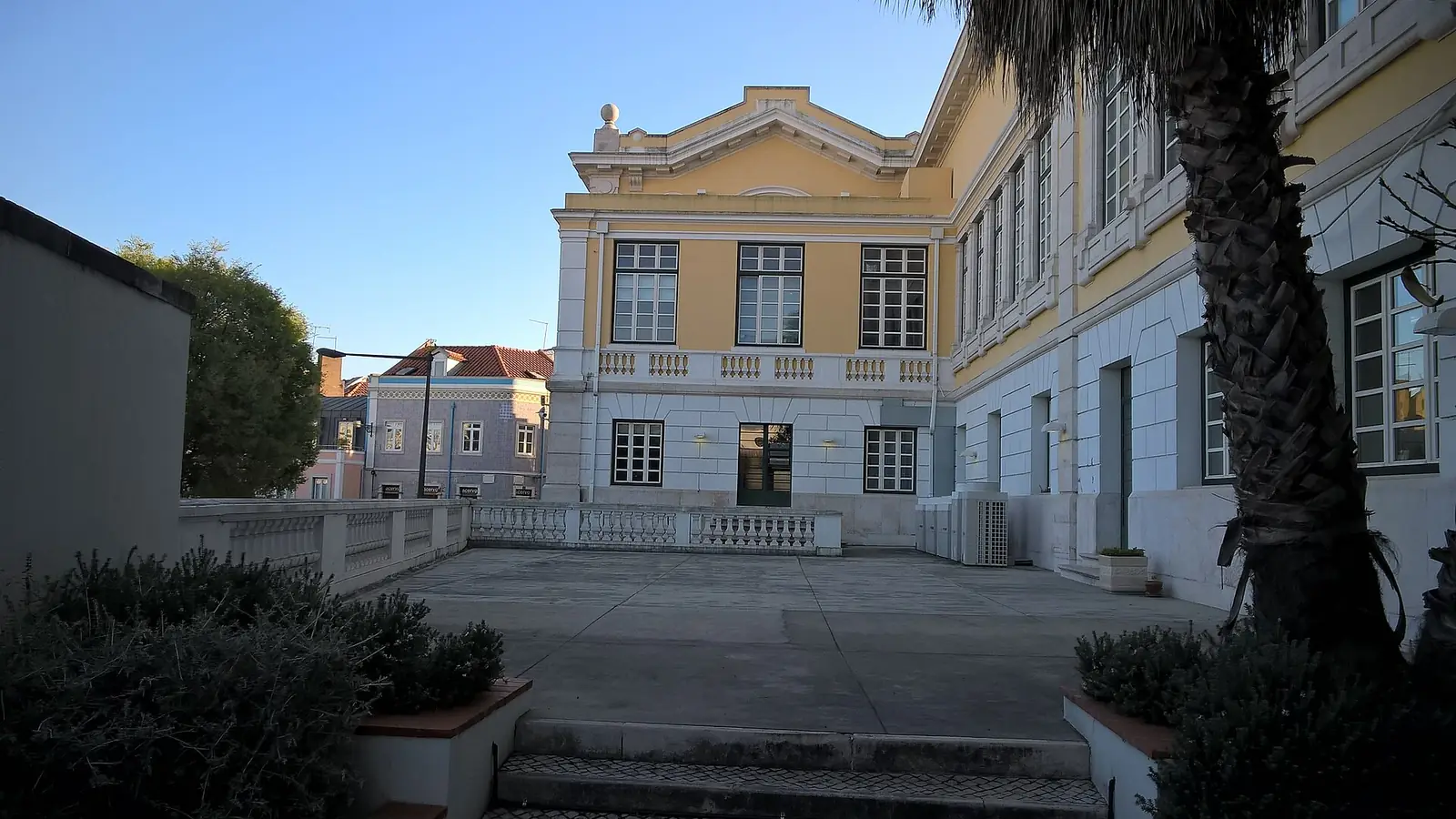
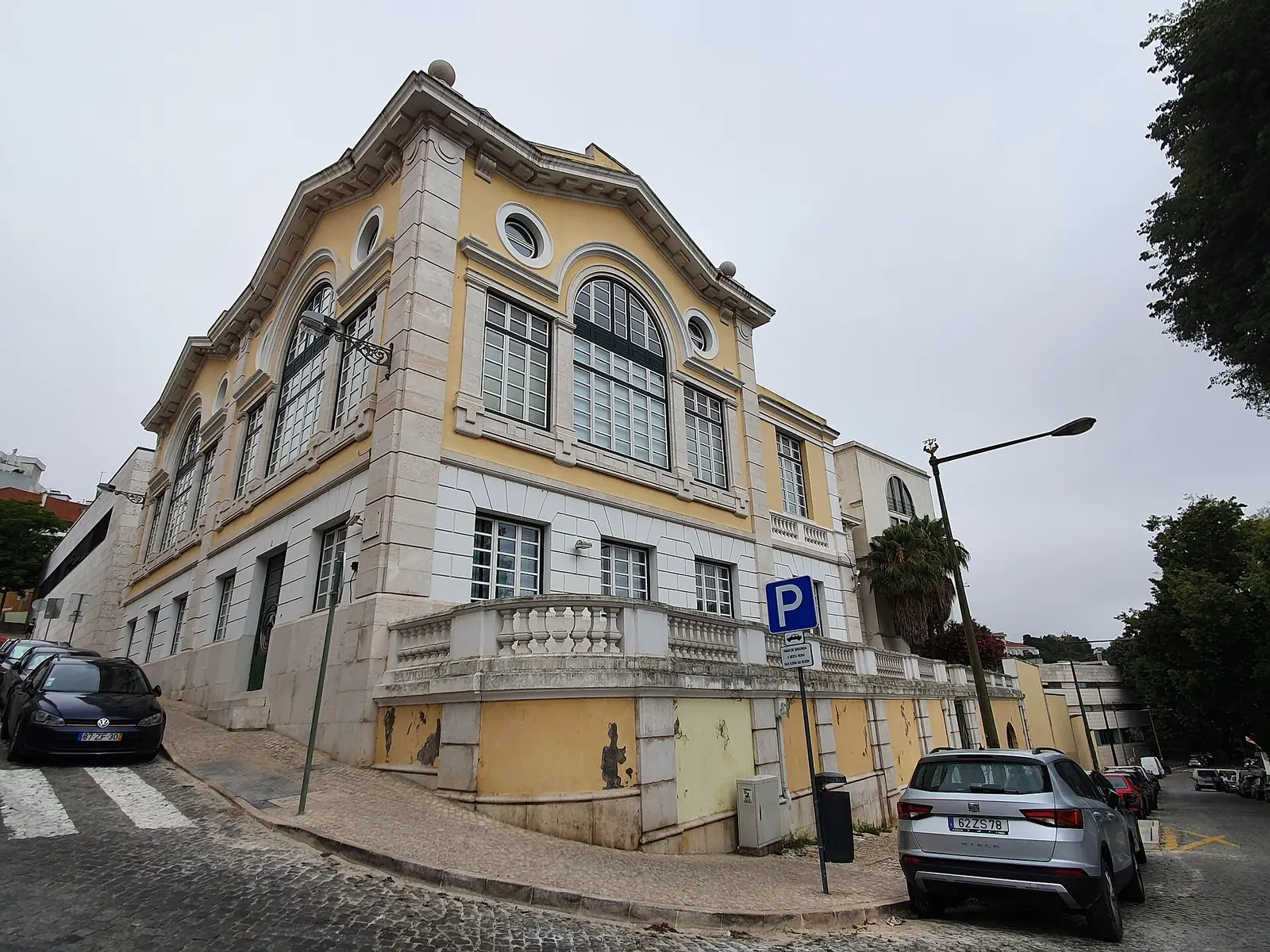
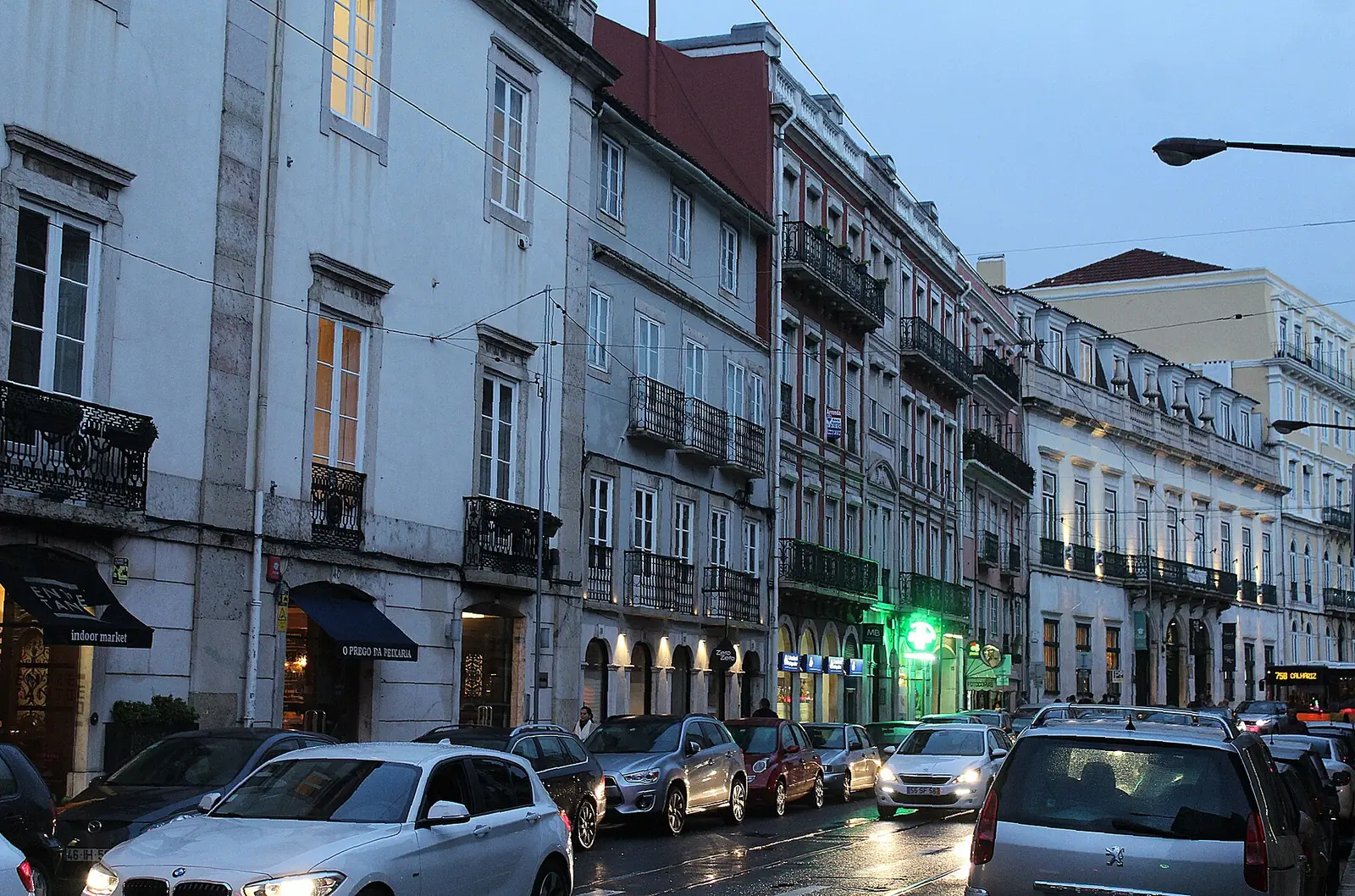
O Palacete de São Bento, residência oficial do primeiro-ministro, visto da rua, por trás do muro.Koshelyev, CC BY-SA 3.0
Estrela
Palacete de São Bento – Salazar’s official residence
The mansion behind Parliament that the State expropriated in 1937 as the official residence of the President of the Council (head of government). Salazar lived here from May 1938 to July 1970, the month in which he died. Today it is the official residence of the Prime Minister.
Today: Official residence of the Prime MinisterOn one walk
The mansion was built in 1877 by order of Joaquim Machado Cayres, as his home, on land that since 1598 had belonged to the walled grounds of the Convent of São Bento — the convent that in 1834 became the Palácio das Cortes (Palace of Parliament).1
In 1937, the year in which António de Oliveira Salazar escaped a bomb on Avenida Barbosa du Bocage, the State expropriated the mansion to install in it the official residence of the President of the Council (head of government). Until then, Salazar had lived on Rua Bernardo Lima.12 After conversion works, he moved in in May 1938; the official inauguration was in April 1939. During the works, the architect Cristino da Silva designed a monumental staircase linking the lower part of the grounds to Parliament, opened to make communication between the two buildings easier.1
In 1968, after a fall from a chair left him unable to govern, Salazar was replaced as head of government by Marcelo Caetano, but he went on living here until July 1970, the month in which he died.341 Caetano never lived in the mansion. In 1971 he ordered the largest remodelling in its history, which preserved little more than the four façades and added a storey in place of the attic.1
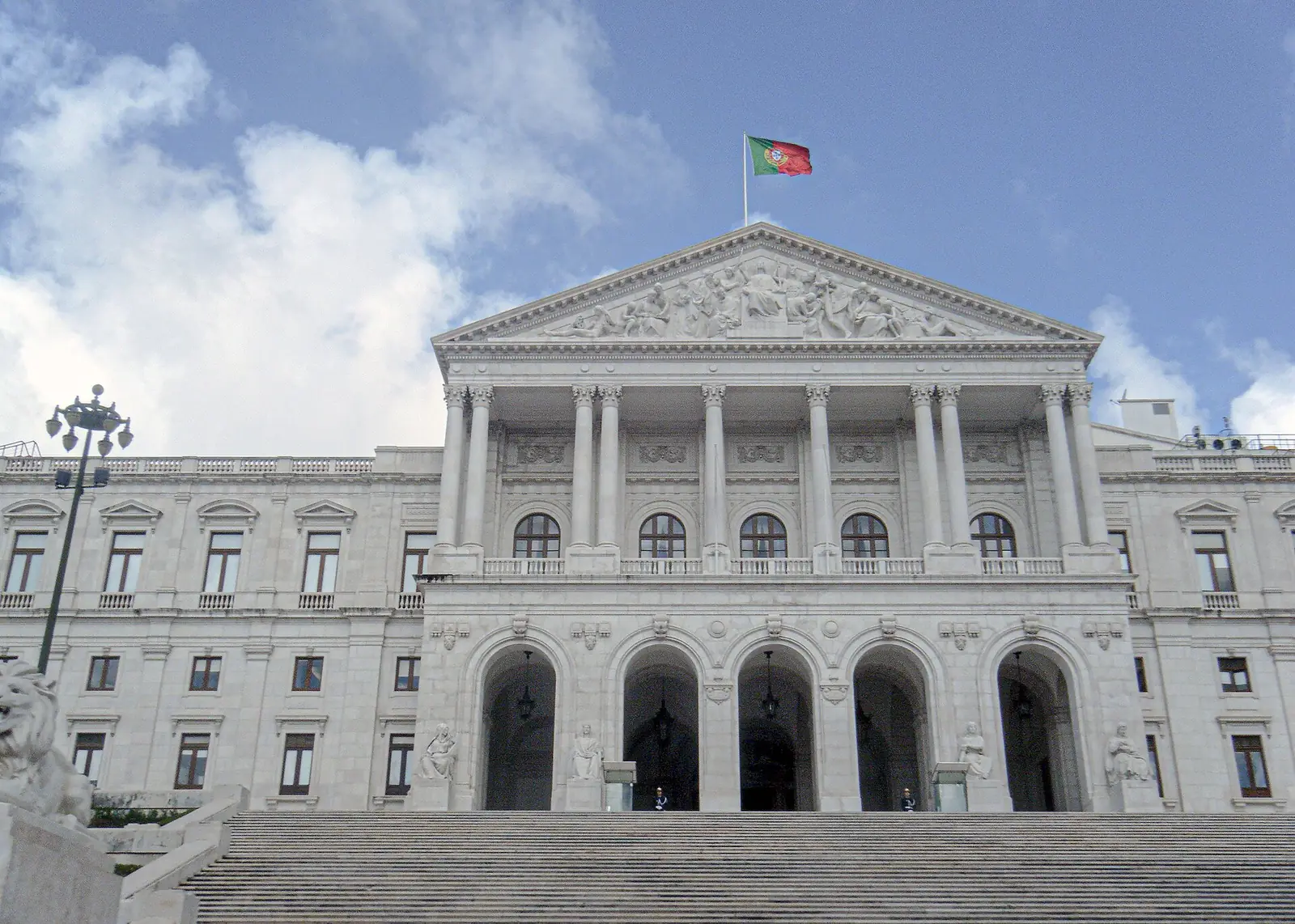
The parliament where, in 1911, women were refused the vote and where, in 1975–76, twenty-seven women deputies helped to write the Constitution that prohibits discrimination on grounds of sex. Sophia de Mello Breyner Andresen chaired the committee on the preamble here.
Today: ISEG – Lisbon School of Economics & Management
In a prefabricated lecture theatre at this school, on 12 October 1972, a DGS agent shot dead the law student José António Ribeiro Santos, during a “meeting against repression”. Aurora Rodrigues was in the room.
The regime’s official radio station was occupied in the early hours of 25 April 1974 by a small force from the Serra da Carregueira Firing Range, to serve as the MFA’s reserve broadcaster. It was fought over again on 11 March and 25 November 1975.
The Portuguese Society of Writers was on the first floor of no. 20 on this street. In May 1965, for having given a prize to “Luuanda”, by Luandino Vieira, then a prisoner at Tarrafal, it was dissolved by the government, and its headquarters were raided and wrecked that same night.
Culture and censorshipRepressionColonialism
Notes on the sources2
Whether Salazar died in the mansion: the Government gives him as living here until July 1970, and the Torre do Tombo National Archive says only that he died in Lisbon, on 27 July.
According to Wikipedia, from December 1934 the mansion was a girls’ school run by the Handmaids of the Sacred Heart of Jesus, which had to leave when the State expropriated it; the congregation’s page speaks of a school opened in 1934 at the request of the Patriarch of Lisbon and set up in 1938 on Rua de São Félix, without naming the mansion.
Do you know more, or do you have a document? Tell us.
Sources
1Residência Oficial do Primeiro-Ministro — História. Governo de Portugal — consulted on 3 October 2026Página do sítio do Governo, lida na cópia do Internet Archive de 29 de novembro de 2009; inclui o quadro dos chefes de Governo que residiram no palacete.