Santa Maria Maior
D. Maria II National Theatre
The national theatre, in the Rossio. Maria Barroso made her debut here in 1944 and was José Régio’s “Benilde”; in 1948, an order from the police and the Ministry of Education took her off this stage. The company that ran it worked under censorship until the fire of 1964.
The National Theatre opened on 13 April 1846, on the 27th birthday of the queen who gave it her name. Passos Manuel had entrusted Almeida Garrett with the idea of a national theatre, and the building went up on the site of the Palácio dos Estaus, the former headquarters of the Inquisition, which a fire had destroyed in 1836. Under the Republic it was renamed the Almeida Garrett National Theatre; it became the D. Maria II again in 1939.1
From 1929 to 1964 — almost the whole of the Estado Novo (“New State”) — the theatre was in the hands of the company of Amélia Rey Colaço and Robles Monteiro, the longest concession in its history. The company lived, in the theatre’s own words, in an “unstable balance with the regime”: a censorship commissioner had the last word on every play, and texts such as Felizmente há luar! (Fortunately There Is Moonlight!) and O Motim (The Riot) were banned.1
It was with this company that Maria Barroso made her debut, in 1944, and she played the lead in José Régio’s Benilde ou a Virgem Mãe (Benilde, or the Virgin Mother) in 1947.2 At the same time she recited the poets of the opposition at recitals all over the country. In 1948, an order “coming from the police and the Ministry of Education” removed her from the D. Maria II; Amélia Rey Colaço considered it a fatal blow, one that struck at the heart of the theatre.43
In 1964, hours after a performance of Macbeth, a fire destroyed the building; the walls, the Salão Nobre (state room) and the archive survived. Rebuilt to its old design, the theatre reopened on 11 May 1978, and plays banned decades earlier, such as Felizmente há luar!, could at last be staged here. Brecht’s Mother Courage, which Amélia Rey Colaço had wanted to stage in defiance of the censors, opened in 1986, in a co-production by the theatre, with Eunice Muñoz; the writer Agustina Bessa-Luís was artistic director from 1990 to 1993.1
In 1979, the theatre’s director, Lima de Freitas, commissioned a play from Natália Correia for the fourth centenary of the death of Camões. She delivered Erros Meus, Má Fortuna, Amor Ardente (My Errors, Ill Fortune, Ardent Love) in June 1980, but the Secretary of State for Culture cut the funding and the play was not produced at the National Theatre; it was only staged in 1988, by the Calouste Gulbenkian Foundation.5
On the walks
Where it is
Map showing where D. Maria II National Theatre is.
Dates
13 April 1846
The D. Maria II National Theatre opens.
1929
The concession to the company of Amélia Rey Colaço and Robles Monteiro begins (until 1964).
1944
Maria Barroso makes her debut at the National Theatre.
1947
Maria Barroso plays the lead in José Régio’s “Benilde ou a Virgem Mãe”.
1948
Maria Barroso is removed from the theatre on the orders of the police and the Ministry of Education.
1964
A fire destroys the building; the walls, the Salão Nobre and the archive survive.
11 May 1978
The theatre reopens, rebuilt.
June 1980
Natália Correia delivers the play the theatre had commissioned from her; it is never produced here.
People connected with this place


Nearby
60 m · 5 min on foot
Café Gelo
Today: Gelo, a seafood restaurant since 2024
A café on the Rossio where, between 1957 and 1962, the “Café Gelo Group” of dissident poets and painters used to meet; the group was banned from entering it after May Day 1962.
Culture and censorshipOppositionRepression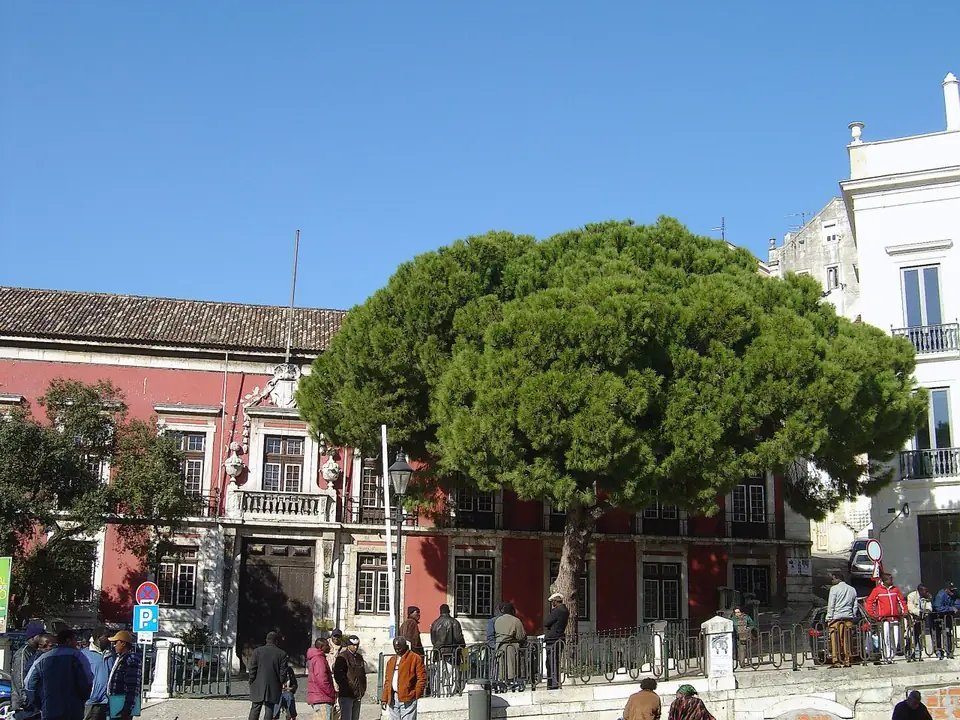
80 m · 5 min on foot
Palácio da Independência – headquarters of the Portuguese Youth (Mocidade Portuguesa)
Today: Palácio da Independência (Historical Society of the Independence of Portugal)
In the palace where the uprising of 1 December 1640 was planned, the Estado Novo set up the headquarters of the Portuguese Youth (Mocidade Portuguesa), the regime’s youth organisation. Abolished on 25 April 1974 itself, it made way for the Association of the Disabled of the Armed Forces.
Repression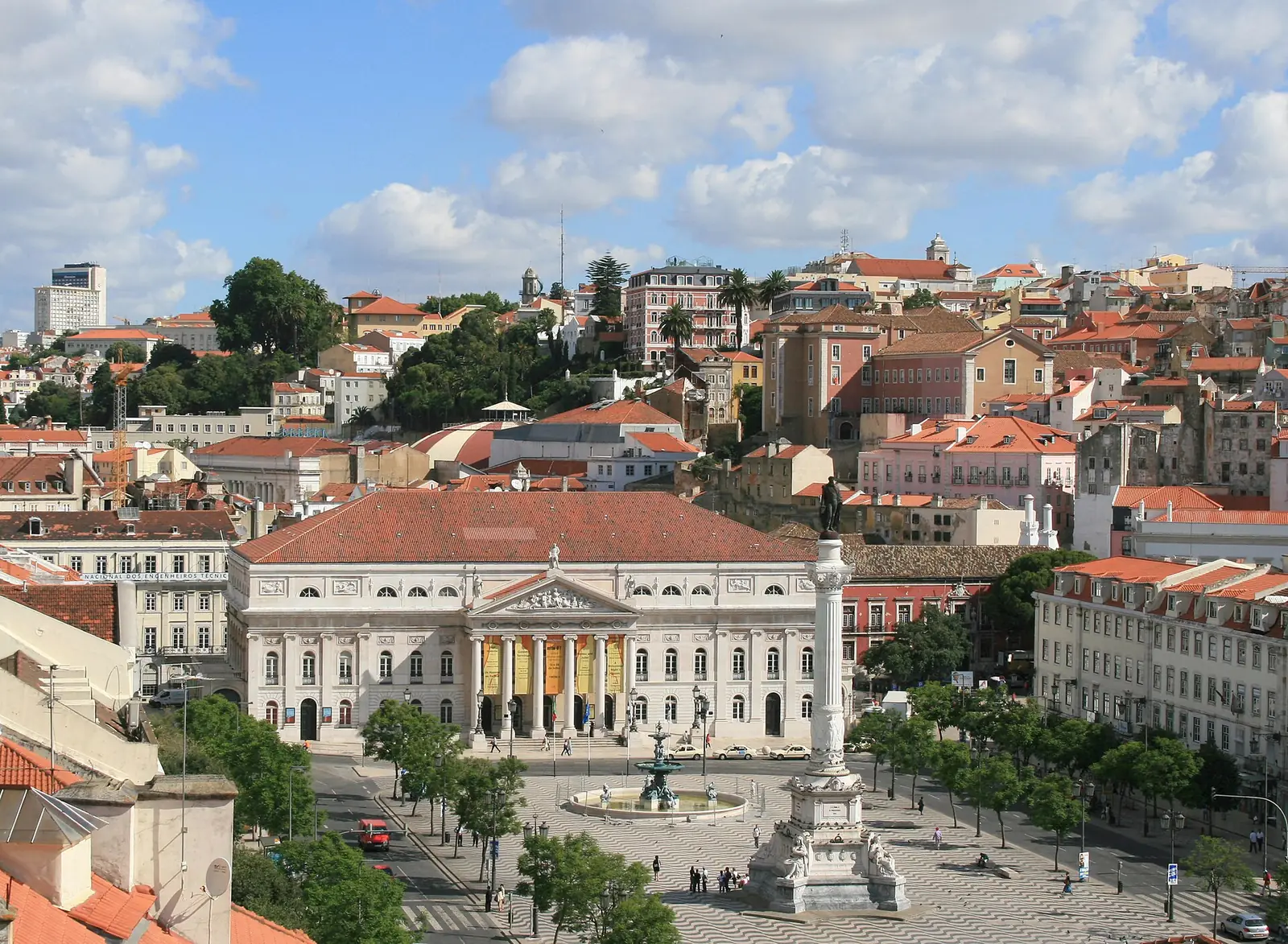
120 m · 5 min on foot
Café Chave d'Ouro
Today: A Caixa Geral de Depósitos bank branch
On the first floor of this café on the Rossio, on 10 May 1958, Humberto Delgado answered “Obviously, I’ll sack him!” (Obviamente, demito-o!) when asked what he would do with Salazar if he were elected.
Opposition120 m · 5 min on foot
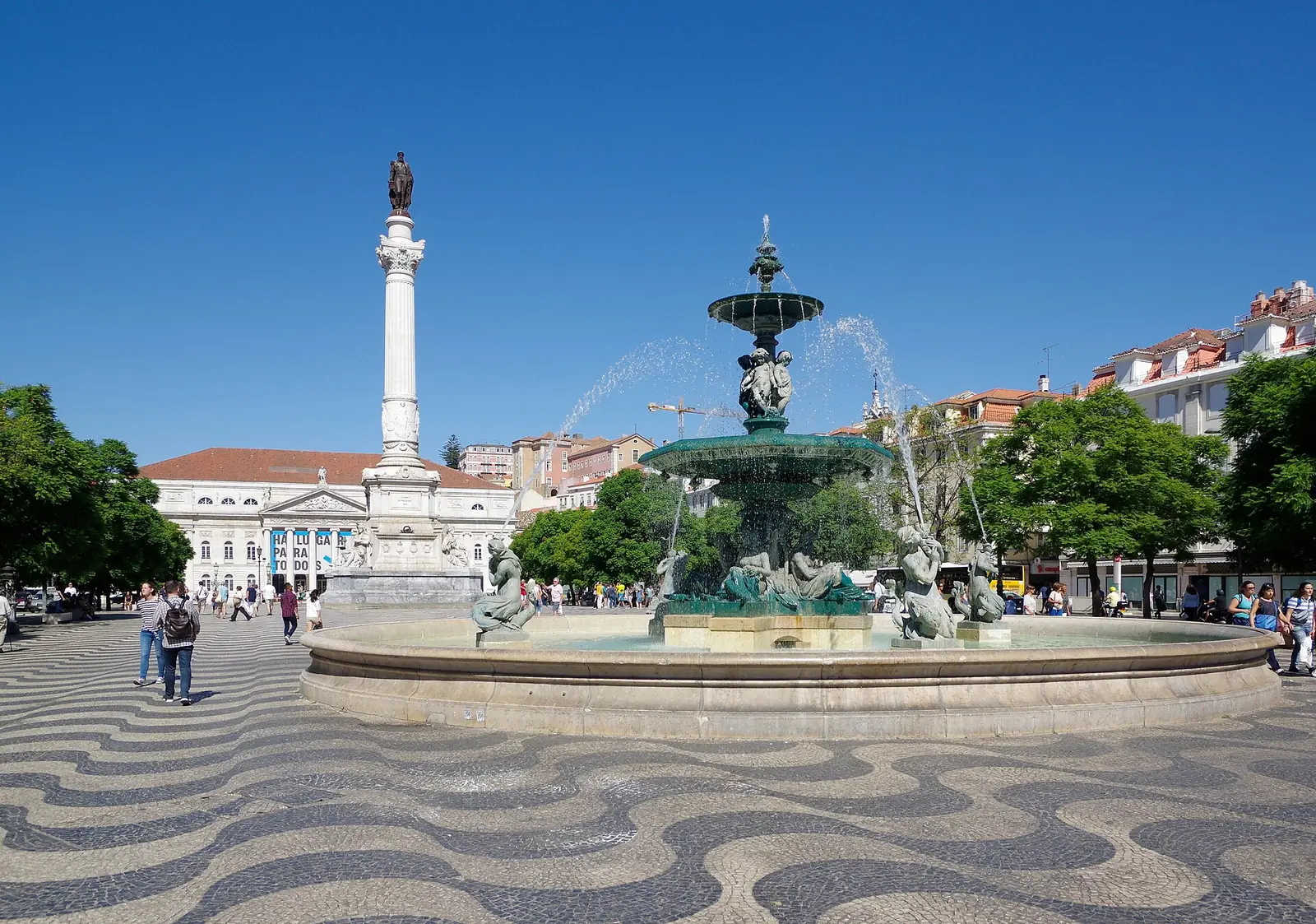
Rossio (Praça de D. Pedro IV)
Today: Praça D. Pedro IV
On the Rossio, the GNR charged Humberto Delgado’s supporters in 1958 and the police put down the May Day demonstration of 1962. On 25 April 1974, Salgueiro Maia’s column passed through here, among the crowd, on its way to the Carmo.
OppositionLabourStudents


Notes on the sources2
- When and why Maria Barroso was removed from the theatre: in 1948, on the orders of the police and the Ministry of Education, according to the Mário Soares and Maria Barroso Foundation and the National Culture Centre (which follows Leonor Xavier’s biography); the Assembly of the Republic says she was accused of reciting subversive poetry; the English Wikipedia places her removal around 1946, after a performance of “The House of Bernarda Alba” in Coimbra.
- The day of the 1964 fire, which the theatre’s history page does not give.
Do you know more, or do you have a document? Tell us.
Sources
- 1História. Teatro Nacional D. Maria II — consulted on 3 October 2026
- 2A vida de Maria Barroso, em momentos (cronologia). Fundação Mário Soares e Maria Barroso — consulted on 3 October 2026
- 3Biografia de Maria Barroso. Fundação Mário Soares e Maria Barroso — consulted on 3 October 2026
- 4Guilherme d'Oliveira Martins, A vida dos livros, de 19 a 25 de maio de 2025 (no centenário de Maria Barroso, a partir de «Um Olhar sobre a Vida», de Leonor Xavier). Centro Nacional de Cultura (blogue e-cultura), 2025 — consulted on 3 October 2026
- 5O Essencial sobre Natália Correia (Luiz Fagundes Duarte). Imprensa Nacional, 2024 — consulted on 2 October 2026
- 6Nominatim – OpenStreetMap (geocodificação). OpenStreetMap contributors (ODbL) — consulted on 2 October 2026
Coordinates: OpenStreetMap (way 77473968, Nominatim), consultado a 3 de outubro de 2026.