Walk · Culture and censorship · on foot
Forbidden words
Cafés, churches, stages and newsrooms where people said what the censors would not allow — from “Obviously, I’ll sack him!” to “Grândola” at the Coliseu
- Distance
- 3.5 km
- Duration
- 1 h 55 min
- Stops
- 8
- Difficulty
- Moderate
The walk, the photos and the map stay on the phone, to open anywhere.
Introduction
For almost half a century, nothing was published in Portugal without going through censorship: newspapers sent in their proofs and got them back cut with the “blue pencil”.1 The words that mattered were spoken elsewhere — at a café table, in a church at the end of the year, on the stage of a show watched by the police, in a newsroom that one day refused to send in its proofs.
This route goes from the Rossio to the Chiado through those places, and through the women who wrote, sang and spoke in them: Natália Correia, Sophia de Mello Breyner Andresen, Fernanda Botelho, Maria Lamas, Virgínia Quaresma.
Before you go
- Start
- Rossio (Praça de D. Pedro IV) — Metro Rossio (green line); trains at Rossio
- Finish
- Largo de Camões, in the Chiado — Metro Baixa-Chiado (blue and green lines); tram 28
- Accessibility of the route
- The Rossio and Portas de Santo Antão are flat. From the Coliseu to Rua da Escola Politécnica it is a steep climb, up the Calçada da Glória or through the streets of the Bairro Alto, on cobbles. From Príncipe Real to Largo de Camões the way goes downhill, with narrow pavements in the Bairro Alto.
This walk in dates
28 Apr 1911
1928
17 May 1930
10 May 1958
7 more dates
16 May 1958
1 May 1962
21 May 1965
31 Dec 1968
29 Mar 1974
25 Apr 1974
26 Apr 1974
Map of the walk “Forbidden words”, with 8 numbered stops. The list of stops follows the map.
The stops
Stop 1: “Obviously, I’ll sack him!”
Praça D. Pedro IV (Rossio), Lisboa — número de polícia por confirmar
Today: A Caixa Geral de Depósitos bank branch
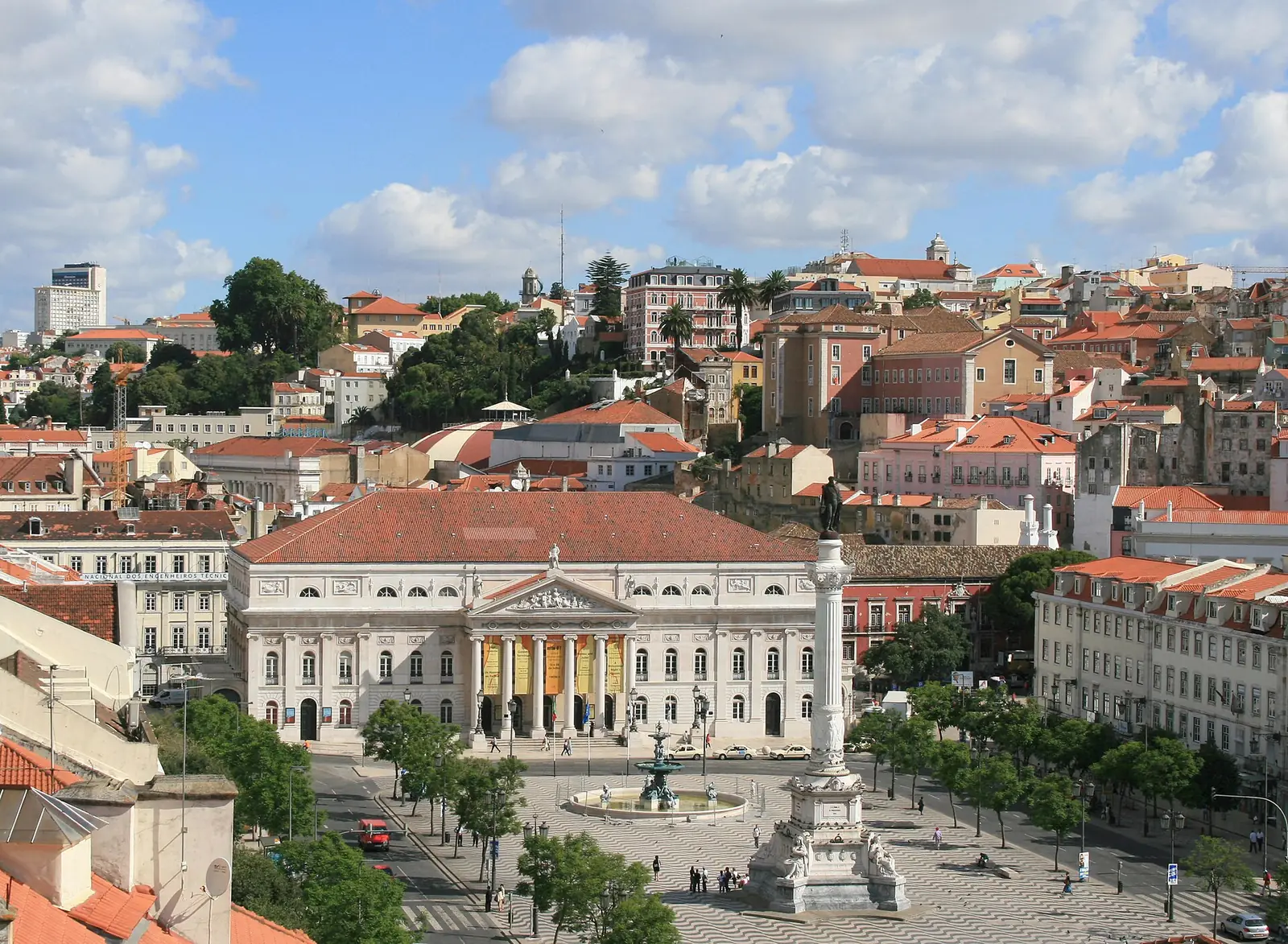
O Rossio (Praça de D. Pedro IV) visto do Elevador de Santa Justa, em 2007. Szilas, Public domain On 10 May 1958, on the first floor of the Café Chave d’Ouro, in the Rossio, the candidacy of General Humberto Delgado for the Presidency of the Republic was presented to the press, the foreign press included. He was asked what he would do with Salazar if he were elected. “Obviously, I’ll sack him!” (Obviamente, demito-o!) — the answer set the country alight and defined the campaign.23
The café, founded in 1919 and a meeting place for the opposition, made way for a bank branch in 1961.4
- 10 May 1958Humberto Delgado: “Obviously, I’ll sack him!” (Obviamente, demito-o!)
- 16 May 1958Humberto Delgado arrives at Santa Apolónia
To stop 2130 m · 5 min on footDirections
Stop 2: The dissidents’ café
Praça D. Pedro IV, 64 (Rossio), com entrada também pela Rua 1.º de Dezembro, 1100-201 Lisboa
Today: Gelo, a seafood restaurant since 2024
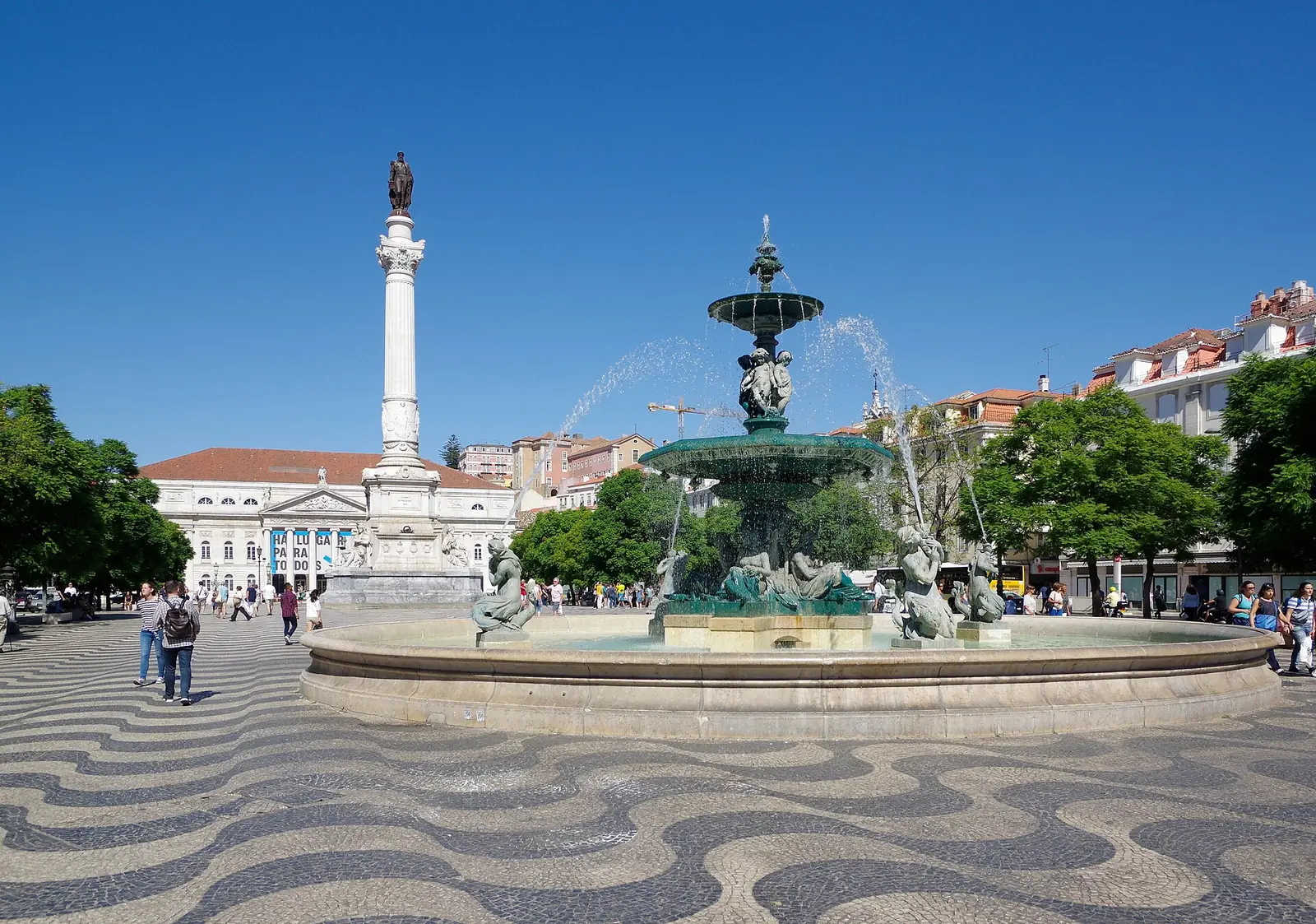
A fonte sul do Rossio, a coluna de D. Pedro IV e o Teatro Nacional D. Maria II, em 2018. Berthold Werner, CC BY-SA 4.0 Between 1957 and 1962, a group of writers and artists that at one point numbered almost thirty met at the Café Gelo: Natália Correia, Herberto Helder, Mário Cesariny, Luiz Pacheco, António José Forte, Manuel de Lima and Pedro Oom, among others. What they had in common, Hélder Macedo later explained, was “an attitude of dissidence, of refusing to collude” — in politics, in social mores, in sex.5
The meetings ended in 1962. According to Wikipedia, on May Day (1 May) that year, during the demonstration that was put down in the Baixa, riot police entered the café and beat the people inside, and the group was banned from returning.5
What you can see today
According to Wikipedia (an unsourced passage), a plaque by the door on the Rossio side sums up the café’s history, recalling the regicide and the opposition to Salazar’s regime — to be confirmed on site.
To stop 3210 m · 5 min on footDirections
Stop 3: “We see, we hear and we read”
Largo de São Domingos, 1169-060 Lisboa
Today: Church of São Domingos
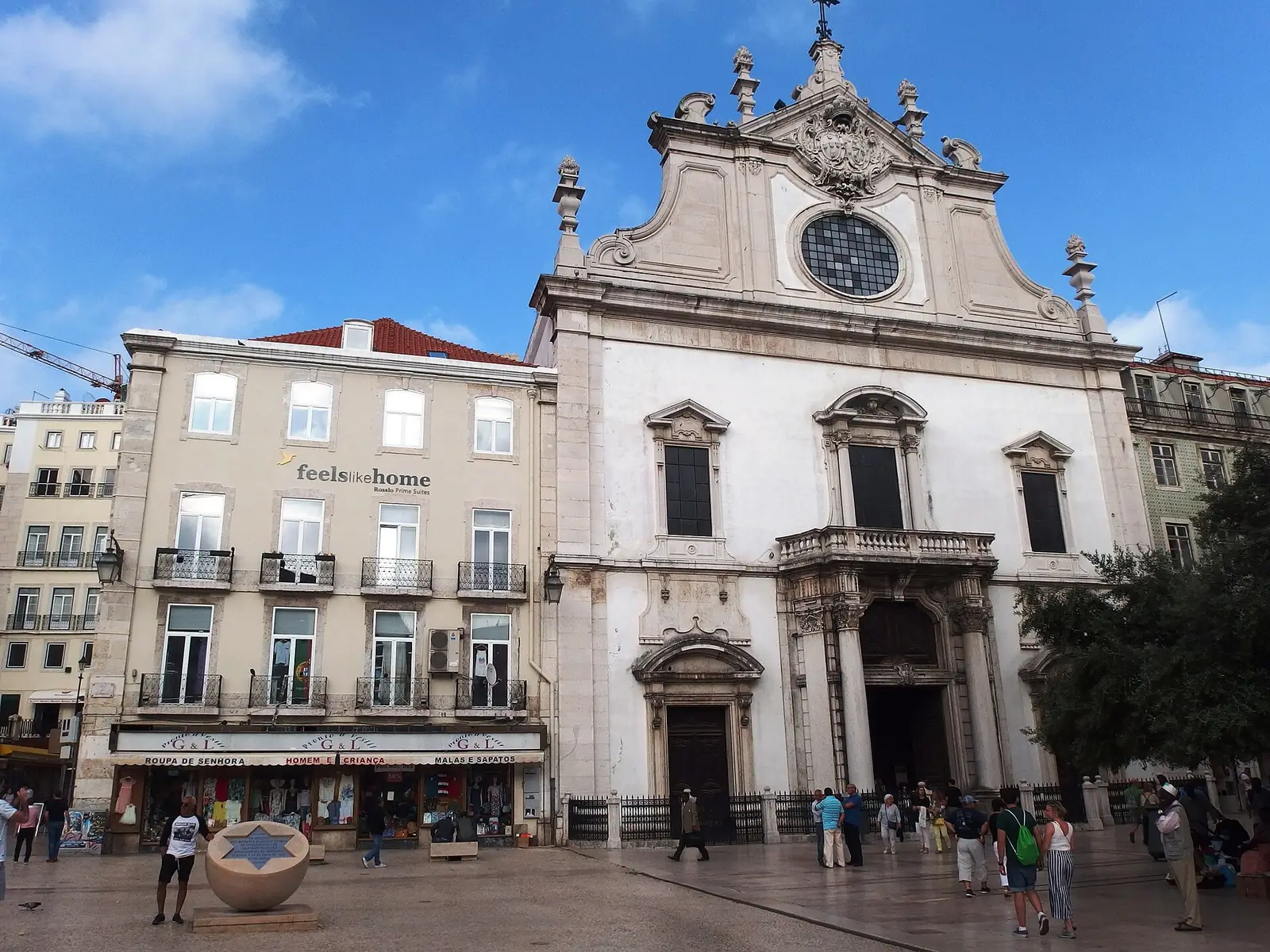
A Igreja de São Domingos e o largo em frente, em julho de 2017. Palickap, CC BY-SA 4.0 On the night of 31 December 1968, after Cardinal Cerejeira’s Mass, more than a hundred Catholics stayed on in this church in a vigil against the colonial war, until six in the morning of the World Day of Peace. For that night, Sophia de Mello Breyner Andresen wrote the “Cantata da Paz” (Cantata of Peace), which Francisco Fanhais sang: “We see, we hear and we read / We cannot ignore” (Vemos, ouvimos e lemos / Não podemos ignorar).6
To stop 4400 m · 5 min on footDirections
Stop 4: The hall that sang “Grândola”
Rua das Portas de Santo Antão, 92-104, 1150-268 Lisboa
Today: Coliseu dos Recreios
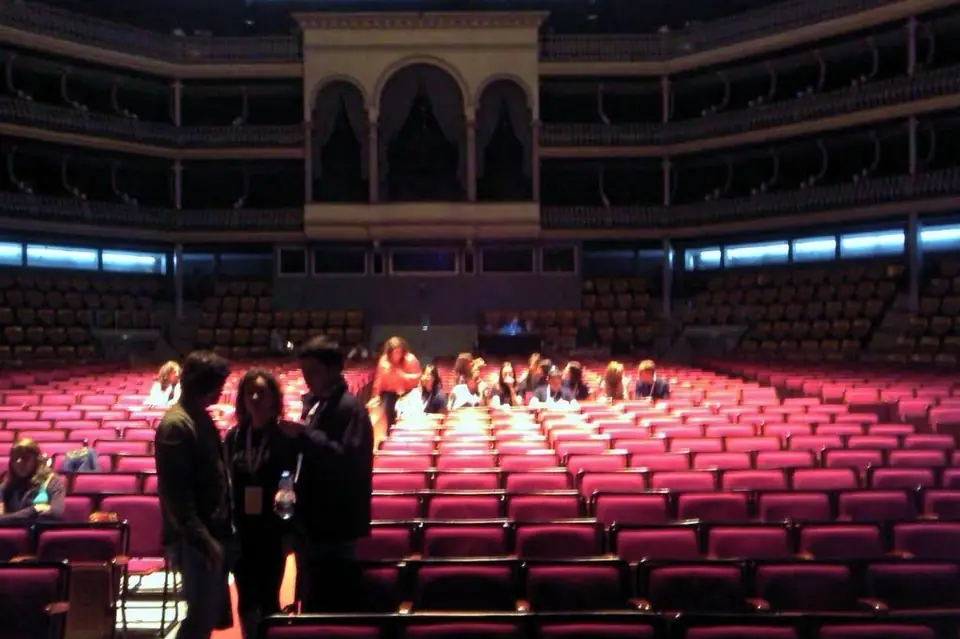
A plateia do Coliseu dos Recreios, em 2010. Diogomedina, CC0 1.0 On 29 March 1974 the 1st Portuguese Song Meeting (I Encontro da Canção Portuguesa) filled the Coliseu, with the PIDE/DGS and the censors in the hall taking notes. Censorship had banned dozens of songs.7 José Afonso sang “Grândola, Vila Morena” (Grândola, swarthy town), the hall sang with him, and at the end thousands of people shouted “Down with repression!” (abaixo a repressão!).8
Less than a month later, the same song went out on the radio as the signal for the revolution.
- 29 Mar 1974I Encontro da Canção Portuguesa no Coliseu
- 25 Apr 1974«Grândola, Vila Morena» na Rádio Renascença confirma a revolução
The Casa da Achada choir and passers-by sing “Grândola, Vila Morena” (Grândola, swarthy town) in the street, in Lisbon, on 25 April 2023. Almost half a century after it served as the signal for the revolution, José Afonso’s song is still sung in chorus every 25 April.
Original page CC BY-SA 4.0 — Contaminadas (obra própria, Wikimedia Commons)
Wikimedia Commons, on Wikimedia Commons. The player only connects to that site when you press “Watch”.
To stop 51.2 km · 20 min on footDirections
Stop 5: The prize that closed the writers’ house
Rua da Escola Politécnica, 20, 1.º Esq., 1250 Lisboa
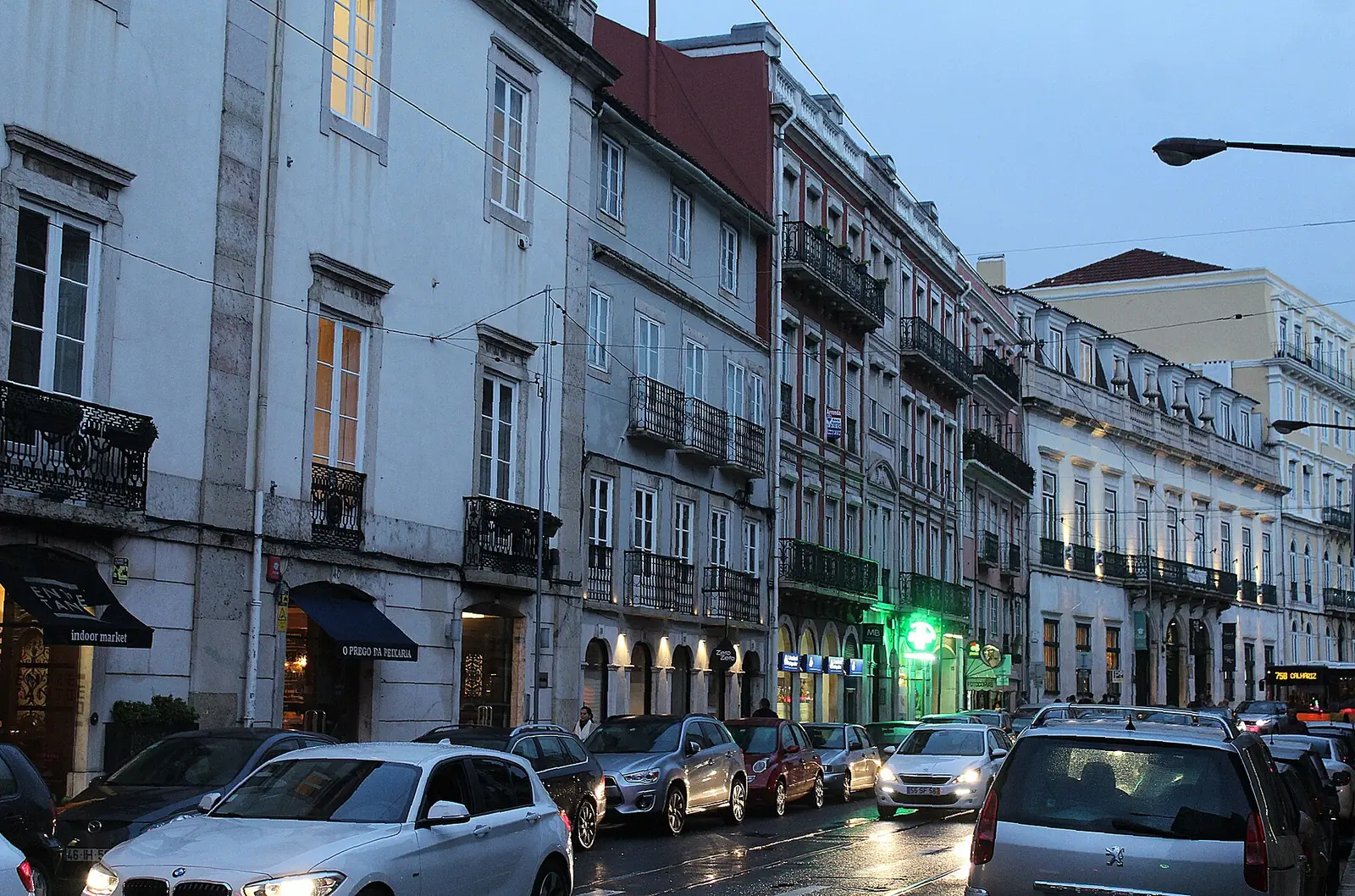
A Rua da Escola Politécnica, onde ficava a sede da Sociedade Portuguesa de Escritores, em 2017. Dguendel, CC BY 4.0 In May 1965, a jury of the Portuguese Society of Writers — Alexandre Pinheiro Torres, Augusto Abelaira, Fernanda Botelho, João Gaspar Simões and Manuel da Fonseca — gave the Grand Prize for Fiction to Luuanda, by José Luandino Vieira, who was imprisoned at Tarrafal for his links to the People’s Movement for the Liberation of Angola (MPLA).9
On 21 May the Minister of National Education dissolved the Society. That night its headquarters, on the first floor of No. 20 on this street, were broken into and ransacked by “unknown persons” backed by the PIDE, who left a sign at the door: “Terrorists’ agency in the Metropole” (Agência dos terroristas na Metrópole). Three of the jurors were arrested; Fernanda Botelho, the only woman on the jury, was questioned.910
To stop 6650 m · 10 min on footDirections
Stop 6: “From woman to woman”
Rua de O Século, 63, 1200-433 Lisboa
Today: Palácio Lançada, Rua de O Século
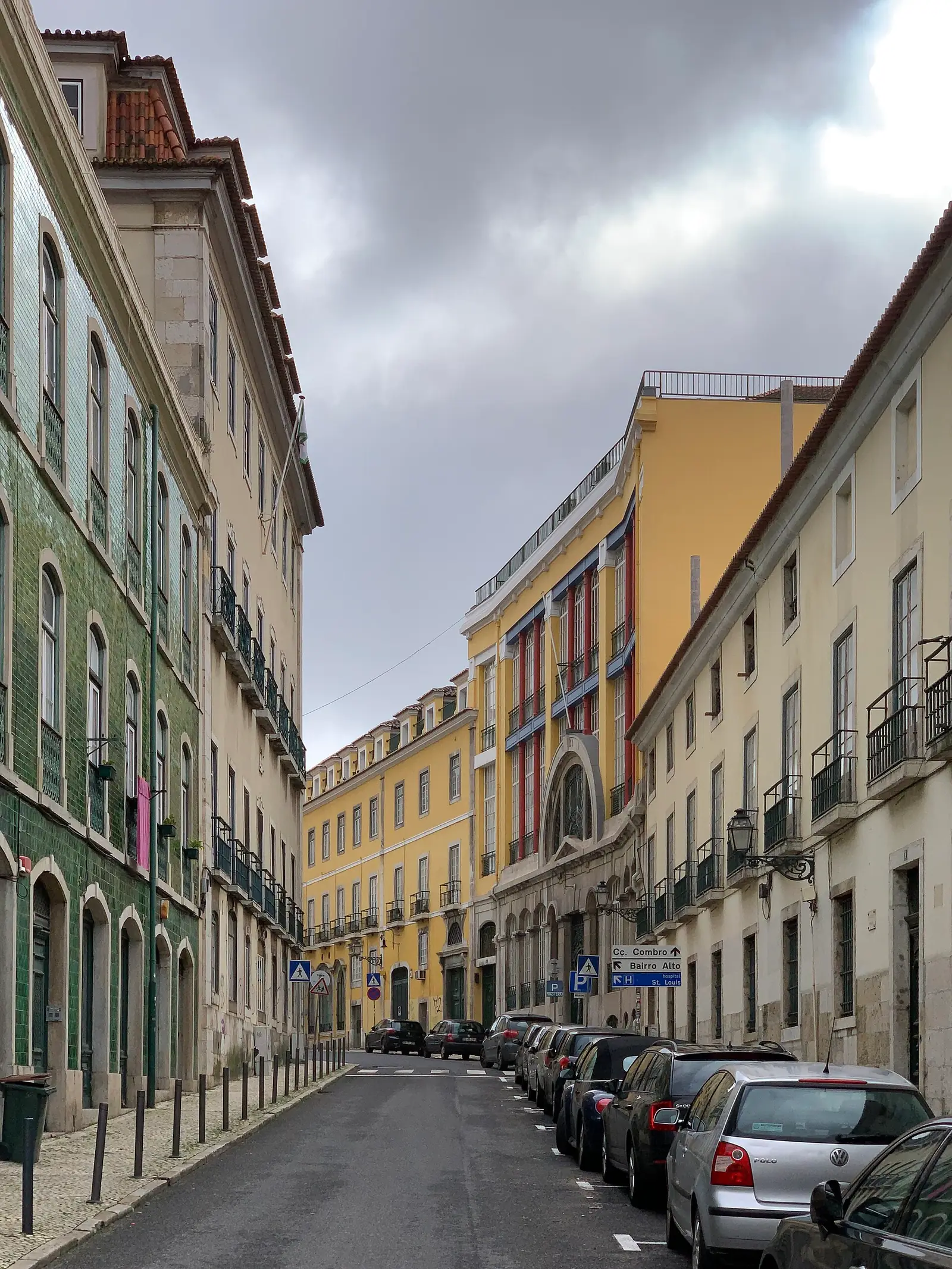
A Rua de O Século, onde funcionou a redação do jornal, em dezembro de 2019. Sergei Gussev, CC BY 2.0 This palace housed the newspaper O Século (The Century). In 1908 Virgínia Quaresma, one of the first Portuguese women reporters, joined its newsroom.11 Twenty years later, Maria Lamas took charge of its supplement Modas e Bordados (Fashions and Embroidery), written “from woman to woman”; in 1930 she organised the exhibition “Portuguese Women” (Mulheres Portuguesas) here, under the slogan “Let us be intelligently women” (Sejamos inteligentemente mulheres).1213
In 1947 the regime forced her to choose between the magazine and the National Council of Portuguese Women, which she chaired. She chose the Council.14
- 1928Maria Lamas takes over “Modas & Bordados”
- 17 May 1930Maria Lamas organises the exhibition “Mulheres Portuguesas” (Portuguese Women)
To stop 7600 m · 10 min on footDirections
Stop 7: The newspaper that did not send its proofs
Rua da Misericórdia, 116, 1200-271 Lisboa
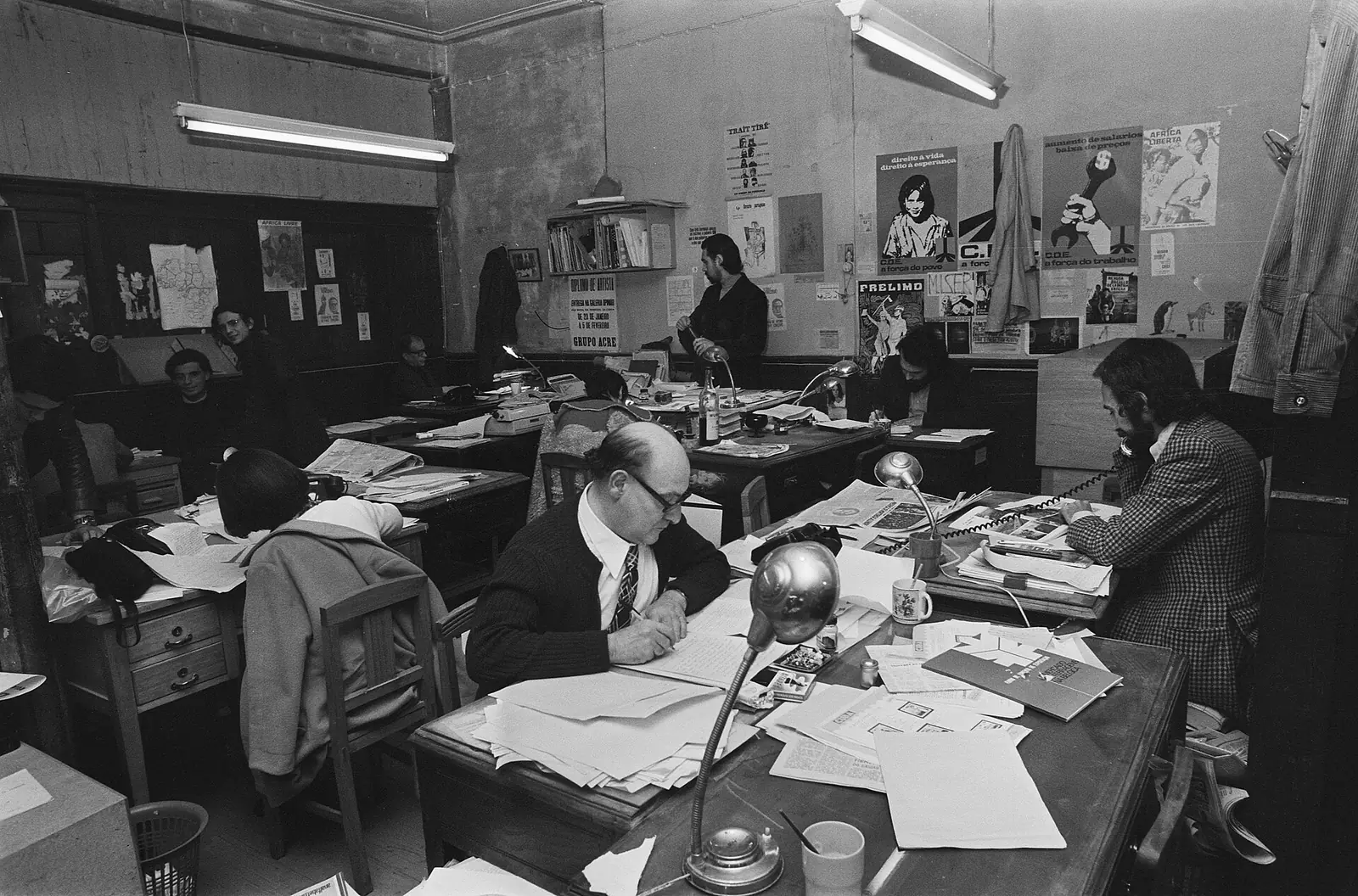
A redação do jornal «República», segundo a legenda do arquivo Anefo, a 11 de fevereiro de 1975 — três meses antes do «caso República». Fotografia de Rob Mieremet. Rob Mieremet / Anefo, CC0 1.0 At No. 116 Rua da Misericórdia stood República, the daily of the democratic opposition — almost opposite the censorship office, which had been working at No. 125 since 1969.15 Two of its journalists, Álvaro Guerra and Carlos Albino, put the Armed Forces Movement (MFA) in touch with the radio programme that would broadcast the signal for the revolution.1715
On 25 April 1974 its editor, Raul Rego, refused to send the proofs to the “Prior Examination”. The paper came out with a line at the foot of the front page: “This newspaper has not been vetted by any Censorship Commission” (Este jornal não foi visado por qualquer Comissão de Censura).15
To stop 8270 m · 5 min on footDirections
Stop 8: The first woman reporter
Rua do Norte, 3 (esquina com a Praça de Luís de Camões), Lisboa
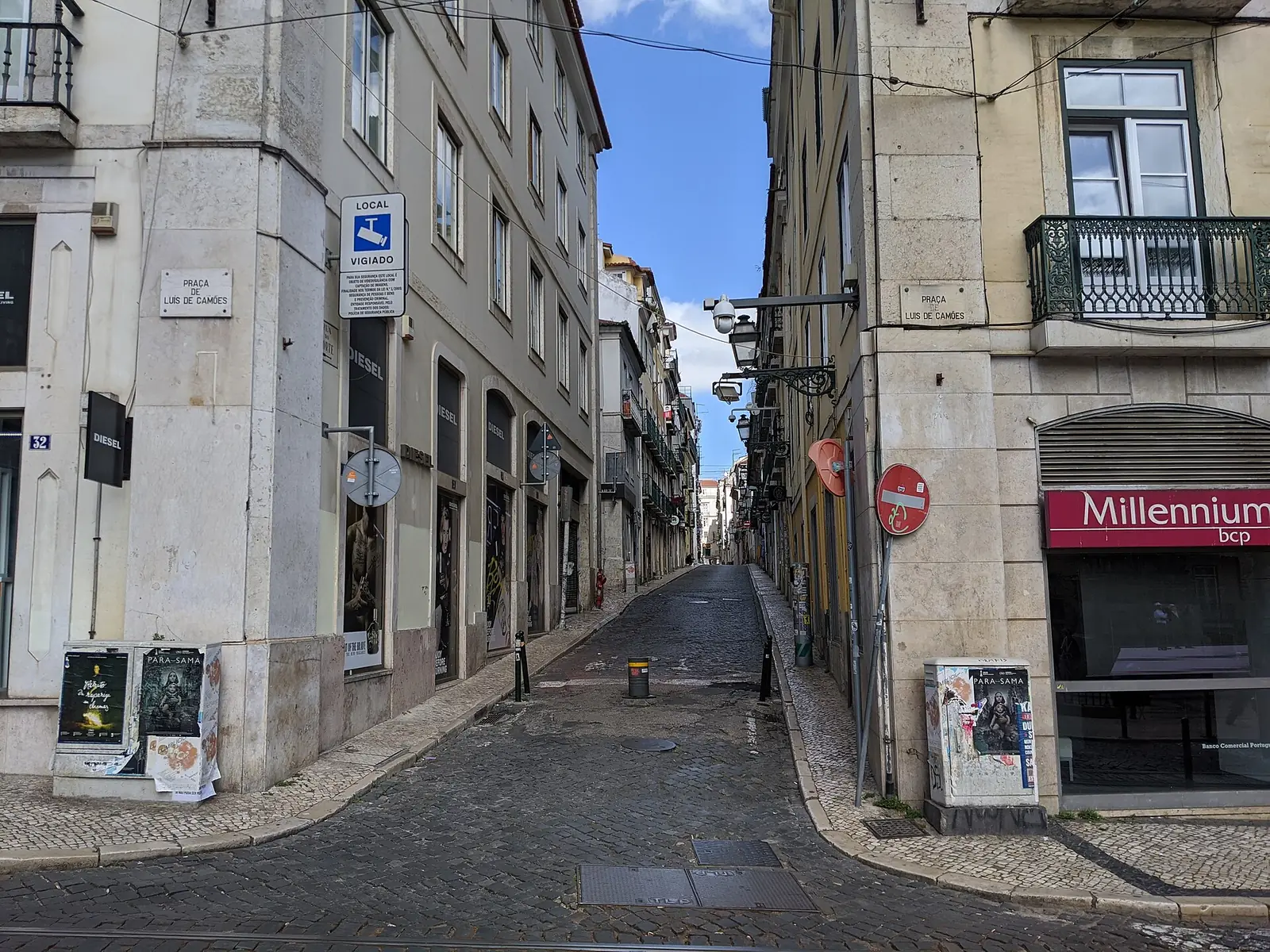
A Rua do Norte, junto à Praça de Luís de Camões, em março de 2020. Daniel, CC BY 2.0 In 1910 Virgínia Quaresma moved to A Capital (The Capital), the republican evening daily whose newsroom was at No. 3 Rua do Norte, on this corner; she went to live right opposite.11 It was A Capital that, on 29 April 1911, printed the ruling that ordered Carolina Beatriz Ângelo to be registered as a voter, and called it “a victory for national feminism”.18
In August that year, Virgínia told the paper that she loved her profession and wanted to see other women earning their living in journalism.11


.jpg)


.jpg)

.jpg)
Notes on the sources2
- The exact spot of the former Café Chave d’Ouro in the Rossio: the stop is placed in the square.
- The police episode at the Café Gelo on 1 May 1962 has only been found in Wikipedia, which cites Luiz Pacheco.
Do you know more, or do you have a document? Tell us.
Sources
- 1Os censores da imprensa (Joaquim Cardoso Gomes), JJ – Jornalismo & Jornalistas n.º 57, jan./jun. 2014. Clube de Jornalistas (PDF no Centro de Documentação 25 de Abril, Univ. Coimbra) — consulted on 2 October 2026
- 2Delgado: Um vendaval varreu o País (João Paulo Guerra). esquerda.net — consulted on 2 October 2026
- 3Candidatura de Humberto Delgado – uma jornada de resistência. Museu do Aljube Resistência e Liberdade (EGEAC) — consulted on 2 October 2026
- 4Café Chave d'Ouro. Restos de Colecção (blogue) — consulted on 2 October 2026
- 5Café Gelo. Wikipédia — consulted on 2 October 2026
- 6A Vigília de São Domingos. Comissão Comemorativa 50 Anos 25 de Abril — consulted on 2 October 2026
- 7Grândola, Vila Morena. Wikipédia — consulted on 2 October 2026
- 8Canção Intervenção, 28/03/1974 (cronologia). Associação 25 de Abril — consulted on 2 October 2026
- 9Breve memorial da Sociedade Portuguesa de Escritores (SPE). Associação Portuguesa de Escritores — consulted on 2 October 2026
- 10Como a PIDE destruiu a Sociedade Portuguesa de Escritores. RTP Ensina — consulted on 2 October 2026
- 11A primeira jornalista de reportagem portuguesa numa rua de Caselas. Toponímia de Lisboa (Câmara Municipal de Lisboa) — consulted on 2 October 2026
- 12Maria Lamas. Wikipédia — consulted on 2 October 2026
- 13Maria Lamas, a ativista pelos direitos das mulheres (Virgínia Baptista, IHC – NOVA FCSH). RUN – Repositório da Universidade Nova de Lisboa — consulted on 2 October 2026
- 14Mulheres pela Igualdade (biografias). CIG – Comissão para a Cidadania e a Igualdade de Género — consulted on 2 October 2026
- 15O jornal República e a Rua da Misericórdia. Toponímia de Lisboa, 2019 — consulted on 2 October 2026
- 16Sede do Jornal República (Lugares de Abril). Associação 25 de Abril — consulted on 2 October 2026
- 17Preparativos para a transmissão da senha, 23/04/1974 (cronologia). Associação 25 de Abril — consulted on 2 October 2026
- 18Carolina Beatriz Ângelo. Assembleia da República — consulted on 2 October 2026
Other walks

Revolution · on foot
The first day
25 April 1974 hour by hour, from the Terreiro do Paço to the Carmo and the door of the political police
- Distance
- 2.4 km
- Duration
- 1 h 30 min
- Stops
- 7 stops
- Difficulty
- Moderate

Women · on foot
Graça, the women’s hill
Seamstresses on strike, a republican propagandist, a women’s prison, a bar and a poet — Graça as they tell it
- Distance
- 1.7 km
- Duration
- 1 h 15 min
- Stops
- 6 stops
- Difficulty
- Demanding

Repression · on foot
The Estado Novo, explained
How a dictatorship lasted 48 years: the leader, the façade, the single party, the family, work and propaganda — from São Bento to Restauradores
- Distance
- 4.6 km
- Duration
- 2 h 20 min
- Stops
- 9 stops
- Difficulty
- Moderate