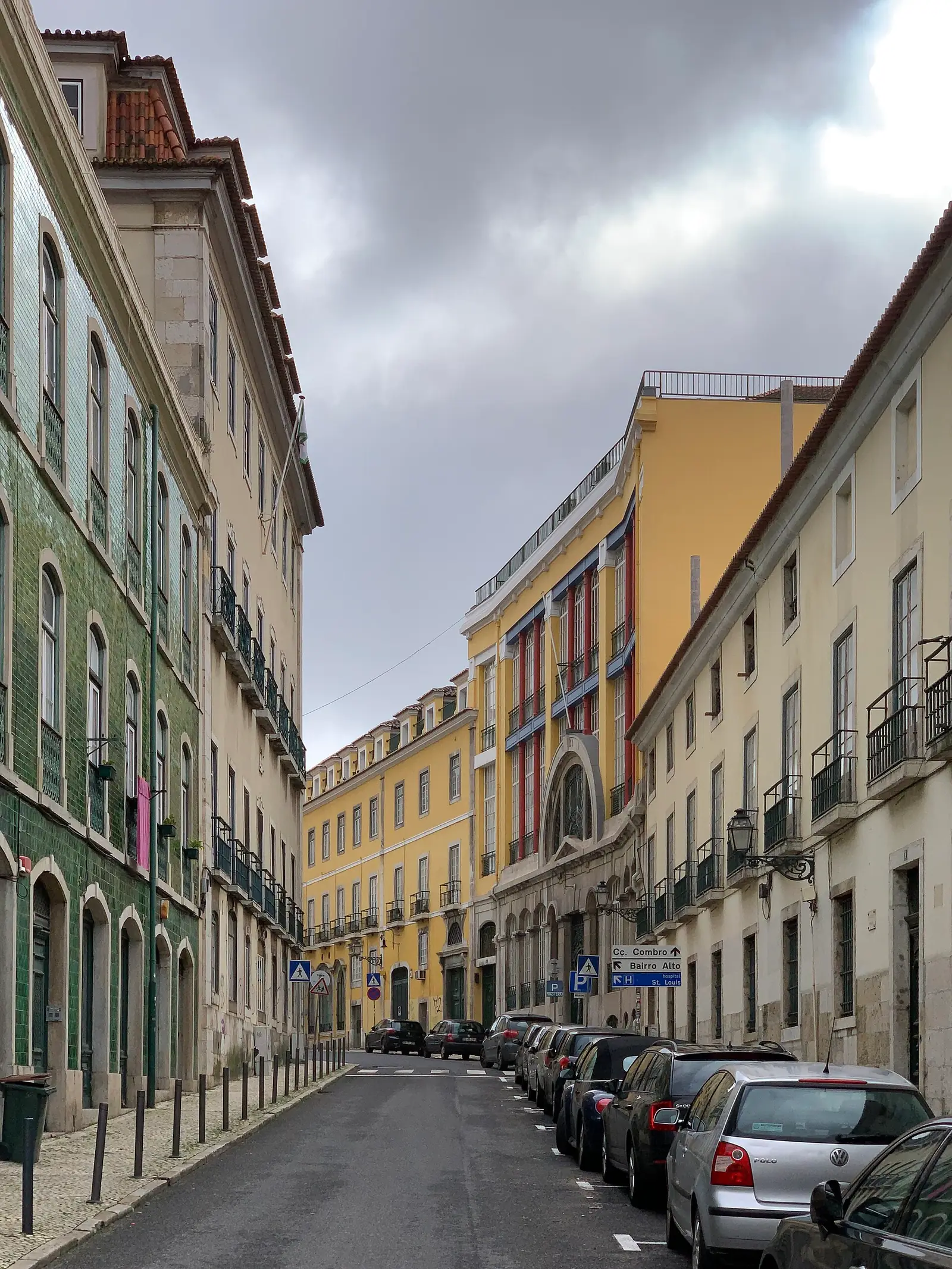
A Rua da Escola Politécnica, onde ficava a sede da Sociedade Portuguesa de Escritores, em 2017.Dguendel, CC BY 4.0
Santo António
Portuguese Society of Writers (headquarters)
The Portuguese Society of Writers was on the first floor of no. 20 on this street. In May 1965, for having given a prize to “Luuanda”, by Luandino Vieira, then a prisoner at Tarrafal, it was dissolved by the government, and its headquarters were raided and wrecked that same night.
The idea of a writers’ association was made public on 30 April 1954, in a circular letter from Aquilino Ribeiro and Ferreira de Castro, and the first meeting was held at the Casa do Alentejo on 6 May. The statutes were not approved until 4 July 1956; the next day the governing bodies were elected, with Aquilino Ribeiro for the board, João de Barros for the general assembly and António Sérgio for the audit committee. In the photograph of their taking office, in July, there are two women among those elected: Manuela de Azevedo and Adelaide Félix. First housed on Rua das Taipas, the Portuguese Society of Writers later settled here, on the first floor of no. 20 Rua da Escola Politécnica.1
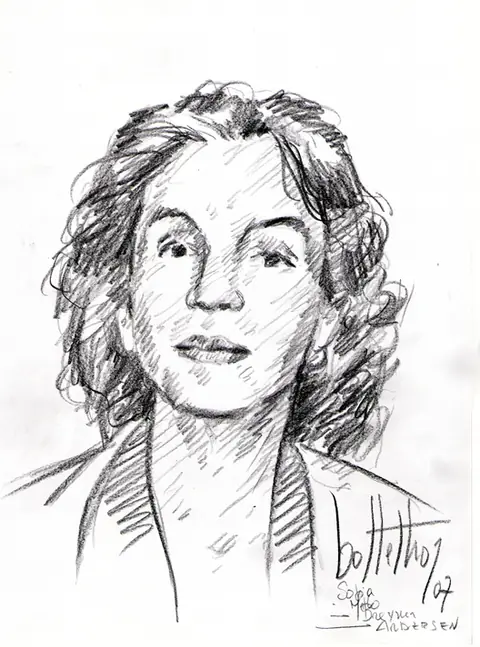
The society organised lecture series and, with the Calouste Gulbenkian Foundation, created biennial grand prizes for poetry, drama, fiction and the essay. It welcomed Roland Barthes and Robbe-Grillet, among others, to its headquarters, and in 1963 it interceded with the minister for members arrested by the PIDE, such as Alves Redol and Urbano Tavares Rodrigues.1 During the 1962 academic crisis, on 15 May, members of the society — among them Sophia de Mello Breyner Andresen, José Cardoso Pires, José Saramago and Aquilino Ribeiro — signed a petition in solidarity with the student associations.56
In May 1965, a jury made up of Alexandre Pinheiro Torres, Augusto Abelaira, Fernanda Botelho, João Gaspar Simões and Manuel da Fonseca gave the Grand Prize for Fiction to Luuanda, by José Luandino Vieira, who was imprisoned for his anti-colonial views.1 Luandino was serving a 14-year sentence at Tarrafal, accused of fighting alongside the People’s Movement for the Liberation of Angola (MPLA).3 The main newspapers reported the prize without realising that the author was a political prisoner; when the censors noticed, they banned any mention of it.2 Under pressure to reverse the decision, the board would not give way. The five jurors were questioned by the PIDE, and Pinheiro Torres, Abelaira and Manuel da Fonseca were imprisoned,1 Manuel da Fonseca at Caxias.4 Twenty-five years later, Fernanda Botelho, the only woman on the jury, told RTP that she had never expected the controversy and that she had voted on literary, not political, grounds.3
On 21 May 1965, an order from the Minister of National Education, Inocêncio Galvão Teles, dissolved the society.2 That night, at around 22:00, the headquarters were broken into and ransacked by “unknown persons” backed by PIDE men; at the door they left a sign, “Terrorists’ agency in the Metropole” (Agência dos terroristas na Metrópole), and on the walls other phrases, such as “M. P. L. A. Branch” (M. P. L. A. Sucursal). The next day’s Diário de Notícias described the smashed furniture, the damaged doors and windows, and the wrecked typewriters and card files.1 RTP speaks of a group of PIDE agents and legionnaires, and says that the Jornal do Fundão, which reported the news, was suspended for six months.3
So ended, after nine years, the Portuguese Society of Writers; the last chairman of its board was Jacinto do Prado Coelho, and its property was never returned. Writers only had an association again with the Portuguese Writers’ Association, approved in September 1972, which was not allowed to inherit the name. When it elected its first governing bodies, in June 1973, it was Sophia de Mello Breyner Andresen who became chair of the general assembly.1
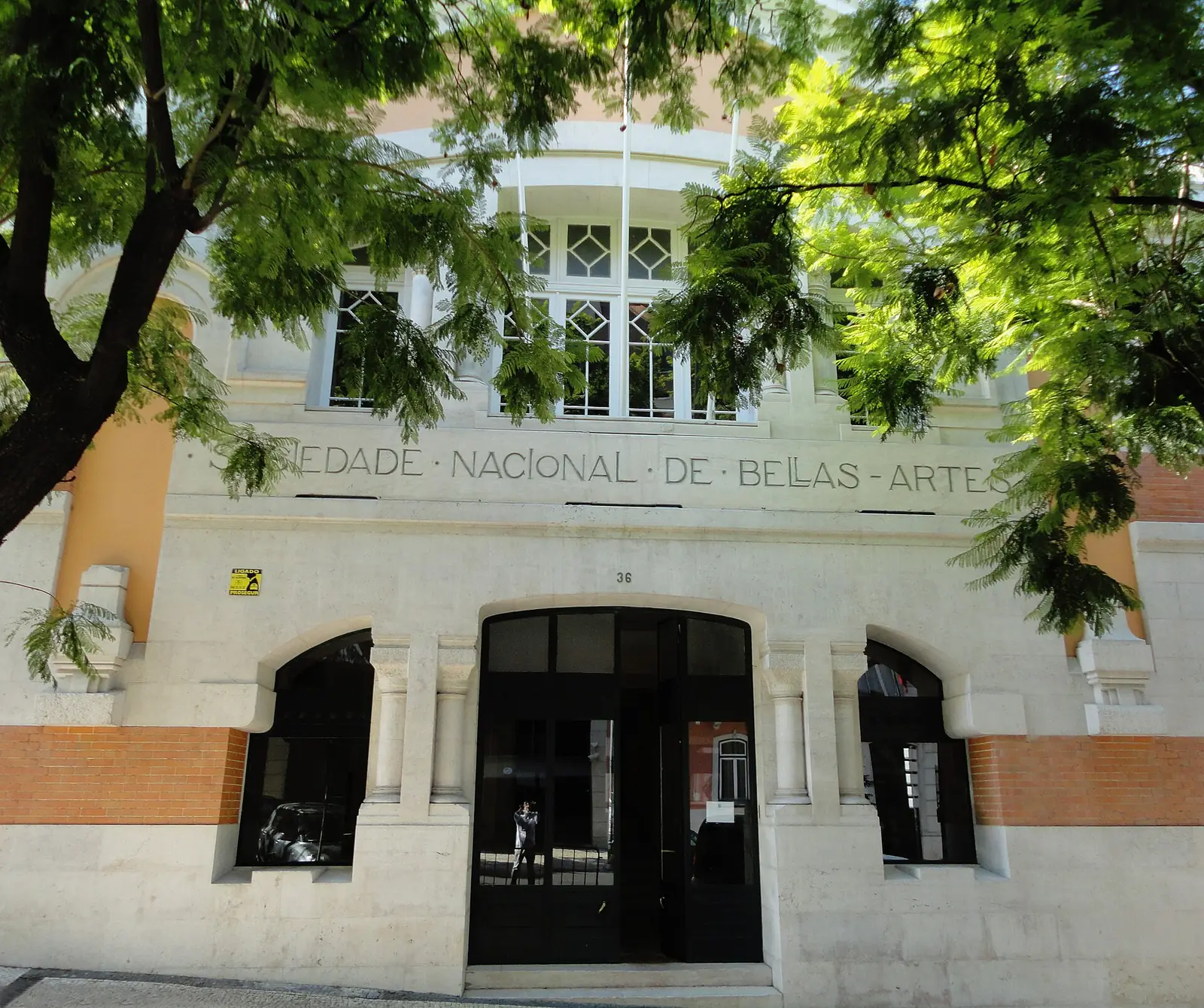
Today: National Society of Fine Arts (Sociedade Nacional de Belas-Artes)
In January 1947, the National Council of Portuguese Women, led by Maria Lamas, brought together here three thousand books by four hundred women authors from thirty countries. It was a success — and the pretext for the regime to close the Council down months later.
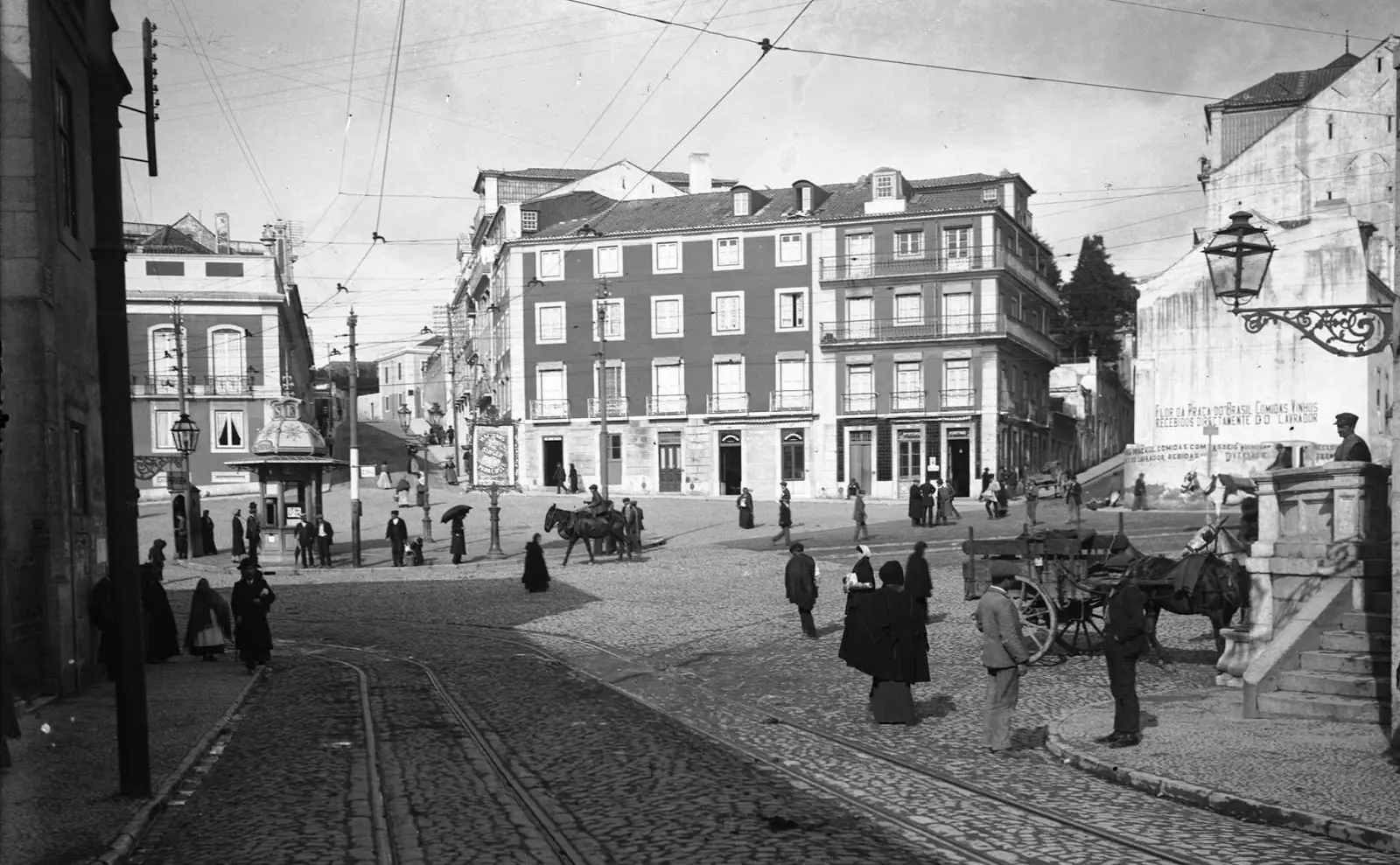
In the revolt of February 1927 barricades went up here, and civilians and sailors were shot by firing squad beside the fountain. In 1931 the square was a front line again; in 1972, it was to the police station on the square that the police took those arrested at the Capela do Rato vigil.
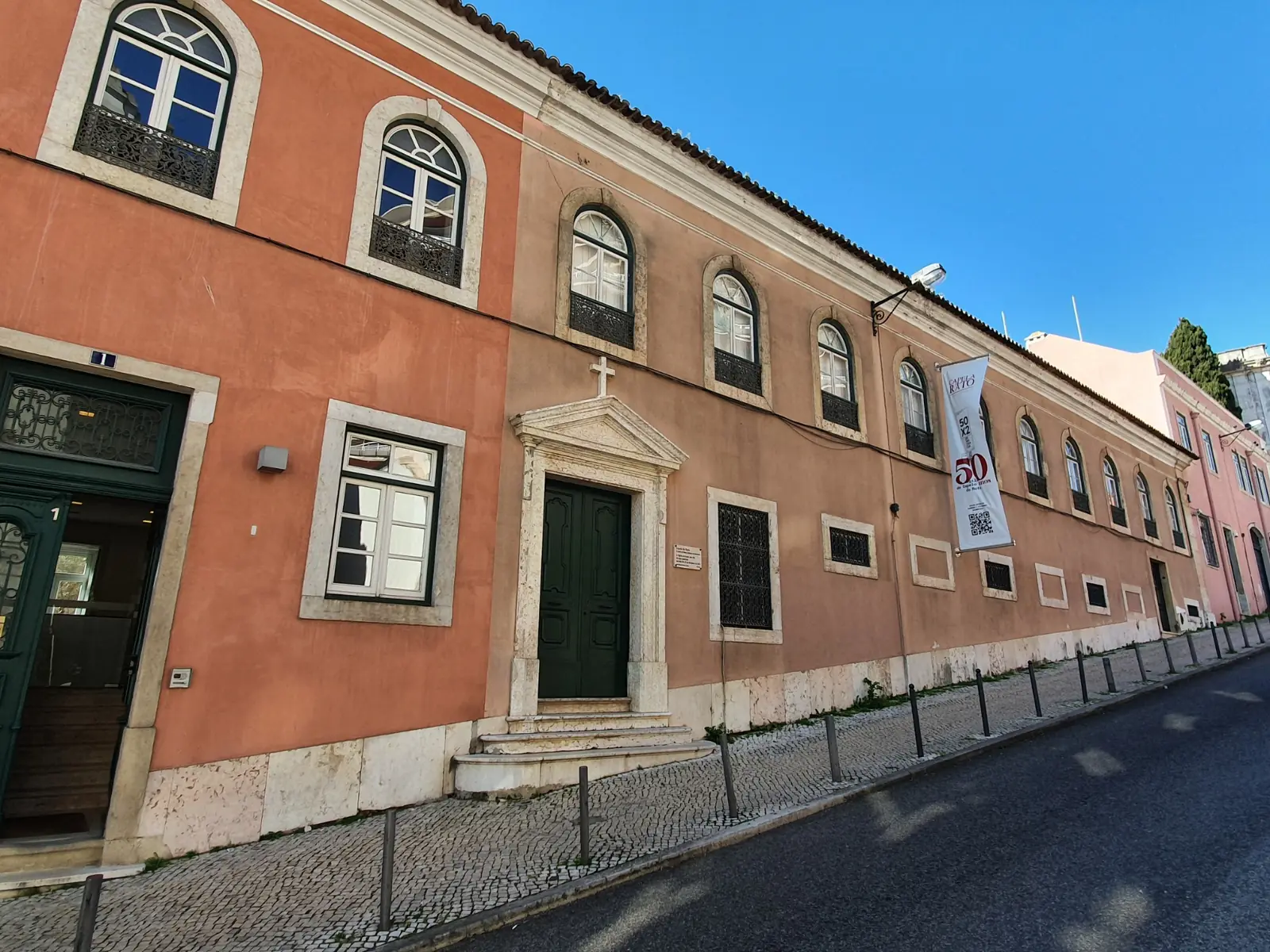
Today: Capela do Rato (Chapel of Nossa Senhora da Bonança)
Over the turn of 1972 into 1973, Catholics opposed to the colonial war held a 48-hour vigil here. It was a woman, Maria da Conceição Moita, who announced it at the microphone; the riot police broke it up and took dozens of people away.
This was the home of the newspaper O Século (The Century), where Maria Lamas edited “Modas e Bordados” (Fashions and Embroidery) until 1947 and where, in 1930, she organised the exhibition “Mulheres Portuguesas” (Portuguese Women). Virgínia Quaresma, one of the first Portuguese women reporters, also worked here.
WomenCulture and censorshipLabour
Notes on the sources3
The point on the map is approximate: it is on Rua da Escola Politécnica, not at the door of no. 20.
What the “Jornal do Fundão” reported: RTP says it was the only newspaper to carry the news and was suspended for six months as a result; but the memorial of the Portuguese Writers’ Association (APE) cites the account of the raid in the “Diário de Notícias” of 22 May 1965.
Who carried out the raid: “gangs of unknown persons, backed by PIDE men” (APE memorial, 1983) or “a group of PIDE agents and legionnaires” (RTP).
Do you know more, or do you have a document? Tell us.