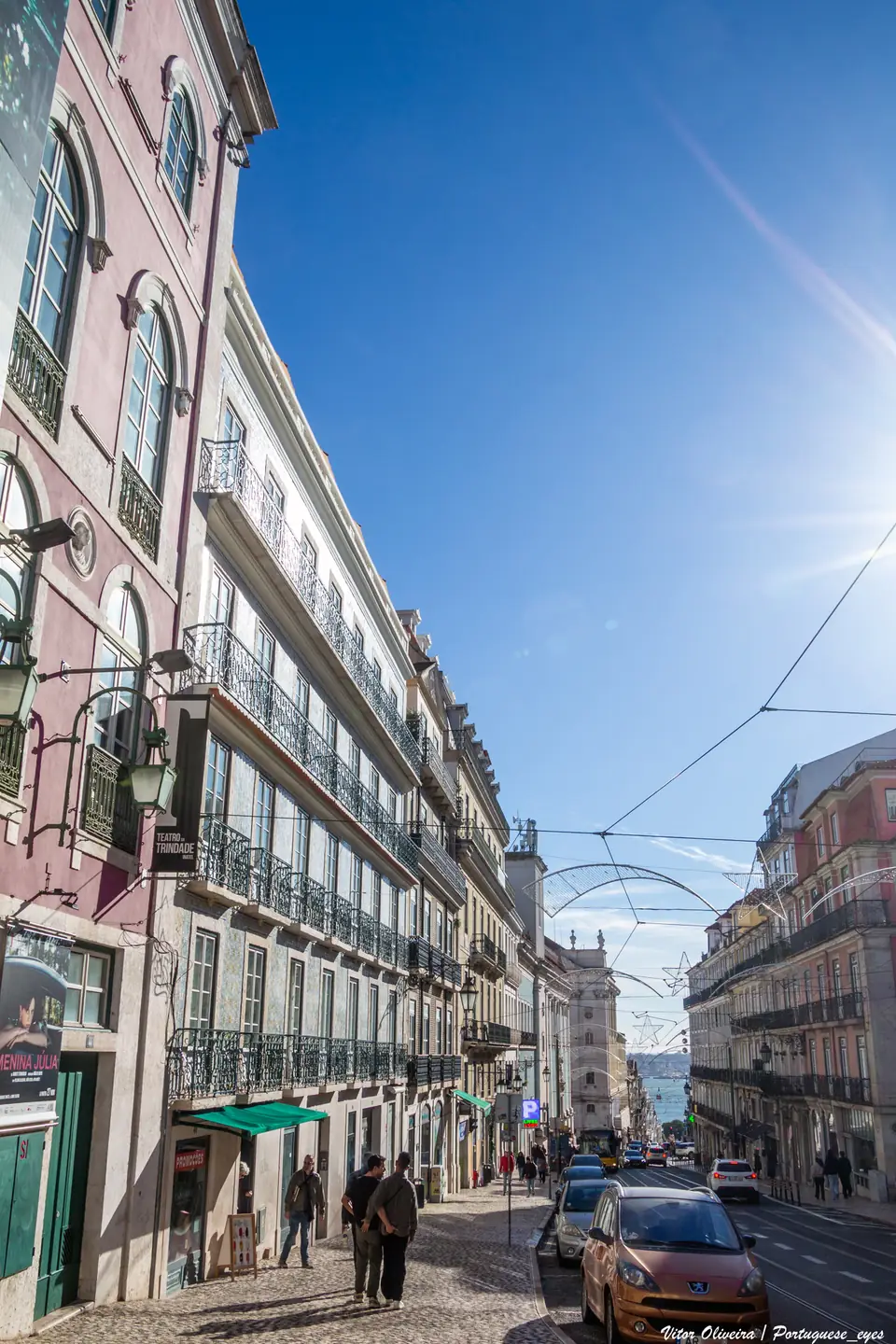
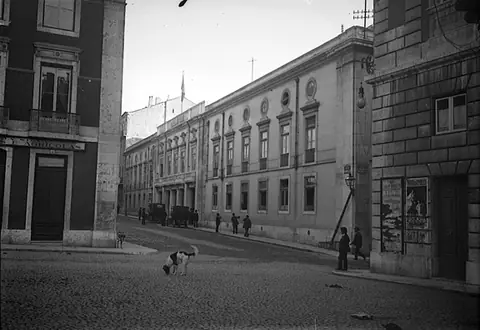
A Rua do Norte, junto à Praça de Luís de Camões, em março de 2020.Daniel, CC BY 2.0
Misericórdia
Editorial offices of the newspaper “A Capital” (Rua do Norte, 3)
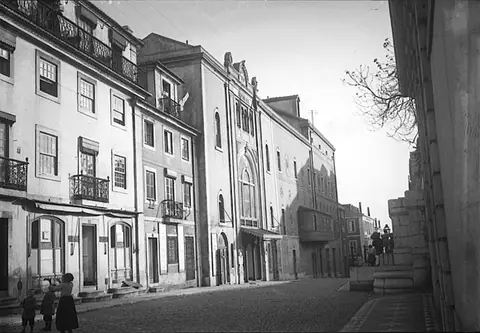
At no. 3 Rua do Norte, on the corner with Praça de Luís de Camões, were the editorial offices of “A Capital”, a republican evening daily. Virgínia Quaresma, the first woman journalist in Portugal, wrote for it and lived just opposite; in 1911, the paper told the story of Carolina Beatriz Ângelo’s fight for the vote.
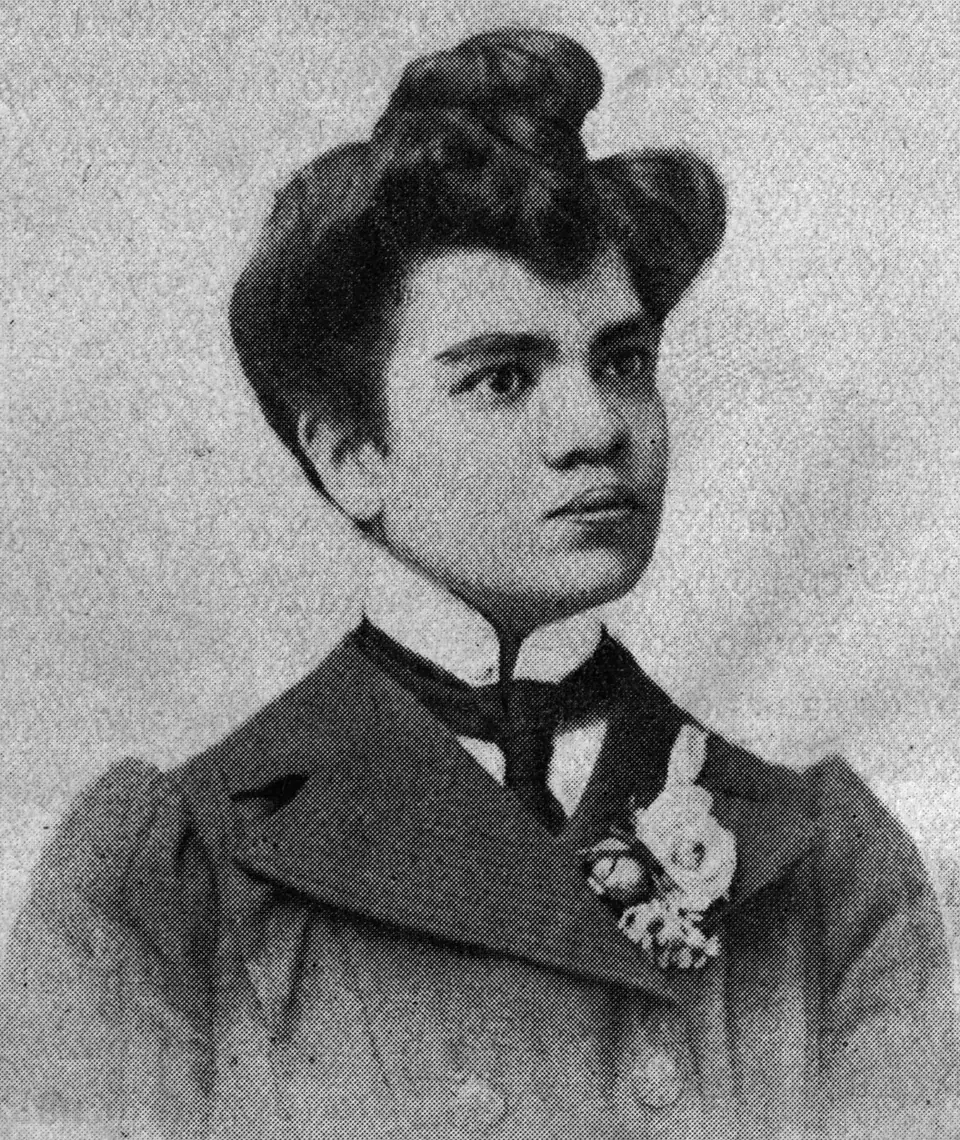
A Capital, a republican evening daily, was published from 1910 to 1938.5 It was founded by Manuel Guimarães, who brought with him Virgínia Quaresma, one of the first women to graduate from the Curso Superior de Letras and the first woman to work as a journalist in Portugal. The editorial offices were here, at no. 3 Rua do Norte, the corner building on Praça de Luís de Camões, and Virgínia rented a flat just opposite.1
Virgínia made her name in political reporting.1 In February 1911, A Capital argued that she should be appointed to the diplomatic service, then closed to women; in August, it reported that she was to go on an official assignment to study schools for girls in France, Italy, Switzerland and Germany.4 On 26 August, in an interview with the paper, she said that she loved the profession, that her male colleagues had always made her welcome and that she wanted to see other women earning their living as journalists.1
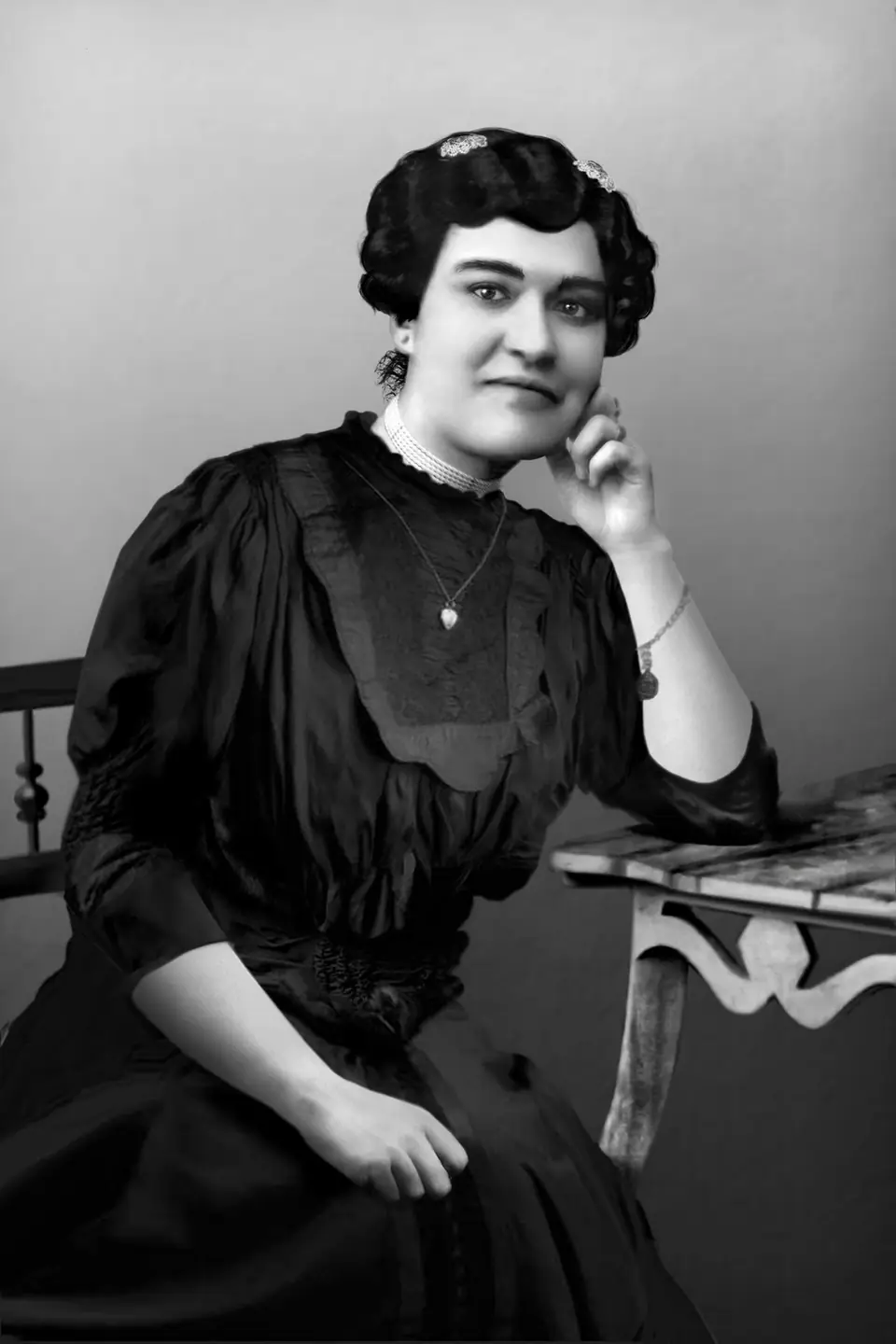
The paper followed the suffragist cause closely. On 29 April 1911 it reproduced the ruling ordering that Carolina Beatriz Ângelo be entered on the electoral roll, and called it “a victory for national feminism”.2 On 28 May, election day, it told how she had voted at the Clube Estefânia: a voter’s protest, the invoking of Article 64 of the electoral law, the “It’s me!” (Sou eu!) at the second roll call and the applause from some of those present.3
From 1931 to 1971 this was the home of the “Diário da Manhã” (Morning Daily), the semi-official newspaper of the National Union, the single party of the Estado Novo (“New State”), and then of “Época”. On 26 April 1974 the people wrecked the headquarters of “Época”; since 2001 the building has been the headquarters of the 25 April Association.
The last headquarters of press censorship, from 22 September 1969 to 25 April 1974, opposite the offices of the newspaper “República”. Newspapers delivered their proofs here for the “blue pencil”; on 26 April the building was stormed by the people.
In the Chiado, the headquarters of the political police: the archives, the informers and, on the third floor, interrogation and torture. On 25 April, agents fired from here on the crowd and killed four people.
Today: The building of the former Civil Government
Seat of the Lisbon Civil Government, in a former building of the Convent of São Francisco. The PSP’s 1st Station, housed there, had cells where the political police locked up many prisoners, especially before 1938, and where trials of the Special Military Court were held.
Repression
Notes on the sources3
The point on the map is approximate: no. 3 Rua do Norte has not been identified, and the point is on Praça de Luís de Camões, by the corner.
Until when the editorial offices of “A Capital” were in this building.
The number of the house where Virgínia Quaresma lived on Rua do Norte, and in which years.
Do you know more, or do you have a document? Tell us.




.jpg)