Pontinha e Famões (concelho de Odivelas), no limite com Carnide (Lisboa)
MFA Command Post – Engineering Regiment No. 1 (Pontinha Barracks)
From 24 to 26 April 1974, the MFA Command Post operated in an annexe of these barracks. From here Otelo Saraiva de Carvalho directed the operations, and Marcelo Caetano was brought here after his surrender. Today it is a museum.
Today: The MFA Command Post Museum, in the Pontinha BarracksThere is a marker at the siteOn one walk
The command post of the Armed Forces Movement (MFA) operated in an annexe of these barracks of Engineering Regiment No. 1, which Captain Luís Macedo, an officer of the unit, had prepared for the mission. On the nights of 22 and 23 April 1974, the Movement secretly strung about 4 km of overhead telephone cable between the Army telephone exchange and the regiment.1 On the 23rd, Otelo Saraiva de Carvalho, Garcia dos Santos and Jaime Neves met at the barracks, and the post was ready.3 From 21:00 on the 24th, what the Signals Practical School picked up by listening in on the networks of the GNR, the Portuguese Legion, the DGS and the PSP, and on the telephones of ministers and military chiefs, came here by direct line.1
At 22:00 on 24 April, the post was assembled: Otelo, Lieutenant Commander Vítor Crespo, Sanches Osório and Lieutenant Colonels Garcia dos Santos and Fisher Lopes Pires; Major Hugo dos Santos arrived later from Tomar. Captain Macedo was in charge of security, and Major José Maria Azevedo provided support.12 The windows were covered with army blankets and the lighting was kept low. In the centre there was a work table and, around it, three support tables — one with radios, two with telephones; in a cupboard, pistols and grenades. To follow the movements of the units, Otelo pinned up military maps of Lisbon and its surroundings and the road map of the Automóvel Clube de Portugal.1
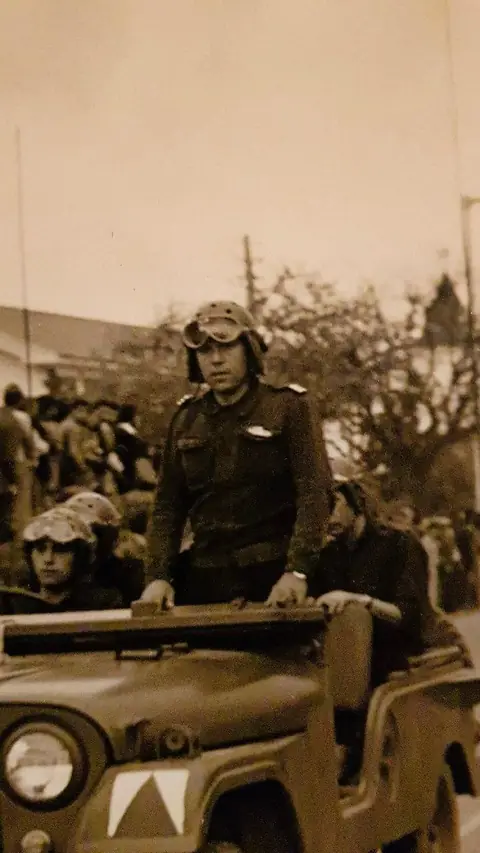
The 25th was commanded from here. At 04:26, with the airport occupied, the post ordered Rádio Clube Português to read the first communiqué, and throughout the day Lieutenant Colonel Fisher Lopes Pires drafted others here, which the station broadcast.2 At around 11:30, with the ministers taking refuge in the Carmo Barracks and at Lanceiros 2, the post ordered the forces at the Terreiro do Paço to split up: one column, with Jaime Neves, would go to the Portuguese Legion barracks, in Penha de França; the other, with Salgueiro Maia, to the Carmo, to obtain the surrender of Marcelo Caetano.2 In the afternoon, while an MFA communiqué read by a woman, Clarisse Guerra, was going out on the radio, Otelo kept pressing Maia from here to force the surrender, and sent him a message through Captain Rosado da Luz: “Blow the locks off the gate with the armoured cars so they can see it’s serious.”1 At 17:00, he gave General António de Spínola a mandate to go and receive Caetano’s surrender.5
As night fell, the barracks filled with prisoners. The Army, Defence and Navy ministers, caught at Monsanto by the Infantry Practical School, were brought here. Spínola arrived with the members of the government arrested at the Carmo and greeted the officers: “Officers, I must begin by informing you that I have just taken power at the Carmo Barracks. Now let us get to work.”2 The Chaimite armoured car “Bula” brought Marcelo Caetano and two ministers, who were held here until the following day.5 At Otelo’s request, Spínola persuaded the arrested Interior Minister, César Moreira Baptista, to telephone the director of the DGS, Silva Pais, who said he was willing to surrender if the Armed Forces protected the agents.2
That night the National Salvation Junta met here, its members summoned by telephone; the first to arrive was General Costa Gomes. At around 23:00, at the meeting with the officers who had drafted the MFA Programme, Spínola wanted to revise it, and it was Lieutenant Commander Vítor Crespo who broke the deadlock: “the armoured vehicles and troops are still in the streets; if need be, the coup goes on”. The Junta named Spínola President of the Republic, when what had been agreed with the MFA was Costa Gomes. At 01:00 on the 26th the Junta left here for the RTP studios, and on its return it resumed the discussion of the Programme, which did not end until 07:00: Spínola’s and Costa Gomes’s demands were accepted, and the “clear recognition” of the right of peoples “to self-determination and independence” was taken out of the text.2
The MFA Command Post Museum opened on 24 April 2001, created by Odivelas City Council together with Engineering Regiment No. 1. The building was classified as a national monument in 2015 and, after a year closed for works, reopened on 25 April 2025.6
Today: Rua Adelaide Cabete, Rua Ana de Castro Osório and Rua Maria Veleda
Lisbon’s first housing development with streets named only after women: in 1976, the new streets of the Quinta dos Condes de Carnide were given the names of Maria Veleda, Ana de Castro Osório, Adelaide Cabete and Guiomar Torresão; in 1978 four more followed, among them Manuela Porto.
The former RTP studios in Lumiar were occupied in the early hours of 25 April 1974 by a column from the Military Administration Practical School. It was from here that the National Salvation Junta presented itself to the country, in the early hours of the 26th.
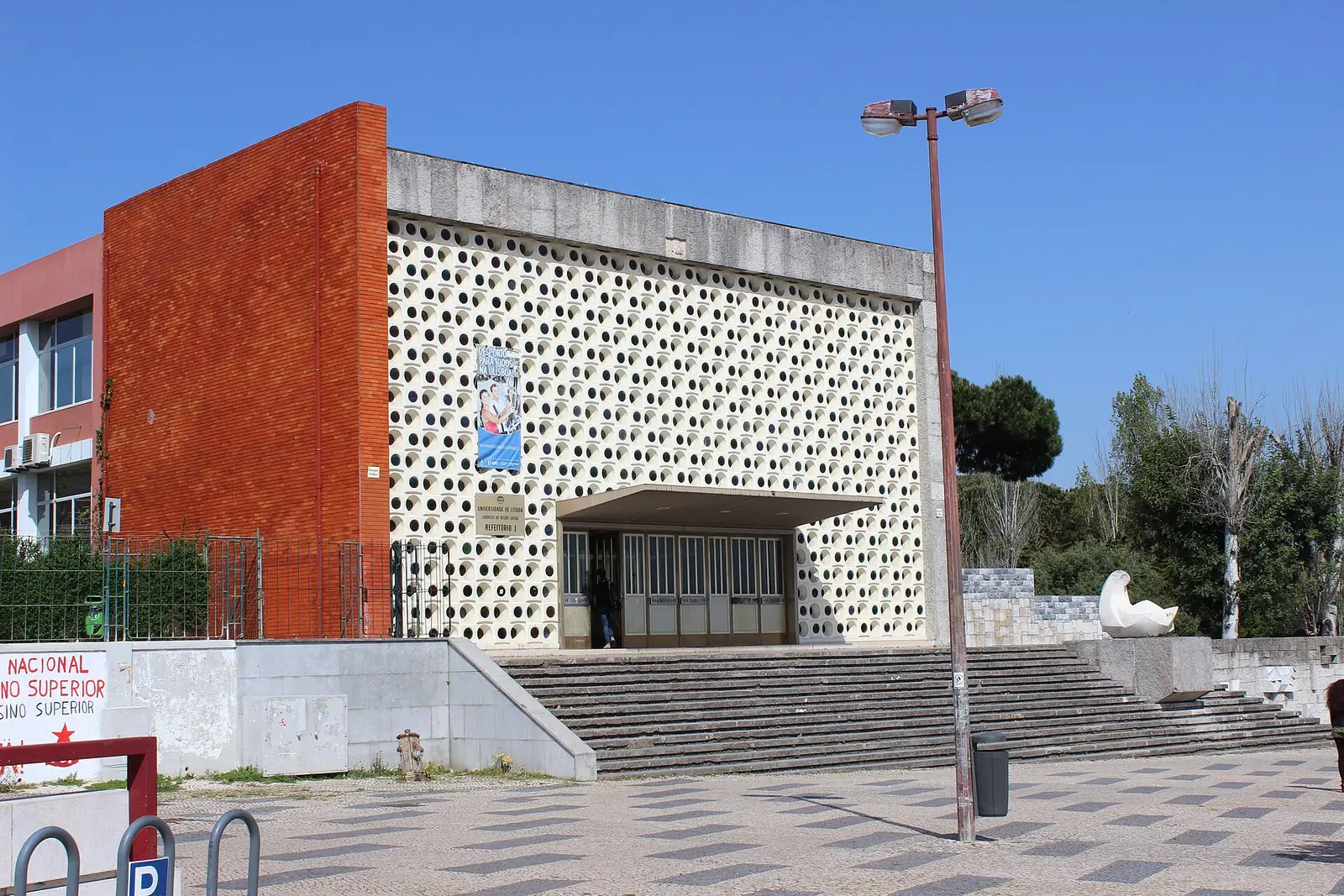
Today: Cantina Velha (Old Canteen) of the University of Lisbon
The Cidade Universitária canteen, opened in 1961, was the stage for the hunger strike of May 1962: 81 students refused to eat, hundreds joined them, and in the early hours of 11 May the police surrounded it and arrested them one by one.
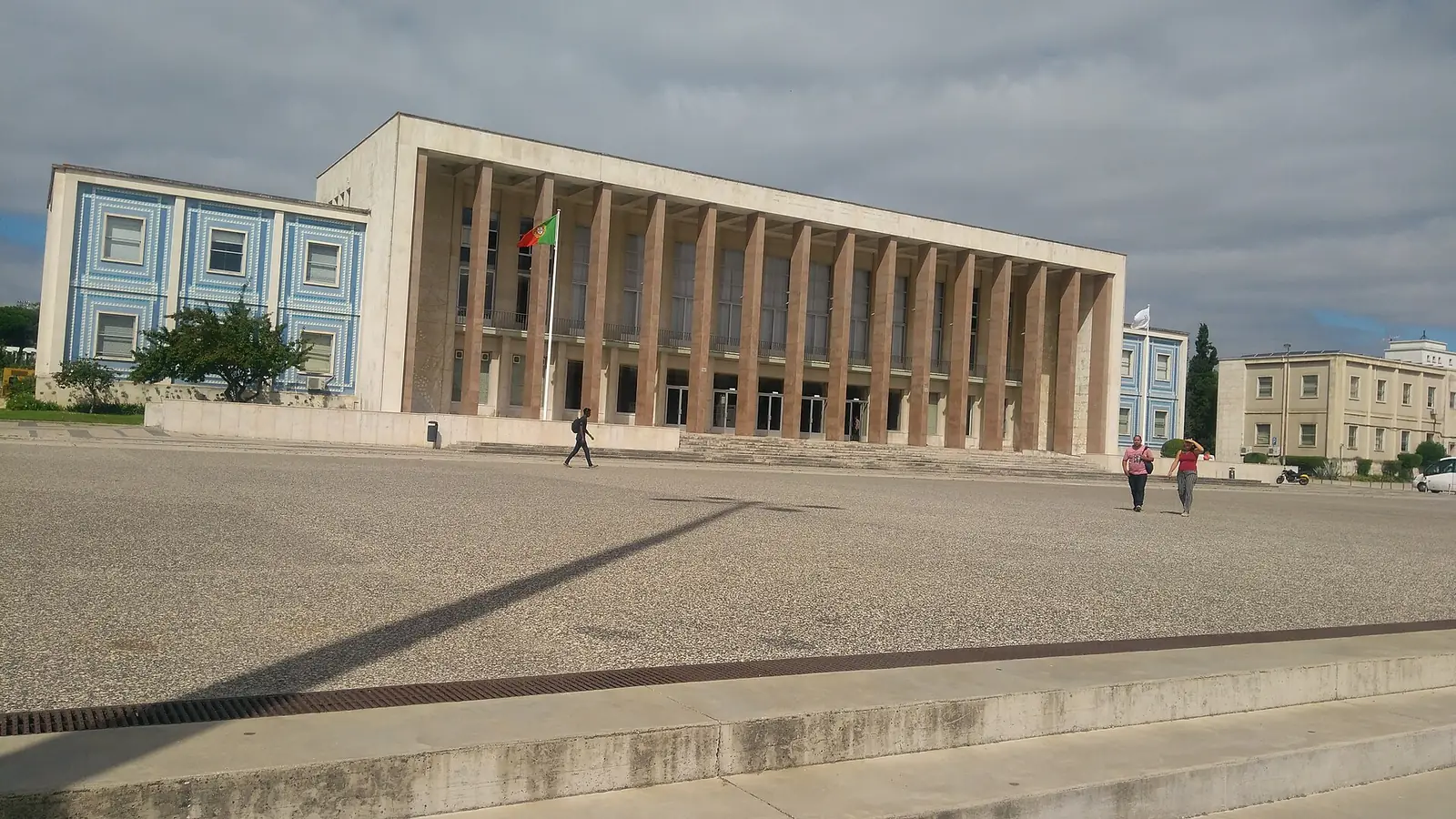
In the 1962 academic crisis, the rector was Marcelo Caetano: from the balcony of the Rectorate he defended the university’s autonomy and, when the government banned Students’ Day again, he resigned. The open ground in front filled with students’ plenary meetings.
StudentsOpposition
Notes on the sources5
Sanches Osório’s rank: major (25 April Association) or lieutenant commander (Commemorative Commission for the 50th Anniversary of 25 April).
The time Caetano arrived: the 25 April Association records Spínola here, with the arrested members of the government, at 20:30; Jofre Alves’s chronology places the Chaimite “Bula” here at 21:00; the Commemorative Commission says that, once the siege was lifted at 19:30, the column took an hour and a half to cover about 11 km.
The instrument that classified the building: Odivelas City Council calls it “Decreto-Lei n.º 21/2015, de 23 de outubro” (Decree-Law no. 21/2015 of 23 October); in the official gazette, the “Diário da República”, its title is Decreto n.º 21/2015 (Decree no. 21/2015).
The municipality: the address is in Pontinha (Odivelas), but OpenStreetMap puts the point on the boundary with Carnide (Lisbon).
Whether the “Places of April” (“Lugares de Abril”) plaque of Lisbon City Council and the 25 April Association has yet been put up at the barracks: in March 2024 it was waiting for the works to finish.
Do you know more, or do you have a document? Tell us.