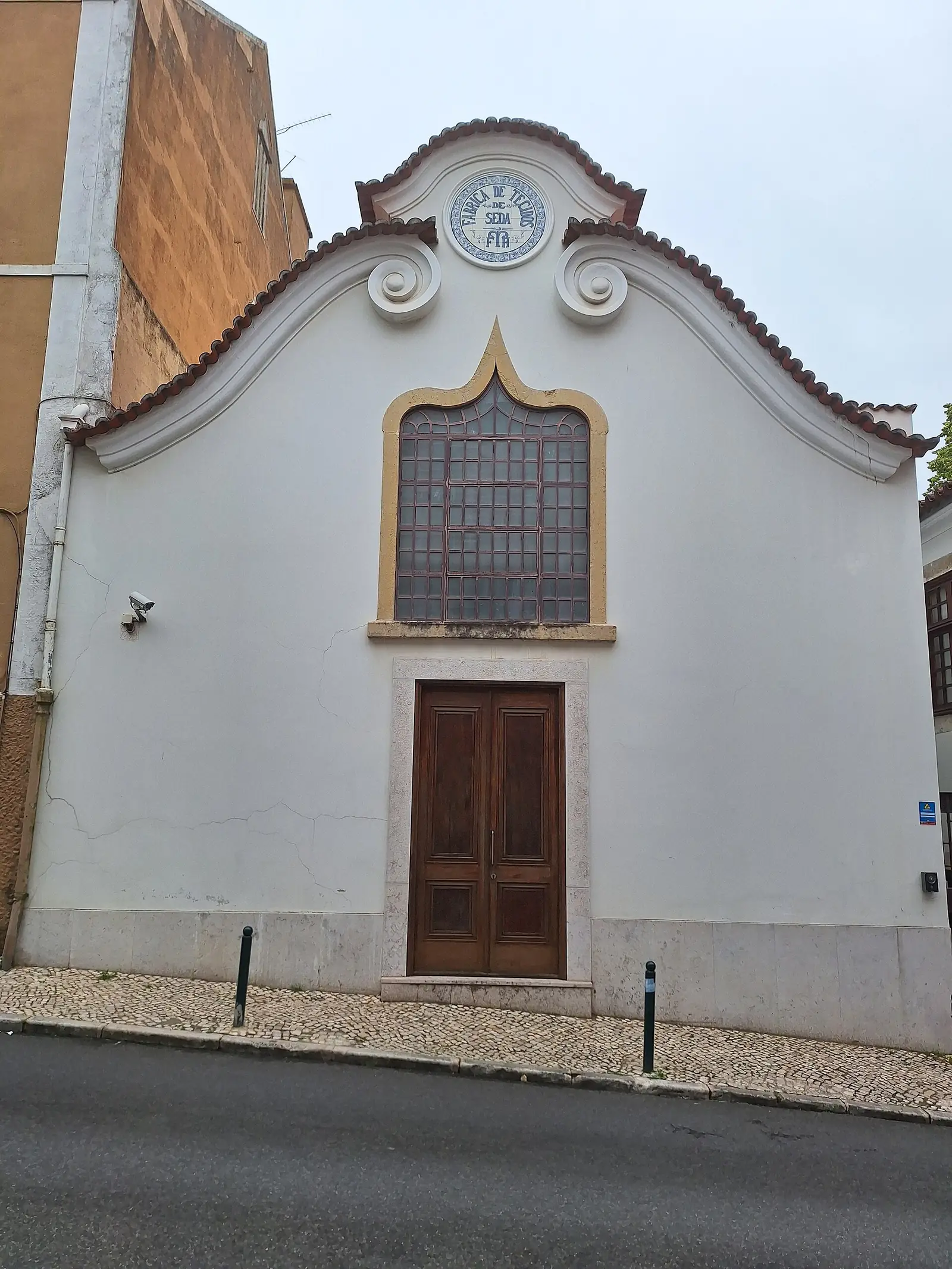
Rádio Clube Português (the Rua Sampaio e Pina studios)
In the early hours of 25 April 1974, MFA officers occupied these studios and made Rádio Clube Português the voice of the Movement: at 04:26, Joaquim Furtado read the first communiqué here. In the afternoon, it was a woman, Clarisse Guerra, who read another.
There is a marker at the siteApproximate locationOn one walk
Rádio Clube Português (RCP) grew in 1931 out of the Rádio Clube da Costa do Sol of Jorge Botelho Moniz, an Army officer who had taken part in the coup of 28 May 1926. The studios moved from Parede to Lisbon at the beginning of 1960.10
The operations plan of the Armed Forces Movement (MFA) made this station the voice of the Movement. At around 03:00 on 25 April 1974, a company of Light Infantry Battalion No. 5 (Caçadores 5) set out on foot from its barracks in Campolide to secure it.23 A group of officers — Majors José da Costa Neves, Delfim Campos Moura and João Sacramento Gomes and Captains Artur Mendonça de Carvalho, José Correia Pombinho, José Santos Coelho, Nuno dos Santos Ferreira and Nuno dos Santos Silva — occupied the studios without incident,1 and Captain Santos Coelho telephoned the Command Post: “MEXICO occupied without incident”.3
At 04:26, with the airport already occupied, the announcer on duty, Joaquim Furtado, read the MFA’s first communiqué, drafted by Major Vítor Alves. Major Costa Neves was supposed to read it, but Furtado, on learning what it was about, volunteered. The communiqué asked the population to stay calm and doctors to go to the hospitals.3 Then came the national anthem and military marches and, throughout the day, songs by censored songwriters — José Afonso, Adriano Correia de Oliveira, José Jorge Letria, Luís Cília, José Mário Branco.4
At 08:00, the government had the electricity and telephones cut off at the studios and at the Porto Alto antennas. Generators kept the broadcast going, and contact with the Command Post was kept up from a public telephone box near Rua Sampaio e Pina. Shortly after 13:00, a lieutenant colonel said that his son was picking up and recording the communications of the regime’s forces; the head of the station’s record library went to his house with a tape recorder, and RCP began putting those conversations on air, which showed the government’s disarray.3 At around 14:30, a communiqué reporting the objectives taken and the siege of Marcelo Caetano in the Carmo Barracks was read by a woman, Clarisse Guerra.34 At 20:00, the station broadcast the MFA Proclamation, which announced a programme for “the restitution to the Portuguese People of the civic freedoms of which it has been deprived”.4
In the attempted coup of 11 March 1975, the Porto Alto transmitter station was attacked and RCP stopped broadcasting on medium wave from Lisbon, carrying on in FM and from Porto.67On 25 November 1975, it went off the air at 22:10.8
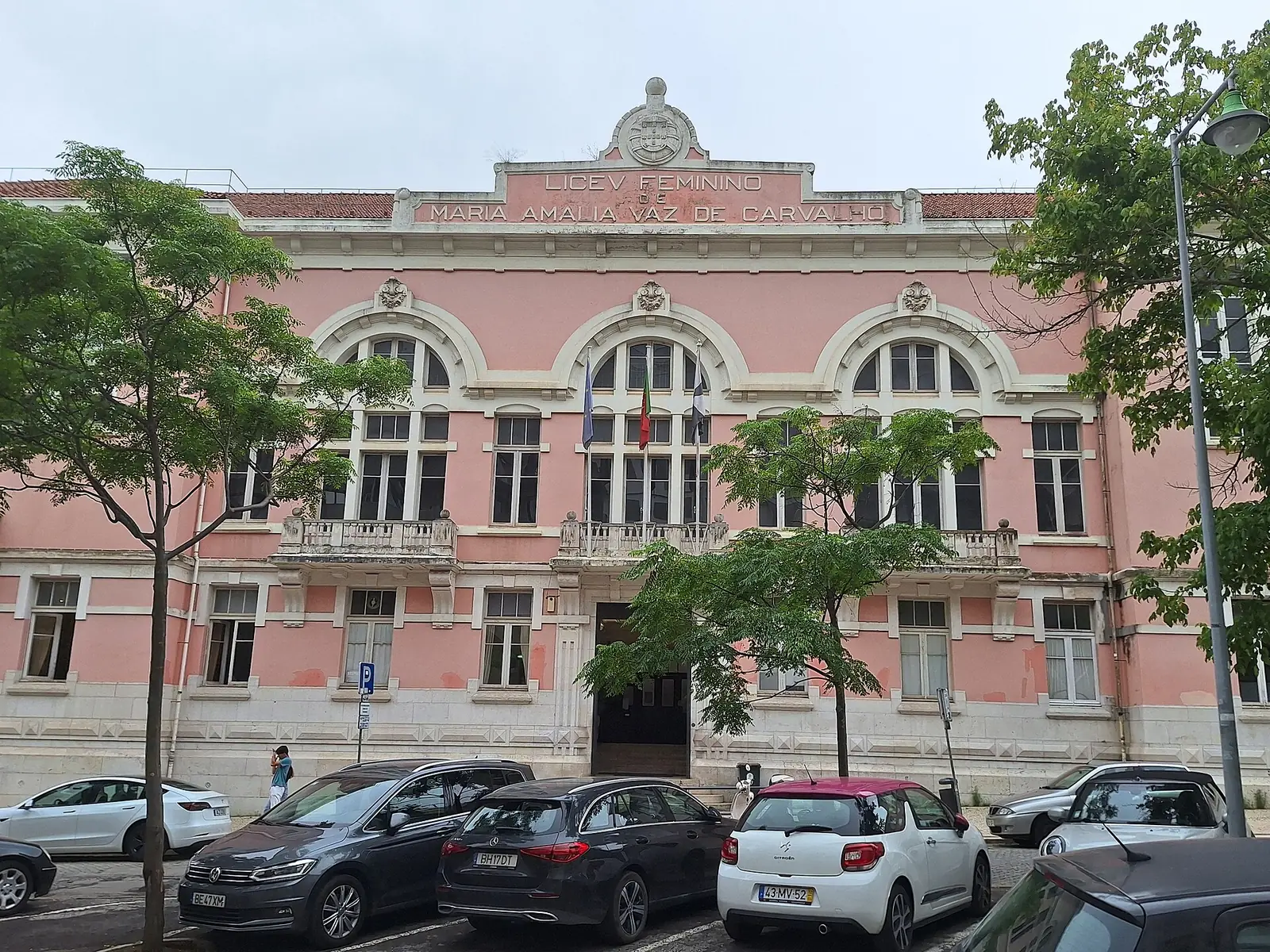
Today: Maria Amália Vaz de Carvalho Secondary School
The country’s first girls’ secondary school (liceu), created in 1906 as the Liceu Maria Pia, and from 1933 the first to be housed in a building purpose-built for girls. Domitila de Carvalho and Maria Guardiola, two of the first three Portuguese women deputies, were headmistresses here.
Here, on 13 January 1975, the Women’s Liberation Movement set out to burn the symbols of women’s oppression. Some two thousand shouting men broke up the demonstration. The bonfire never happened — and the “bra burning” is a legend.
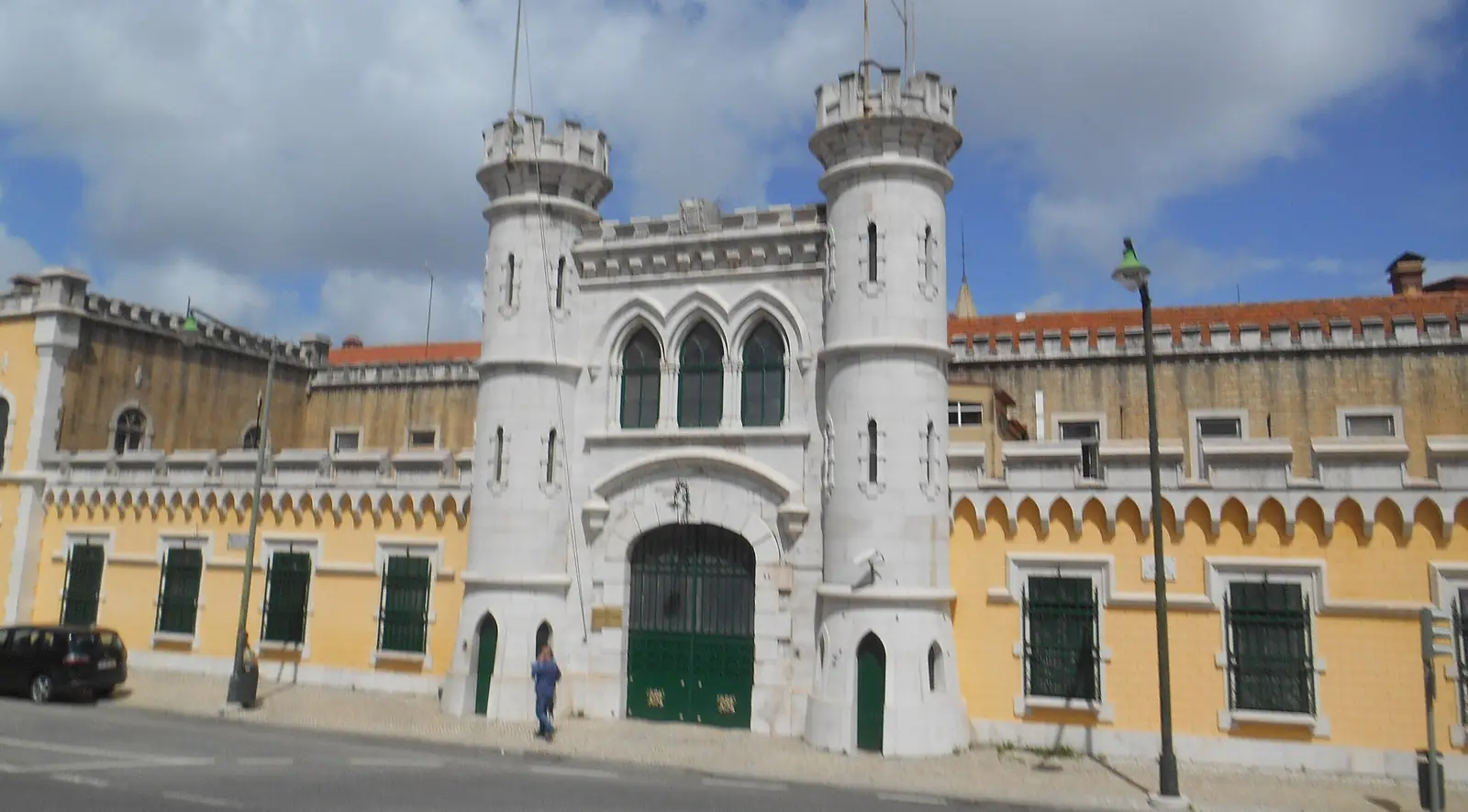
A prison for common crimes that the political police used for political prisoners, above all in prolonged isolation. The sailors of the 1936 revolt left from here for Tarrafal, and the communist leader Militão Ribeiro died here, on hunger strike, in 1950.
In 1946, the National Council of Portuguese Women, chaired by Maria Lamas, moved its headquarters to this lane in Amoreiras. On 28 June 1947, the police closed it “without prior notice”, putting an end to 33 years of the association.
WomenRepression
Notes on the sources4
The time of the occupation: 03:12 (Jofre Alves’s chronology), 03:20 or 03:32 (25 April Association, on its two pages) or 03:30 (Commemorative Commission for the 50th Anniversary of 25 April).
The time of the first communiqué: 04:26 (25 April Association, Commemorative Commission, Jofre Alves) or 04:20 (Aljube Museum).
Who commanded the group of officers that occupied the station: Major Costa Neves (25 April Association) or Captain Mendonça de Carvalho (Jofre Alves).
What occupies no. 24 Rua Sampaio e Pina today, and exactly where the “Places of April” plaque is.
Do you know more, or do you have a document? Tell us.
6Os acontecimentos do 11 de Março de 1975. RTP – Memórias da Revolução (textos de Aniceto Afonso, Carlos Matos Gomes e Maria Inácia Rezola) — consulted on 2 October 2026
7RAL 1 – Lisboa. RTP – Memórias da Revolução (textos de Aniceto Afonso, Carlos Matos Gomes e Maria Inácia Rezola) — consulted on 2 October 2026
825 de Novembro de 1975. Comissão Comemorativa 50 Anos 25 de Abril — consulted on 2 October 2026
925 de Abril de 1974. Museu do Aljube Resistência e Liberdade (EGEAC) — consulted on 2 October 2026