In the early hours of 25 April, the Armed Forces Movement (MFA) occupied Portela airport and closed the airspace. From here Caetano and Tomás left for Funchal, and here, on 30 April, Álvaro Cunhal and Conceição Matos arrived from exile on the “Freedom plane”.
Today: Humberto Delgado AirportApproximate locationOn one walk
On 20 December 1953, returning from a meeting of the World Peace Council, Maria Lamas was arrested by the PIDE at the airport, and with her some fifty people who had come to meet her — among them the painter Maria Keil and her husband, the architect Francisco Keil do Amaral, Sofia Dias Coelho, Antónia Lapa and Maria Machado.7 Almost twenty years later, on 26 November 1972, it was the turn of Maria Antónia Fiadeiro: she was returning from exile in Brazil with her children, was arrested here and taken to Caxias, where she was held for a month.89
In the operations plan of the Armed Forces Movement (MFA), the airport was a target to be occupied: it was necessary to cut communications with the outside world and to prevent regime officials from fleeing and reinforcements from arriving by air.1 About two hundred soldiers of the Infantry Practical School in Mafra, commanded by Captain Rui Rodrigues, arrived before dawn; Air Force Captain José Costa Martins was already inside. The Public Security Police (PSP), the Fiscal Guard and the DGS were disarmed and detained, and Costa Martins went up to the control tower with armed men to have Portuguese airspace closed and traffic diverted to Madrid and Las Palmas.2 At 04:25, Rui Rodrigues reported to the Command Post: “NEW YORK has been occupied and is under control” (NOVA IORQUE foi ocupada e encontra-se sob controlo). With the airport taken, the order could be given to read the MFA’s first communiqué on Rádio Clube Português.12
In the late afternoon, the Mafra force left here for RAL 1, where it freed the officers held since 16 March. At 23:00 two companies of paratroopers from Tancos landed: one relieved the exhausted soldiers of the Infantry Practical School; the other went on to Caxias Fort. On the morning of the 26th, at around 07:00, Américo Tomás and Marcelo Caetano, with the former ministers Silva Cunha and Moreira Baptista, boarded an Air Force plane here for Funchal, where they were kept under surveillance.2
On 30 April, Álvaro Cunhal, general secretary of the Portuguese Communist Party (PCP), arrived at Portela airport after 14 years in exile.43 An emotional crowd was waiting for him; Mário Soares stood a few metres from the plane, waiting to embrace him, and Cunhal spoke to the crowd from the top of a Chaimite armoured car.3On the same plane, the “Freedom plane” (avião da Liberdade), came Conceição Matos and Domingos Abrantes, who had left clandestinely for Paris in February.10
On 11 March 1975, during the Spinolist coup attempt, the Continental Operations Command (COPCON) occupied the airport.6 Since 15 May 2016, the airport has borne the name of Humberto Delgado, in tribute to the general who fought the dictatorship and helped to create Portuguese commercial aviation and TAP.11
The Light Artillery No. 1 barracks, at the entrance to the Autoestrada do Norte motorway, was attacked on 11 March 1975 by aircraft and paratroopers in the coup attempt by Spínola’s supporters; the soldier Joaquim Carvalho Luís was killed. The dialogue between the two captains, filmed by RTP, became famous.
The former RTP studios in Lumiar were occupied in the early hours of 25 April 1974 by a column from the Military Administration Practical School. It was from here that the National Salvation Junta presented itself to the country, in the early hours of the 26th.
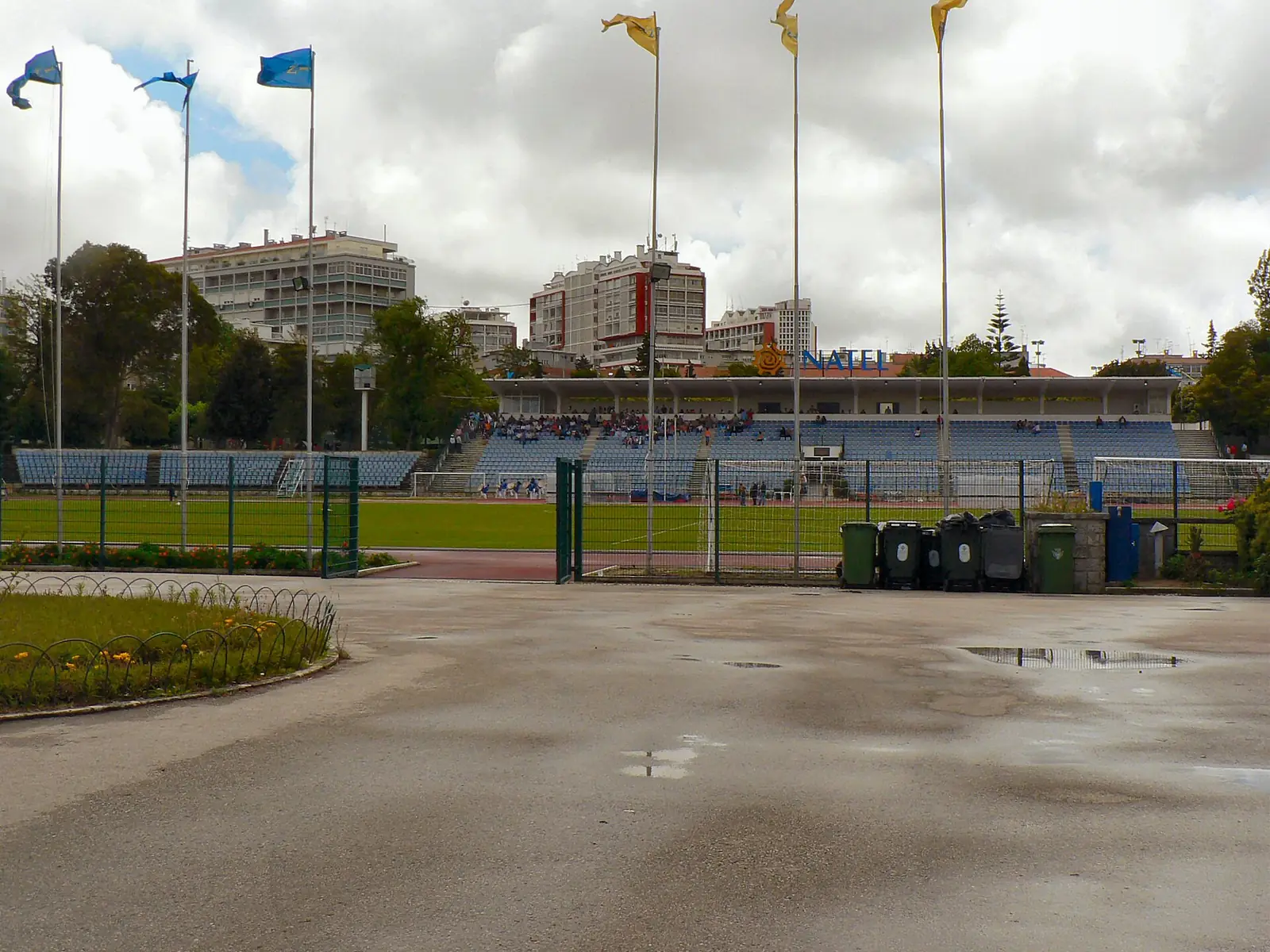
On the first May Day in freedom, a week after the revolution, the Lisbon march ended in a rally at this FNAT stadium, which that day was renamed Estádio 1.º de Maio (May Day Stadium). At the rally, Mário Soares embraced Álvaro Cunhal.
Today: Cidade Universitária – University of Lisbon
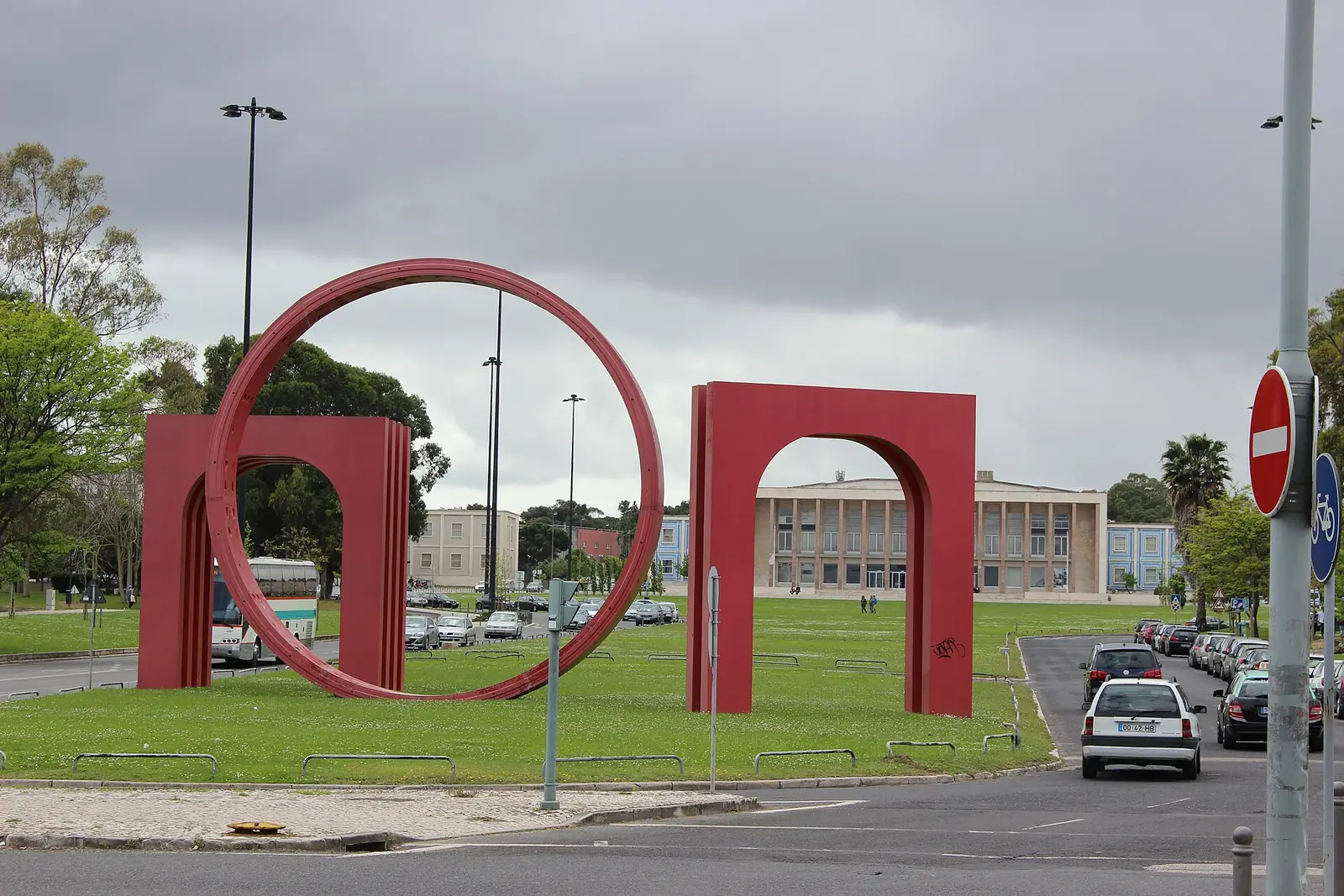
The 1962 academic crisis began here: when Students’ Day was banned, on 24 March, the riot police charged the students. At the general assemblies that followed, Isabel do Carmo was the first woman to take the floor.
StudentsRepressionWomen
Notes on the sources4
That the airport where Maria Lamas was arrested in 1953 is Lisbon’s: the Democratic Women’s Movement writes only “at the Airport”.
That Maria Antónia Fiadeiro was arrested at Lisbon airport: Wikipedia says “at the airport”; the Commission for Citizenship and Gender Equality (CIG) says only that she was arrested in 1972, as she was returning from Brazil.
The time at which the airport was under control in the early hours of 25 April: 04:00 (Commemorative Commission) or 04:25, the time of the message to the Command Post (25 April Association).
The time at which the “Freedom plane” landed on 30 April 1974.
Do you know more, or do you have a document? Tell us.




,_Lisbon,_Portugal_(51323558287).jpg)