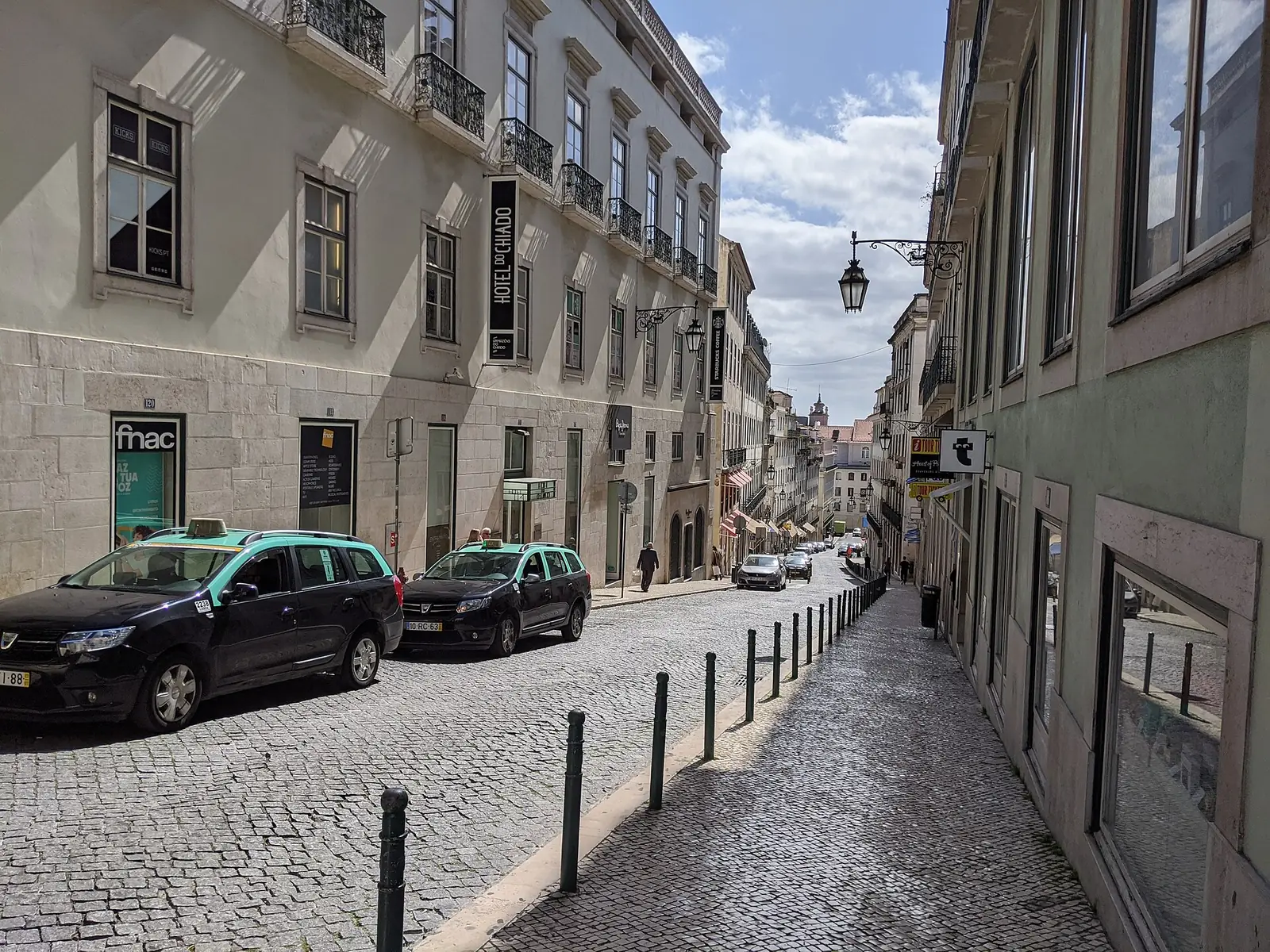
A Rua do Carmo, a subir para o Chiado, com a passagem do Elevador de Santa Justa ao fundo, em 2019.Jan Helebrant, CC0 1.0
Santa Maria Maior
Rua do Carmo — Celeste Caeiro’s carnations
Salgueiro Maia’s column climbed this street, from the Rossio to Largo do Carmo. It was here, at the start of the street, that Celeste Caeiro gave a carnation to a soldier who asked her for a cigarette — and the carnation became the symbol of the revolution.
Today: Rua do CarmoApproximate locationOn one walk
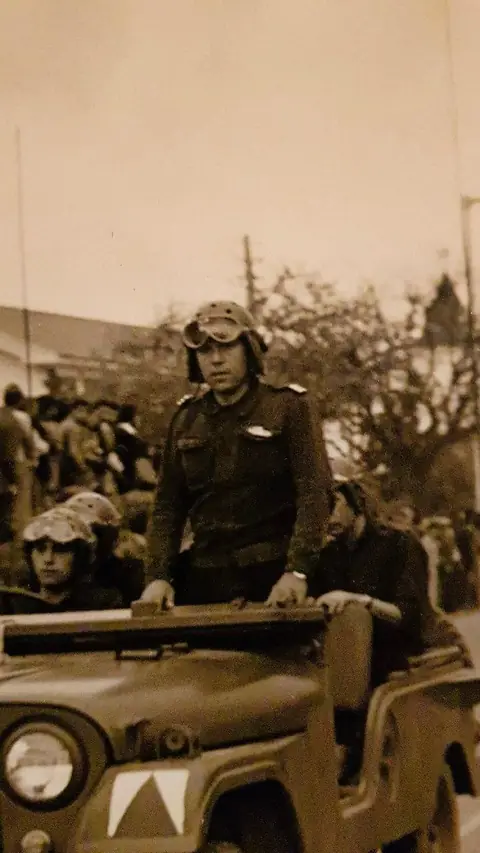
At around midday on 25 April, the armoured vehicles of the Cavalry Practical School left the Terreiro do Paço for Largo do Carmo. In the Rossio, a company sent to stop them placed itself under the Movement’s orders; then the vehicles struggled up the steep streets, cheered by thousands of people, and reached the Carmo at about 12:30.2
Celeste Caeiro worked at the Sir restaurant, in the Franjinhas Building, on Rua Braamcamp. The restaurant turned one year old that day and the owners had bought carnations to give to the women customers; with the coup under way it did not open, and the carnations were given to the women on the staff.7 Celeste came down to the Baixa with her bunch of flowers. By the Chaimite armoured cars, a soldier said to her: “We’re going to the Carmo to arrest Marcelo. By the way, miss, you wouldn’t have a cigarette on you?” (Vamos para o Carmo prender o Marcelo. Já agora, a menina não tem aí um cigarrinho?) She did not smoke. She gave him a carnation, and he put it in the barrel of his rifle. She later said she must have given away about six.5
The gesture was repeated across the city, and the foreign newspapers called it the Carnation Revolution. Celeste Caeiro took part in the parade down Avenida da Liberdade for the 50th anniversary of 25 April, in 2024, in a wheelchair, with carnations in her hand. She died on 15 November that year.8
The unveiling, at the end of Rua do Carmo, by the Rossio, of a plaque bearing the poem “Celeste em Flor” (Celeste in Bloom), by Rosa Guerreiro Dias, at the spot where Celeste Caeiro gave a carnation to a soldier who had asked her for a cigarette. The plaque marks the gesture 51 years on.
Original page Licença padrão do YouTube — embed permitido pelo canal oficial da Câmara Municipal de Lisboa
Câmara Municipal de Lisboa, on YouTube. The player only connects to that site when you press “Watch”.
Celeste Caeiro, then aged 81, tells in her own words the story of the carnations that became the symbol of 25 April, in a video published by Lisbon City Council on the eve of the revolution’s 40th anniversary.
Original page Licença padrão do YouTube — embed permitido pelo canal oficial da Câmara Municipal de Lisboa
Câmara Municipal de Lisboa, on YouTube. The player only connects to that site when you press “Watch”.
Where it is
Map showing where Rua do Carmo — Celeste Caeiro’s carnations is.
Opening the map…
Rua do Carmo — Celeste Caeiro’s carnationsRua do Carmo, 1200-093 Lisboa
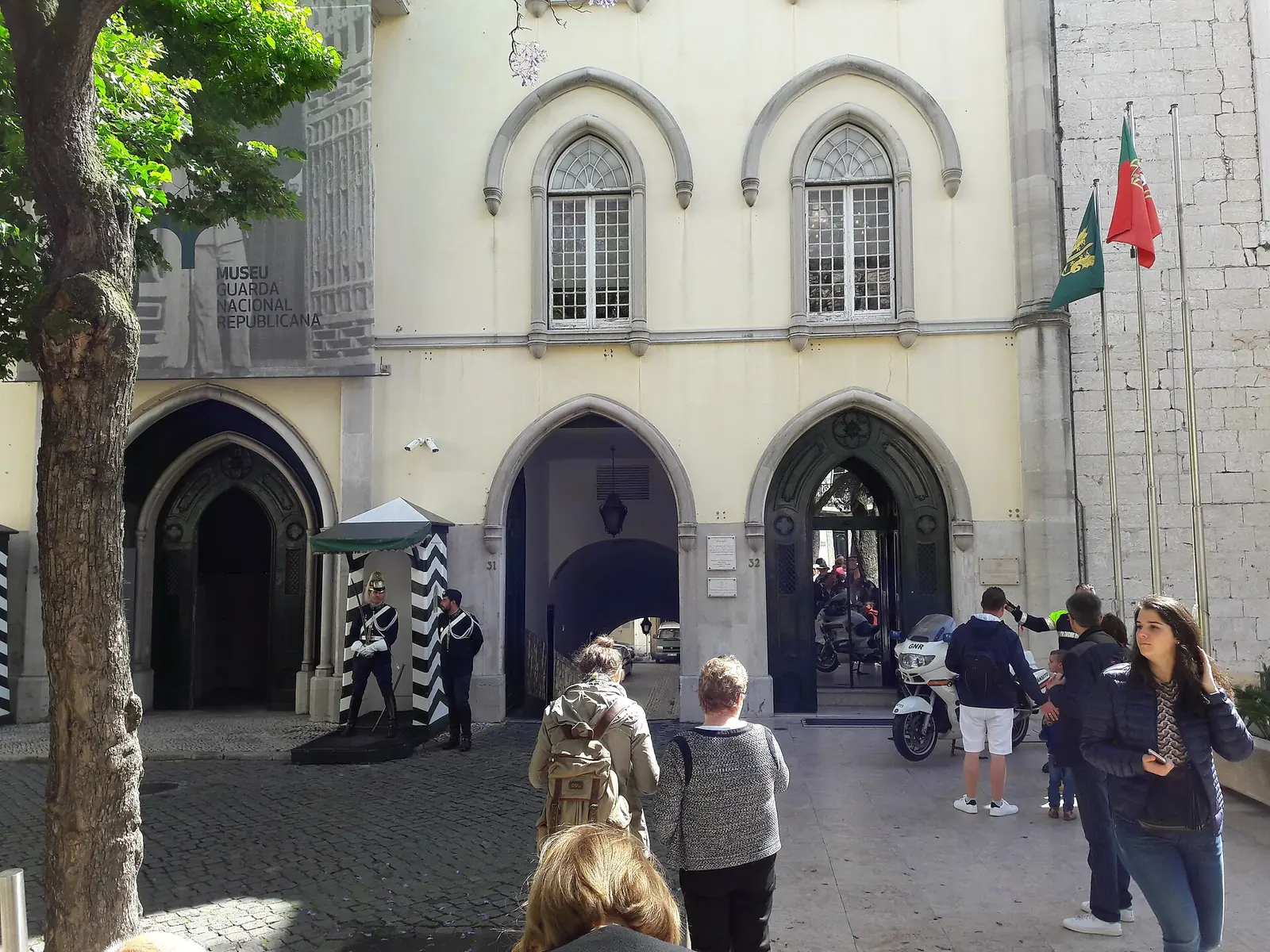
Today: GNR General Command and the National Republican Guard Museum
The most symbolic of the places of April. Marcelo Caetano took refuge in the Carmo Barracks in the early hours of 25 April 1974; surrounded by Salgueiro Maia’s column and by thousands of people, he handed power to General Spínola late in the afternoon.
An advertisement from 1909 places the surgery of Carolina Beatriz Ângelo, a gynaecologist and the first Portuguese woman surgeon, here, at no. 84 Rua Nova do Almada — two years before she became the first woman to vote in Portugal.
On the first floor of this café on the Rossio, on 10 May 1958, Humberto Delgado answered “Obviously, I’ll sack him!” (Obviamente, demito-o!) when asked what he would do with Salazar if he were elected.
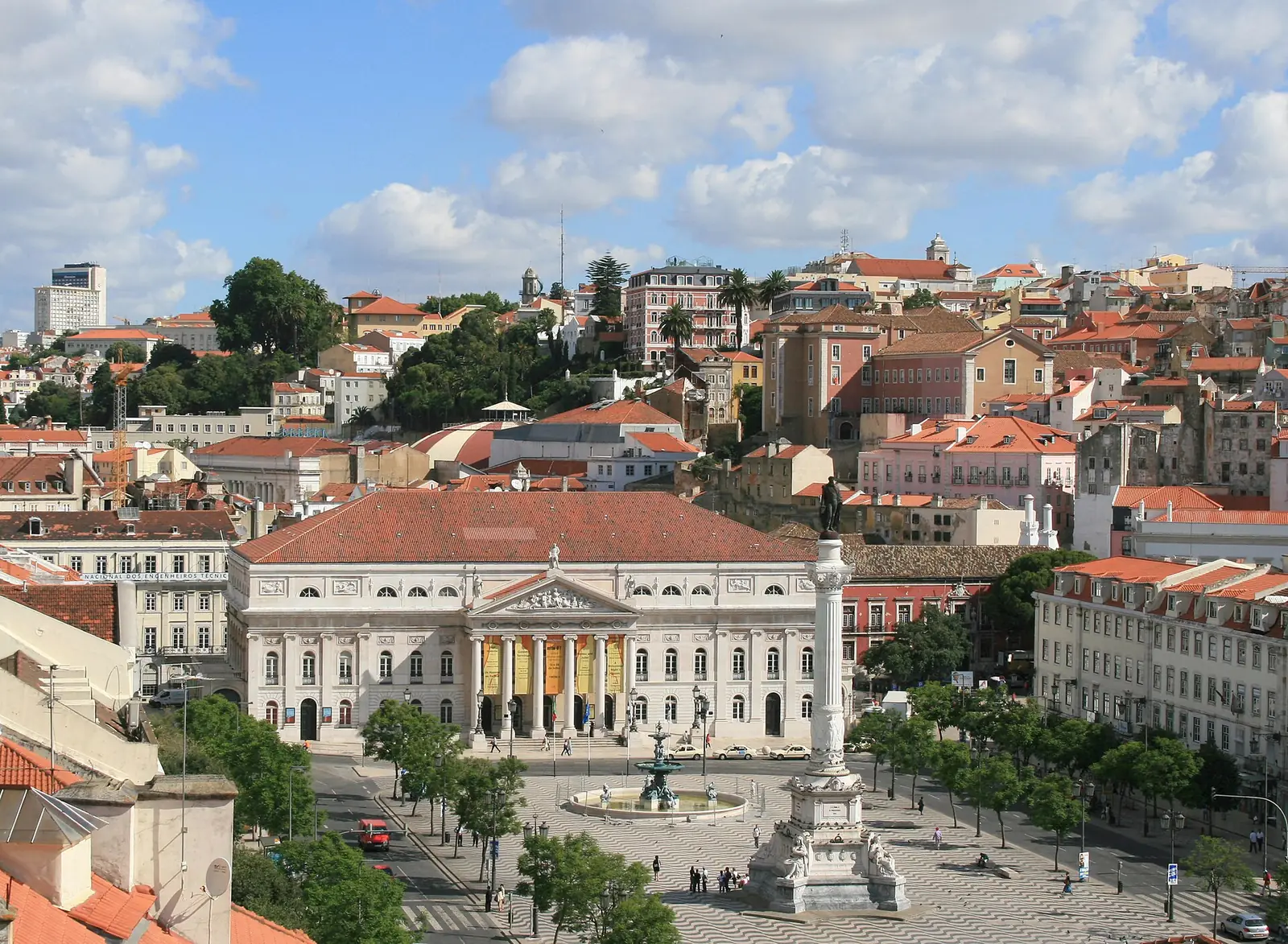
On the Rossio, the GNR charged Humberto Delgado’s supporters in 1958 and the police put down the May Day demonstration of 1962. On 25 April 1974, Salgueiro Maia’s column passed through here, among the crowd, on its way to the Carmo.
OppositionLabourStudents
Notes on the sources4
The exact spot of Celeste Caeiro’s gesture: “the start of Rua do Carmo” (“Diário de Notícias”), the corner with Rua Garrett (“A Mensagem de Lisboa”), “in front of the Tabacaria Caravela” (“Diário de Notícias”) or the Rossio (English Wikipedia). The coordinate is that of the street.
Whether Celeste was going home (she lived in the Chiado) or to the Rossio by metro: the published accounts differ.
The time of the encounter: the sources say only that it was in the morning or near midday.
Whether there is any plaque or marker to Celeste Caeiro in the street.
Do you know more, or do you have a document? Tell us.



.jpg)