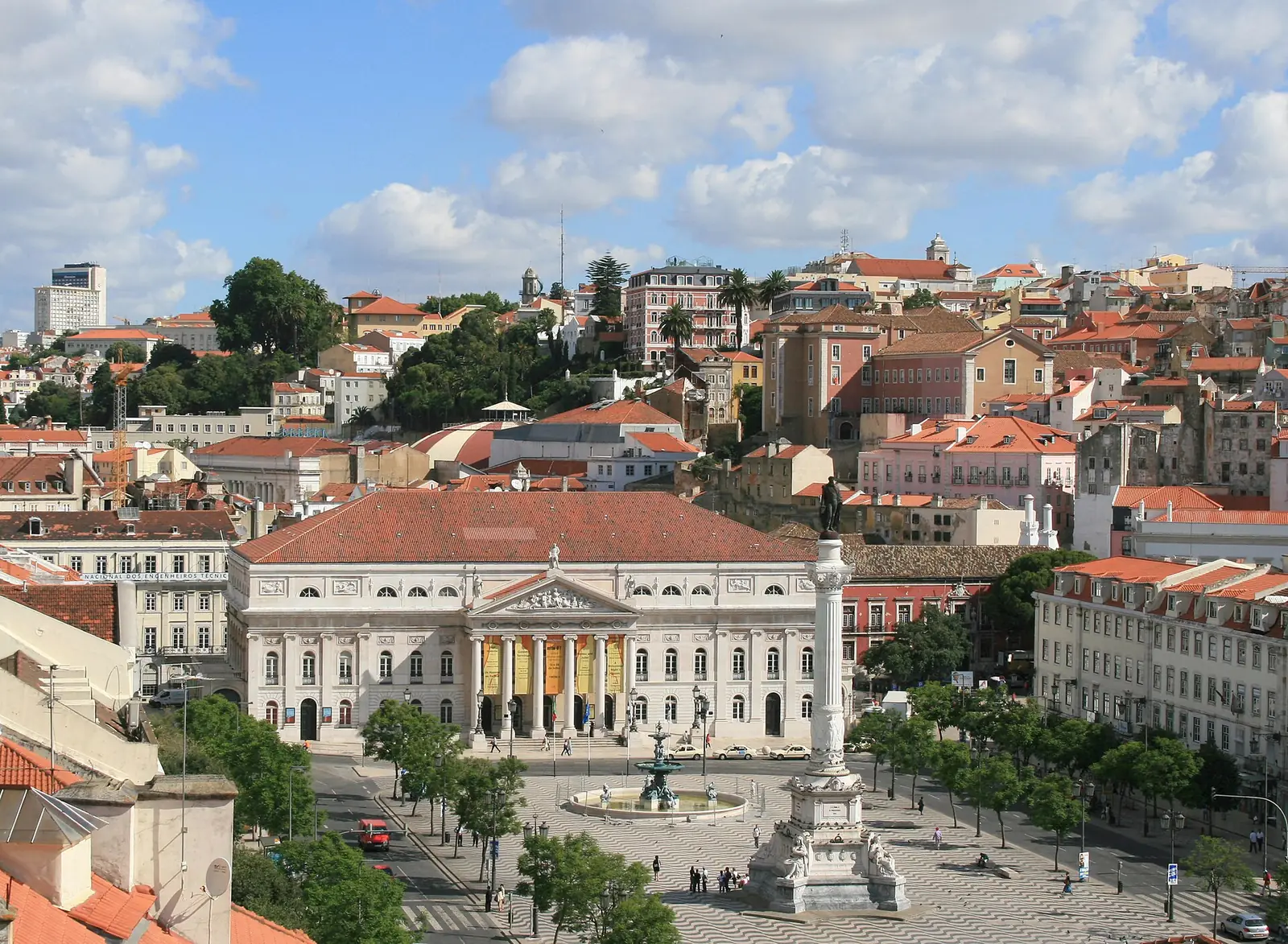
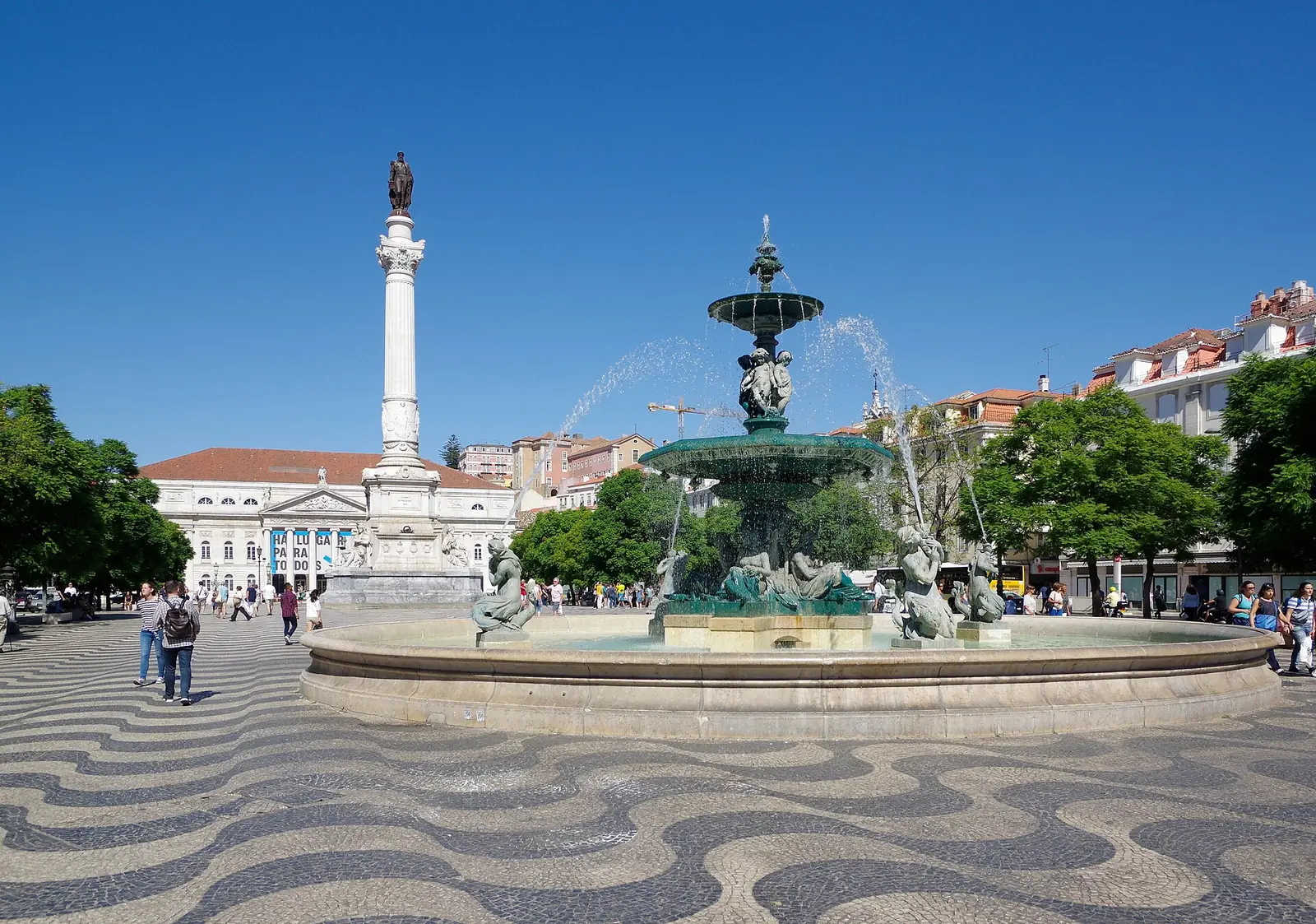
O Rossio (Praça de D. Pedro IV) visto do Elevador de Santa Justa, em 2007.Szilas, Public domain
Santa Maria Maior
Rossio (Praça de D. Pedro IV)
On the Rossio, the GNR charged Humberto Delgado’s supporters in 1958 and the police put down the May Day demonstration of 1962. On 25 April 1974, Salgueiro Maia’s column passed through here, among the crowd, on its way to the Carmo.
Today: Praça D. Pedro IVThere is a marker at the siteOn one walk
In May 1958, when Humberto Delgado, the opposition candidate for the Presidency of the Republic, came back from Porto, a crowd was waiting for him all the way from Santa Apolónia to the Terreiro do Paço. The PIDE diverted the general’s motorcade to the eastern part of the city, and the GNR chased and beat his supporters across the Terreiro do Paço, the Rossio, the Restauradores and the streets of the Baixa.1
On May Day (1 May) 1962, at the height of the academic crisis, workers and students burst into the Baixa shouting “We are hungry!” (Temos fome!), “Freedom!” (Liberdade!), “Down with fascism!” (Abaixo o fascismo!), “Down with the PIDE!” (Abaixo a PIDE!). There were clashes in the Terreiro do Paço, the Carmo, the Rossio, Martim Moniz and Alcântara, and the riot police, the GNR, the PIDE and the Portuguese Legion only regained control late into the night. Near Largo do Caldas, the police shot dead the printer Estêvão Giro, aged 25.2 At the Café Gelo, here on the Rossio, a group of writers and painters had been meeting since 1957 — Mário Cesariny, Herberto Helder, Luiz Pacheco, Natália Correia, among others.4 That day the police stormed into the café, laying about them with truncheons. Luiz Pacheco remembered the metal sugar bowls flying and policemen ending up in the Rossio’s fountain pool; days later, after being summoned to the police station, the manager told the group that he could no longer have them there.5
Ten years later, a few days after the re-election of Américo Tomás on 25 July 1972, the Revolutionary Brigades let loose two pigs dressed as admirals in the middle of the Rossio and in Alcântara, while leaflet bombs scattered pamphlets against the “electoral farce” — “a bigger puppet show and a filthy mess” (uma fantochada maior e uma porcaria).3
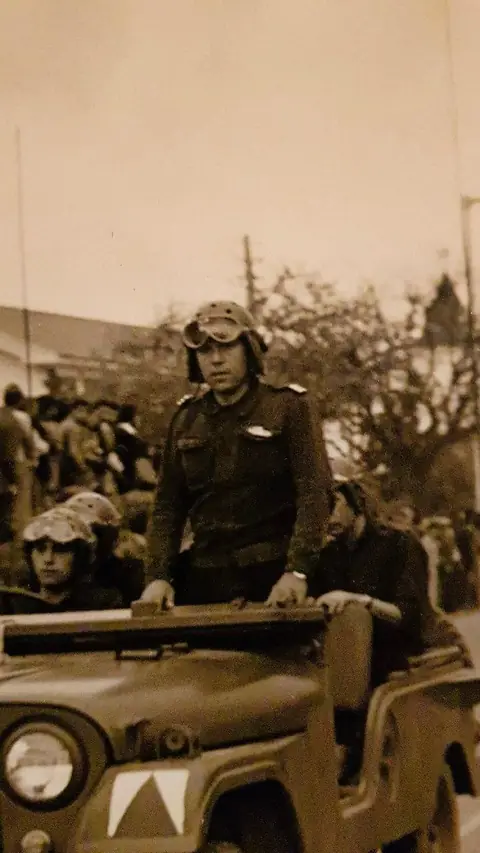
At around midday on 25 April 1974, the column led bySalgueiro Maia passed through here, on its way from the Terreiro do Paço to Largo do Carmo among thousands of people. In the Rossio it met a force from the 1st Infantry Regiment, sent to stop it, which placed itself under the Movement’s orders and followed it.6 For the 25 April Association, it was here that the people of Lisbon showed their support for the revolution, and it was also here that the gesture of Celeste Caeiro was repeated: the carnation given to a soldier, who put it in the barrel of his rifle.7
On the first floor of this café on the Rossio, on 10 May 1958, Humberto Delgado answered “Obviously, I’ll sack him!” (Obviamente, demito-o!) when asked what he would do with Salazar if he were elected.
A café on the Rossio where, between 1957 and 1962, the “Café Gelo Group” of dissident poets and painters used to meet; the group was banned from entering it after May Day 1962.
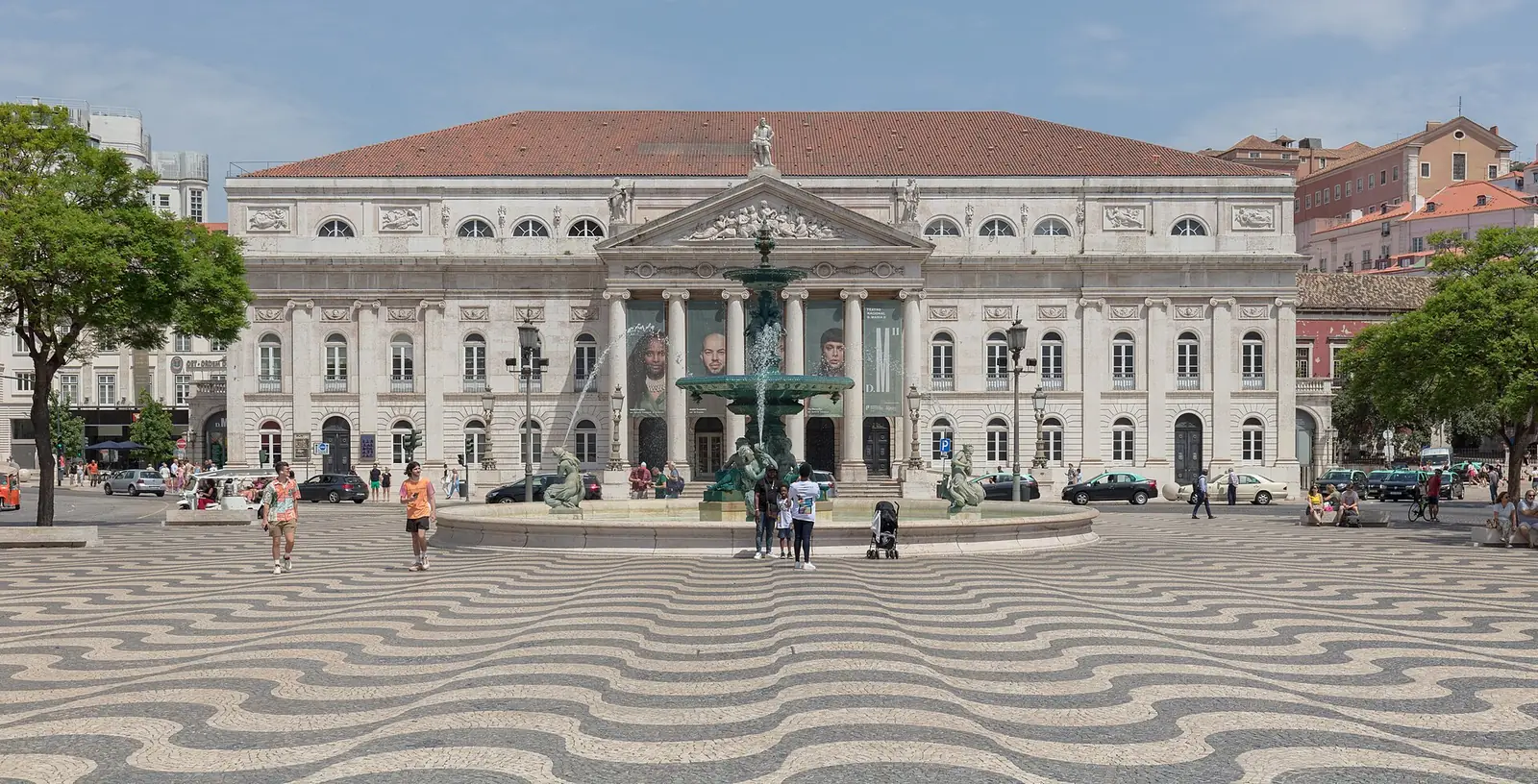
The national theatre, in the Rossio. Maria Barroso made her debut here in 1944 and was José Régio’s “Benilde”; in 1948, an order from the police and the Ministry of Education took her off this stage. The company that ran it worked under censorship until the fire of 1964.
As 1968 turned into 1969, more than a hundred Catholics kept a vigil here against the colonial war. For that night, Sophia de Mello Breyner Andresen wrote the “Cantata da Paz” (Cantata of Peace): “We see, we hear and we read / We cannot ignore” (Vemos, ouvimos e lemos / Não podemos ignorar).
OppositionColonialismCulture and censorship
Notes on the sources3
The day of the GNR charges after Humberto Delgado’s arrival at Santa Apolónia: 16 May 1958 (the day on which, in 2008, the plaque at the station was unveiled) or 15 May (“the day after” the Porto rally, according to the Aljube Museum).
The day of the Revolutionary Brigades’ pig action: the Aljube Museum says only that it was “days after” the re-election of Américo Tomás on 25 July 1972.
Whether Celeste Caeiro also gave out carnations on the Rossio, or whether the 25 April Association means other people who repeated her gesture: Celeste said she gave the carnation to the soldier who asked her for a cigarette on Rua do Carmo, on the way to Largo do Carmo.
Do you know more, or do you have a document? Tell us.