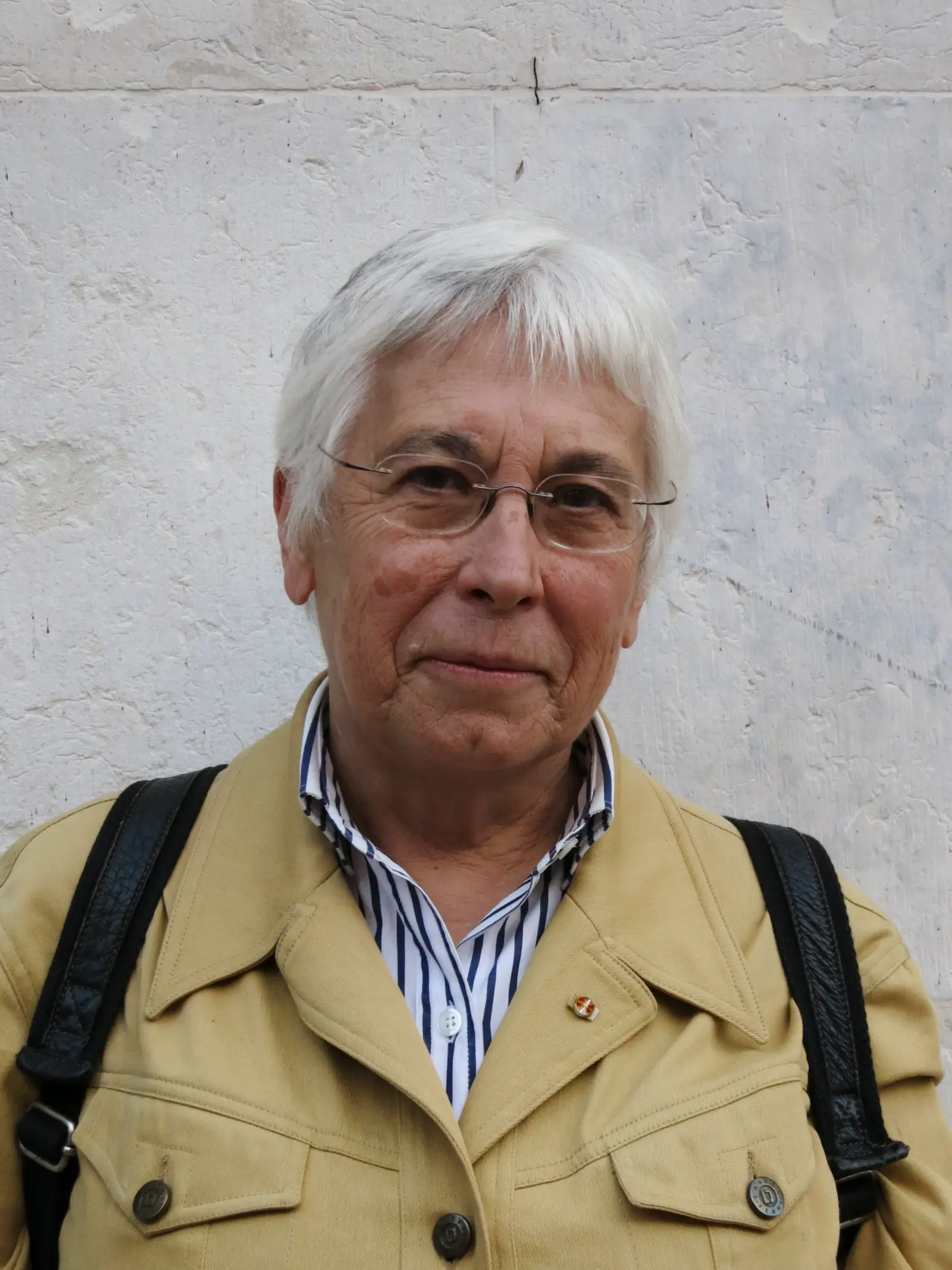
A law student and MRPP activist, she was arrested by the PIDE on 22 October 1973, interrogated at the headquarters on Rua António Maria Cardoso and tortured in Caxias. By then a public prosecutor, she went back to the door of the building in 2005 to ask for it to be preserved.
She was born in 1951 and studied at the Lisbon Faculty of Law.2 An MRPP activist, she belonged to a group of anti-fascist students who met, handed out leaflets, demonstrated against the colonial war and wrote their positions on the walls. “We had no means of any kind, no pistols, no bombs”, she recalled. At 19 she went underground: an arrest warrant accused her of “very serious crimes against the security of the State”.1 In February 1972 she was suspended from the faculty “for disturbances”, with José António Ribeiro Santos and José Galamba de Oliveira.4
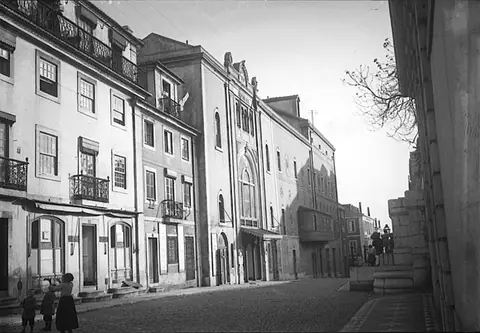
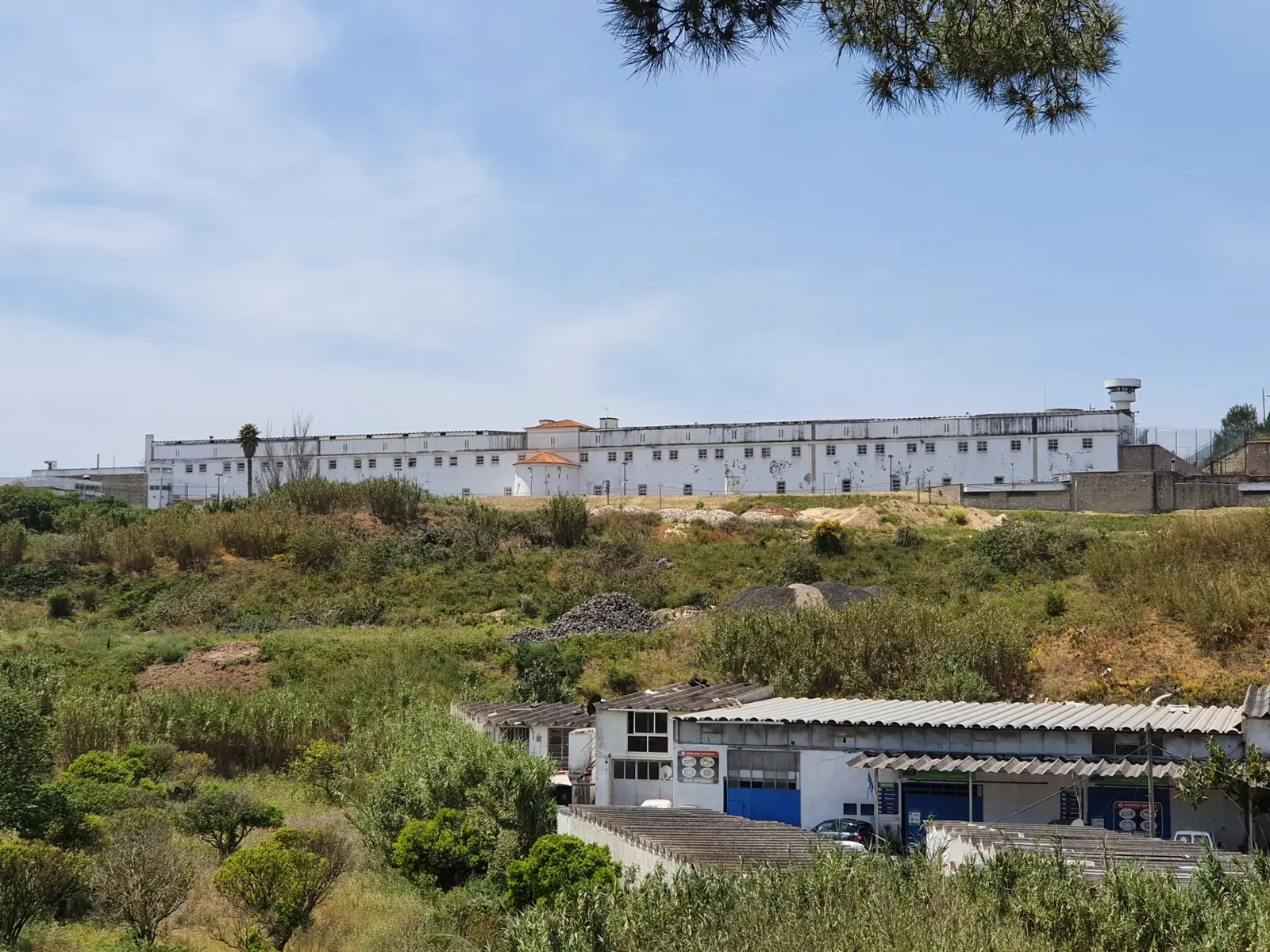
She was arrested on 22 October 1973 — “a beautiful morning”, she recalled — when she was just over 20.51PIDE agents came for her at the house where she was sheltering, near the Feira da Ladra, and took her to the political police headquarters on Rua António Maria Cardoso. On the interrogation floor — the “investigation phase” (fase de instrução), in the police’s euphemism — she was slapped several times and humiliated. In Caxias Fort, the “investigation” went on with five days of sleep torture and beatings with a hippopotamus-hide whip (cavalo-marinho).1
She joined the Public Prosecutor’s Office as a magistrate in 1979.2 In March 2005, on one of the guided visits that the Biblioteca-Museu República e Resistência (Republic and Resistance Library-Museum) organised at the door of the former PIDE building, she recalled her arrest there and argued that the place should be preserved: “This is not a folklore memory. A former political prisoner is not a Martian.”1
A communist activist arrested in 1965 and in 1968, she suffered at the PIDE headquarters some of the cruellest and most humiliating torture methods used on a woman, and never talked. Decades later, she spoke about it publicly to denounce the political police.
A journalist and documentary maker born in Angola. A medical student active in the committees supporting political prisoners, she was arrested in 1970 for contacts with the Angolan liberation movements and sentenced by the Lisbon Plenary Court.
A journalist and opposition activist, she was a prisoner in Caxias when 25 April came. The photograph of her release, with the journalist Elvira Nereu, appeared in “A Capital” on 27 April 1974.
A student leader in the 1962 academic crisis, she was arrested in 1967 and suffered long isolation, beatings and sleep torture in Caxias. She later led the Não Apaguem a Memória (Do Not Erase Memory) movement.
A medical student, she was the first woman to speak at a general assembly in the 1962 academic crisis; she later founded the Revolutionary Brigades, which attacked the machinery of the colonial war. A doctor and professor, she is the author of the first study on obesity in Portugal.
A journalist, the daughter of Stella Piteira Santos, arrested by the PIDE in 1962 and in 1972. After 25 April, as managing editor, she gave “Modas e Bordados” a feminist line and invited Maria Lamas to be its honorary editor; in 1984 she wrote “Aborto – O Crime Está na Lei” (Abortion – The Crime Is in the Law).
Notes on the sources3
The day of birth, 27 June 1951, appears only in Wikidata; the CIG gives only the year, and none of the sources says where she was born.
How long she was held, and whether she was only released with 25 April.
The interrogation floor: “the fourth floor”, in her account to the Jornal de Notícias; the third floor, according to the other sources on the PIDE headquarters — perhaps a difference in the way the floors are counted.
Do you know more, or do you have a document? Tell us.