Walk · Students · by metro and train
Students against the dictatorship
From the academic crisis of 1962 to the death of Ribeiro Santos in 1972 — and the house from which the leaders of African independence emerged
- How it’s done
- By metro and train
- Stops
- 9
- Difficulty
- Easy
The walk, the photos and the map stay on the phone, to open anywhere.
Introduction
On 24 March 1962 the Government banned Students’ Day, and riot police charged the students at the Cidade Universitária. It was the start of the academic crisis that marked a generation — and in which, for the first time, women students spoke at the plenary meetings and went on hunger strike.1 Ten years later, a DGS agent shot dead a law student in a lecture theatre in the Quelhas.2
This route links the places of those struggles by metro: the faculties and the canteen of 1962, the House of the Students of the Empire and the house on Rua Actor Vale where young people from the African colonies studied their own Africa, the Técnico and the Quelhas.
Before you go
- Start
- Cidade Universitária, by the Rectorate — Metro Cidade Universitária (yellow line)
- Finish
- Calçada Ribeiro Santos, near Largo de Santos — Train at Santos (Cascais line); tram 25 and buses on Avenida 24 de Julho
- Accessibility of the route
- Three neighbourhoods linked by the metro — the Cidade Universitária, Arroios and the Quelhas. Within each one there is little walking, on wide pavements; the descent from the Quelhas to Santos is steep and cobbled. Wheelchair users should check on the Metropolitano de Lisboa website which stations have lifts.
This walk in dates
18 May 1958
1962
24 Mar 1962
26 Mar 1962
9 more dates
5 Apr 1962
9 May 1962
4 Jun 1962
15 Jun 1962
6 Sep 1965
8 Dec 1968
12 Oct 1972
14 Oct 1972
3 May 1973
Map of the walk “Students against the dictatorship”, with 9 numbered stops. The list of stops follows the map.
The stops
Stop 1: 24 March 1962
Alameda da Universidade, 1600 / 1649 Lisboa
Today: Cidade Universitária – University of Lisbon
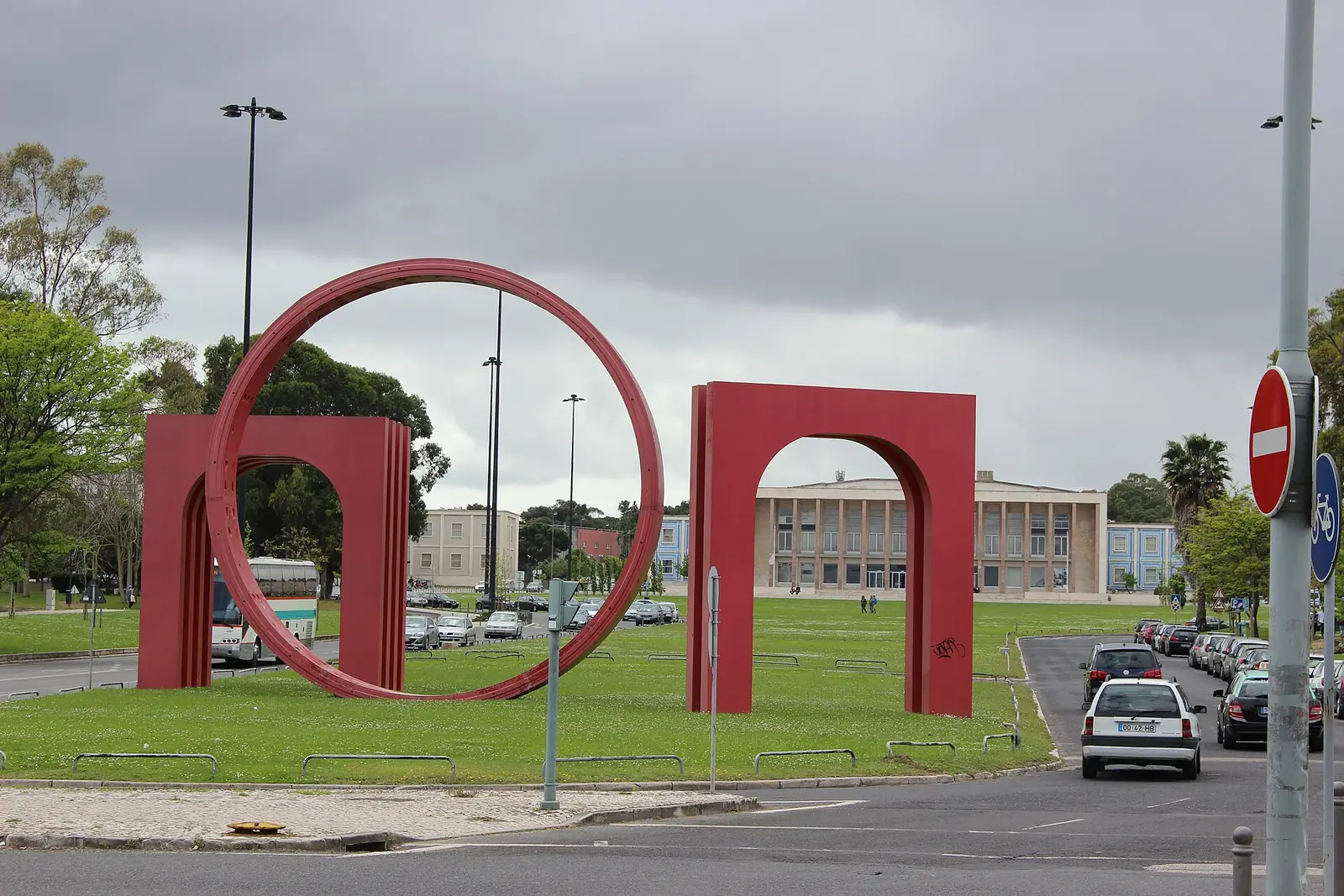
A Alameda da Universidade, na Cidade Universitária, com a escultura de arcos vermelhos à entrada, em 2015. Metro Centric, CC BY 2.0 With the Students’ Day celebrations banned, the students gathered here on the morning of 24 March 1962. Riot police charged them several times, at the University Stadium and in the Campo Grande, making arrests and beating them.3 Two days later, the student associations of Lisbon and Coimbra declared “luto académico” (academic mourning) — a strike from classes, which the dictatorship prohibited.
The open-air plenary meetings were something new. At one of them, according to a PIDE report, the medical student Isabel do Carmo spoke — the first woman to take the floor at a plenary meeting of the crisis — and proposed offering flowers to the police, “the most beautiful weapons created in Portugal”.1 Since 1987, 24 March has been National Students’ Day.3
- 24 Mar 1962Students’ Day banned: the 1962 academic crisis begins
- 26 Mar 1962Declaration of “luto académico” (academic mourning)
- 1962Isabel do Carmo, the first woman student to speak at a plenary meeting
- 4 Jun 1962Police charge at the Faculty of Medicine; Lindley Cintra assaulted
Published on International Women’s Day 2024, it recalls the academic crisis of 1962 and the student movement against the dictatorship through the voices of three women who took part in it: Manuela Tavares, Maria Emília Brederode Santos and Isabel do Carmo.
Original page Licença padrão do YouTube — embed permitido pelo canal oficial da Comissão Comemorativa 50 Anos 25 de Abril
Comissão Comemorativa 50 Anos 25 de Abril, on YouTube. The player only connects to that site when you press “Watch”.
To stop 2by metro, train or busDirections
Stop 2: The rector who resigned
Alameda da Universidade, 1649-004 Lisboa
Today: Rectorate of the University of Lisbon
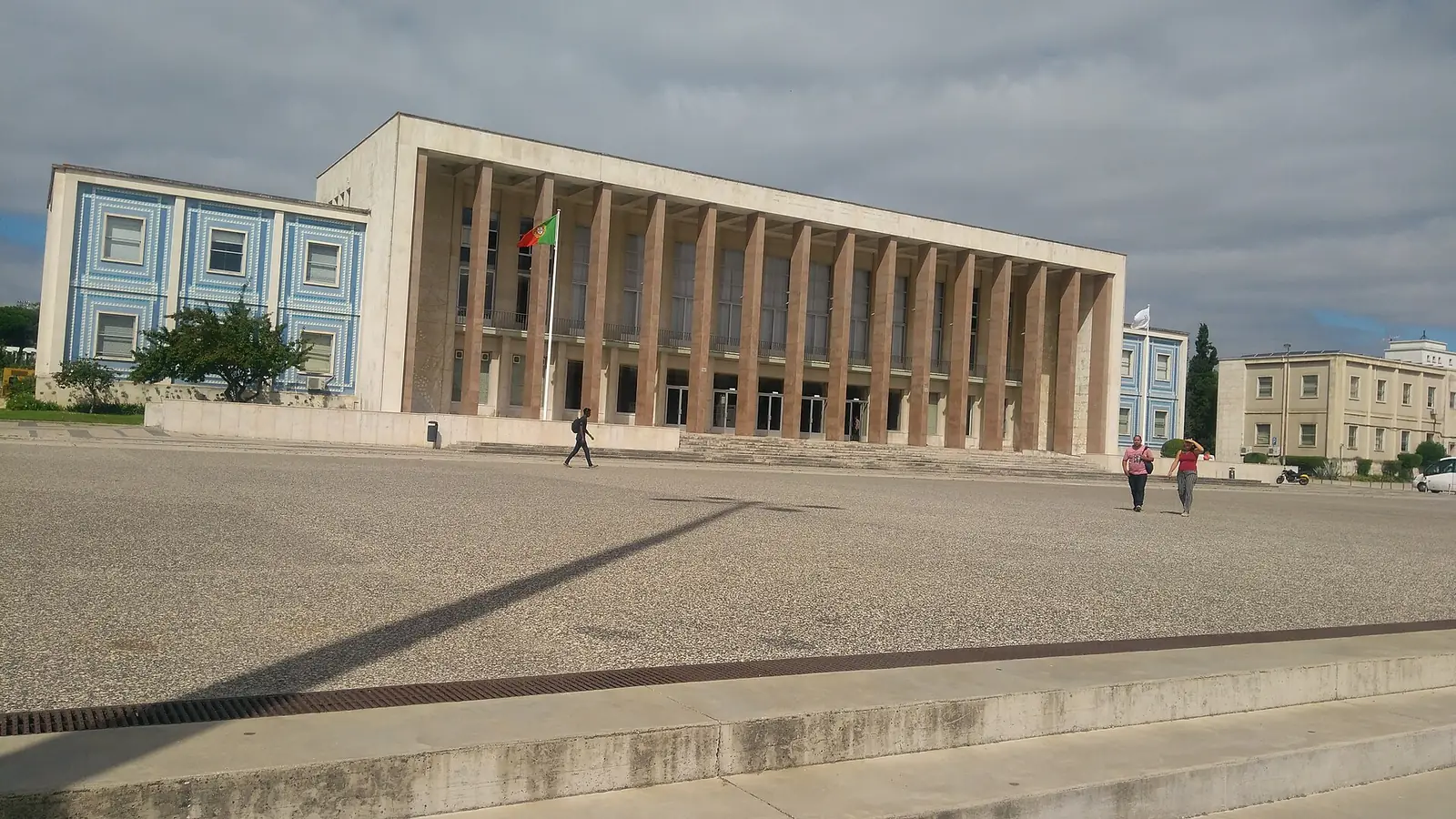
A Reitoria da Universidade de Lisboa, na Alameda da Universidade, em 2018. Eugenio Hansen, OFS, CC BY-SA 4.0 The rector was Marcelo Caetano. Greeted with applause by the students, he defended the university’s autonomy from the balcony of the Rectorate; when the Government banned Students’ Day again, on 5 April, he resigned.4 During the three months of mourning, the open ground in front was the scene of countless plenary meetings.5
Six years later, Marcelo Caetano succeeded Salazar as head of government.6
To stop 3by metro, train or busDirections
Stop 3: The hunger strike
Avenida Professor Gama Pinto, 1649-004 Lisboa
Today: Cantina Velha (Old Canteen) of the University of Lisbon
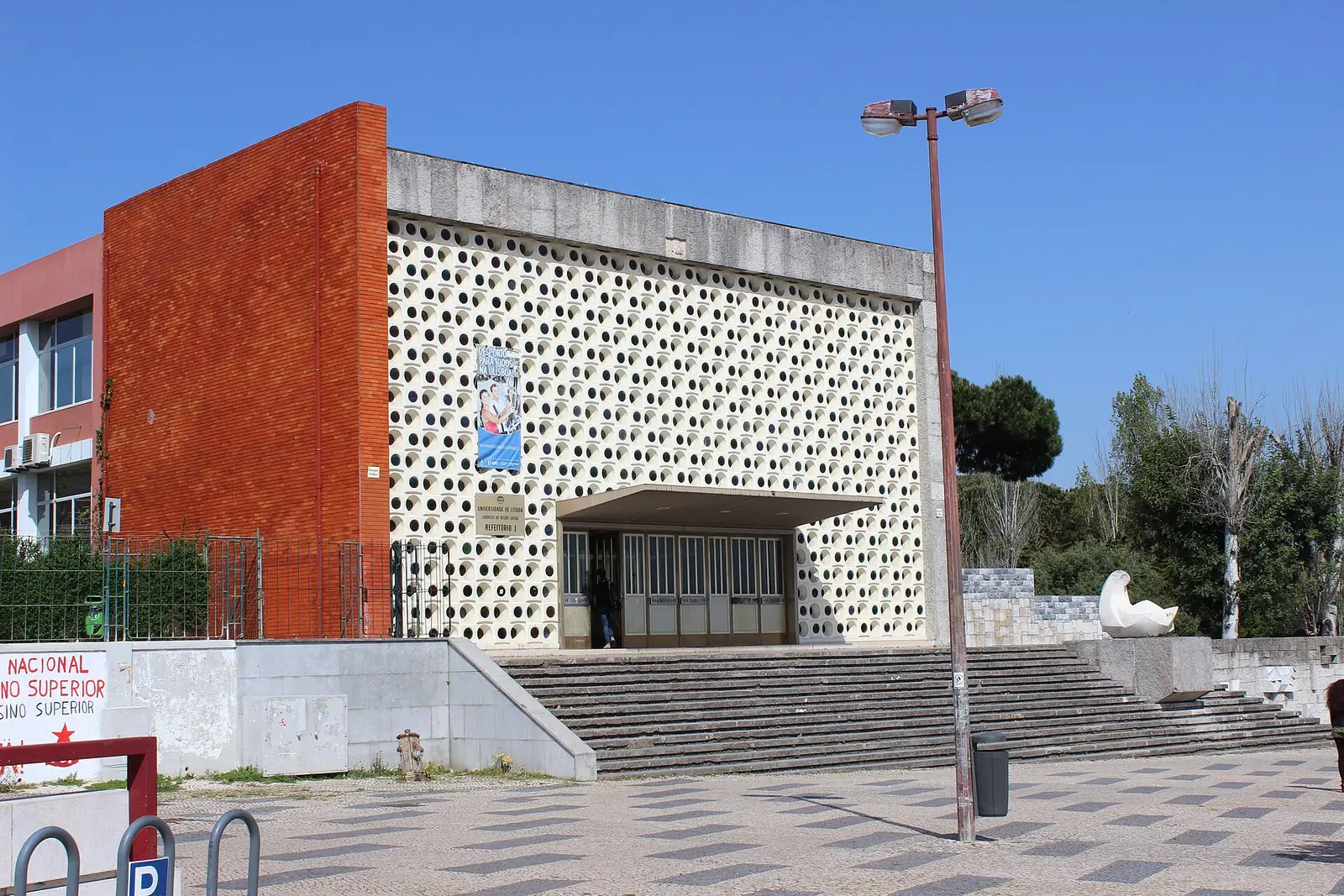
A Cantina Velha da Universidade de Lisboa, aberta em 1961, em 2015. Metro Centric, CC BY 2.0 On 9 May 1962, eighty-one students began a hunger strike here, on the proposal of the medical student Eurico de Figueiredo; some 1,500 joined them inside the canteen in solidarity. In the early hours of the 11th, the police surrounded the building and went in, and the students were arrested one by one.7
Once in prison, a group of women students kept up the protest and refused even the sandwiches the police offered them. Among the women strikers, the PIDE identified Laura Larcher Graça, Isabel Vila Maior, Maria da Conceição Santinho, Maria Emília Teles Tavares, Maria Fernanda Guerra and Maria José Barreiro Marques. The hunger strikers were expelled from the university.7
To stop 4by metro, train or busDirections
Stop 4: The House of the Students of the Empire
Avenida Duque de Ávila, 23 (esquina com a Rua D. Estefânia), 1000-138 Lisboa
Today: Office and residential building
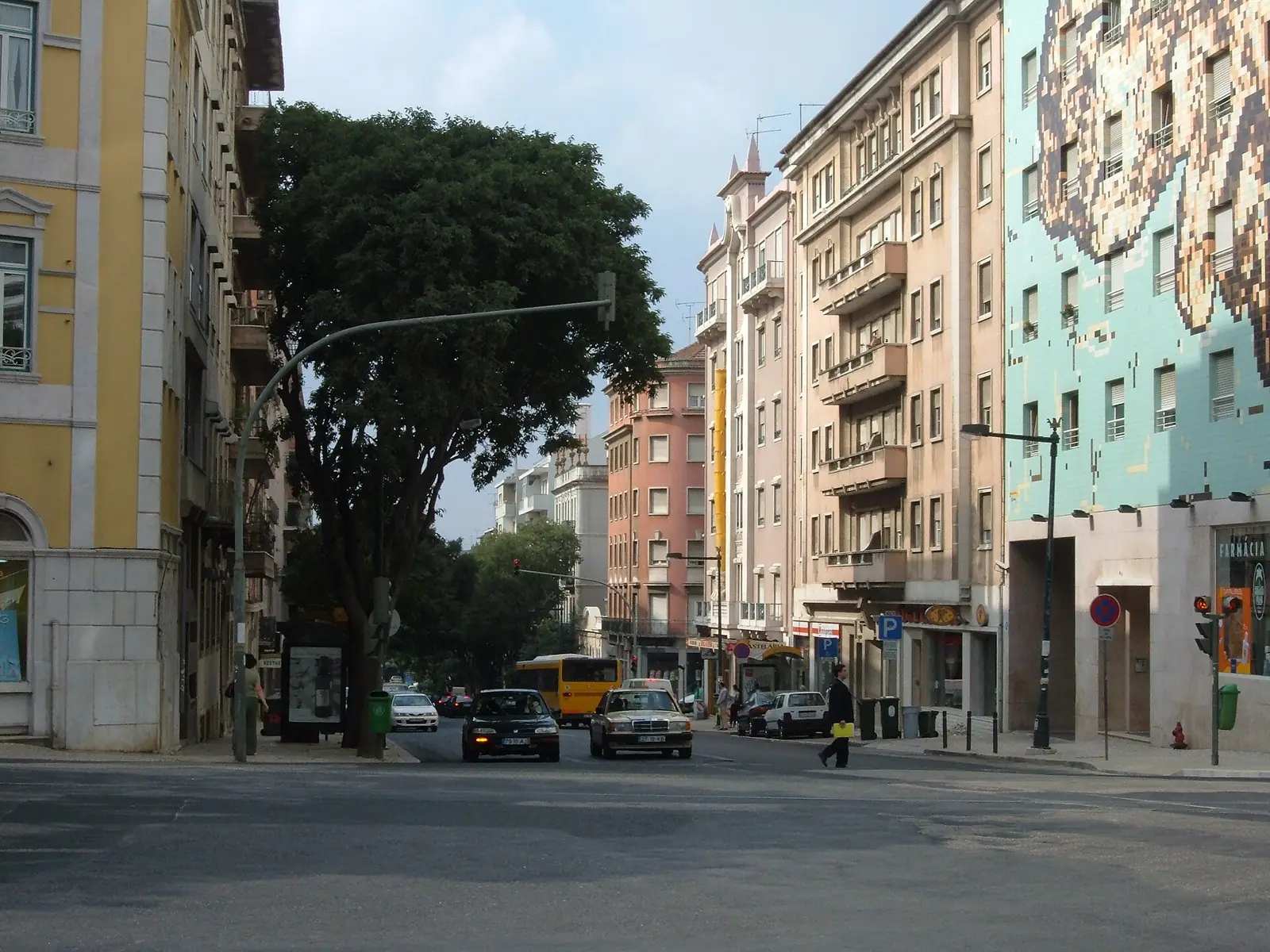
O cruzamento da Avenida Duque de Ávila com a Rua de Dona Estefânia, onde ficava a Casa dos Estudantes do Império, em 2005. Garsd, CC BY-SA 3.0 Created in 1944 by the regime itself, to cultivate “imperial unity” among the students who came from the colonies, the House of the Students of the Empire did the opposite: Amílcar Cabral, Agostinho Neto, Marcelino dos Santos, Joaquim Chissano and Alda do Espírito Santo all passed through here. Its publications and its bulletin Mensagem (Message) are at the origin of the African literatures in Portuguese.8
During the 1962 crisis, the House’s duplicating machines served the student associations. In 1965 it was dissolved, and the PIDE confiscated its archive and library.9
What you can see today
A commemorative plaque from Lisbon City Council, set into the pavement in front of the building (1992).9
To stop 5by metro, train or busDirections
Stop 5: Delgado’s rally
Praça José Fontana, 1050-129 Lisboa
Today: Camões Secondary School
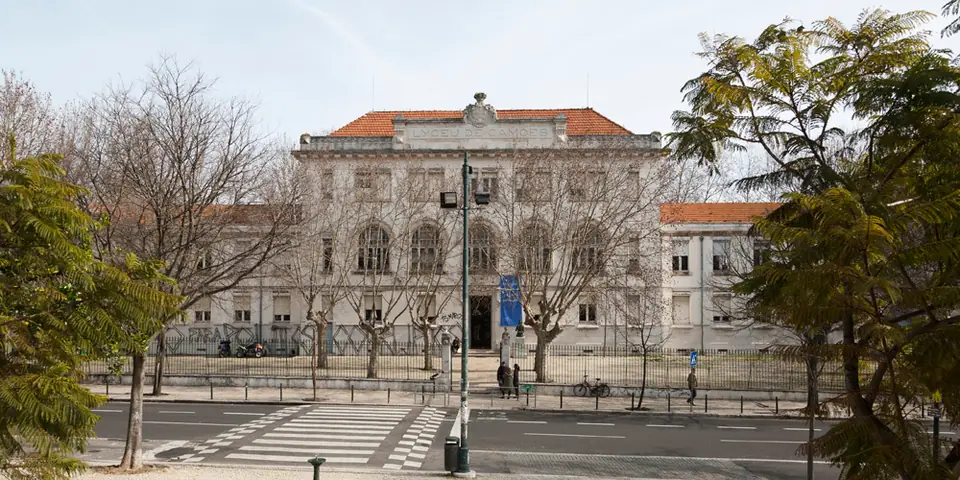
O Liceu Camões, de Ventura Terra, na Praça José Fontana, em 2013. Manuelvbotelho, CC BY-SA 3.0 On 18 May 1958, in the middle of the presidential campaign, Humberto Delgado gave a speech in the gymnasium of this secondary school (liceu); the text of the speech is among Manuel Mendes’s papers, at the Casa Comum.10 According to the journalist João Paulo Guerra, the scenes of police violence that had greeted the general’s arrival at Santa Apolónia were repeated after this rally.11
To stop 6by metro, train or busDirections
Stop 6: The Técnico
Avenida Rovisco Pais, 1, 1049-001 Lisboa
Today: Instituto Superior Técnico – University of Lisbon
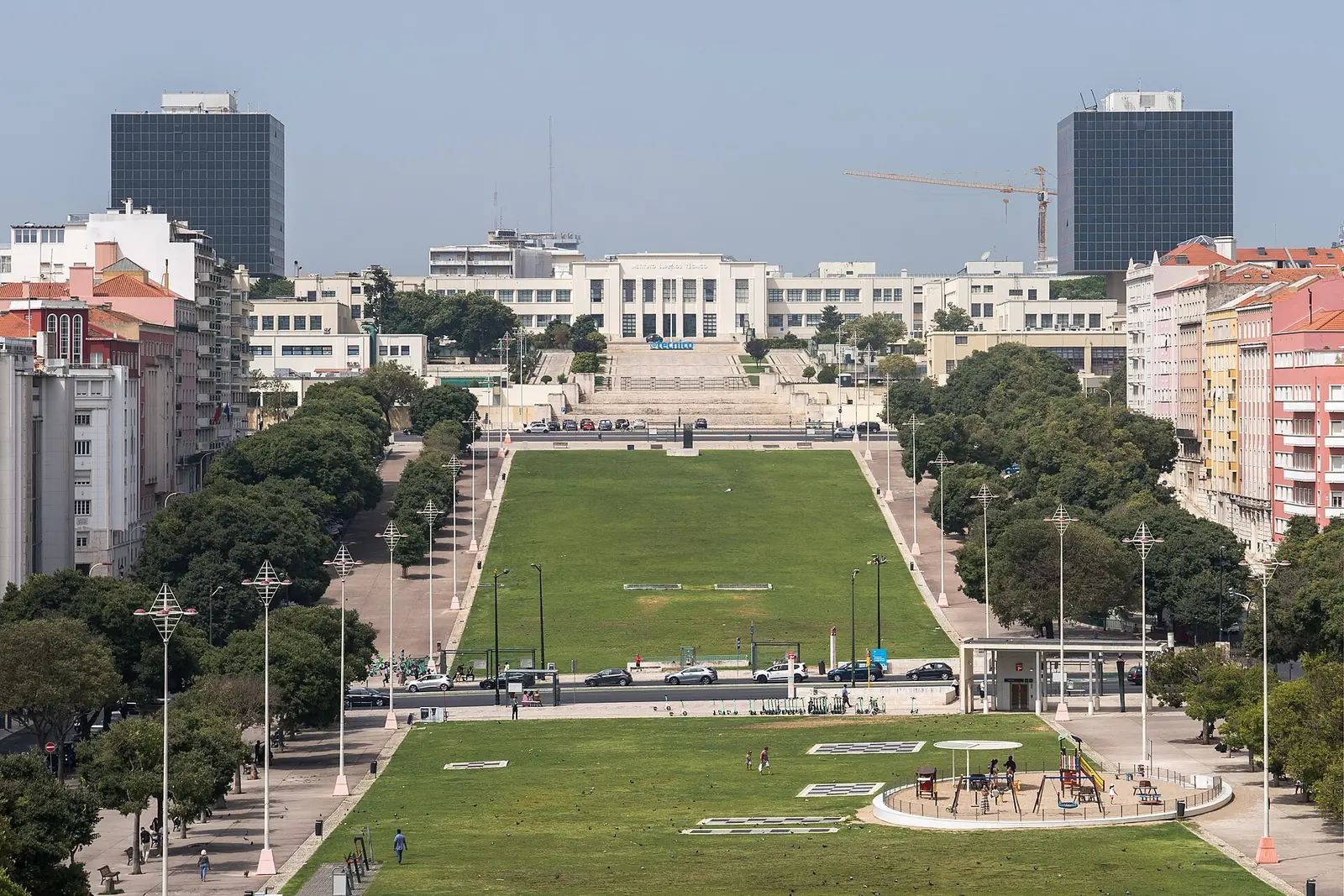
A Alameda D. Afonso Henriques vista do alto, com o Instituto Superior Técnico ao fundo, em agosto de 2025. Alexkom000, CC BY 4.0 On 8 December 1968 the PIDE raided the Students’ Association of the Instituto Superior Técnico, seized documents and identified students; the association and the Institute were closed until the end of the holidays.12
On the night of 12 October 1972, hours after the death of Ribeiro Santos, three hundred students meeting here decided to bring the university to a standstill and go to the funeral en masse.13
- 8 Dec 1968The PIDE raids the Técnico Students’ Association
- 15 Jun 1962A plenary meeting at the Técnico suspends the academic mourning
To stop 7by metro, train or busDirections
Stop 7: To know Africa
Rua Actor Vale, 37, 1900-078 Lisboa
In 1951 a group of African students set up their headquarters in this house — “an enormous house, at 37 Rua Actor Vale, at the top of the Alameda”, where Alda do Espírito Santo, from São Tomé, lived. This was the home of the Centre for African Studies, run by Mário de Andrade, Amílcar Cabral and Francisco Tenreiro, among others. The aim, in the words of the doctor António Tomás Medeiros, was “to know Africa”.14
The centre broke up when the older members left: for Paris, for Germany, for prison. Alda do Espírito Santo went back to São Tomé; Noémia de Sousa, the Mozambican poet, “disappears”, says Medeiros.14
To stop 8by metro, train or busDirections
Stop 8: 12 October 1972 — the shot in the lecture theatre
Rua do Quelhas, 6, 1200-781 Lisboa
Today: ISEG – Lisbon School of Economics & Management
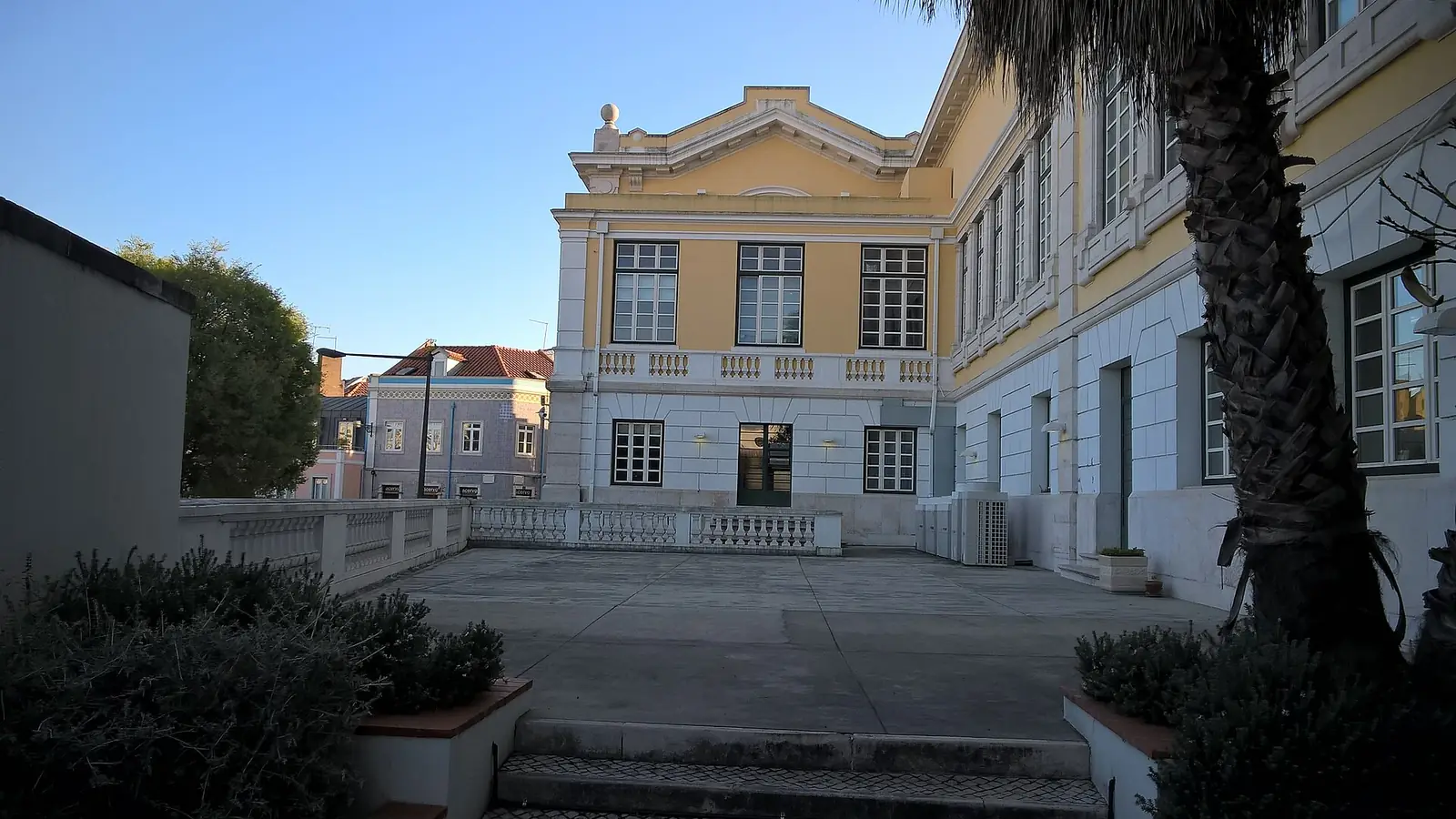
O edifício do Quelhas, onde funcionava o ISCEF e hoje funciona o ISEG, em 2019. GualdimG, CC BY-SA 4.0 In a prefabricated lecture theatre at the Higher Institute of Economic and Financial Sciences (ISCEF), students were holding a “meeting against repression”. They spotted a stranger whom they took for a DGS informer; the school called the political police, who sent two agents. A confrontation broke out, and the agent António Gomes da Rocha fired. José António Ribeiro Santos, a 26-year-old law student, was killed; José Lamego was wounded.215
In the room was Aurora Rodrigues, who later joined the Movement for the Reorganisation of the Party of the Proletariat (MRPP) and would be arrested and tortured in 1973.16 The agent was never tried.2
- 12 Oct 1972Student Ribeiro Santos shot dead by the PIDE/DGS at the ISCEF
- 3 May 1973Arrest of Aurora Rodrigues
Aurora Rodrigues, in a testimony recorded by the Aljube Museum on 12 October 2016. The museum’s keywords include the student movement, the murder of Ribeiro Santos, the Movement for the Reorganisation of the Party of the Proletariat (MRPP), imprisonment, interrogation and torture in Caxias.
Original page Licença padrão do YouTube — embed permitido pelo canal oficial do Museu do Aljube
Museu do Aljube Resistência e Liberdade, on YouTube. The player only connects to that site when you press “Watch”.
To stop 9by metro, train or busDirections
Stop 9: The funeral
Calçada Ribeiro Santos, 1200-869 Lisboa (junto ao Largo de Santos)
Today: Calçada Ribeiro Santos (formerly Calçada de Santos)
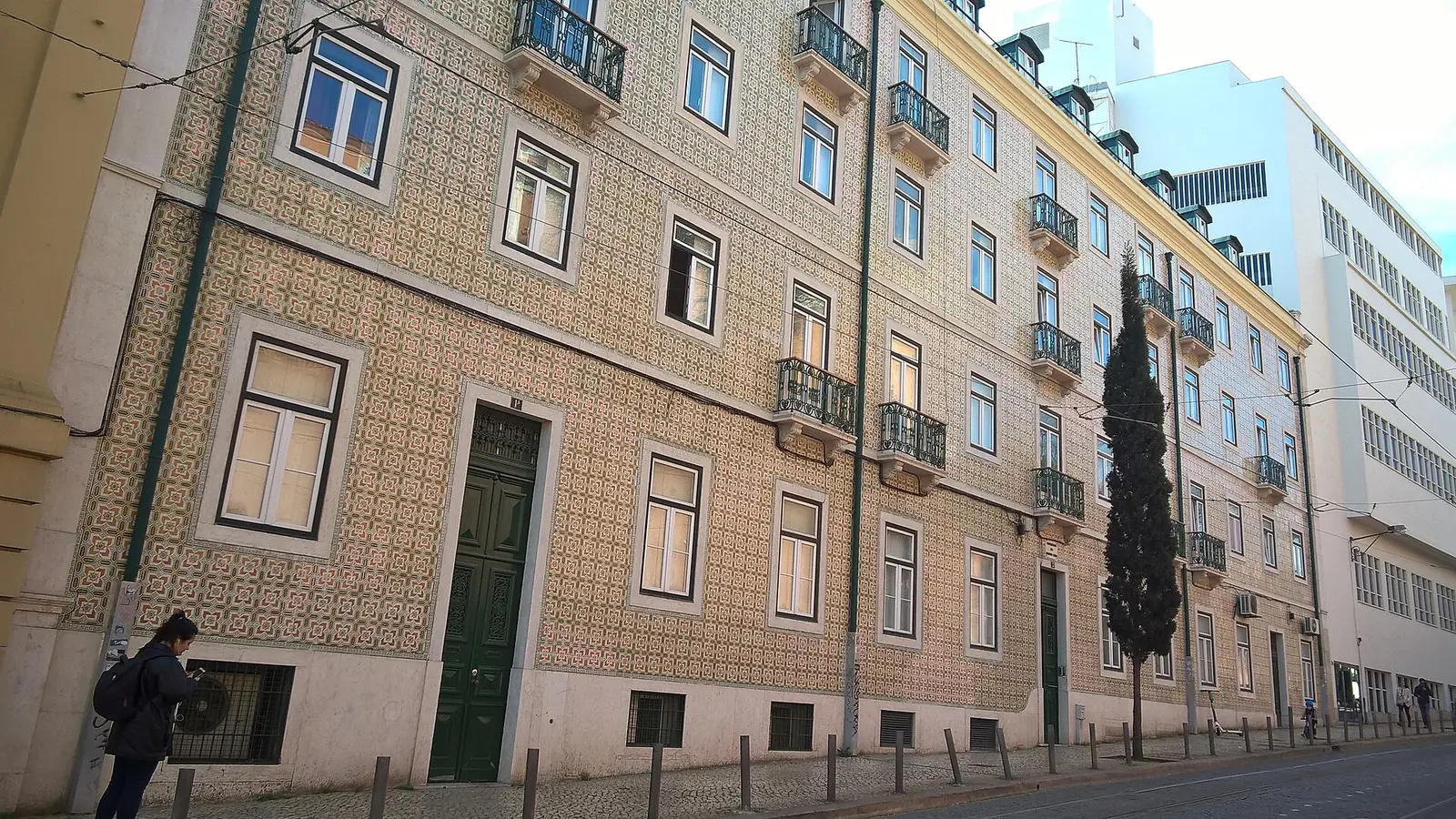
Os prédios de azulejo dos n.os 1, 3 e 5 da Calçada Ribeiro Santos, em 2019. GualdimG, CC BY-SA 4.0 Ribeiro Santos lived on this steep street, and his home often served as a meeting place. On 14 October 1972 the funeral left from here for the Ajuda Cemetery: some five thousand people, the coffin carried on the students’ shoulders, charges by riot police, some twenty arrests.17
The first street-naming edict after 25 April, on 30 December 1974, gave the street his name, with the caption “Antifascist Activist” (Militante Antifascista). Since 2012 a plaque on the house has remembered him.17
What you can see today
Since 2012, a plaque on the house: “Here was born and lived José Ribeiro Santos, 1946-1972”. The street has borne his name since 1974.


.jpg)

.jpg)


Notes on the sources2
- The exact location of the prefabricated lecture theatre on the present-day ISEG campus, and whether there is a plaque.
- When the Centre for African Studies moved into Rua Actor Vale: 1951 (António Tomás Medeiros) or 1954 (Wikipedia).
Do you know more, or do you have a document? Tell us.
Sources
- 1A participação das estudantes na crise. Comissão Comemorativa 50 Anos 25 de Abril — consulted on 2 October 2026
- 2Assassinato de Ribeiro Santos. Museu do Aljube Resistência e Liberdade (EGEAC) — consulted on 2 October 2026
- 3Dia Nacional do Estudante. Museu do Aljube Resistência e Liberdade (EGEAC) — consulted on 2 October 2026
- 4O Dia do Estudante. Comissão Comemorativa 50 Anos 25 de Abril — consulted on 2 October 2026
- 5A Crise Académica de 1962: Contestação vs Repressão. Comissão Comemorativa 50 Anos 25 de Abril — consulted on 2 October 2026
- 6Marcelo José das Neves Alves Caetano – Antigo Reitor. Universidade de Lisboa — consulted on 2 October 2026
- 7A Crise Académica de 1962: A Greve de Fome. Comissão Comemorativa 50 Anos 25 de Abril — consulted on 2 October 2026
- 8Casa dos Estudantes do Império. Comissão Comemorativa 50 Anos 25 de Abril — consulted on 2 October 2026
- 9Casa dos Estudantes do Império: berço de líderes africanos em Lisboa (João Carlos, DW África). Buala — consulted on 2 October 2026
- 10Discurso proferido pelo Sr. General Humberto Delgado [...] no Ginásio do Liceu de Camões (cota 04959.043.029). Casa Comum – Fundação Mário Soares e Maria Barroso — consulted on 2 October 2026
- 11Delgado: Um vendaval varreu o País (João Paulo Guerra). esquerda.net — consulted on 2 October 2026
- 12Encerramento do Instituto Superior Técnico (IST). Museu do Aljube Resistência e Liberdade (EGEAC) — consulted on 2 October 2026
- 13O assassinato de José Ribeiro Santos. Comissão Comemorativa 50 Anos 25 de Abril — consulted on 2 October 2026
- 14Entrevista a António Tomás Medeiros (Colecção E-Books). Centro de Documentação 25 de Abril – Universidade de Coimbra — consulted on 2 October 2026
- 15José António Leitão Ribeiro Santos. Memória Comum – Memorial aos Presos e Perseguidos Políticos — consulted on 2 October 2026
- 16Aurora Rodrigues (testemunho e biografia). Museu do Aljube Resistência e Liberdade — consulted on 2 October 2026
- 17A Calçada Ribeiro Santos no Dia do Estudante. Toponímia de Lisboa – CML (24/3/2014) — consulted on 2 October 2026
Other walks

Revolution · on foot
The first day
25 April 1974 hour by hour, from the Terreiro do Paço to the Carmo and the door of the political police
- Distance
- 2.4 km
- Duration
- 1 h 30 min
- Stops
- 7 stops
- Difficulty
- Moderate

Women · on foot
Graça, the women’s hill
Seamstresses on strike, a republican propagandist, a women’s prison, a bar and a poet — Graça as they tell it
- Distance
- 1.7 km
- Duration
- 1 h 15 min
- Stops
- 6 stops
- Difficulty
- Demanding

Repression · on foot
The Estado Novo, explained
How a dictatorship lasted 48 years: the leader, the façade, the single party, the family, work and propaganda — from São Bento to Restauradores
- Distance
- 4.6 km
- Duration
- 2 h 20 min
- Stops
- 9 stops
- Difficulty
- Moderate