O Edifício Franjinhas, na esquina da Rua Braamcamp com a Rua Castilho, em 2019.GualdimG, CC BY-SA 4.0
Santo António
Edifício Franjinhas — the restaurant of the carnations
This was the home of the Sir, the restaurant where Celeste Caeiro worked. It turned one year old on 25 April 1974: it did not open, and the carnations bought for the celebration were given to the women on the staff — the carnations that Celeste took down to the Baixa.
The Sir, a self-service restaurant, opened in this building in April 1973. For its first anniversary, the owners bought carnations to give to the women customers — and, according to Observador, a glass of port for the men.1
On the morning of 25 April 1974, when Celeste Caeiro arrived, at nine, the owner announced that the restaurant would not open, “because there’s a revolution going on”. The carnations were taken out of the storeroom and handed out to the women on the staff, so that they would not wilt. Celeste took a bunch and caught the metro down to the Baixa.2 What happened next is told on Rua do Carmo.
The building, by Nuno Teotónio Pereira and João Braula Reis, won the 1971 Valmor Prize and has been a Monument of Public Interest since 2011.3Nuno Teotónio Pereira was among those detained at the vigil in the Capela do Rato; at the end of 1973 he was beaten and subjected to sleep torture.4
A month before the revolution, on 5 March 1974, the Captains’ Movement scheduled a clandestine plenary meeting here; on the day itself, it moved the meeting to Cascais, where the choice of a coup was accepted as irreversible.5
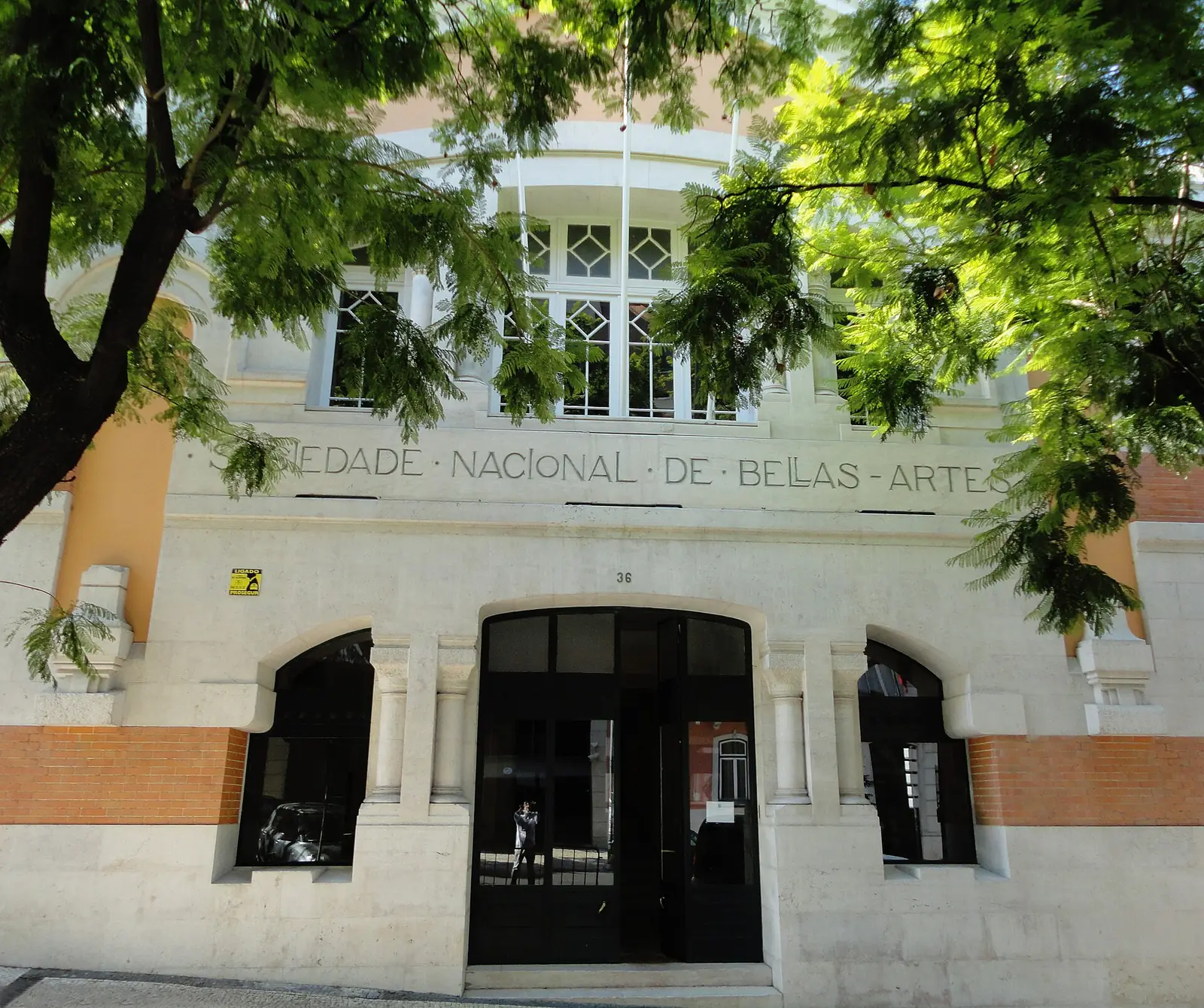
Today: National Society of Fine Arts (Sociedade Nacional de Belas-Artes)
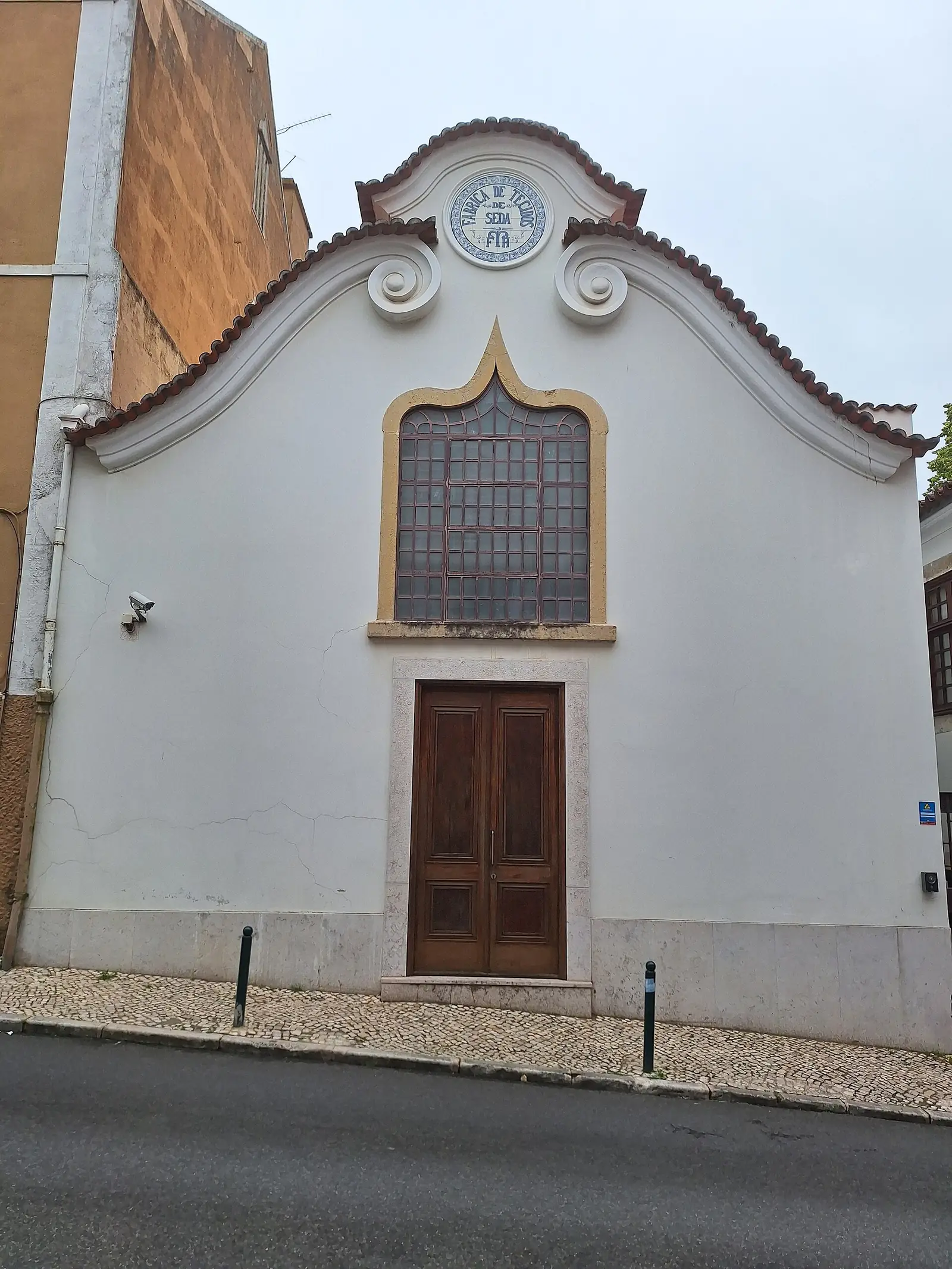
In January 1947, the National Council of Portuguese Women, led by Maria Lamas, brought together here three thousand books by four hundred women authors from thirty countries. It was a success — and the pretext for the regime to close the Council down months later.
In 1946, the National Council of Portuguese Women, chaired by Maria Lamas, moved its headquarters to this lane in Amoreiras. On 28 June 1947, the police closed it “without prior notice”, putting an end to 33 years of the association.
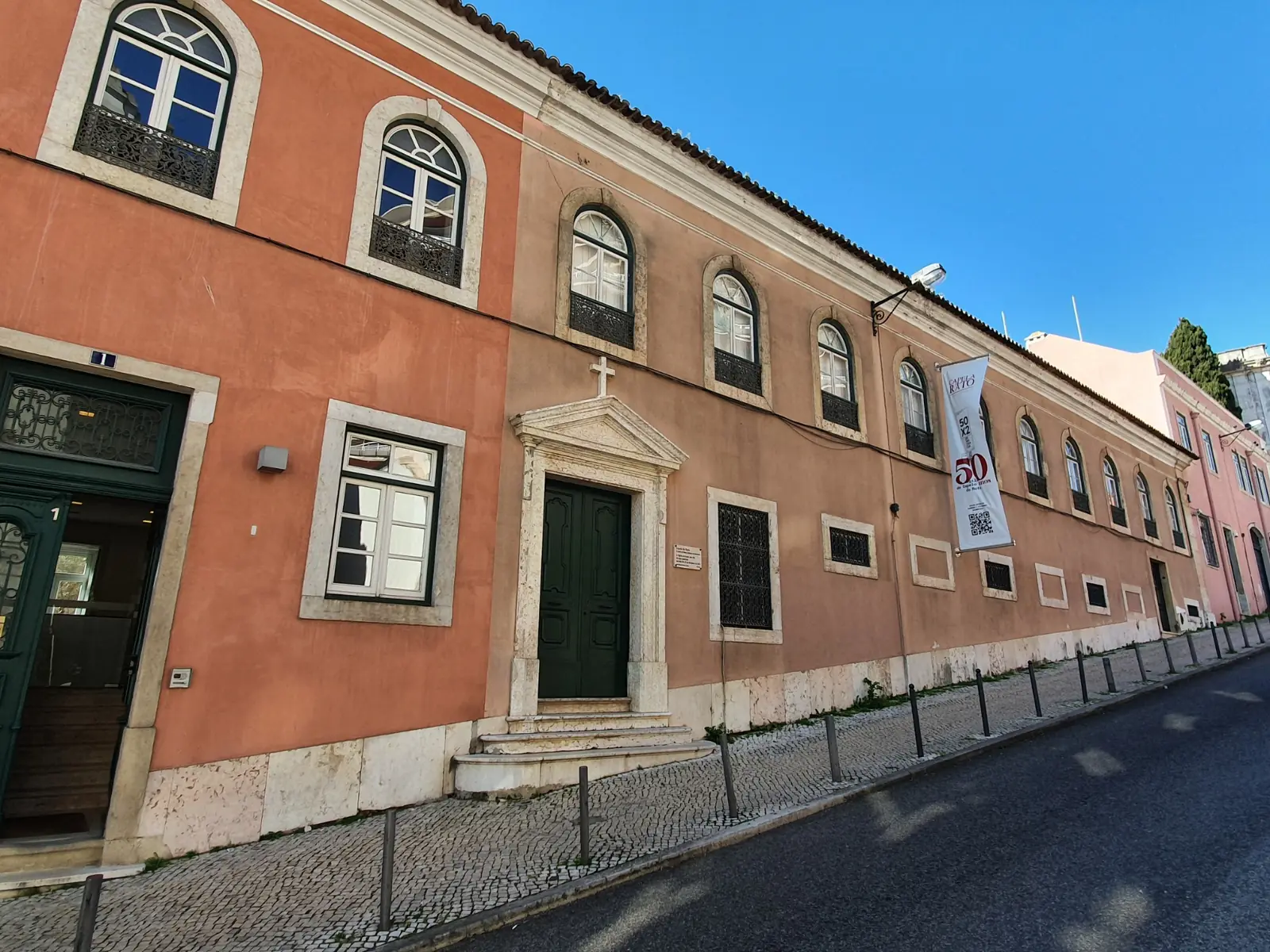
Today: Capela do Rato (Chapel of Nossa Senhora da Bonança)
Over the turn of 1972 into 1973, Catholics opposed to the colonial war held a 48-hour vigil here. It was a woman, Maria da Conceição Moita, who announced it at the microphone; the riot police broke it up and took dozens of people away.
In the revolt of February 1927 barricades went up here, and civilians and sailors were shot by firing squad beside the fountain. In 1931 the square was a front line again; in 1972, it was to the police station on the square that the police took those arrested at the Capela do Rato vigil.
RepublicOppositionRepression
Notes on the sources4
The street number (OpenStreetMap and a City Council publication give Rua Braamcamp, 9) and the restaurant’s exact unit in the building.
The Sir’s opening date (25 April 1973) and the detail of the glass of port come from the press, not from an institutional source.
The building’s authorship and the 1971 Valmor Prize have only been read in Wikipedia.
Whether there is any marker commemorating Celeste Caeiro on the building.
Do you know more, or do you have a document? Tell us.