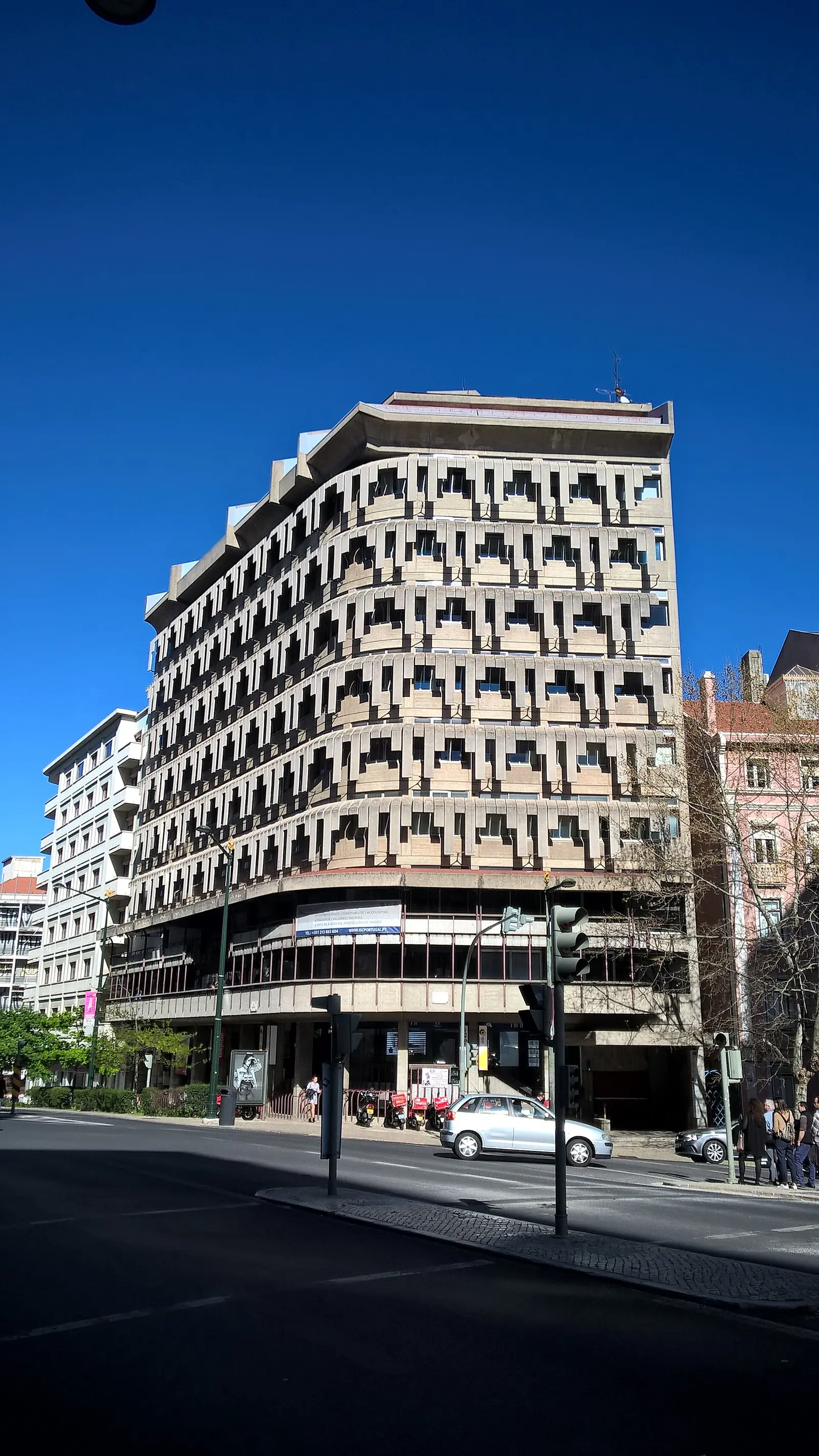
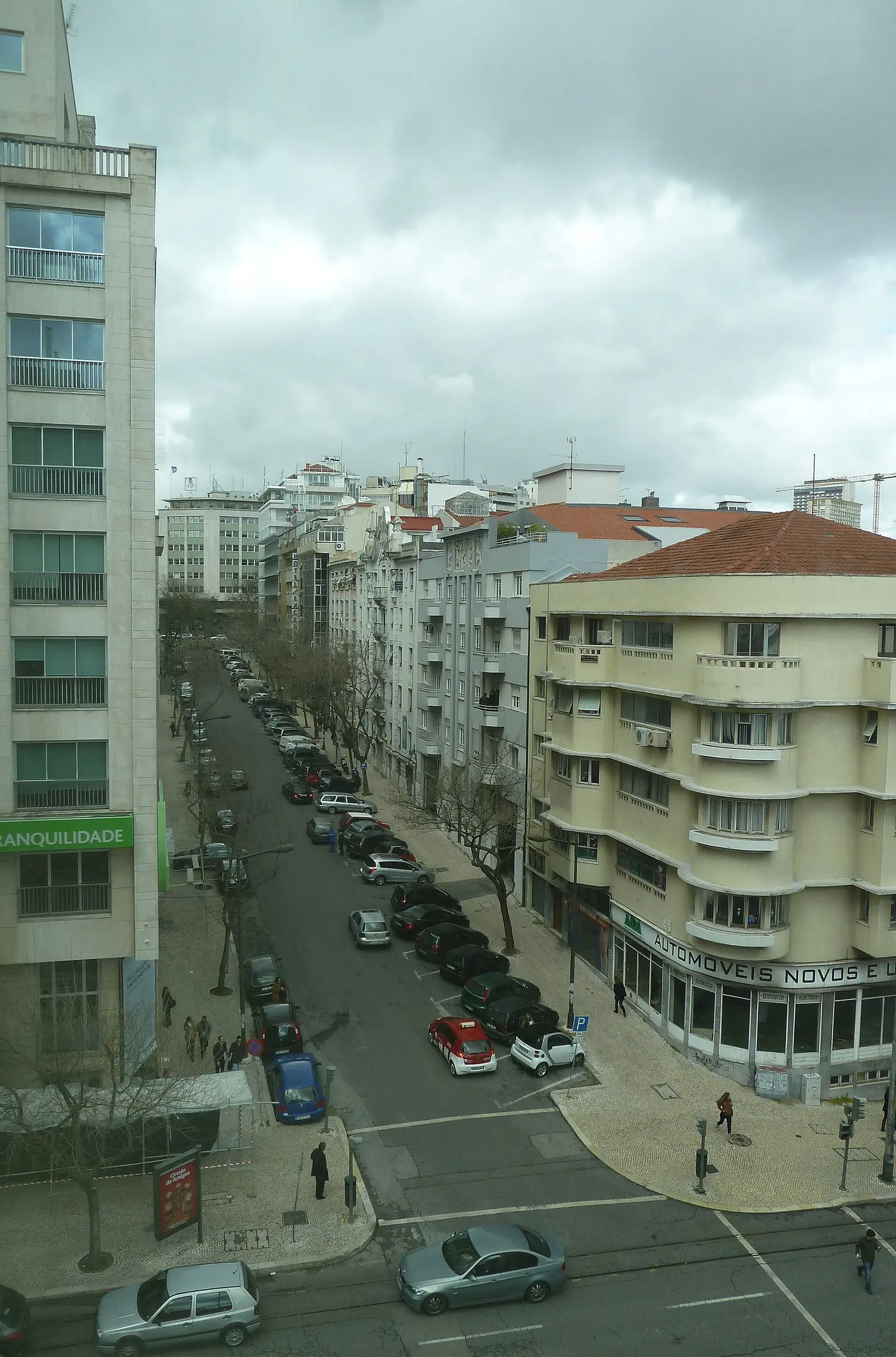
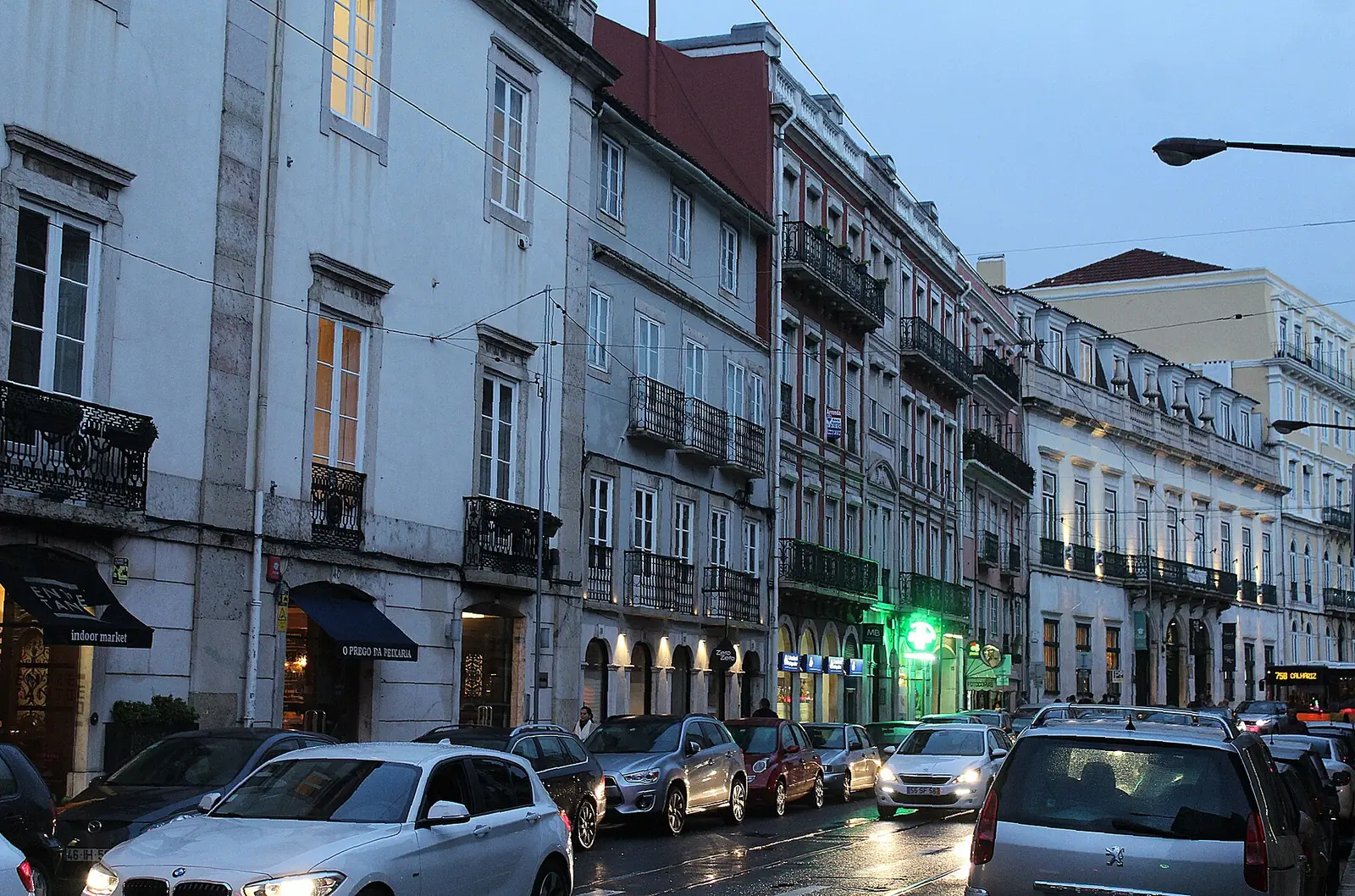
A entrada da Sociedade Nacional de Belas-Artes, na Rua Barata Salgueiro, em 2012.Manuelvbotelho, CC BY-SA 3.0
Santo António
National Society of Fine Arts
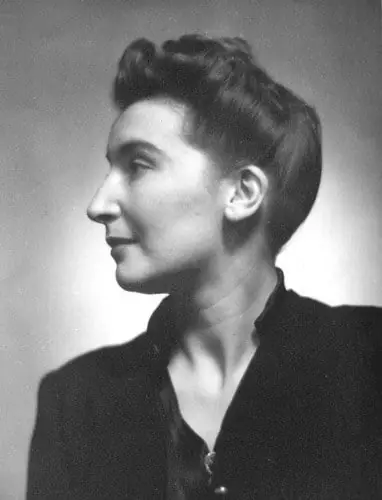
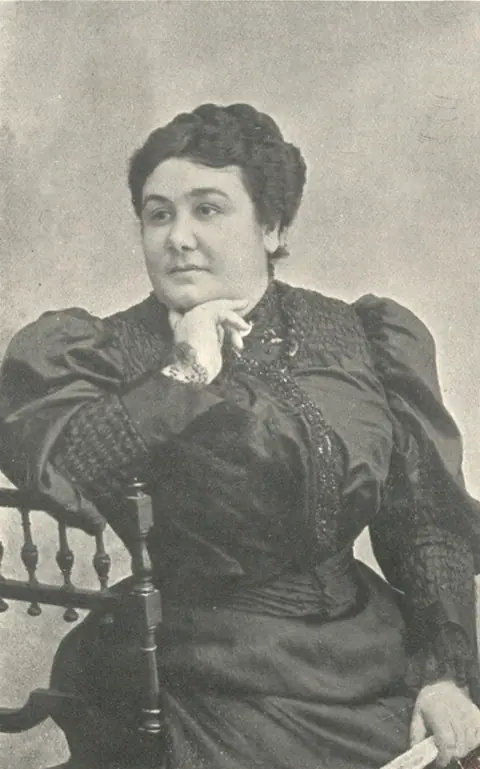
In January 1947, the National Council of Portuguese Women, led by Maria Lamas, brought together here three thousand books by four hundred women authors from thirty countries. It was a success — and the pretext for the regime to close the Council down months later.
Today: National Society of Fine Arts (Sociedade Nacional de Belas-Artes)On one walk
The National Society of Fine Arts opened its headquarters on this street in 1913, with a large exhibition hall.1
From 4 to 12 January 1947, the National Council of Portuguese Women, led by Maria Lamas, held the “Exhibition of Books Written by Women” (Exposição de Livros Escritos por Mulheres) here: three thousand books, by four hundred women authors from thirty countries, with photographs of women who had stood out as intellectuals and as members of the resistance to Nazism and fascism.23 The actress and translator Manuela Porto gave a talk on “Virginia Woolf: the problem of women of letters” (Virginia Woolf: o problema das mulheres das letras).3
Maria Lamas wrote that it had been “a resounding success”, but the Catholic press saw the Council as “a mortal danger to Woman and Morality”.4 Newspapers linked to the regime accused it of being against the Estado Novo (“New State”) and of linking feminism and communism.5 For the researcher Teresa Joaquim, it was the exhibition that led to the closure of the Council by the police, on 28 June 1947.6
Between 1946 and 1956, the building also hosted the General Exhibitions of Visual Arts, which brought together opposition artists.1
This was the home of the Sir, the restaurant where Celeste Caeiro worked. It turned one year old on 25 April 1974: it did not open, and the carnations bought for the celebration were given to the women on the staff — the carnations that Celeste took down to the Baixa.
Natália Correia lived on the fifth floor of no. 52 from 1953 until her death in 1993. In the 1950s and 1960s the flat hosted her salons and, in 1955, a theatre premiere behind closed doors: her translation of Sartre’s “Huis-Clos”.
The Portuguese Society of Writers was on the first floor of no. 20 on this street. In May 1965, for having given a prize to “Luuanda”, by Luandino Vieira, then a prisoner at Tarrafal, it was dissolved by the government, and its headquarters were raided and wrecked that same night.
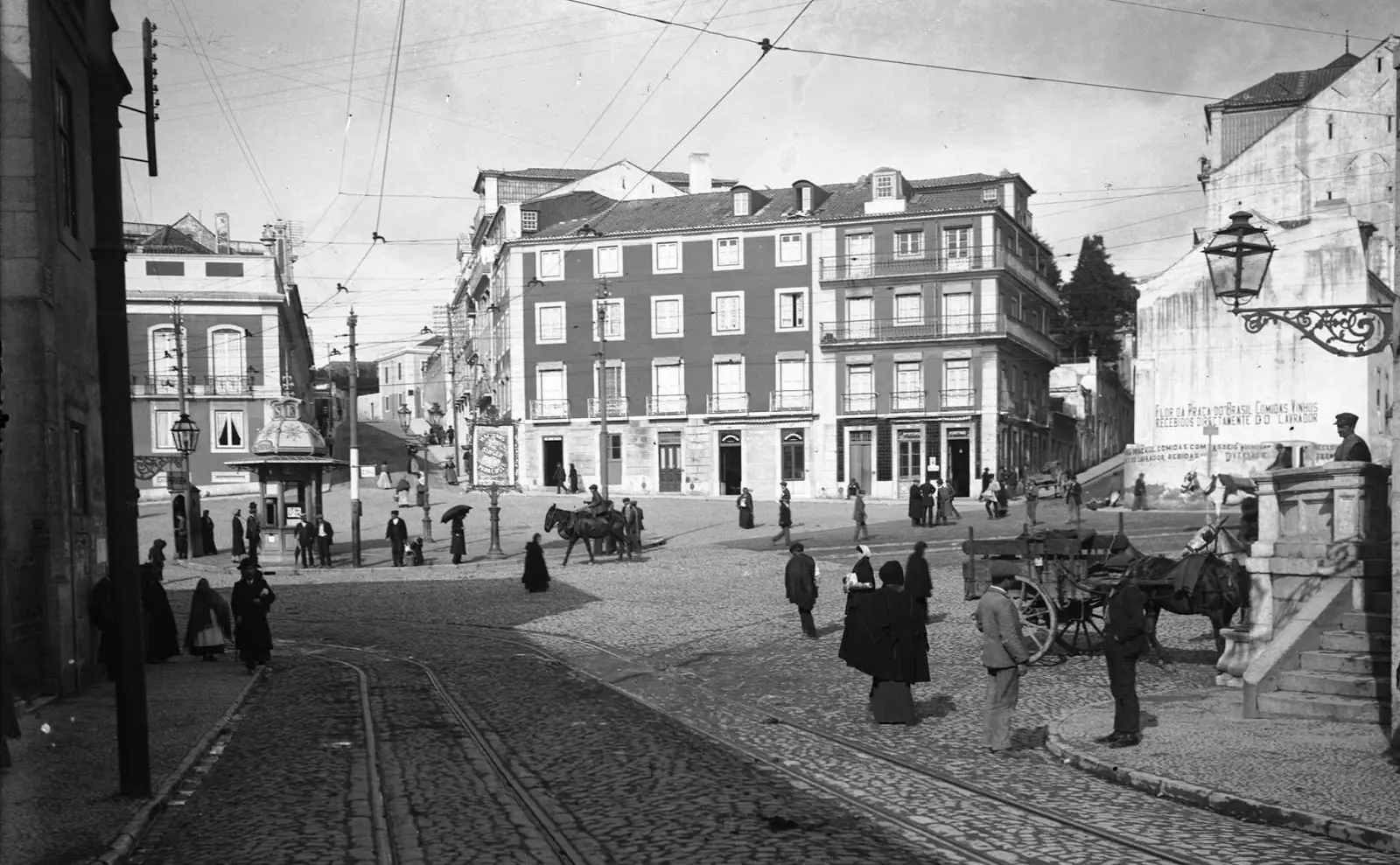
In the revolt of February 1927 barricades went up here, and civilians and sailors were shot by firing squad beside the fountain. In 1931 the square was a front line again; in 1972, it was to the police station on the square that the police took those arrested at the Capela do Rato vigil.
RepublicOppositionRepression
Notes on the sources4
The year of the exhibition: January 1947 (Virgínia Baptista, Teresa Joaquim, the catalogue cited by Wikipedia) or 1946 (a page of the Aljube Museum).
The link between the General Exhibitions of Visual Arts and the Movement of Democratic Unity (MUD) has only been read in Wikipedia.
The rooms used, and the date of Manuela Porto’s talk.
Whether there is any marker of the exhibition in the building.
Do you know more, or do you have a document? Tell us.