Women of the resistance
Maria da Conceição Moita
Maria da Conceição Moita («Xexão»)
- Born
- 5 April 1937, Alcanena
- Died
- 30 March 2021
An educator and progressive Catholic, she was the one who, at the microphone of the Capela do Rato, announced the vigil of 30 December 1972 against the colonial war. Arrested by the PIDE/DGS in December 1973 and tortured, she did not leave Caxias until 26 April 1974.
She was born in Alcanena on 5 April 1937 and came to Lisbon at the age of ten, with her grandmother and her older brother. Known as Xexão, she trained as a nursery-school teacher, taught Religion and Morals in secondary schools (liceus) in Lisbon and Barreiro, worked in the O Ninho movement with poor girls who were working as prostitutes, and ran a section of the Casa Pia.15
A progressive Catholic, she led the Boletim Anti-Colonial (Anti-Colonial Bulletin) group with her brother, Luís Moita, and Isabel Pimentel, and was one of the organisers of the Capela do Rato vigil against the colonial war.5 On 30 December 1972, at the end of the afternoon Mass, she went up to the microphone and announced, on behalf of a group of Christians, a “48-hour vigil”, with fasting, in protest against the war.4 The priest celebrating Mass, João Seabra Diniz, knew her well from the community and was not surprised when she went up to the altar.4 When the police broke up the vigil, she was taken with the others to the police station to be identified but, unlike some, she was not held; summoned by the PIDE to give a statement, she said she had been at the back and did not know who had read the declaration.5
Also in 1972, approached by Carlos Antunes, she gave logistical support to the Revolutionary Brigades: she rented a house in her own name for people living underground and gave lifts.15 On 6 December 1973, after several of her comrades had been arrested, among them her brother Luís, she was arrested as she was preparing to flee to Paris.1 She was included in the case that the DGS had opened in Caxias on 24 November against people linked to the Brigades and to an anti-colonial group; she was slapped until she fainted and subjected several times to sleep torture — the first time for seven days and eight nights, with fourteen hours of the “statue” torture.4 She was held in isolation in Caxias until 25 April, and only came out on 26 April 1974.1
After the revolution she devoted herself to early-childhood education and to civic and Catholic activism. She died on 30 March 2021, aged 83.1
On the walks
Places


In the timeline
They crossed paths with her
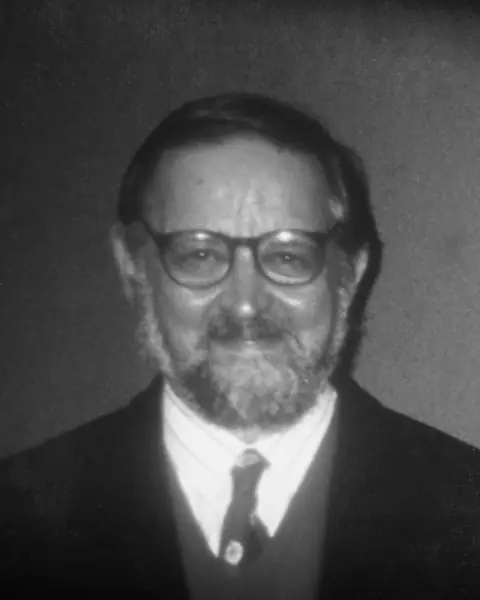
Nuno Teotónio Pereira
1922–2016
An architect and a figure among the progressive Catholics, he took part in the peace vigil at São Domingos (1968–1969) and was one of the organisers of the Capela do Rato vigil (1972). Arrested by the DGS in 1970, after the Rato vigil and at the end of 1973, he only left Caxias with 25 April.
Isabel do Carmo
b. 1940
A medical student, she was the first woman to speak at a general assembly in the 1962 academic crisis; she later founded the Revolutionary Brigades, which attacked the machinery of the colonial war. A doctor and professor, she is the author of the first study on obesity in Portugal.
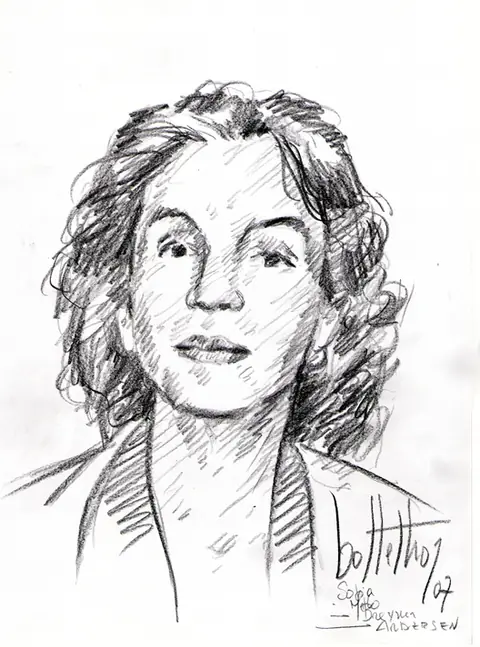
Sophia de Mello Breyner Andresen
1919–2004
A poet. She lived in Graça from 1951 until her death, wrote the “Cantata da Paz” (Cantata of Peace) for the São Domingos vigil, helped found the committee for aid to political prisoners and was a deputy in the Constituent Assembly. “This is the dawn I was waiting for” (Esta é a madrugada que eu esperava) is hers.
Maria Isabel Barreno
1939–2016
A writer and researcher, one of the “Three Marias”. Tried over “Novas Cartas Portuguesas” (New Portuguese Letters) and acquitted on 7 May 1974, she saw the greatest consequence of the case in the Constitution: equality for all, “without distinction of race, sex or religion”.
Aida Magro
1918–2011
A chemical engineer and underground PCP activist, she was in charge of the Eastern Zone of the Lisbon Local Committee, “the most important working-class zone of the capital”. Arrested by the PIDE in 1957, she was, in Caxias, one of the authors of the letters of the Caxias Manifesto.
Albina Fernandes
1928–1970
A communist activist arrested in 1961 with her two small children, whom she kept with her in Caxias. She spent six years and seven months in prison and took her own life in 1970, her nervous system weakened by the years in jail.


Notes on the sources4
- The day of her arrest, 6 December 1973, and the escape to Paris she was preparing come from Wikipedia, which cites the book “Os Últimos Presos do Estado Novo” (The Last Prisoners of the Estado Novo), by Joana Pereira Bastos; she herself, in 2014, said only “in December ’73”.
- Whether she was an active member of the Revolutionary Brigades, as Carlos Antunes (quoted by António de Araújo) and Eloísa Aragão’s thesis say, or only a supporter, as she said in 2014: “the only thing I did before 25 April was to support some actions of the Revolutionary Brigades”.
- Who decided that she would be the one to read the declaration in the Capela do Rato: Carlos Antunes says it was he, “for reasons of discipline”; the Catholics’ accounts speak of a group decision, and António de Araújo records Antunes’s version with reservations.
- Her full name: “Maria da Conceição Victor Moita”, according to the 1973 DGS case file quoted by António de Araújo.
Do you know more, or do you have a document? Tell us.
Sources
- 1Maria da Conceição Moita. Wikipédia — consulted on 2 October 2026
- 2Vigília da Capela do Rato. Wikipédia — consulted on 2 October 2026
- 3Caso da Capela do Rato. Museu do Aljube Resistência e Liberdade (EGEAC) — consulted on 2 October 2026
- 4«A paz é possível»: algumas notas sobre o caso da Capela do Rato (António de Araújo). Lusitania Sacra, 2.ª série, 16 (2004), pp. 431-463 – Universidade Católica Portuguesa — consulted on 2 October 2026
- 5Sophia de Mello Breyner Andresen: militância antifascista a partir da crise do Estado Novo (tese de doutoramento, Eloísa da Silva Aragão, 2017). Universidade de São Paulo — consulted on 2 October 2026