Women of the resistance
Albina Fernandes
Albina Fernandes (também Albina Pato; pseudónimo «Rosália»)
- Born
- 5 January 1928, Soissons (France)
- Died
- 2 October 1970, Lisbon
A communist activist arrested in 1961 with her two small children, whom she kept with her in Caxias. She spent six years and seven months in prison and took her own life in 1970, her nervous system weakened by the years in jail.
Also known as Albina Pato, she used the pseudonym “Rosália”. She was born in Soissons, in France, on 5 January 1928, and fought in the French Resistance.1 An underground PCP activist, she was arrested by the PIDE on 15 December 1961, on the same day as her partner, Octávio Pato, but in different places.12
With no one to entrust them to, she took her children with her to Caxias: Isabel, aged six, and Rui, aged two. She laid them down on the only divan and, as she told Maria Rodrigues Pato, the children’s paternal grandmother, she “rested on her knees on the floor, with her hands gripping their wrists, so that they would not take them from her”. The testimony is in the book A Força Ignorada das Companheiras (The Unacknowledged Strength of the Women Companions), by Gina de Freitas (1975). The PIDE threatened to hand them over to an institution, and only on 10 January 1962 did it let her entrust them to their grandparents.1
Tried on 17 November 1962, she was sentenced to three years’ major imprisonment and an extendable security measure, and ended up spending six years and seven months in Caxias. In November 1966, a petition signed by many citizens called for her release, but she was only granted parole on 9 July 1968.1
Her nervous system badly weakened by the years in prison, she took her own life on 2 October 1970. The National Commission for Aid to Political Prisoners, in a telegram signed by, among other women, Cecília Areosa Feio, Maria Eugénia Varela Gomes and Sophia de Mello Breyner Andresen, held the Government directly responsible for the “tragic event”. The funeral was a demonstration of grief and of protest against the regime.1
On the walks
Places

In the timeline
15 Dec 1961
Albina Fernandes arrested with her small children2 Oct 1970
Suicide of Albina Fernandes
They crossed paths with her
Sofia Ferreira
1922–2010
The daughter of farm labourers from Alhandra, she was arrested with Álvaro Cunhal and Militão Ribeiro in 1949 and again in 1959, and spent more than thirteen years in the dictatorship’s prisons.
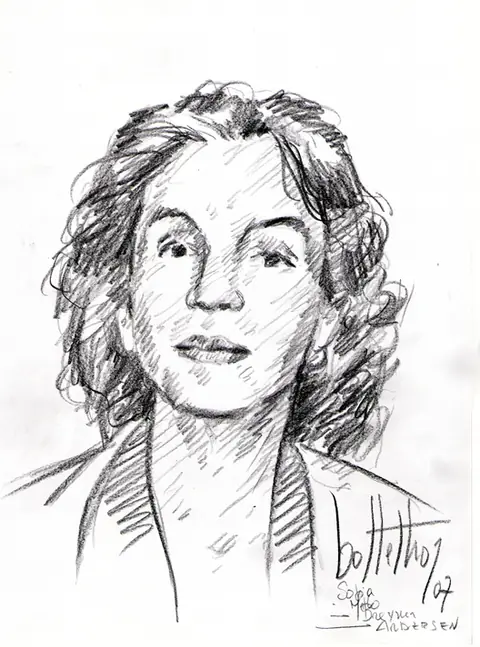
Sophia de Mello Breyner Andresen
1919–2004
A poet. She lived in Graça from 1951 until her death, wrote the “Cantata da Paz” (Cantata of Peace) for the São Domingos vigil, helped found the committee for aid to political prisoners and was a deputy in the Constituent Assembly. “This is the dawn I was waiting for” (Esta é a madrugada que eu esperava) is hers.
Aida Magro
1918–2011
A chemical engineer and underground PCP activist, she was in charge of the Eastern Zone of the Lisbon Local Committee, “the most important working-class zone of the capital”. Arrested by the PIDE in 1957, she was, in Caxias, one of the authors of the letters of the Caxias Manifesto.
Alda do Espírito Santo
1926–2010
A poet from São Tomé whose Lisbon home, on Rua Actor Vale, housed the Centre for African Studies from 1951. Arrested in 1965 and imprisoned in Caxias, she later wrote the words of the anthem of São Tomé and Príncipe.
António Tereso
A mechanic imprisoned in Caxias, he posed for months as a “rachado” (turncoat), at the PCP’s request, to prepare the escape of 4 December 1961, and it was with him at the wheel of Salazar’s armoured car that eight prisoners got out of the fort.
Aurora Rodrigues
b. 1952
A law student, she witnessed the murder of Ribeiro Santos in 1972. Arrested in 1973, she was one of the women students most savagely tortured by the political police in Caxias, and she never talked.

Notes on the sources1
- Where she died and where the funeral, which became a protest demonstration, was held: the sources say only Lisbon.
Do you know more, or do you have a document? Tell us.
Sources
- 1Albina Fernandes. Memória Comum – Memorial aos Presos e Perseguidos Políticos — consulted on 2 October 2026
- 2A fuga de Caxias, um acto de resistência antifascista rumo à vitória, foi há 60 anos. URAP – União de Resistentes Antifascistas Portugueses — consulted on 2 October 2026
- 3Consulta SPARQL de identificadores e datas (P569/P570) de pessoas. Wikidata Query Service — consulted on 2 October 2026