Women of the resistance
Aida Magro
Aida de Freitas Loureiro Magro
- Born
- 4 April 1918, Gambos, Huíla (Angola)
- Died
- 11 November 2011, Lisbon
A chemical engineer and underground PCP activist, she was in charge of the Eastern Zone of the Lisbon Local Committee, “the most important working-class zone of the capital”. Arrested by the PIDE in 1957, she was, in Caxias, one of the authors of the letters of the Caxias Manifesto.
She was born in 1918 in Gambos, in Huíla, Angola, and came to Lisbon to study chemistry at the Industrial Institute, where she joined the student struggle against the dictatorship.2 She joined the PCP in 1942 and three years later went underground,1 when her husband, José Magro, was denounced to the PIDE; she took her daughter, still a baby, with her, and later handed her over to the family.2
Underground, she was in charge of the Eastern Zone of the Lisbon Local Committee, “the most important working-class zone of the capital”; she carried illegal documents and wrote, under the pseudonym “Eva”, for the party’s clandestine publications, among them A Voz das Camaradas (The Voice of the Women Comrades).1 Like the other women in the clandestine houses, it was also her job to keep the house safe and to keep up a cover routine that would not arouse the neighbours’ suspicions.2
She was arrested by the PIDE in 19571 and taken to Caxias prison, where she spent six months in isolation and under interrogation.2 Given a custodial sentence of two and a half years, with her political rights suspended for 15 years and security measures, because she was considered a “dangerous element”,1 she was only released six years later, at the age of 45; in all that time she never saw her husband, imprisoned in the same fort.2 In prison she read and discussed the news with the other women prisoners, and was one of the authors of the thirteen letters of the Caxias Manifesto,1 which Maria Alda Nogueira smuggled out of the prison in 1961, addressed to women’s and democratic organisations all over the world.3
On parole, she had to report to the PIDE every month and could not leave Lisbon without permission, not even to visit her husband, imprisoned again in Peniche.2 Unable to work as an engineer, she even sold coffee machines; she devoted herself to supporting political prisoners and their families, in the National Commission for Aid to Prisoners.1 In 1973 she wrote to Marcelo Caetano asking for the release of her husband, who was ill, and for an amnesty for political prisoners; he was only freed with 25 April. After the revolution she was a full-time PCP worker, and she died in Lisbon on 11 November 2011.2 Her papers have been digitised at the 25 April Documentation Centre of the University of Coimbra, and the originals have been in the Torre do Tombo since 2007.1
From the archives
In other archives
These can only be viewed on each archive’s own website.
On the walks
Places

In the timeline
They crossed paths with her
Maria Lamas
1893–1983
A journalist and writer, she edited “Modas e Bordados” (Fashions and Embroidery), chaired the National Council of Portuguese Women until the regime closed it down in 1947, and responded with “As Mulheres do Meu País” (The Women of My Country). She was arrested several times and lived in exile in Paris.
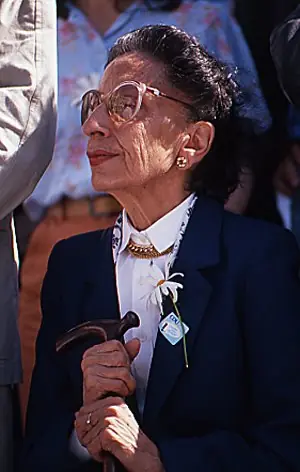
Virgínia Moura
1915–1998
The first woman recognised as a civil engineer in Portugal, and a communist activist, she was arrested sixteen times by the PIDE. In 1949 she was held in Caxias, in the same cell as Maria Lamas.
Emídio Santana
1906–1988
A metalworker and anarcho-syndicalist, he was one of the perpetrators of the bomb attack on Salazar on Avenida Barbosa du Bocage, in 1937. He fled to England, was handed over to the Portuguese police and was not released from prison until 1953.
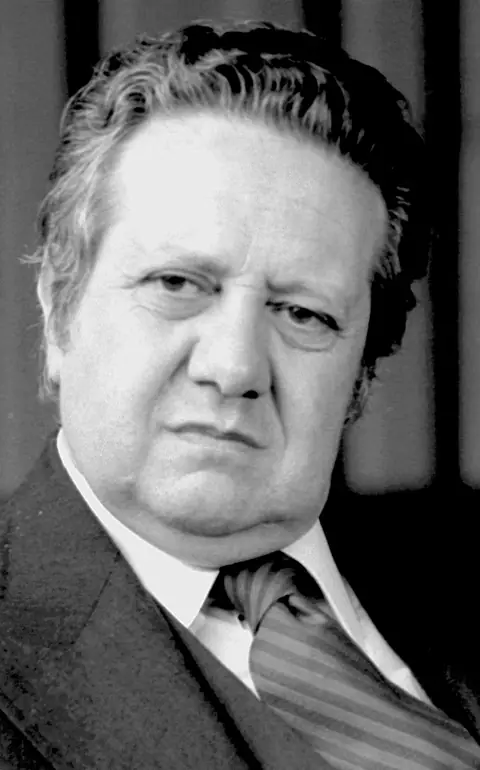
Mário Soares
1924–2017
General secretary of the PS, he returned from exile on 28 April 1974 and was greeted by a crowd at Santa Apolónia. In 1975 he took on the PCP in the República affair and at the Fonte Luminosa rally; in 1976 he headed the First Constitutional Government.
Albina Fernandes
1928–1970
A communist activist arrested in 1961 with her two small children, whom she kept with her in Caxias. She spent six years and seven months in prison and took her own life in 1970, her nervous system weakened by the years in jail.
Alda do Espírito Santo
1926–2010
A poet from São Tomé whose Lisbon home, on Rua Actor Vale, housed the Centre for African Studies from 1951. Arrested in 1965 and imprisoned in Caxias, she later wrote the words of the anthem of São Tomé and Príncipe.


Notes on the sources3
- The day of her arrest: 27 May 1957, according to Wikipedia; the CIG gives only the year.
- When she left prison: six years after her arrest, because of the security measures, according to Wikipedia; the CIG does not give the date.
- The year of the Caxias Manifesto, 1961, appears only in Wikipedia.
Do you know more, or do you have a document? Tell us.
Sources
- 1Mulheres pela Igualdade (biografias). CIG – Comissão para a Cidadania e a Igualdade de Género — consulted on 2 October 2026
- 2Aida Magro. Wikipédia (português) — consulted on 2 October 2026
- 3Maria Alda Nogueira. Wikipédia (português) — consulted on 2 October 2026