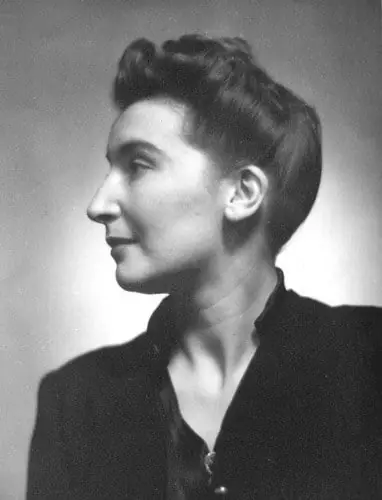
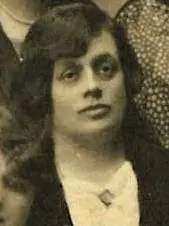
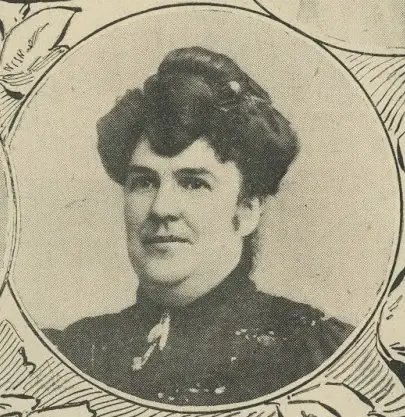
Elina Júlia Chaves Pereira Guimarães (Elina Guimarães da Palma Carlos)
Repressionjurist and writerleader of the National Council of Portuguese Womeneditor of “Alma Feminina” (1929–1930)forerunner of “legal feminism”opposition activist (MUD)
Born
8 August 1904, Lisbon
Died
24 June 1991, Lisbon
A jurist and feminist, a leader of the National Council of Portuguese Women until the Estado Novo (“New State”) closed it down in 1947. A forerunner of “legal feminism”, she championed votes for women, co-education and the rights of working women, and was part of the democratic opposition.
She was born in Lisbon in 1904, the daughter of Vitorino Guimarães, an Army officer, teacher and minister of the First Republic.1 Afonso Costa called her a “woman of the future”.4 While still a student, she challenged in the magazine Vida Académica what Júlio Dantas had written about women; she graduated in Law in Lisbon in 1926, with a mark of 18 out of 20.1 In 1928 she married Adelino da Palma Carlos, a fellow student since secondary school,3 who in 1974 would head the first government after 25 April.5
Invited by Adelaide Cabete, she joined the National Council of Portuguese Women,4 where she was secretary-general (1927), vice-president of the board (1928, 1929 and 1931), head of the legal and suffrage sections and editor of the magazine Alma Feminina (1929–1930).1 A forerunner of “legal feminism”, she defined it as the current that “imposes and advocates the equality of the sexes before the law”.1 At the Second Feminist and Education Congress, in 1928, she argued in her paper “Protecção à mulher trabalhadora” (Protection for the working woman) that women should receive part of their wages during the compulsory rest before and after childbirth, and that pregnancy should not be grounds for ending an employment contract.2 She also chaired the executive committee of the national subscription opened by the newspaper O Rebate for the families of political prisoners, deportees and exiles.3
In 1931 she was among those who protested to the Minister of Public Instruction against the end of co-education in primary schools.4 She wrote in the press about women’s rights, as far as the censors allowed, and published O Poder Maternal (Maternal Authority, 1933) and A Lei em que Vivemos (The Law We Live Under, 1937), on the law in women’s lives.1 In 1946 she was elected vice-president of the Council’s general assembly, and was in office when the Estado Novo closed it down, in 1947, at its Amoreiras headquarters.15
In the opposition, she joined the MUD in 1945, took part in the Aveiro Republican Congress, in 1969, and in the Congress of the Democratic Opposition, in 1973, sitting on its national committee. After 25 April she chaired the League for Women’s Civic Rights.1 In 1985, at the close of the International Decade for Women, President Ramalho Eanes made her an Officer of the Order of Liberty.15 She died in Lisbon on 24 June 1991; in November that year, the City Council named a street in Santa Clara after her.1
From the archives
In other archives
These can only be viewed on each archive’s own website.
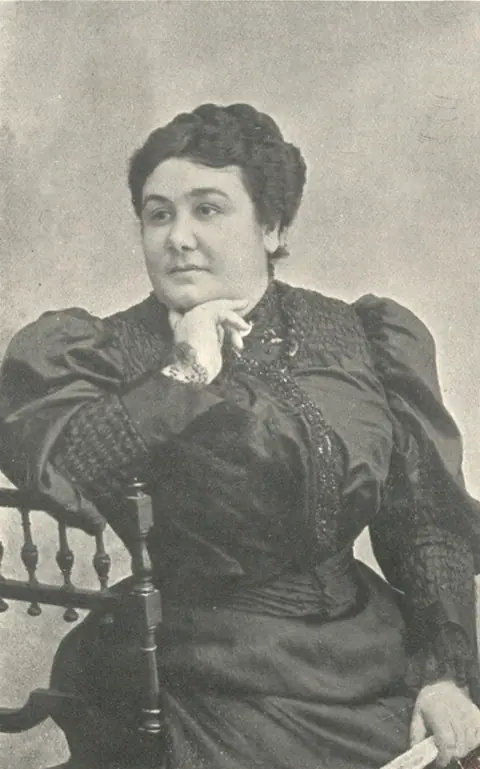
A republican doctor who only began studying after she married, she founded the National Council of Portuguese Women in 1914, chaired it for more than twenty years and made her practice in Restauradores its headquarters.
An actress, translator and reciter of poetry, she was vice-president of the National Council of Portuguese Women and, in 1947, spoke about Virginia Woolf at the Exhibition of Books Written by Women. Troubled by the exhibition, the regime closed the Council down that same year.
A journalist and writer, she edited “Modas e Bordados” (Fashions and Embroidery), chaired the National Council of Portuguese Women until the regime closed it down in 1947, and responded with “As Mulheres do Meu País” (The Women of My Country). She was arrested several times and lived in exile in Paris.
A philanthropist and feminist, she was vice-president of the National Council of Portuguese Women in 1928 and presented papers at both Feminist and Education Congresses, on assistance to women offenders and on the moral action of work.
A primary school teacher and nursery teacher, she taught at Workshop School No. 1, in Graça, a school of libertarian inspiration; she sat on the organising committee of the First Feminist and Education Congress, in 1924, and on the board of the National Council of Portuguese Women.
A republican teacher and journalist, she was active in the Republican League of Portuguese Women and in Freemasonry, and edited the publications of the National Council of Portuguese Women: the “Boletim Oficial” (Official Bulletin), from 1914, and the magazine “Alma Feminina” (Feminine Soul), from 1917.
Notes on the sources3
Her full name: “Elina Júlia Pereira Guimarães da Palma Carlos” (Toponímia de Lisboa, Wikipedia) or “Elina Júlia Chaves Pereira Guimarães” (CIG).
The year of the article against Júlio Dantas in “Vida Académica”: 1922 (Toponímia de Lisboa) or 1925 (Wikipedia).
When she joined the National Council of Portuguese Women: at 20, around 1924 (Toponímia de Lisboa), or in 1925 (Silêncios e Memórias; the CIG gives 1925 as the year she joined the feminist movement).
Do you know more, or do you have a document? Tell us.