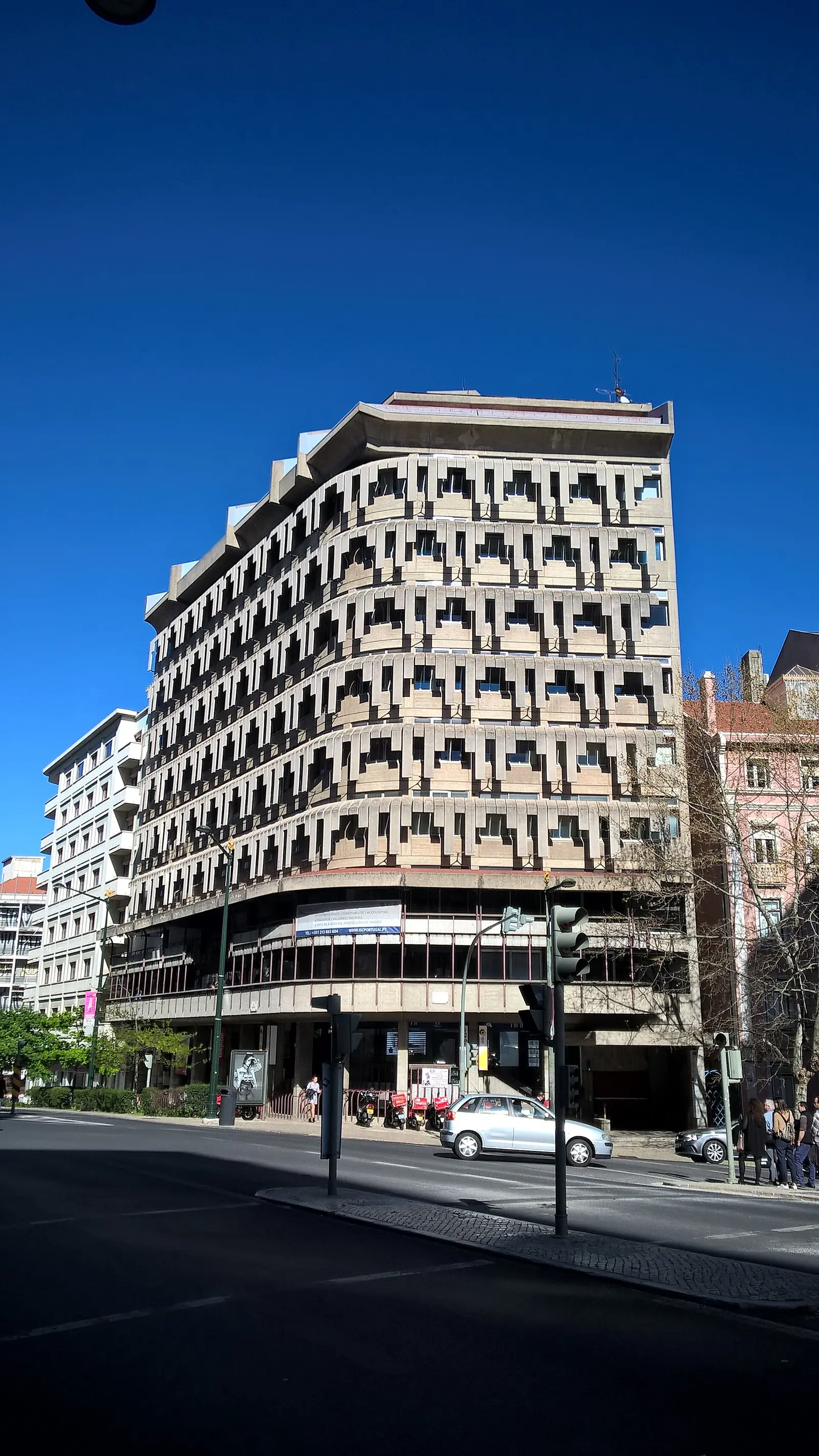
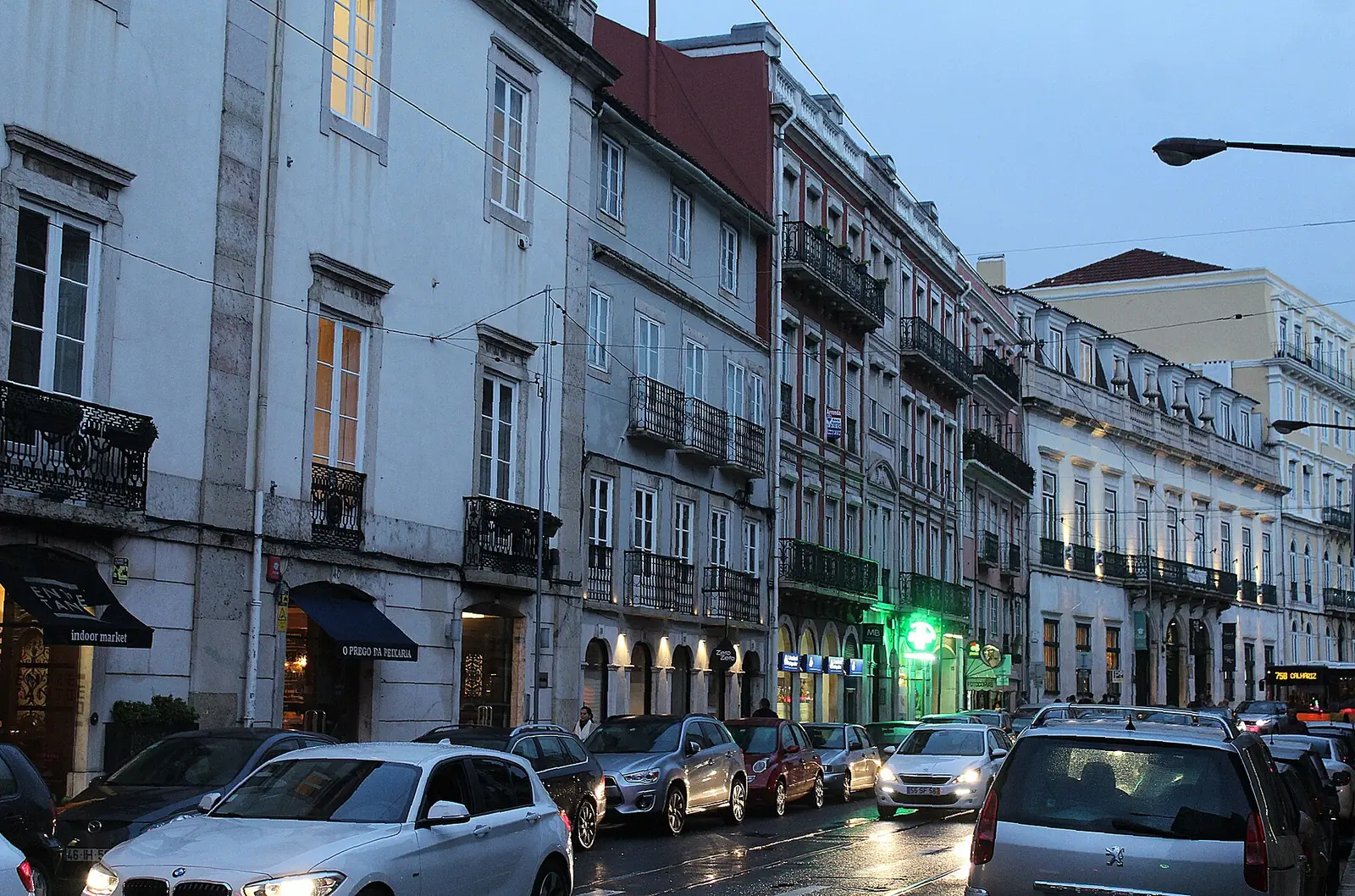
A Rua Rodrigues Sampaio, onde morou Natália Correia, vista do alto, em 2011.deror_avi, CC BY-SA 3.0
Santo António
Home of Natália Correia
Natália Correia lived on the fifth floor of no. 52 from 1953 until her death in 1993. In the 1950s and 1960s the flat hosted her salons and, in 1955, a theatre premiere behind closed doors: her translation of Sartre’s “Huis-Clos”.
On 31 July 1953, Natália Correia married Alfredo Machado, owner of the Hotel Império, and rented the fifth floor of no. 52 Rua Rodrigues Sampaio, “to which she moves and where she settles for the rest of her life”.1
In the 1950s and 1960s, this flat was the centre of the salons that brought together names from Portuguese culture and literature; from 1971, Natália took them to the Botequim, in Graça, which she founded with Isabel Meireles, Júlia Marenha and Helena Roseta.3 In July 1955 her translation of Sartre’s Huis-Clos premiered here behind closed doors, directed by Carlos Wallenstein, with sets by João Santiago and with Alexandre de Castro Freire, Maria Ferreira and Manuel de Lima in the cast.1 She was living here when, in 1966, she published the Antologia de Poesia Portuguesa Erótica e Satírica (Anthology of Portuguese Erotic and Satirical Poetry), which the censors seized and which brought her before the Plenary Court: the trial began on 3 June 1969 and ended on 21 March 1970, with a sentence of 90 days in prison, commuted to a fine. In the case over the Novas Cartas Portuguesas (New Portuguese Letters), published in 1972 by Estúdios Cor, where she was literary director, she was named a defendant as the editor responsible.1
She died in this flat, of a heart attack, in the early hours of 16 March 1993, after coming back from the Botequim. The flat and its contents were left untouched until the death of her husband, Dórdio Guimarães, in 1997; that year it was emptied of thousands of books and manuscripts and hundreds of works of art, from Vieira da Silva to Almada Negreiros and Mário Cesariny. Under the terms of Dórdio Guimarães’s will, the estate has been in Ponta Delgada since 2011: the papers and books in the Public Library and Regional Archive, the works of art and some furniture in the Carlos Machado Museum.1
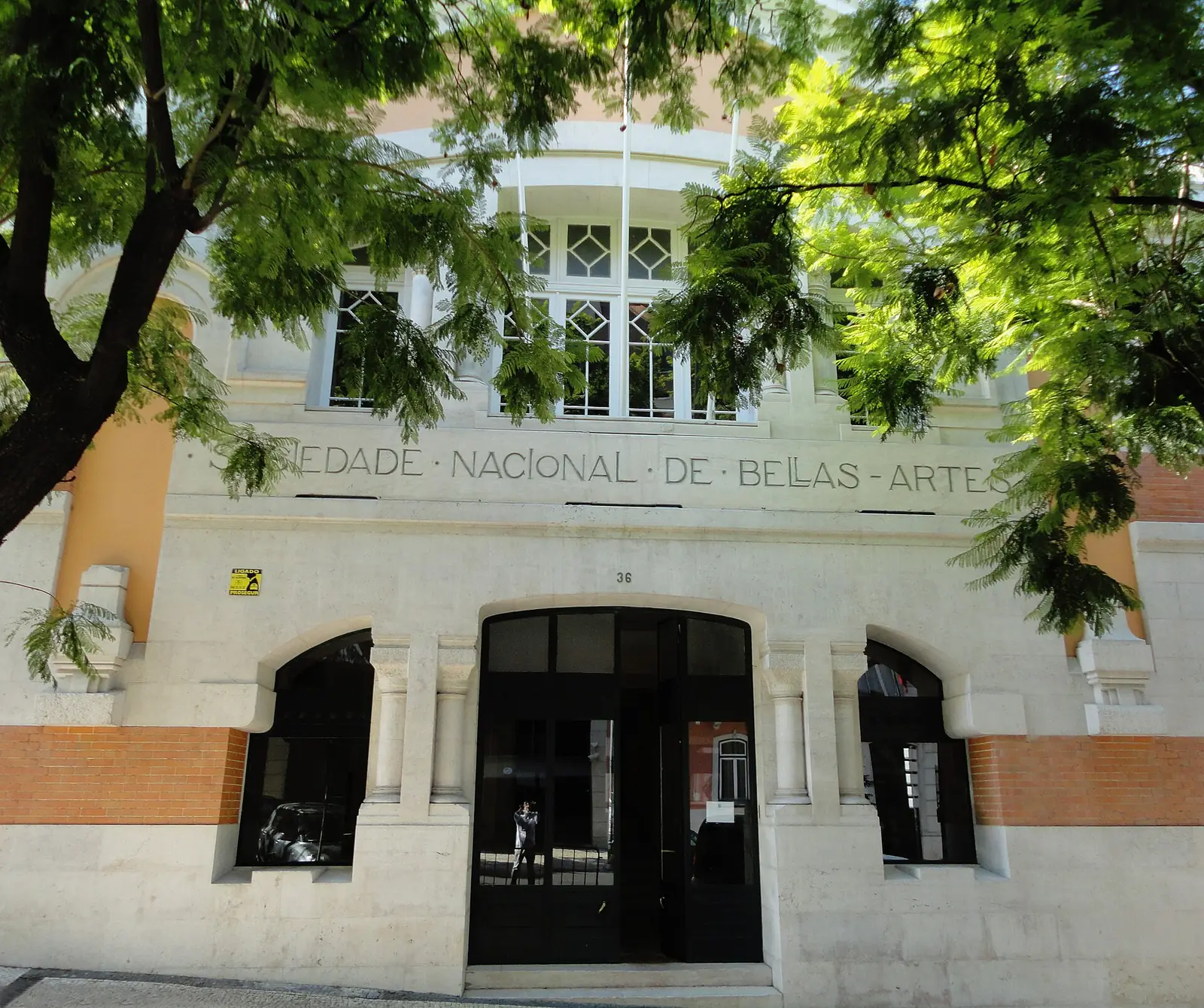
Today: National Society of Fine Arts (Sociedade Nacional de Belas-Artes)
In January 1947, the National Council of Portuguese Women, led by Maria Lamas, brought together here three thousand books by four hundred women authors from thirty countries. It was a success — and the pretext for the regime to close the Council down months later.
This was the home of the Sir, the restaurant where Celeste Caeiro worked. It turned one year old on 25 April 1974: it did not open, and the carnations bought for the celebration were given to the women on the staff — the carnations that Celeste took down to the Baixa.
The Portuguese Society of Writers was on the first floor of no. 20 on this street. In May 1965, for having given a prize to “Luuanda”, by Luandino Vieira, then a prisoner at Tarrafal, it was dissolved by the government, and its headquarters were raided and wrecked that same night.
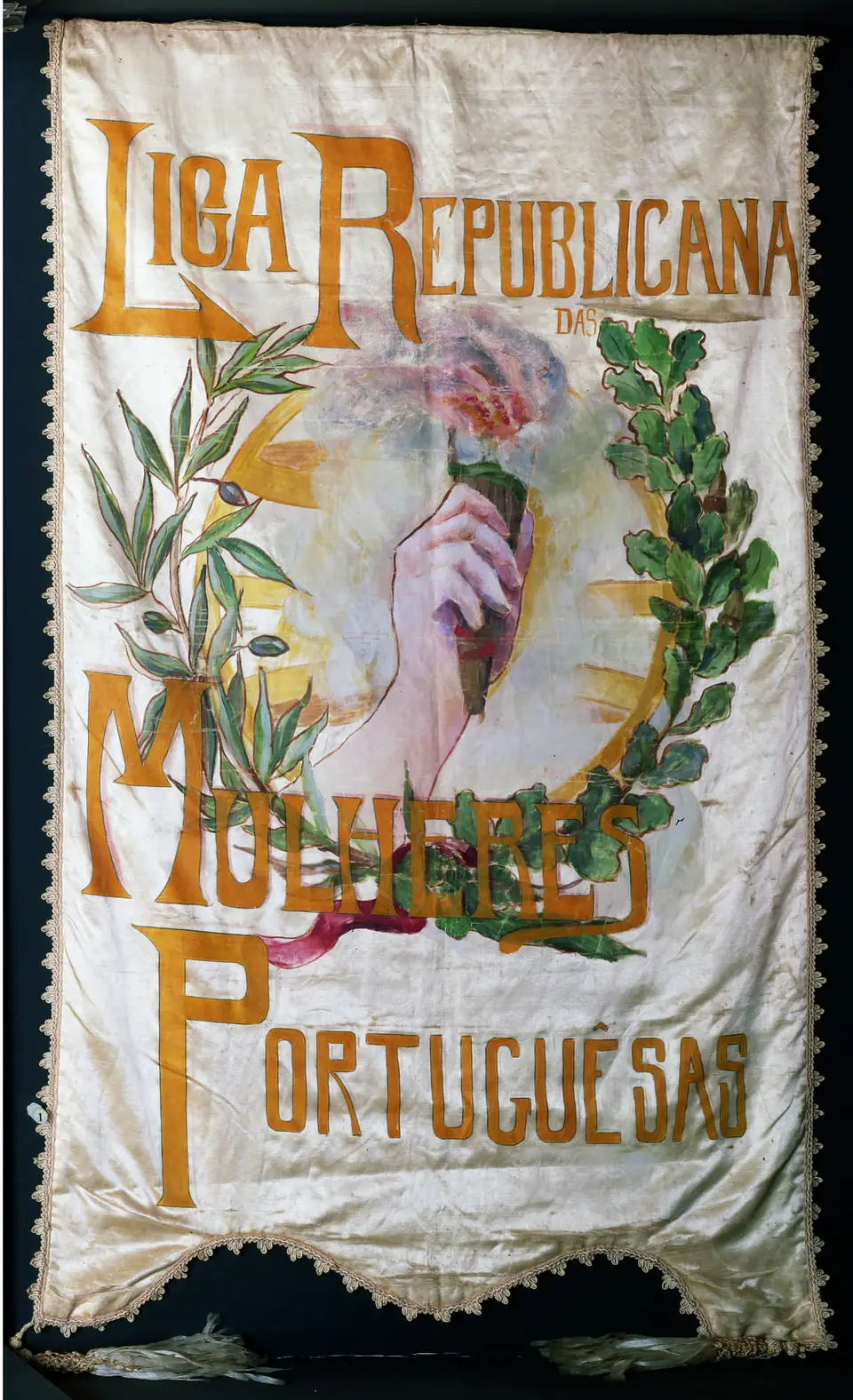
The Republican League of Portuguese Women — the league of Ana de Castro Osório, Carolina Beatriz Ângelo, Adelaide Cabete and Maria Veleda — was founded in 1909 on the 2nd floor of no. 6 on this street. It was the first association to bring together the defence of feminism and of the Republic.
WomenRepublic
Notes on the sources3
Whether the building has any plaque in memory of Natália Correia.
The point on the map comes from a medical practice at no. 52 (OpenStreetMap), not from the entrance to the building.
The sentence over the “Antologia”: 90 days in prison commuted to a fine, on 21 March 1970, according to the chronology by Luiz Fagundes Duarte, who elsewhere speaks of a suspended prison sentence; the Aljube Museum speaks of a suspended sentence and places it in 1966, the year of the book.
Do you know more, or do you have a document? Tell us.