Santa Maria Maior
Carolina Beatriz Ângelo’s surgery (Rua Nova do Almada, 84)
An advertisement from 1909 places the surgery of Carolina Beatriz Ângelo, a gynaecologist and the first Portuguese woman surgeon, here, at no. 84 Rua Nova do Almada — two years before she became the first woman to vote in Portugal.
Carolina Beatriz Ângelo came from Guarda to Lisbon to study: at the Polytechnic School from 1895, then at the Medical-Surgical School, where she graduated in 1902.4 She was the first Portuguese woman doctor to operate at São José Hospital, worked at Rilhafoles with Miguel Bombarda and devoted herself to gynaecology. An advertisement from 1909 places her surgery here, at no. 84 Rua Nova do Almada; she was then living at no. 181 Rua do Sol ao Rato.1
The Baixa was also the territory of another feminist doctor. Adelaide Cabete, an obstetrician and gynaecologist, opened a surgery in 1907 at no. 153 Rua da Prata, moved it in 1908 to no. 267 Rua Áurea and, from 1910, to no. 13 Praça dos Restauradores, where she gave free consultations to women on low incomes and where she set up the headquarters of the National Council of Portuguese Women.2
Two years after the advertisement, Carolina, a widow and head of family, applied to be registered as a voter. Refused, she went to court, and Judge João Baptista de Castro ruled in her favour: on 28 May 1911 she was the first woman to vote in Portugal, at the Clube Estefânia.5
On the walks
Where it is
Map showing where Carolina Beatriz Ângelo’s surgery (Rua Nova do Almada, 84) is.
Dates
1909
An advertisement places Carolina Beatriz Ângelo’s surgery here.
12 May 1911
Feminist Propaganda Association founded
People connected with this place


Nearby
90 m · 5 min on foot
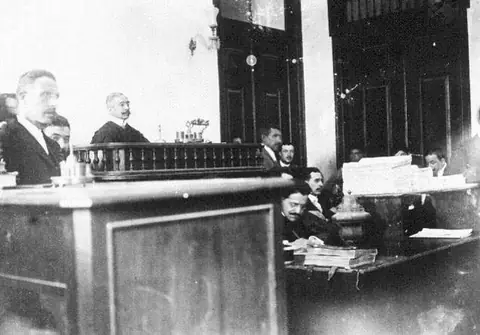
Boa-Hora Court
Today: Former court, closed since 2009
A convent turned into a court in 1843. The Plenary Court, which tried political prisoners, sat here — and it was here that Maria Alda Nogueira, Natália Correia and the “Three Marias” were tried; the Three Marias were acquitted after 25 April.
RepressionWomenCulture and censorship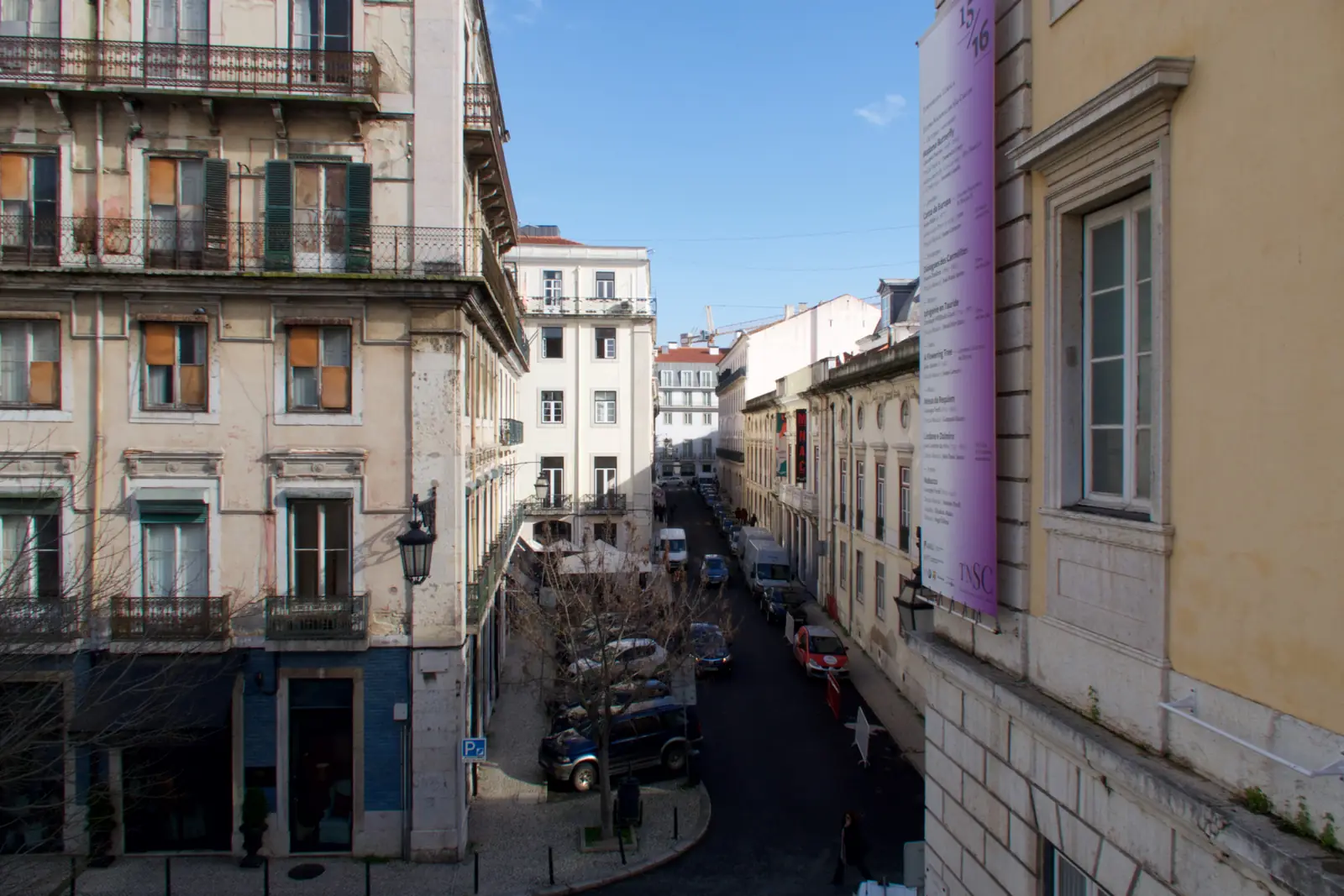
120 m · 5 min on foot
Rádio Renascença (the Rua Capelo studios)
Today: A hotel, The Ivens
In the Rádio Renascença studios, on the second floor of no. 5 Rua Capelo, the first verse of “Grândola, Vila Morena”, by José Afonso, went on air at 00:20 on 25 April 1974, on the programme “Limite” — the signal that confirmed the advance of the MFA troops.
RevolutionCulture and censorship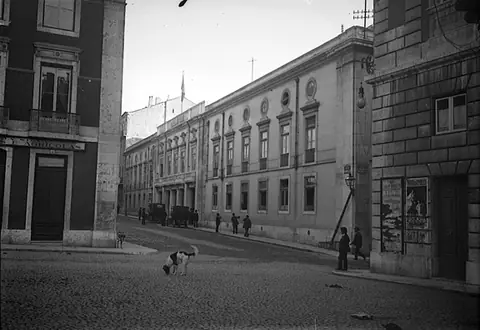
150 m · 5 min on foot
Lisbon Civil Government and the PSP’s 1st Station
Today: The building of the former Civil Government
Seat of the Lisbon Civil Government, in a former building of the Convent of São Francisco. The PSP’s 1st Station, housed there, had cells where the political police locked up many prisoners, especially before 1938, and where trials of the Special Military Court were held.
Repression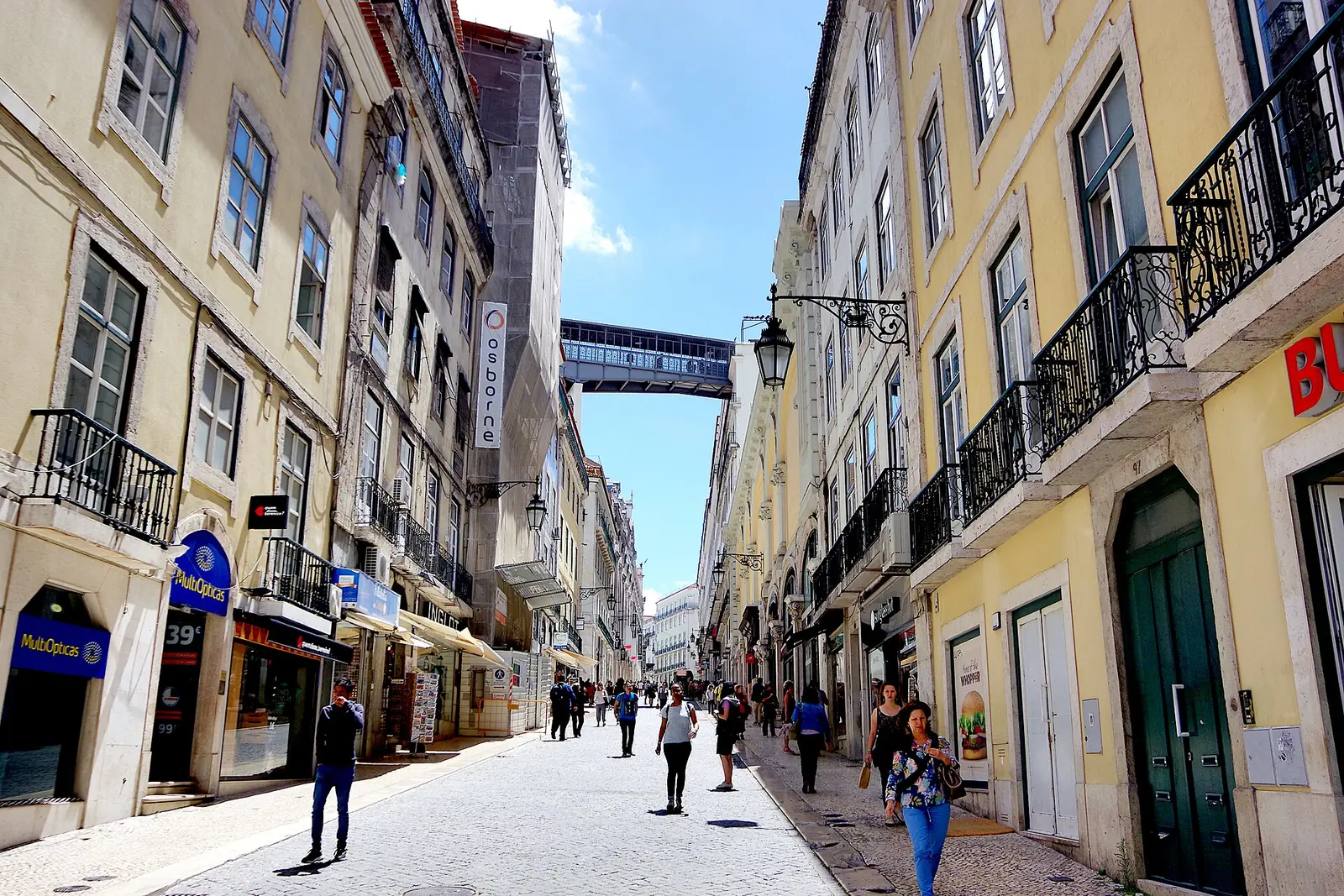
180 m · 5 min on foot
Rua do Carmo — Celeste Caeiro’s carnations
Today: Rua do Carmo
Salgueiro Maia’s column climbed this street, from the Rossio to Largo do Carmo. It was here, at the start of the street, that Celeste Caeiro gave a carnation to a soldier who asked her for a cigarette — and the carnation became the symbol of the revolution.
RevolutionWomenLabour


.jpg)
Notes on the sources3
- Whether today’s no. 84 is the same building as the no. 84 of 1909.
- How long the surgery operated here: the only reference is the 1909 advertisement.
- Which court heard Carolina’s appeal to be registered as a voter: a blog (Em Defesa do Benfica, 2014) says it was the Boa-Hora Court, a few steps from here, in the 1st Civil Court of Lisbon.
Do you know more, or do you have a document? Tell us.
Sources
- 1A rua lisboeta da primeira mulher que votou em Portugal. Toponímia de Lisboa (Câmara Municipal de Lisboa) — consulted on 2 October 2026
- 2A Rua da médica Adelaide Cabete que também foi professora de Higiene. Toponímia de Lisboa (Câmara Municipal de Lisboa) — consulted on 2 October 2026
- 3Carolina Beatriz Ângelo. Wikipédia (pt) — consulted on 2 October 2026
- 4Ângelo, Carolina Beatriz (1878-1911) — Dicionário de Médicos Portugueses. Unidade de História da Medicina, Faculdade de Ciências Médicas da UNL (projeto de estudantes) — consulted on 2 October 2026
- 5Carolina Beatriz Ângelo. Assembleia da República — consulted on 2 October 2026
- 6O Benfiquismo e D. Carolina Beatriz Ângelo (Alberto Miguéns, 8/3/2014). Em Defesa do Benfica (blogue) — consulted on 2 October 2026
Coordinates: OpenStreetMap (Nominatim), consultado a 2 de outubro de 2026.