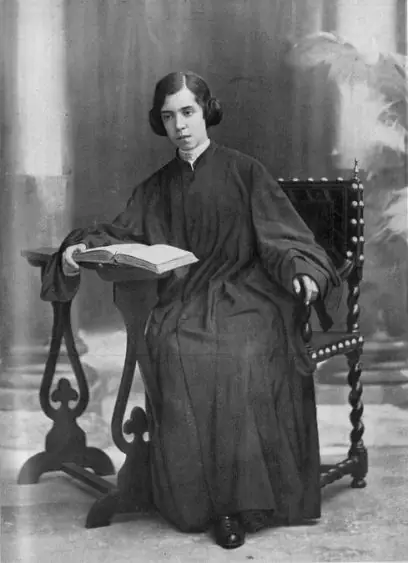
Republicphilanthropistvice-president of the National Council of Portuguese Women (1928)speaker at the Feminist and Education Congresses
Born
10 November 1881, Paço de Arcos (Oeiras)
Died
21 May 1938, Lisbon (São Mamede)
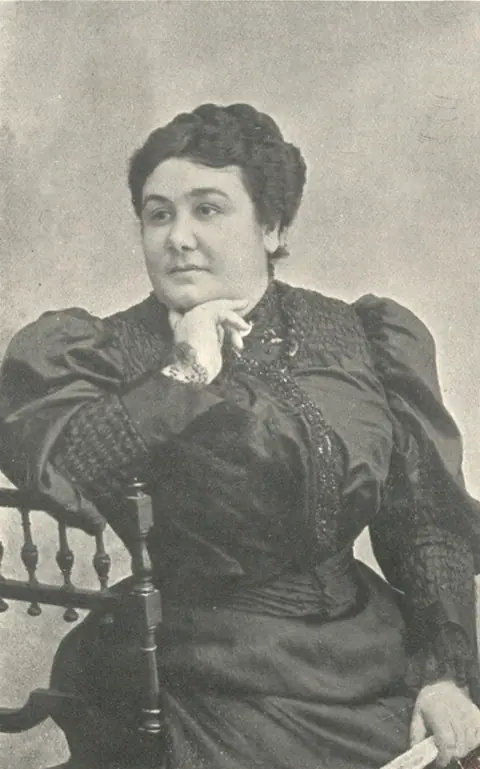
A philanthropist and feminist, she was vice-president of the National Council of Portuguese Women in 1928 and presented papers at both Feminist and Education Congresses, on assistance to women offenders and on the moral action of work.
She was born in Paço de Arcos in 1881.1 In 1907 she joined Ilda Jorge, Maria Veleda and Ana de Castro Osório on the women’s committee that sought to set up a Nursery School in Lisbon for vulnerable children.12
In the National Council of Portuguese Women she was vice-president of the board in 1928.2 At the Feminist and Education Congresses that the Council organised in Lisbon she presented the papers “Assistência às delinquentes” (Assistance to women offenders), at the first, in 1924, and “A acção moral do trabalho” (The moral action of work), at the second, in 1928.1
She died in 1938, at home, on Rua Luís Fernandes, in Lisbon, and is buried in the Alto de São João Cemetery.1
A republican doctor who only began studying after she married, she founded the National Council of Portuguese Women in 1914, chaired it for more than twenty years and made her practice in Restauradores its headquarters.
A primary school teacher and nursery teacher, she taught at Workshop School No. 1, in Graça, a school of libertarian inspiration; she sat on the organising committee of the First Feminist and Education Congress, in 1924, and on the board of the National Council of Portuguese Women.
A Lisbon writer and journalist, she was one of the figures of the National Council of Portuguese Women in the 1920s and took the paper “O voto às mulheres” (Votes for women) to the Second Feminist and Education Congress, in 1928.
Described as the first Portuguese woman notary, with an office in Alcântara, she presented a paper at the First Feminist and Education Congress, in 1924, that demanded full political equality and the right to vote for Portuguese women.
A jurist and feminist, a leader of the National Council of Portuguese Women until the Estado Novo (“New State”) closed it down in 1947. A forerunner of “legal feminism”, she championed votes for women, co-education and the rights of working women, and was part of the democratic opposition.
One of the first women to graduate in law in Portugal, she was the first to practise as a lawyer, at the Boa-Hora Court, on 14 November 1913 — five years before the law opened the profession to women.
Notes on the sources2
Whether she led the 1907 Nursery School committee, as Wikipedia says, or was only a member of it, as the blog Silêncios e Memórias says.
The years of her vice-presidency of the National Council of Portuguese Women: 1928, according to the blog Silêncios e Memórias, based on a photograph of the board; 1929, 1931–1934 and 1936, according to Wikipedia, which adds the honorary presidency in 1937.
Do you know more, or do you have a document? Tell us.