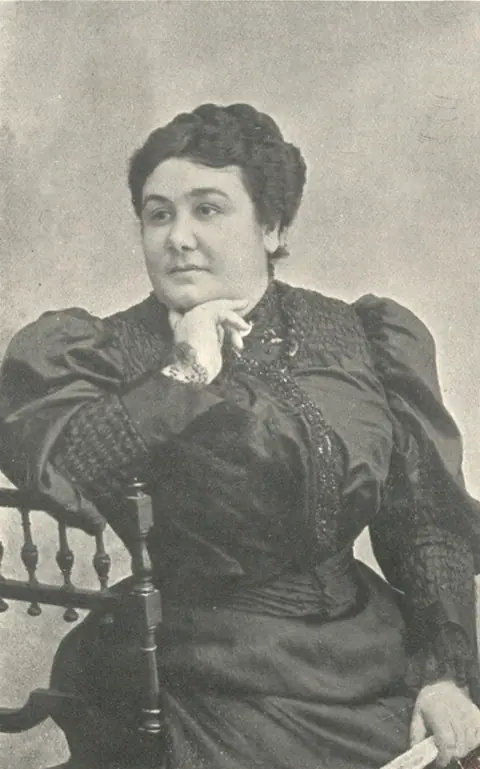
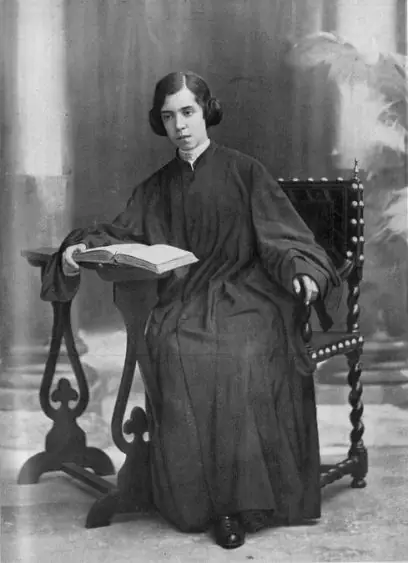
Maria da Conceição Infante de Lacerda Pereira de Eça Custance O'Neill
Republicwriter and poetjournalistleader of the National Council of Portuguese Womenauthor of the paper “O voto às mulheres” (Votes for women) (1928)
Born
19 November 1873, Lisbon
Died
23 March 1932, At sea, aboard the steamer “General Osório”, near Cape Verde
A Lisbon writer and journalist, she was one of the figures of the National Council of Portuguese Women in the 1920s and took the paper “O voto às mulheres” (Votes for women) to the Second Feminist and Education Congress, in 1928.
She was born in Lisbon on 19 November 1873.12 A writer, poet and journalist, she also signed her work as Lina Marville and contributed to magazines such as Brasil-Portugal, Ilustração Portuguesa and Alma Feminina.1
In 1920, at the Associação dos Caixeiros (Shop Assistants’ Association), she presented the paper “A ferocidade do egoísmo” (The ferocity of selfishness) and became one of the figures of the National Council of Portuguese Women, where she chaired the committees for Social Assistance, for Labour and for the Leagues of Kindness.13 At the First Feminist and Education Congress, in 1924, she presented the papers “Assistência e trabalho” (Assistance and work) and “As ligas de bondade” (The leagues of kindness); at the second, in 1928, “O voto às mulheres” (Votes for women).13 She appears in the photograph of the Council’s board at the time of that second congress.2
She died in 1932, on the high seas, aboard the German steamer “General Osório”, two days after setting out on the voyage back from Brazil to Portugal, and was buried at sea.12
A republican doctor who only began studying after she married, she founded the National Council of Portuguese Women in 1914, chaired it for more than twenty years and made her practice in Restauradores its headquarters.
A philanthropist and feminist, she was vice-president of the National Council of Portuguese Women in 1928 and presented papers at both Feminist and Education Congresses, on assistance to women offenders and on the moral action of work.
A primary school teacher and nursery teacher, she taught at Workshop School No. 1, in Graça, a school of libertarian inspiration; she sat on the organising committee of the First Feminist and Education Congress, in 1924, and on the board of the National Council of Portuguese Women.
Described as the first Portuguese woman notary, with an office in Alcântara, she presented a paper at the First Feminist and Education Congress, in 1924, that demanded full political equality and the right to vote for Portuguese women.
A jurist and feminist, a leader of the National Council of Portuguese Women until the Estado Novo (“New State”) closed it down in 1947. A forerunner of “legal feminism”, she championed votes for women, co-education and the rights of working women, and was part of the democratic opposition.
One of the first women to graduate in law in Portugal, she was the first to practise as a lawyer, at the Boa-Hora Court, on 14 November 1913 — five years before the law opened the profession to women.
Notes on the sources3
The day of death: 23 March 1932 (Wikipedia) or 21 March (Silêncios e Memórias).
The place of death: “near Cape Verde”, according to the body of the Wikipedia article, or “Brazilian coast”, according to the opening of the same article; Silêncios e Memórias says only “in the Atlantic Ocean”.
The address where she lived in Lisbon, which the sources do not give.
Do you know more, or do you have a document? Tell us.
Sources
1Maria O'Neill. Wikipédia (pt) — consulted on 2 October 2026





.png)