Women of the resistance
Luísa Basto
- Born
- 1947, Vale de Vargo (Serpa)
A singer from the Alentejo. She went underground with her parents at the age of 12 and studied singing in Moscow; her voice reached Portugal through the clandestine radio stations. She was the first to record “Avante Camarada” (Forward, Comrade) and, once freedom had come, “É Para Ti Mulher Esta Canção” (This Song Is for You, Woman), the anthem of the Democratic Women’s Movement.
She was born in Vale de Vargo, in the municipality of Serpa, the daughter of communist activists, and her name was Úrsula Lobato.2 At the age of 12 she went underground with her parents, in clandestine houses and printing shops of the PCP in Lisbon, Sintra and Damaia, where her parents were arrested.1 She remembered the death of Catarina Eufémia, the village surrounded by the GNR on horseback, and her father being arrested twice.1
She went to study in Moscow, where she changed her name to Luísa Basto and recorded Canções Revolucionárias Portuguesas (Portuguese Revolutionary Songs), with music by Fernando Lopes-Graça and poems by Manuel Alegre; the recordings reached Portugal through Rádio Portugal Livre (Free Portugal Radio), which broadcast from Bucharest, and Rádio Voz da Liberdade (Voice of Freedom Radio), from Algiers.1 It was also in Moscow that she first recorded “Avante Camarada” (Forward, Comrade), by Luís Cília: “my parents heard me singing on the clandestine radio stations and didn’t know it was me”, she said.1 She finished her studies in 1973 and, in February 1974, went to Paris to sing for the emigrants.1
She returned on 3 May 1974 and at once began singing at rallies all over the country; she sang with Adriano Correia de Oliveira at a local association in the Alentejo where the only equipment was a megaphone, and in 1977 she went to the Festival da Canção (Song Festival) with Os Amigos.1 In 1980 she sang at the Coliseu, at the 10th anniversary of the CGTP-IN trade union confederation.3 In the 1980s she recorded “É Para Ti Mulher Esta Canção” (This Song Is for You, Woman), which became the anthem of the Democratic Women’s Movement.1
Places

In the timeline
They crossed paths with her
Adriano Correia de Oliveira
1942–1982
A singer of the Coimbra generation that made song a weapon against the Estado Novo (“New State”). His “Trova do Vento que Passa” (Ballad of the Passing Wind), with a poem by Manuel Alegre, became a student and anti-fascist anthem. He was at the Coliseu in March 1974 and at the airport to welcome the exiles.
José Mário Branco
1942–2019
A singer, composer and producer. Arrested by the PIDE in 1962, he deserted from the colonial war and spent eleven years in exile in France, where he produced José Afonso’s “Cantigas do Maio” (Songs of May). He returned on 30 April 1974 and was welcomed at the airport with “Grândola”.
Sérgio Godinho
b. 1945
A poet, composer, singer and actor. He left Portugal at the age of 20 so as not to go to the colonial war, and lived in exile in Geneva, Paris, Amsterdam, Brazil and Vancouver. His first record, “Os Sobreviventes” (The Survivors), recorded in France, was banned by the censors.
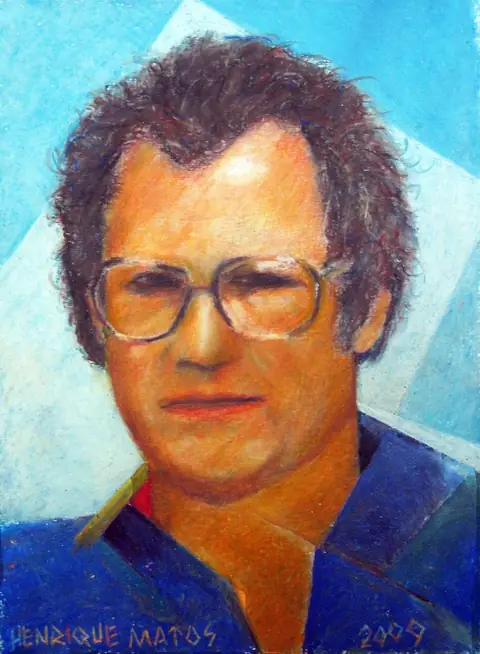
José Afonso (Zeca Afonso)
1929–1987
A protest singer, persecuted by the censors and imprisoned by the PIDE/DGS in 1973. His “Grândola, Vila Morena” (Grândola, swarthy town), sung in chorus at the Coliseu in March 1974, was a month later the second signal of 25 April.
Paulo de Carvalho
b. 1947
The singer of “E Depois do Adeus” (And After the Goodbye), the song that won the 1974 Festival da Canção (Song Festival) and that Emissores Associados de Lisboa broadcast at 22:55 on 24 April as the MFA’s first signal.
Francisco Fanhais
b. 1941
A priest and singer. At the São Domingos vigil, as 1968 turned into 1969, he sang Sophia de Mello Breyner’s “Cantata da Paz” (Cantata of Peace). Barred from being a priest, from teaching and from singing in public, he left for France in 1971 and took part in the recording of “Cantigas do Maio” (Songs of May).

Notes on the sources2
- The year of birth, 1947, is taken from the age given in the 2021 interview and from Wikipedia (which gives 10 May 1947).
- Lisbon City Council writes “Luísa Bastos” in the list of singers at the CGTP-IN’s 10th anniversary, in 1980; it is read as Luísa Basto.
Do you know more, or do you have a document? Tell us.
Sources
- 1Mariana Duarte, Entrevista com Luísa Basto: «Os meus pais ouviam-me cantar nas rádios clandestinas e não sabiam que era eu». Fonoteca Municipal do Porto (Câmara Municipal do Porto), 2021 — consulted on 3 October 2026
- 2Luísa Basto. Wikipédia — consulted on 3 October 2026
- 3António Adriano (textos), Adriano Correia de Oliveira, músico, 1942-1982. Câmara Municipal de Lisboa — Comissão Municipal de Toponímia, 2016 — consulted on 3 October 2026