Arroios
Clube Estefânia — São Jorge de Arroios polling station (1911)
On 28 May 1911, the São Jorge de Arroios polling station was set up here. It was there that the doctor Carolina Beatriz Ângelo, registered by order of a judge, became the first woman to vote in Portugal.
The Clube Estefânia was founded in 1890 at no. 62 of the street that gives it its name and, in those early days, only men went there.4 In the election for the National Constituent Assembly, on 28 May 1911, the polling station for the parish of São Jorge de Arroios, in constituency no. 34, Eastern Lisbon, was set up here: the minutes call it the “Primary Assembly of S. Jorge de Arroios – Clube Estefânia, no. 62, 2nd District”.1
The electoral law of 14 March 1911 gave the vote to Portuguese citizens over 21 who could read and write or were heads of family, without saying that they had to be men. Carolina Beatriz Ângelo, a doctor, a widow with a daughter in her care, met both conditions.3 The registration committee and the Ministry of the Interior refused to register her; she appealed to the courts, and Judge João Baptista de Castro, father of Ana de Castro Osório, ruled in her favour. She was registered in the parish of São Jorge de Arroios with the number 2513.2
According to that day’s report in the newspaper A Capital, the room was full. At the end of the first roll call, the chairman of the polling board, Constâncio de Oliveira, asked the board members whether he should accept Carolina’s ballot paper, as she stood there with many other ladies. One voter protested, many others turned on him, and Carolina pointed out that Article 64 of the electoral law barred from voting only those who were “insane or drunk”. At the second roll call, the secretary read out her name. “That’s me!” (Sou eu!), she answered, and handed her ballot paper to the chairman, while part of the audience applauded her. She thanked them and said that, if she were ever elected, she would know how to fulfil her mandate.1 In the minutes, the chairman justified the vote: her name was on the electoral register, and she, “holding a diploma as she does, with a higher education degree”, was prepared “to face that responsibility”.2 She was in mourning, with two white carnations in her lapel; the third, symbol of the Feminist Propaganda Association that the two women had founded, was worn by Ana de Castro Osório.1
The Ilustração Portuguesa of 5 June called her “the only Portuguese woman voter” and published a photograph of her with Ana de Castro Osório near the polling place.23 It was Joshua Benoliel who captured the moment for the magazine.5 In 1911, Finland was the only European country where women voted: the news crossed borders, and foreign journalists came to Portugal to interview her.3 The door did not stay open. Carolina died in October that year, aged 33, and the electoral code of 1913 required voters to be “of the male sex”.2
The club later moved to nearby Rua Alexandre Braga, a few metres away, and at the entrance to its current premises there is a plaque with Carolina Beatriz Ângelo. It houses the Clube Estefânia Intergenerational University (UNIESTE) and the theatre company Escola de Mulheres – Oficina de Teatro (School for Women – Theatre Workshop), created by seven women, among them Fernanda Lapa, to “give women’s role in the arts the prominence it deserves”.4
On the walks
Where it is
Map showing where Clube Estefânia — São Jorge de Arroios polling station (1911) is.
Dates
1890
The Clube Estefânia is founded at no. 62 Rua de Dona Estefânia.
28 May 1911
Carolina Beatriz Ângelo votes at the São Jorge de Arroios polling station, set up in the club.
People connected with this place


Nearby
270 m · 5 min on foot
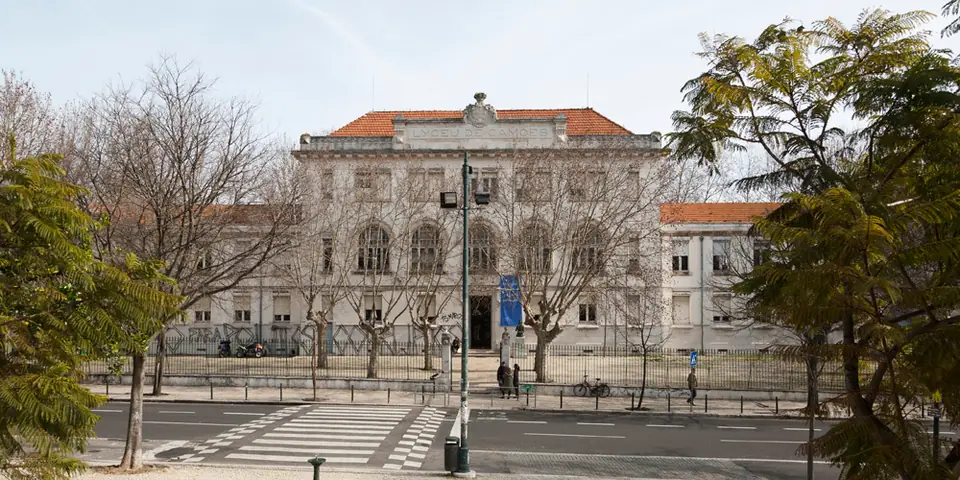
Liceu de Camões
Today: Camões Secondary School
In the gymnasium of this secondary school, on 18 May 1958, Humberto Delgado held a presidential campaign rally, and the police violence was repeated afterwards. In 1945, it was here that the students from the colonies overthrew the board imposed on their House.
OppositionRepressionStudents310 m · 5 min on foot
Dr Afonso Costa Republican School Centre — evening classes for women (Calçada de Arroios)
In this republican centre on Calçada de Arroios, while the monarchy still ruled, Maria Veleda set up free evening courses to teach women to read and write; in 1907, the Portuguese Group for Feminist Studies gave classes here to illiterate women.
WomenRepublic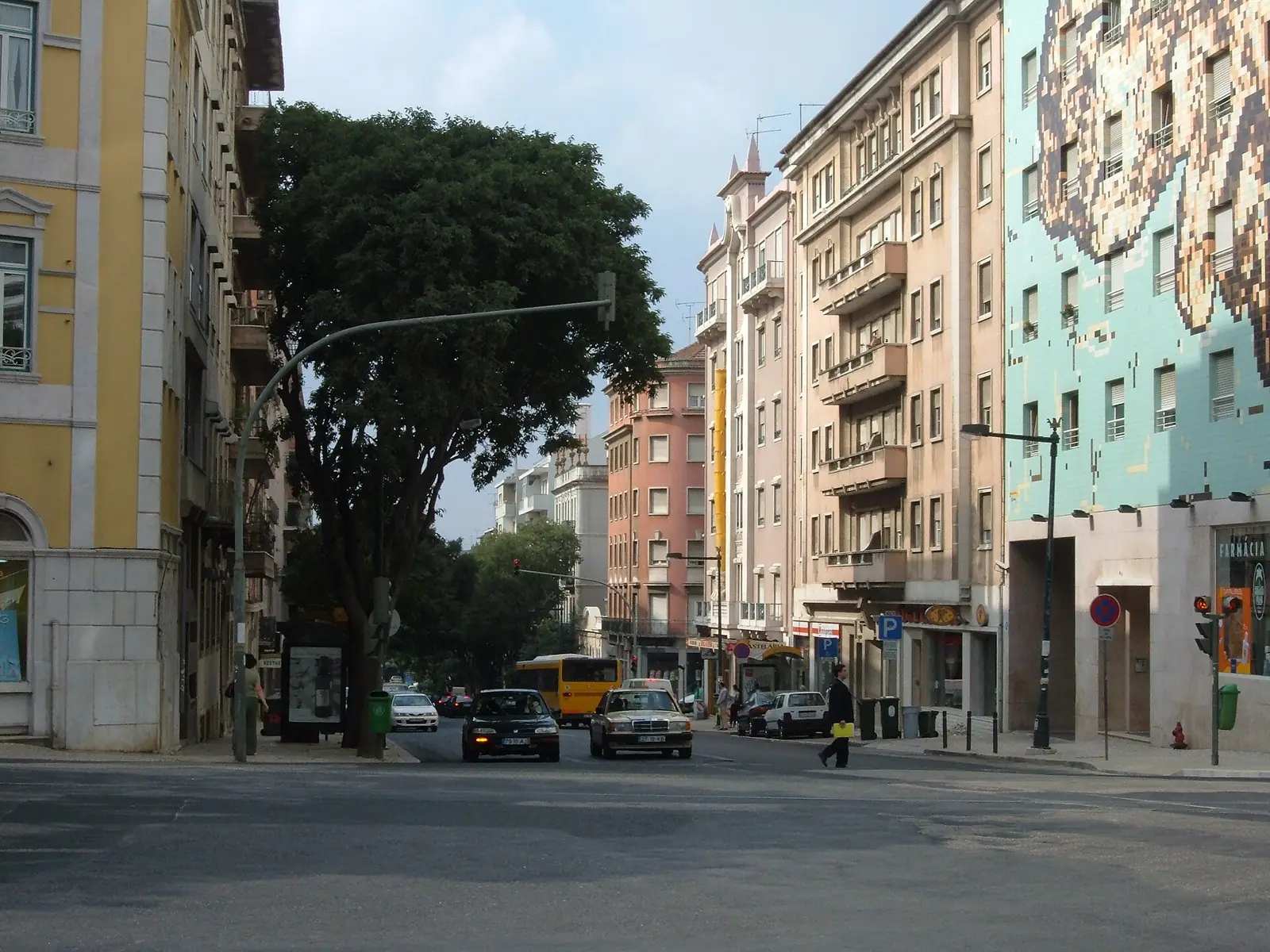
330 m · 5 min on foot
House of the Students of the Empire (CEI)
Today: Office and residential building
Created by the regime in 1944 to foster “imperial unity” among students from the colonies, it became a school of opposition and anti-colonialism: Amílcar Cabral, Agostinho Neto and Alda do Espírito Santo passed through here. The PIDE closed it in 1965.
ColonialismStudentsOpposition550 m · 10 min on foot
Headquarters of the Portuguese Women’s Association for Peace
Headquarters of the Portuguese Women’s Association for Peace, which from 1935 to 1952 brought women together for peace and for their rights — from Maria Lamas, its president, to Stella Piteira Santos, Isabel Aboim Inglez and Maria Alda Nogueira. The Minister of the Interior dissolved it in 1952.
WomenOpposition


Notes on the sources4
- Whether today’s no. 62 Rua de Dona Estefânia is the 1911 building (the numbering and the building may have changed), and what is there now.
- The text of the plaque at the entrance to the club’s current premises.
- Whom she voted for: a blog (Em Defesa do Benfica, 2014) says that she voted for Afonso Costa, Bernardino Machado and Magalhães Lima, candidates of the Republican Party; this still needs to be confirmed in the 1911 press.
- The phrase “If the law does not open the door to us, neither does it put us out in the street” (Se a lei não nos abre a porta, também não nos põe na rua), which Mensagem de Lisboa attributes to Carolina, comes without a contemporary source.
Do you know more, or do you have a document? Tell us.
Sources
- 1Carolina: por entre os itinerários da memória e da ciência (Gaudium Sciendi, n.º 2, julho de 2012). Isabel Lousada / Universidade Católica Portuguesa — consulted on 2 October 2026
- 2Carolina Beatriz Ângelo. Assembleia da República — consulted on 2 October 2026
- 3O sufrágio feminino no Parlamento na 1.ª República (ComunicAR n.º 71, março de 2021). Assembleia da República — consulted on 2 October 2026
- 4O clube de Arroios onde uma mulher votou pela primeira vez virou espaço de resistência (8/3/2024). Mensagem de Lisboa — consulted on 2 October 2026
- 5A rua lisboeta da primeira mulher que votou em Portugal. Toponímia de Lisboa (Câmara Municipal de Lisboa) — consulted on 2 October 2026
- 6Como chegar ao Clube Estefânia? (folheto com a morada do clube). pongpesca (WordPress) — consulted on 2 October 2026
- 7Ângelo, Carolina Beatriz (1878-1911) — Dicionário de Médicos Portugueses. Unidade de História da Medicina, Faculdade de Ciências Médicas da UNL (projeto de estudantes) — consulted on 2 October 2026
- 8O Benfiquismo e D. Carolina Beatriz Ângelo (Alberto Miguéns, 8/3/2014). Em Defesa do Benfica (blogue) — consulted on 2 October 2026
Coordinates: OpenStreetMap (Nominatim), consultado a 2 de outubro de 2026.