Santa Maria Maior
Lisbon Civil Government and the PSP’s 1st Station
Seat of the Lisbon Civil Government, in a former building of the Convent of São Francisco. The PSP’s 1st Station, housed there, had cells where the political police locked up many prisoners, especially before 1938, and where trials of the Special Military Court were held.
For many years Rua Capelo, in the Chiado, was the address of the Lisbon Civil Government, housed in a building that had belonged to the Convent of São Francisco.1 The PSP’s 1st Station operated in the same building: after the reorganisation of 1922, Lisbon had 30 numbered police stations, from the 1st, in the Civil Government, to the 30th, in Caminho Novo, next to Parliament.2
Until the PVDE headquarters, on Rua António Maria Cardoso, became fully operational, in 1938, some PSP stations provided, in the words of the Memória Comum project, “the real logistics of repression”: it was in them that prisoners were held, almost always incommunicado, and it was in them that much of the police violence and torture took place.2 The General Register of Prisoners often does not even record the station, but the 1st, in the Civil Government, is the main exception: its cells could hold many prisoners and were used to keep them on the eve of the trials of the Special Military Courts, which were often held in the building itself.2
In the records that Memória Comum devotes to those who died at the hands of the repression, the 1st Station appears again and again. The tradesman Adelino Marques de Andrade was brought from Santarém to Lisbon on 12 January 1937 and, his record says, “is taken to the 1st Station”; on the 18th he was tried by the Special Military Court. The driver António Guedes Oliveira Silva, arrested on 7 November 1937, was moved between the 1st Station, the Aljube and Caxias until he was sentenced to eleven years of penal exile; he died at Tarrafal in 1941.3 António Gato Pinto, arrested in 1934 for taking part in the general strike of 18 January, left handwritten notes on his capture and on his time in the Trafaria Detention House, the cells of the Civil Government and the Aljube, between April and June that year.4
After the police broke up the Capela do Rato vigil, on the night of 31 December 1972, the fourteen detainees who were not released at the Largo do Rato police station were brought to the cells of the Civil Government; in the early hours, they were taken on to Caxias. Among them were the architect Nuno Teotónio Pereira and only one woman, the librarian Maria Benedita Galamba de Oliveira.78
In 2011, the civil governments were abolished in all but name: a decree-law approved by the Council of Ministers on 8 September and published on 30 November transferred their powers to other public administration bodies and regulated the winding-up of their assets.59
On the walks
From the archives
Helena Cabeçadas tells the Aljube Museum about the student association movement in the secondary schools (liceus), the academic crisis of 1962, which she lived through at 14, and her arrest in 1965, when she was taken to the Civil Government building and to Caxias. Expelled from every school in the country, she left alone for exile in Belgium at 17.
Original page Licença padrão do YouTube — embed permitido pelo canal oficial do Museu do Aljube
Museu do Aljube Resistência e Liberdade, on YouTube. The player only connects to that site when you press “Watch”.
Where it is
Map showing where Lisbon Civil Government and the PSP’s 1st Station is.
Dates
1934
Between April and June, António Gato Pinto, arrested after the general strike of 18 January, passes through Trafaria, the cells of the Civil Government and the Aljube.
1938
With the PVDE headquarters fully operational, the police stations play a smaller part in the logistics of repression.
8 September 2011
The Council of Ministers approves the decree-law transferring the powers of the civil governments to other bodies (published on 30 November): their abolition in all but name.
26 Aug 1931
The “reviralho” revolt of 26 August 1931 in Lisbon5 Dec 1932
Creation of the Special Military Courts18 Jan 1934
The revolutionary general strike of 18 January 1934
People connected with this place

Nearby
40 m · 5 min on foot
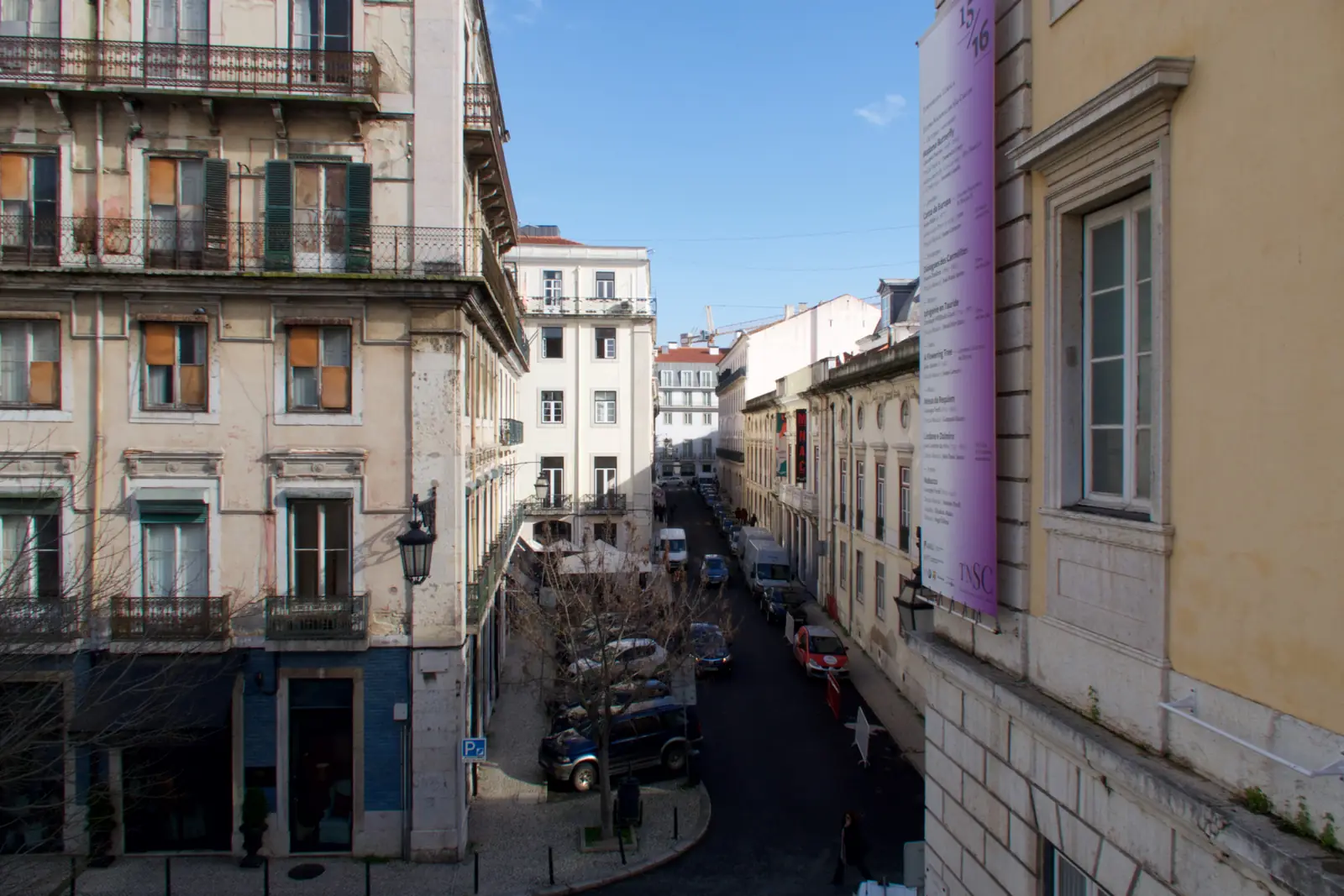
Rádio Renascença (the Rua Capelo studios)
Today: A hotel, The Ivens
In the Rádio Renascença studios, on the second floor of no. 5 Rua Capelo, the first verse of “Grândola, Vila Morena”, by José Afonso, went on air at 00:20 on 25 April 1974, on the programme “Limite” — the signal that confirmed the advance of the MFA troops.
RevolutionCulture and censorship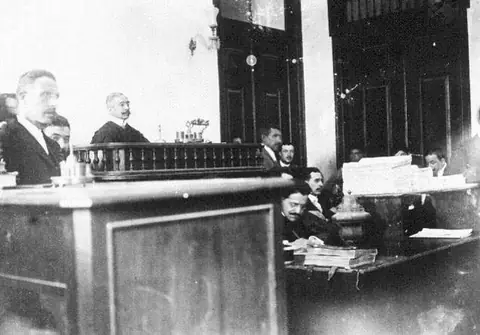
120 m · 5 min on foot
Boa-Hora Court
Today: Former court, closed since 2009
A convent turned into a court in 1843. The Plenary Court, which tried political prisoners, sat here — and it was here that Maria Alda Nogueira, Natália Correia and the “Three Marias” were tried; the Three Marias were acquitted after 25 April.
RepressionWomenCulture and censorship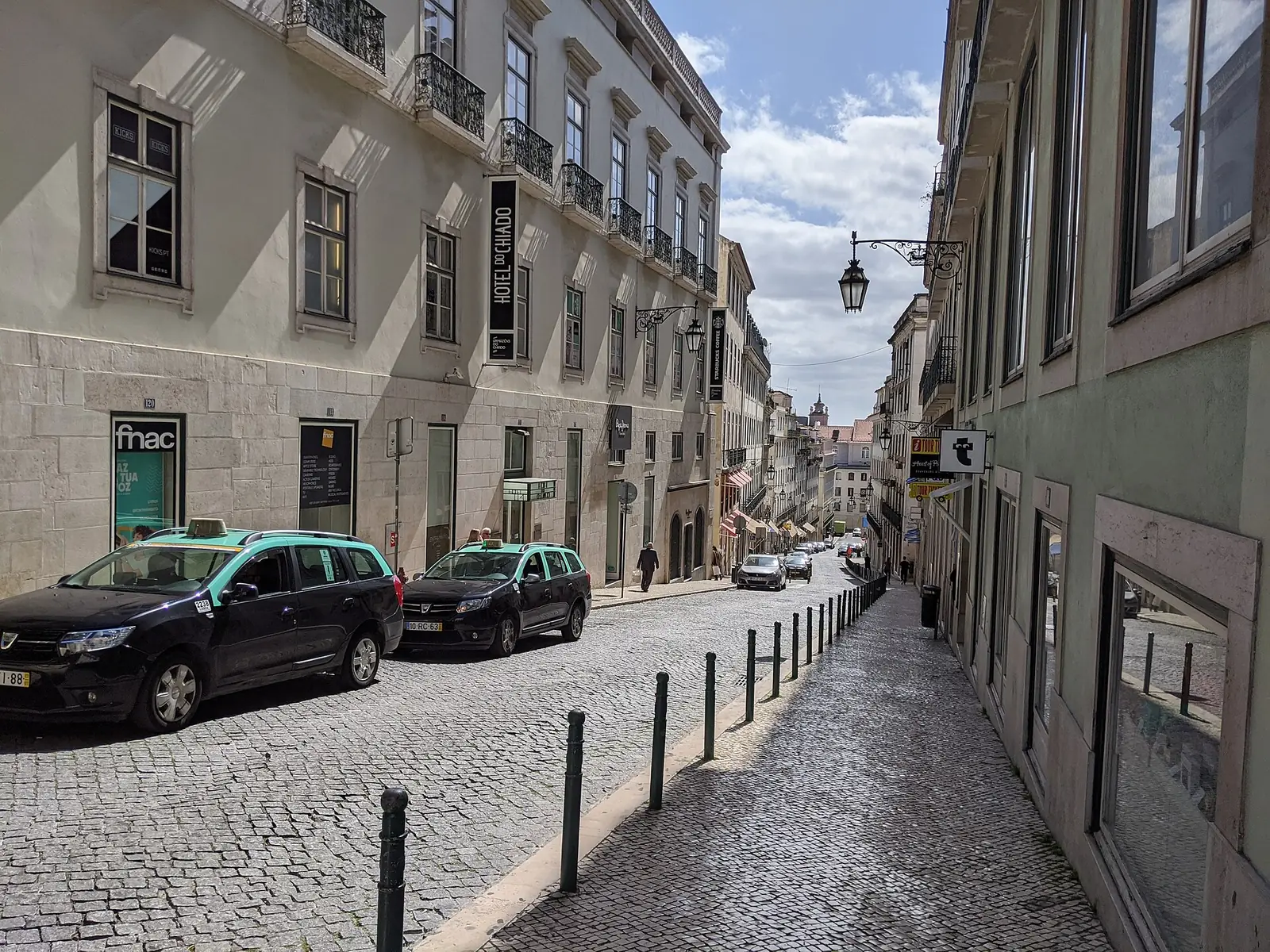
150 m · 5 min on foot
Carolina Beatriz Ângelo’s surgery (Rua Nova do Almada, 84)
Today: A building with a shop on the ground floor
An advertisement from 1909 places the surgery of Carolina Beatriz Ângelo, a gynaecologist and the first Portuguese woman surgeon, here, at no. 84 Rua Nova do Almada — two years before she became the first woman to vote in Portugal.
WomenLabour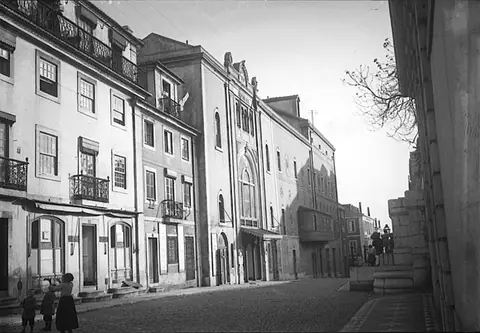
160 m · 5 min on foot
PVDE / PIDE / DGS headquarters
Today: Residential apartment complex
In the Chiado, the headquarters of the political police: the archives, the informers and, on the third floor, interrogation and torture. On 25 April, agents fired from here on the crowd and killed four people.
RepressionWomenRevolution


.jpg)
Notes on the sources3
- The building’s street number on Rua Capelo and what is there today.
- In which years the Civil Government was here: Toponímia de Lisboa says only that Rua Capelo was its address “for many years”.
- Whether in December 1972, when the fourteen detainees from the Capela do Rato vigil were taken there, the Civil Government was still in this building: the sources on the vigil say only “Governo Civil” (Civil Government).
Do you know more, or do you have a document? Tell us.
Sources
- 1A Rua Capelo nascida com a Rua Ivens. Toponímia de Lisboa – CML (10/11/2015) — consulted on 2 October 2026
- 230 Esquadras de Lisboa. Memória Comum – Memorial aos Presos e Perseguidos Políticos — consulted on 2 October 2026
- 3Os que ficaram pelo caminho (lista, páginas 1 a 7). Memória Comum – Memorial aos Presos e Perseguidos Políticos — consulted on 2 October 2026
- 4Os «crimes políticos» no Estado Novo (Prisões da Ditadura). Comissão Comemorativa 50 Anos 25 de Abril — consulted on 2 October 2026
- 5Governo Civil de Lisboa. Wikipédia (ponto de partida) — consulted on 2 October 2026
- 6Nominatim – OpenStreetMap (geocodificação). OpenStreetMap contributors (ODbL) — consulted on 2 October 2026
- 7«A paz é possível»: algumas notas sobre o caso da Capela do Rato (António de Araújo). Lusitania Sacra, 2.ª série, 16 (2004), pp. 431-463 – Universidade Católica Portuguesa — consulted on 2 October 2026
- 8Vigília da Capela do Rato. Wikipédia — consulted on 2 October 2026
- 9Decreto-Lei n.º 114/2011, de 30 de novembro (Diário da República, 1.ª série, n.º 230): transfere as competências dos governos civis para outras entidades da Administração Pública e regula a liquidação do seu património. Diário da República (Imprensa Nacional-Casa da Moeda), 2011 — consulted on 3 October 2026Visto e aprovado em Conselho de Ministros a 8 de setembro de 2011; promulgado a 21 de novembro.
Coordinates: OpenStreetMap (Nominatim), consultado a 2 de outubro de 2026.