Avenidas Novas
Emissores Associados de Lisboa (the studio on Avenida Elias Garcia)
From the studio that the Emissores Associados de Lisboa had on the 7th floor of this building, the announcer João Paulo Diniz put “E Depois do Adeus” (And After the Goodbye) on the air at 22:55 on 24 April 1974 — the first signal of the Armed Forces Movement.
On the night of 24 April 1974, one of the studios of the Emissores Associados de Lisboa was operating on the 7th floor of this building. It was the station chosen by the Armed Forces Movement to broadcast the signal that would mark the start of the military operation against the regime.1
At 22:55, live on air, the announcer João Paulo Diniz said: “It is five minutes to eleven. With you, Paulo de Carvalho with Eurofestival 74, ‘E Depois do Adeus’, a song by José Niza.” (Faltam cinco minutos para as vinte e três horas. Convosco, Paulo de Carvalho com o Eurofestival 74, “E Depois do Adeus”, uma canção de José Niza.) It was the first signal for preparations to begin in the units committed to the Movement.2 In the Lisbon Military Region and at the Practical Schools of Cavalry, in Santarém, and of Artillery, in Vendas Novas, the Movement’s soldiers now knew that they were to get ready to leave their barracks.3
The song, by José Niza, sung by Paulo de Carvalho, had won the Festival da Canção (Song Festival) on 7 March. The Movement chose it because it would not arouse suspicion: it was a romantic ballad, with no political content. At 00:20, the second signal — “Grândola, Vila Morena”, on Rádio Renascença — confirmed that the operation had begun.3
The building is one of the places marked by the “Lugares de Abril” (Places of April) project, run by Lisbon City Council and the 25 April Association.67
From the archives
In other archives
These can only be viewed on each archive’s own website.
Where it is
Map showing where Emissores Associados de Lisboa (the studio on Avenida Elias Garcia) is.
Dates
7 March 1974
“E Depois do Adeus” wins the Festival da Canção.
24 April 1974, 22:55
João Paulo Diniz puts “E Depois do Adeus”, the MFA’s first signal, on the air.
People connected with this place
Nearby
280 m · 5 min on foot
Avenida Barbosa du Bocage, no. 96 (Josué Trocado’s private chapel)
Today: Avenida Barbosa du Bocage
It was here, on 4 July 1937, that the bomb with which anarchists tried to kill Salazar went off, as he arrived for Mass at the chapel of his friend Josué Trocado. The dictator was unhurt; the police arrested and tortured people who had nothing to do with the case.
OppositionRepression810 m · 10 min on foot
Headquarters of the Portuguese Women’s Association for Peace
Headquarters of the Portuguese Women’s Association for Peace, which from 1935 to 1952 brought women together for peace and for their rights — from Maria Lamas, its president, to Stella Piteira Santos, Isabel Aboim Inglez and Maria Alda Nogueira. The Minister of the Interior dissolved it in 1952.
WomenOpposition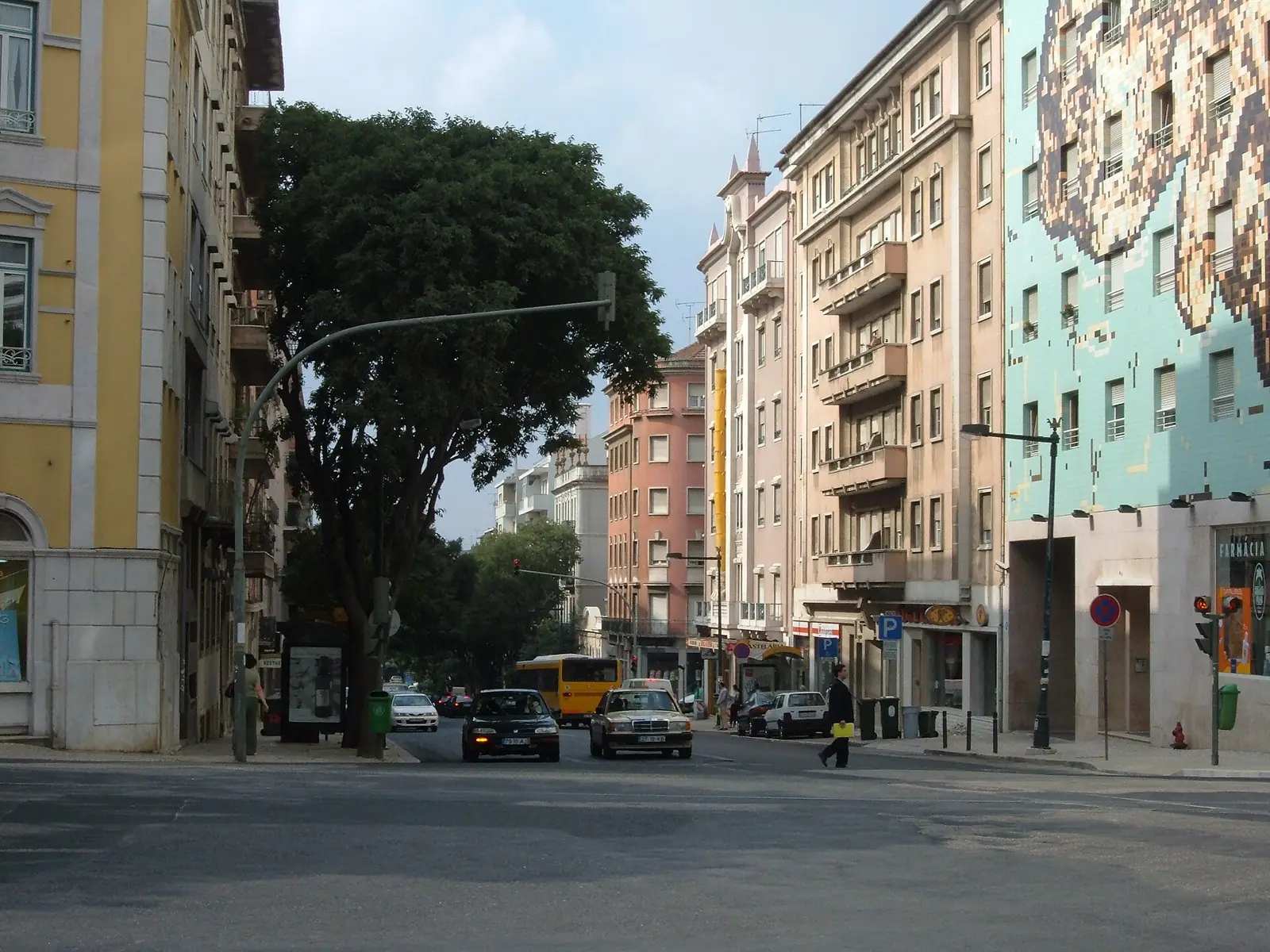
890 m · 15 min on foot
House of the Students of the Empire (CEI)
Today: Office and residential building
Created by the regime in 1944 to foster “imperial unity” among students from the colonies, it became a school of opposition and anti-colonialism: Amílcar Cabral, Agostinho Neto and Alda do Espírito Santo passed through here. The PIDE closed it in 1965.
ColonialismStudentsOpposition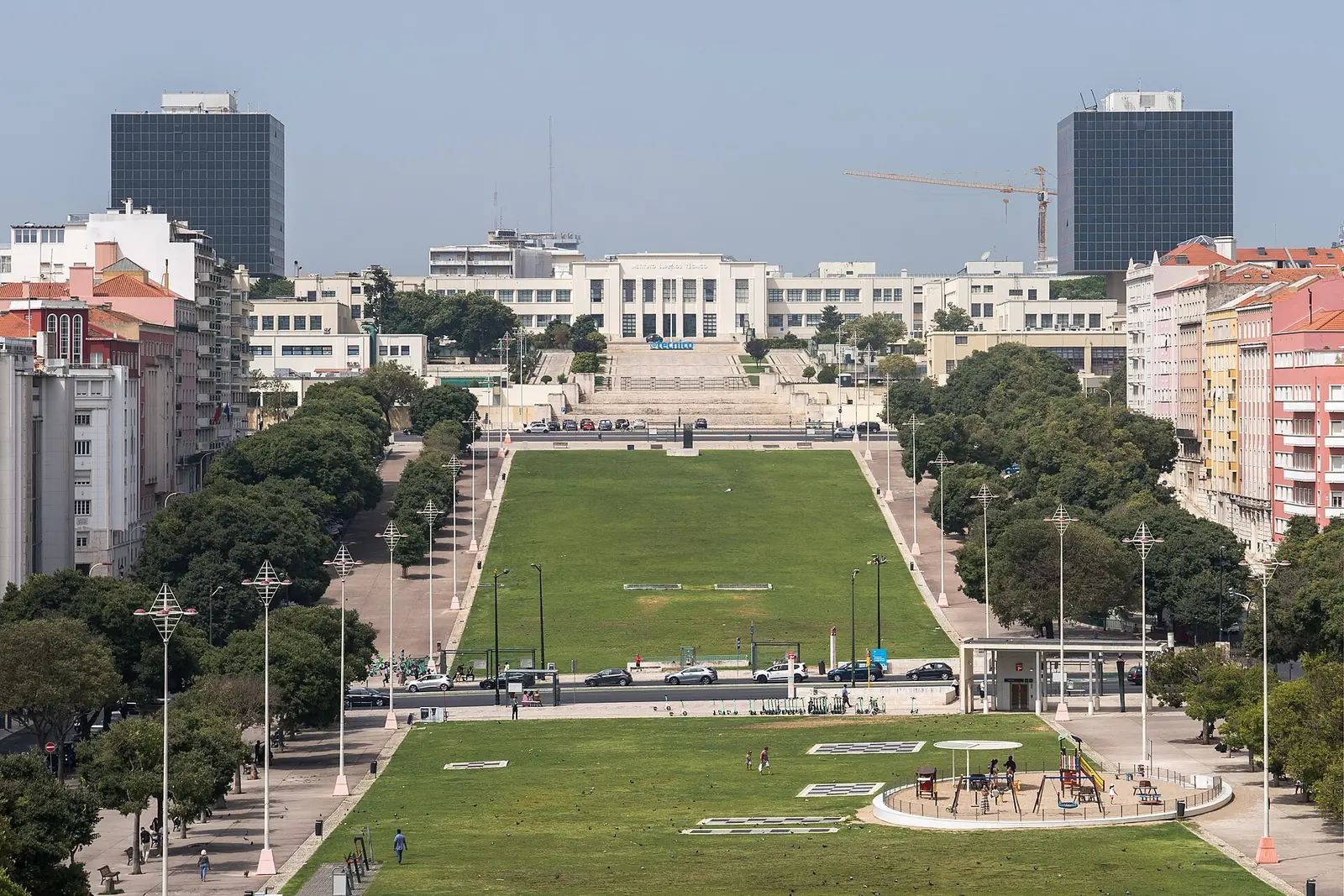
1.1 km · 15 min on foot
Instituto Superior Técnico
Today: Instituto Superior Técnico – University of Lisbon
Pardal Monteiro’s campus was the scene of decisive plenary meetings of the student movement: here the academic mourning of 1962 was suspended, here the PIDE raided the students’ association in 1968, and here it was decided, in 1972, to go en masse to Ribeiro Santos’s funeral.
StudentsRepressionWomen


Notes on the sources3
- What the 7th floor is used for today, and where on the building the “Lugares de Abril” plaque is.
- Which of the Emissores Associados de Lisboa stations broadcast from this studio.
- The spelling of the announcer’s surname: “Dinis” on the pages of the 25 April Association and the Commemorative Commission, “Diniz” in other sources.
Do you know more, or do you have a document? Tell us.
Sources
- 1Emissores Associados de Lisboa (Lugares de Abril). Associação 25 de Abril — consulted on 2 October 2026
- 2Movimentações do dia 25 de Abril. Associação 25 de Abril — consulted on 2 October 2026
- 3Operação Viragem Histórica. Comissão Comemorativa 50 Anos 25 de Abril — consulted on 2 October 2026
- 4O 25 de Abril para os mais novos – Cronologia hora a hora. Centro de Documentação 25 de Abril – Universidade de Coimbra — consulted on 2 October 2026
- 525 de Abril de 1974. Museu do Aljube Resistência e Liberdade (EGEAC) — consulted on 2 October 2026
- 6Lisboa – Lugares de Abril. Associação 25 de Abril — consulted on 3 October 2026
- 7Inauguradas as últimas placas do Projeto «Lugares de Abril». Olhares de Lisboa, 2024 — consulted on 3 October 2026
Coordinates: OpenStreetMap (Nominatim), consultado a 2 de outubro de 2026.