São Vicente
Mónicas Prison
A 16th-century convent turned into a women’s prison. It was mainly a prison for common crimes, but it took in women political prisoners — and served as a punishment for women of the opposition, such as Isabel Aboim Inglez, sent here by the Plenary Court.
The Convent of Santa Mónica, in Graça, dates from the end of the 16th century. After the religious orders were abolished, it became a reformatory for minors and, from the beginning of the 20th century, a women’s prison; according to the English Wikipedia, which cites the inventory of architectural heritage, a decree of 16 April 1918 created the Lisbon Women’s Civil Prison here.1
It was mainly a prison for common crimes, but it took in women political prisoners: the Memória Comum project counts the Mónicas, “residually”, among the places where the political police imposed incommunicado detention.2 In June 1937 ten women from Ribeira Brava arrived here, arrested after the “milk revolt” in Madeira.3 From May 1938, the political prison for women became the North Redoubt of Caxias Fort.4
The Mónicas also served as a punishment. Isabel Aboim Inglez, called to give evidence as a defence witness at the Plenary Court, stood up to the presiding judge, who had her locked up for three days for “lack of respect for the court” and sent her here. On her way out, she said she had learnt from the other prisoners and carried out a “sociological study” there.5
Magda Fonseca, of the Union of Portuguese Anti-Fascist Resisters, remembers the visits she made as a child, before 1946, to her aunt Dalila, a communist activist arrested several times: the “apalpadeiras” (the women who frisked visitors) at the entrance, the searching of the bread and the food tins, a net at half height separating prisoners and visitors. Political and common prisoners had the same visiting hour and were told apart by their uniform — “little blue and white checks for the political prisoners, and red and white for the common prisoners”. Notes were often passed hidden in the child’s underwear.6
From 1953, the inmates were gradually transferred to the new prison at Tires.1 In the same lane, at no. 57, lived Sophia de Mello Breyner Andresen, who described the house as having one side facing “onto the Travessa das Mónicas, where there was a prison”.7 In 2021 a plan for a hotel in the former convent was reported, contested by a citizens’ movement.8
On the walks
Where it is
Map showing where Mónicas Prison is.
Dates
16 April 1918
A decree creates the Lisbon Women’s Civil Prison here.
June 1937
Ten women from Ribeira Brava arrive, arrested after the “milk revolt”.
May 1938
The political prison for women moves to the North Redoubt at Caxias.
1953
The transfer of the inmates to Tires begins.
May 2021
News of a hotel project for the former convent.
6 Aug 1936
The “Milk Revolt” in Madeira; ten women prisoners sent to Lisbon
People connected with this place
Nearby
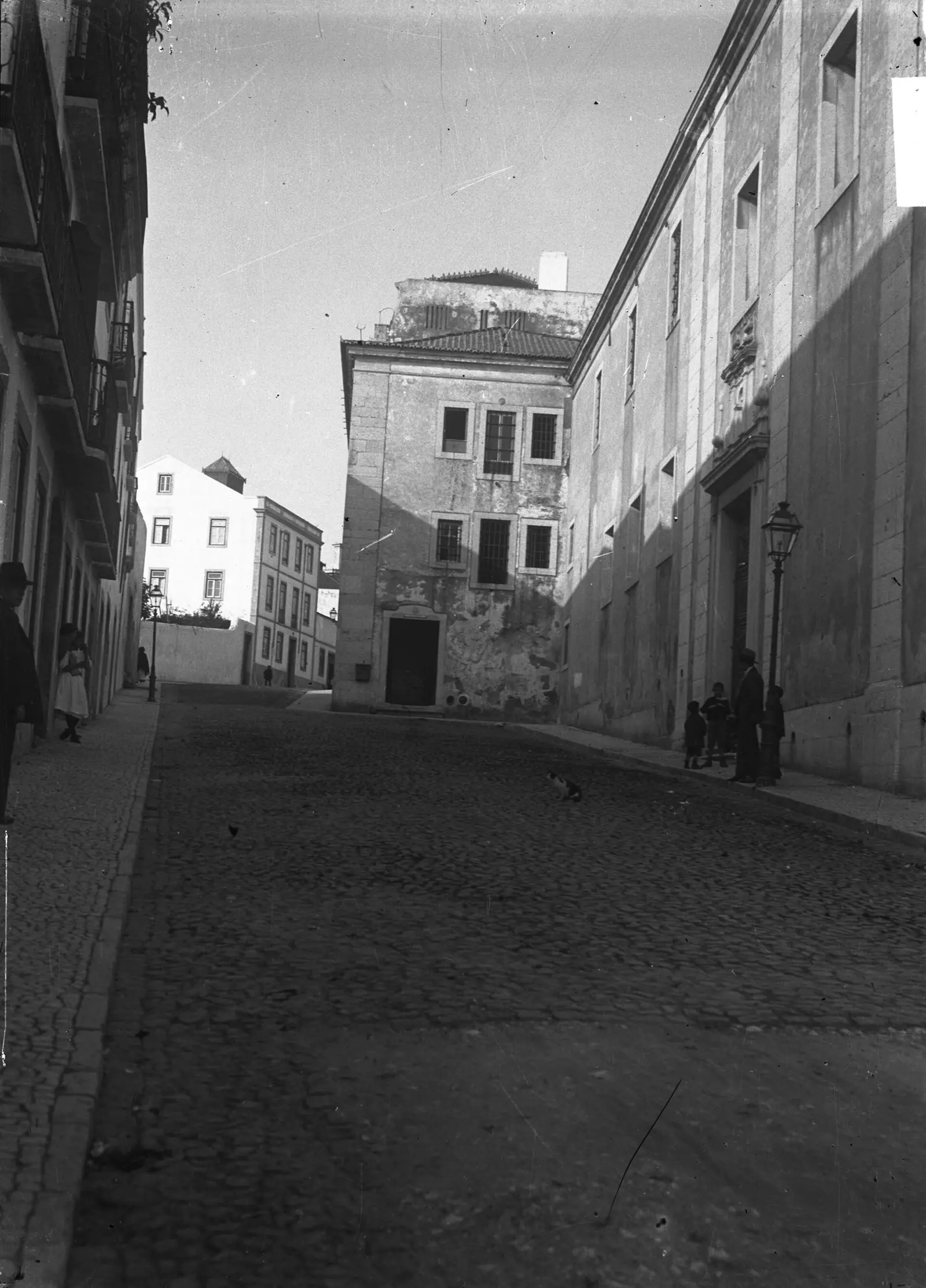
30 m · 5 min on foot
Home of Sophia de Mello Breyner Andresen
Sophia de Mello Breyner Andresen lived on the first floor of no. 57 from 1951 until her death in 2004. A home with its doors open to the opposition, with one side facing the river and the other the lane of the Mónicas women’s prison.
Culture and censorshipOppositionWomen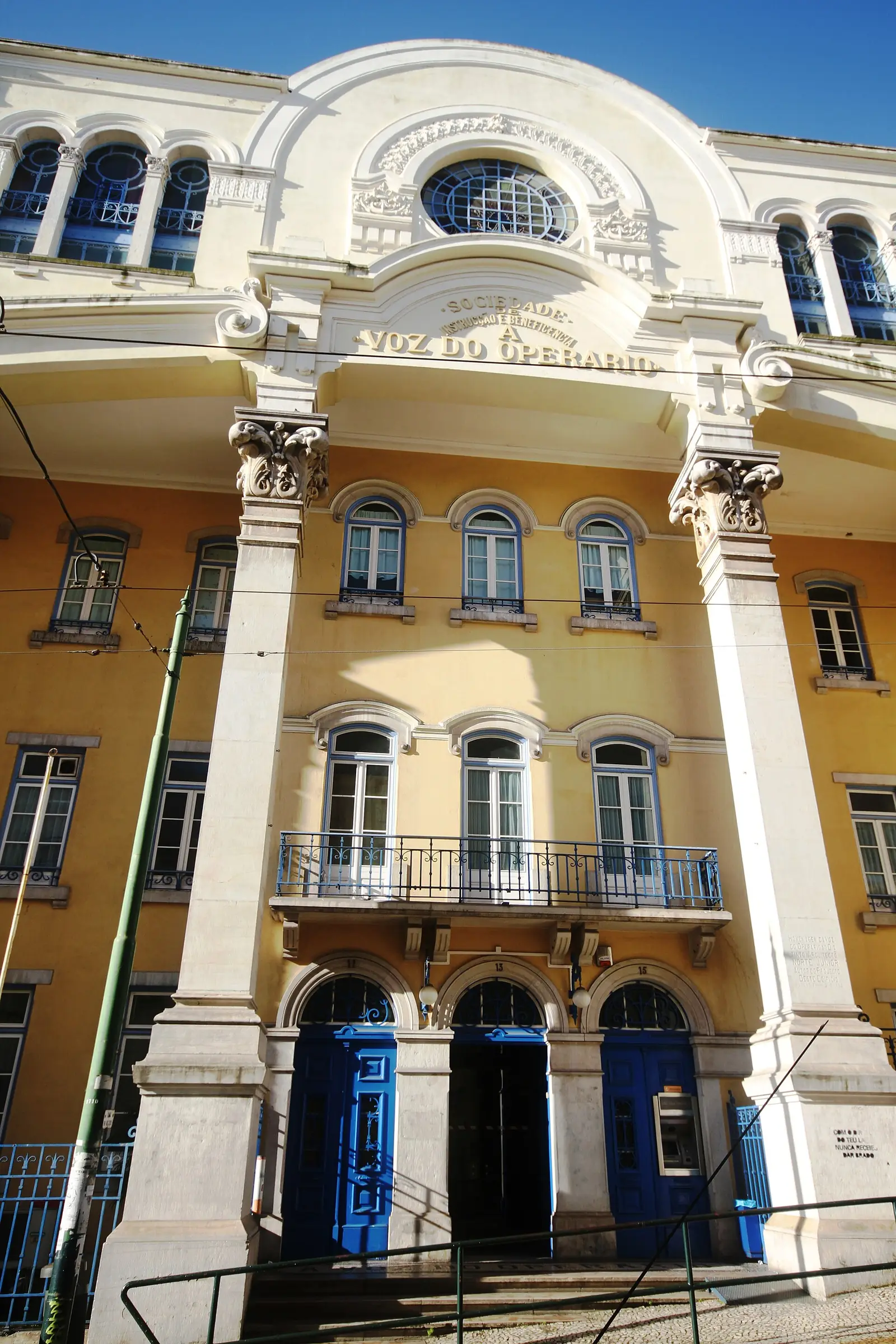
90 m · 5 min on foot
A Voz do Operário (The Worker’s Voice)
Today: A Voz do Operário Education and Welfare Society
It was born in 1879 as the newspaper of the tobacco workers and became the largest people’s school in Lisbon. In 1949, the opposition held rallies here for the candidacy of Norton de Matos, with Maria Lamas, Isabel Aboim Inglez and Cesina Bermudes.
LabourOppositionWomen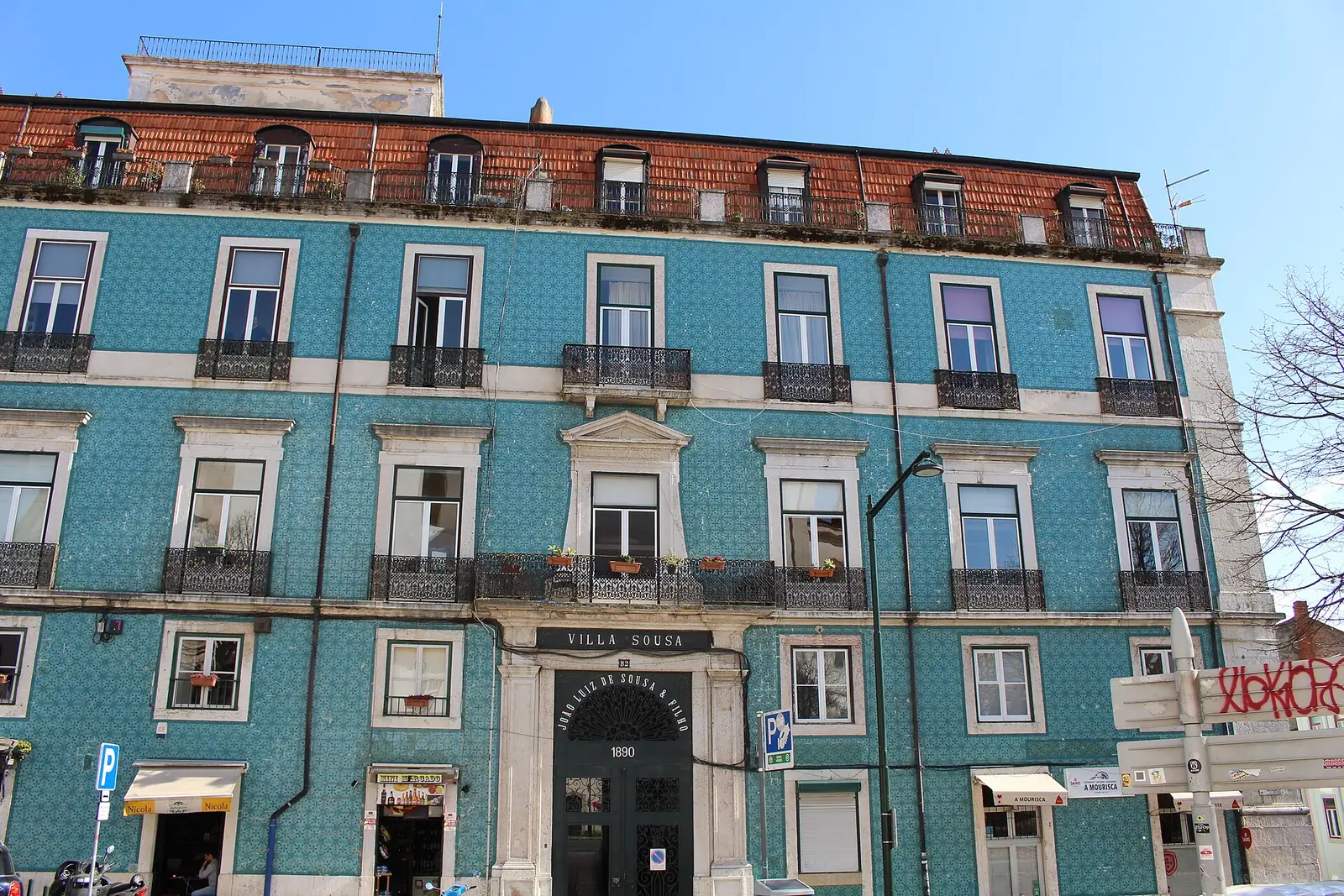
110 m · 5 min on foot
Botequim
Today: Botequim bar (reopened in 2010 by new owners)
The bar Natália Correia opened in 1971 on Largo da Graça with three friends, and to which she moved the salon she held at home — where, in the words of a NOVA University guide, people discussed “literature, politics and feminism in freedom”.
Culture and censorshipWomenOpposition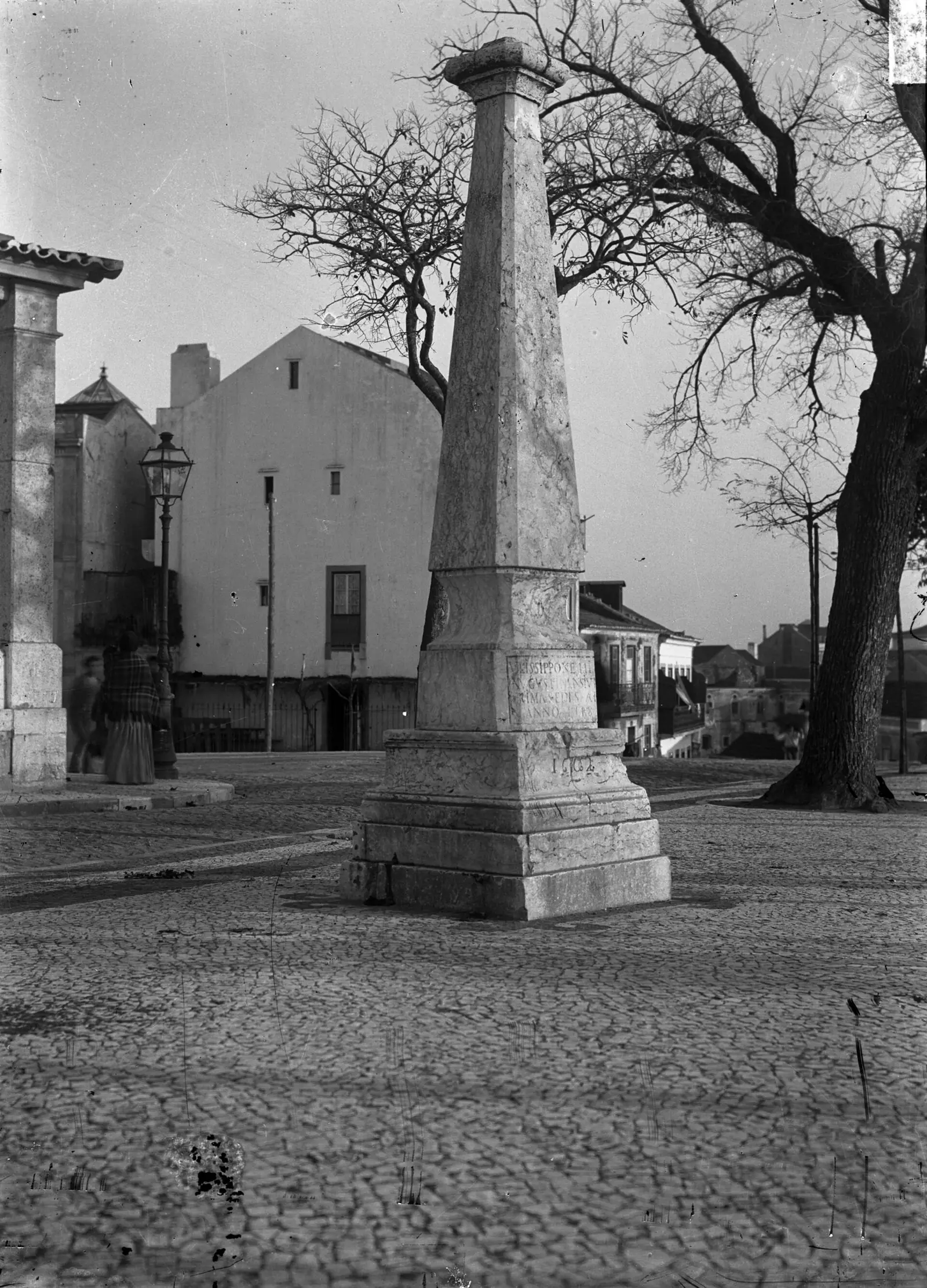
480 m · 5 min on foot
House where Angelina Vidal died (Rua de São Gens, 41)
Today: A small single-storey house
In this single-storey house on Rua de São Gens lived Angelina Vidal, a teacher, journalist and republican and socialist propagandist who championed women workers and the education of women. She died here, “almost destitute”, on 1 August 1917.
WomenRepublicLabour


Notes on the sources7
- The institutional dates (1918, 1953) come from the English Wikipedia, which cites the Architectural Heritage Information System (SIPA); SIPA was unavailable when consulted.
- The date the prison closed (1989, according to the Portuguese Wikipedia) has not been confirmed in another source.
- Current use of the building and state of the hotel project; whether the site can be visited.
- The full name of Dalila, Magda Fonseca’s aunt, and the dates of her arrests.
- Other women political prisoners in the Mónicas mentioned in blogs (Aida Paulo, transferred in 1939; Carolina Loff da Fonseca) — not confirmed in an institutional source.
- The date on which Isabel Aboim Inglez was sent to the Mónicas.
- The current use of the former convent.
Do you know more, or do you have a document? Tell us.
Sources
- 1Monastery of the Mónicas. Wikipedia (en) (ponto de partida; cita o SIPA) — consulted on 2 October 2026
- 27. Isolamento e «celas disciplinares». Memória Comum – Memorial aos Presos e Perseguidos Políticos — consulted on 2 October 2026
- 3“Revolta do Leite” da Madeira. Museu do Aljube Resistência e Liberdade (EGEAC) — consulted on 2 October 2026
- 4Cárceres do império. Memória Comum – Memorial aos Presos e Perseguidos Políticos — consulted on 2 October 2026
- 5Isabel Aboim Inglez. Museu do Aljube Resistência e Liberdade (EGEAC) — consulted on 2 October 2026
- 6Mónicas (testemunho de Magda Fonseca). URAP – União de Resistentes Antifascistas Portugueses — consulted on 2 October 2026
- 7Sophia de Mello Breyner Andresen – Lisboa (exposição virtual). Biblioteca Nacional de Portugal — consulted on 2 October 2026
- 8Antigo Convento das Mónicas, na Graça, vai ser transformado em hotel (Susete Francisco, 20/5/2021). Diário de Notícias — consulted on 2 October 2026
- 9Convento das Mónicas. Wikipédia (português) — consulted on 2 October 2026
- 10Graça em estado de graça (roteiro, 20/4/2017). FCSH+Lisboa – NOVA FCSH — consulted on 2 October 2026
- 11Nominatim – OpenStreetMap (geocodificação). OpenStreetMap contributors (ODbL) — consulted on 2 October 2026
Coordinates: OpenStreetMap (Nominatim), consultado a 2 de outubro de 2026.