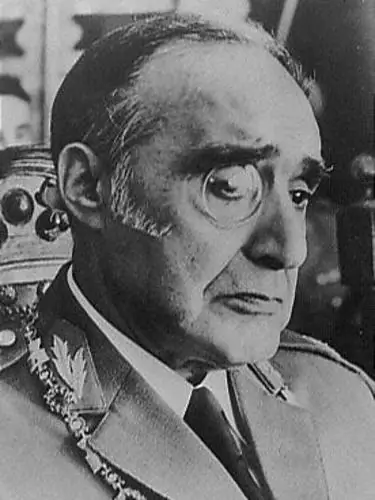
Maria Margarida do Carmo Mendes Tengarrinha Campos Costa
Repressionvisual artistunderground full-time PCP workerdocument forgerwriter for “Avante!”deputy (1979–1983)
Born
7 May 1928, Portimão
Died
26 October 2023
A visual artist expelled from the School of Fine Arts in 1952, she lived underground with José Dias Coelho, in a house where the PCP forged documents. She only learnt that the PIDE had killed him on the day of his burial, which she could not attend.
She was born in Portimão on 7 May 1928. At 20 she joined the MUD Juvenil (Youth Movement of Democratic Unity) and became involved in the student struggles at the Lisbon School of Fine Arts and in the General Exhibitions of Visual Arts.1 At the school, she coordinated the students’ involvement in the movement.5 After the protests against the NATO meeting in Lisbon, in 1952, she was expelled and banned from attending any faculty in the country and from teaching; that year she joined the PCP.1 Another 81 students were expelled with her.5
At the end of 1954 she went underground with her partner, the painter José Dias Coelho.1 Their clandestine house was home to the party’s document-forging office — identity cards, driving licences, passports — and, from 1960, the two of them drew illustrations and mastheads for A Voz das Camaradas (The Voice of the Women Comrades) and Avante! (Forward!).2
On 19 December 1961 the PIDE shot Dias Coelho dead in a street in Alcântara that now bears his name.2 Margarida, who was still living underground, only learnt of it early in the evening of 26 December, at a meeting in the street. When she asked to see him, the comrade answered: “You can’t, the burial was today, at the Benfica cemetery.” From that moment on, she wrote, she resolved “not to let his memory die”.3
In 1962 she went abroad: she worked with Álvaro Cunhal in Moscow, and then at Rádio Portugal Livre, in Bucharest.15 She returned in 1968 and resumed underground work, in Lisbon and then in Porto.5 In 1974 she joined the PCP Central Committee and later published several books, among them Memórias de Uma Falsificadora – A Luta na Clandestinidade em Portugal (Memoirs of a Forger: The Underground Struggle in Portugal).1 She was a deputy for the Algarve from 1979 to 1983 and, in 2014, received the first Maria Veleda Prize. She died in Portimão on 26 October 2023.5
From the archives
Margarida Tengarrinha’s testimony, recorded by the Aljube Museum on 8 March 2017 and published in 2021. Going by the museum’s keywords, it covers the Youth Movement of Democratic Unity (MUD Juvenil), underground life in the Portuguese Communist Party (PCP), the document-forgery apparatus, the clandestine press and José Dias Coelho.
Original page Licença padrão do YouTube — embed permitido pelo canal oficial do Museu do Aljube
Museu do Aljube Resistência e Liberdade, on YouTube. The player only connects to that site when you press “Watch”.
A documentary edited by Sofia Gomes for the exhibition “Women and Resistance – New Portuguese Letters and other struggles” (“Mulheres e Resistência – Novas Cartas Portuguesas e outras lutas”), with excerpts from the testimonies the Aljube Museum has been recording since 2015: sixteen women talk about resistance to the dictatorship and the struggle for women’s rights. This version has Portuguese Sign Language (LGP) interpretation; the version without LGP is on the same channel (XmUbNbnHgKg, 2022).
Original page Licença padrão do YouTube — embed permitido pelo canal oficial do Museu do Aljube
Museu do Aljube Resistência e Liberdade, on YouTube. The player only connects to that site when you press “Watch”.
In other archives
These can only be viewed on each archive’s own website.
A protest singer, persecuted by the censors and imprisoned by the PIDE/DGS in 1973. His “Grândola, Vila Morena” (Grândola, swarthy town), sung in chorus at the Coliseu in March 1974, was a month later the second signal of 25 April.
A communist leader, he was arrested in 1949 and escaped from Peniche Fortress in 1960. General secretary of the PCP, he returned from exile on 30 April 1974 and addressed the crowd at the airport from the top of a Chaimite armoured car.
A sculptor and painter who gave up his artistic career for underground life in the PCP. PIDE agents shot him dead in a street in Alcântara on 19 December 1961, aged 38.
A chemical engineer and underground PCP activist, she was in charge of the Eastern Zone of the Lisbon Local Committee, “the most important working-class zone of the capital”. Arrested by the PIDE in 1957, she was, in Caxias, one of the authors of the letters of the Caxias Manifesto.
A general and author of “Portugal e o Futuro” (Portugal and the Future), he received Marcelo Caetano’s surrender at the Carmo Barracks, presided over the National Salvation Junta and was President of the Republic until he resigned, on 30 September 1974. On 11 March 1975 he fled to Spain.
A communist activist arrested in 1965 and in 1968, she suffered at the PIDE headquarters some of the cruellest and most humiliating torture methods used on a woman, and never talked. Decades later, she spoke about it publicly to denounce the political police.
Notes on the sources2
When she went underground: at the end of 1954 (testimony at the Aljube Museum) or in 1955 (Wikipedia and José Dias Coelho’s biography at the same museum).
The address of the clandestine house in Lisbon where she lived with José Dias Coelho and where the document-forging office operated.
Do you know more, or do you have a document? Tell us.