Marvila
“Mitra” – the Mitra Asylum and the 3rd Post of the PSP’s 14th Station
Next to the Palácio da Mitra, the former residence of the prelates of Lisbon, the City Council opened the Mitra Asylum in 1933, where the police confined the children they caught begging. The “Mitra” police post served as a prison for the rebel sailors of 1936.
The Palácio da Mitra, also called the Patriarchal Palace of Marvila, is an early 17th-century building on Rua do Açúcar. It was the residence of the prelates of Lisbon and became known as the house of D. Tomás de Almeida, the first patriarch, between 1716 and 1754. When the religious orders were abolished, in 1834, it passed to the State Treasury and, at the beginning of the 20th century, housed a metalworking and foundry factory. In April 1930, Lisbon City Council bought the palace, the land and the outbuildings: on the land it set up the Mitra Asylum, opened in 1933; in the palace, the Municipal Library, in 1934, and later the City Museum, from 1941 to 1973.1 During the dictatorship, children found begging were picked up by the police and confined in the Mitra Shelter (Albergue da Mitra).2
The “Mitra” also had a police post, the 3rd Post of the 14th Station, in the eastern part of the city, where the political police held prisoners. After the sailors’ revolt of 8 September 1936, the arrested sailors were handed over to the PVDE and were held here; on 18 September they were moved to the Lisbon Penitentiary and, on 17 October, they embarked for the newly created Tarrafal concentration camp. Two of those who passed through the “Mitra” died at Tarrafal: the gunner Francisco José Pereira, on 20 September 1937, and the sailor Jacinto de Melo Faria Vilaça, on 3 January 1941, aged 26.34
Where it is
Map showing where “Mitra” – the Mitra Asylum and the 3rd Post of the PSP’s 14th Station is.
Dates
April 1930
Lisbon City Council buys the Palácio da Mitra.
1933
The Mitra Asylum opens.
8 September 1936
Sailors arrested in that day’s revolt are taken to the “Mitra” police post.
18 September 1936
The sailors are moved to the Lisbon Penitentiary.
17 Oct 1936
The rebel sailors embark for Tarrafal
Nearby
2.4 km · 35 min on foot
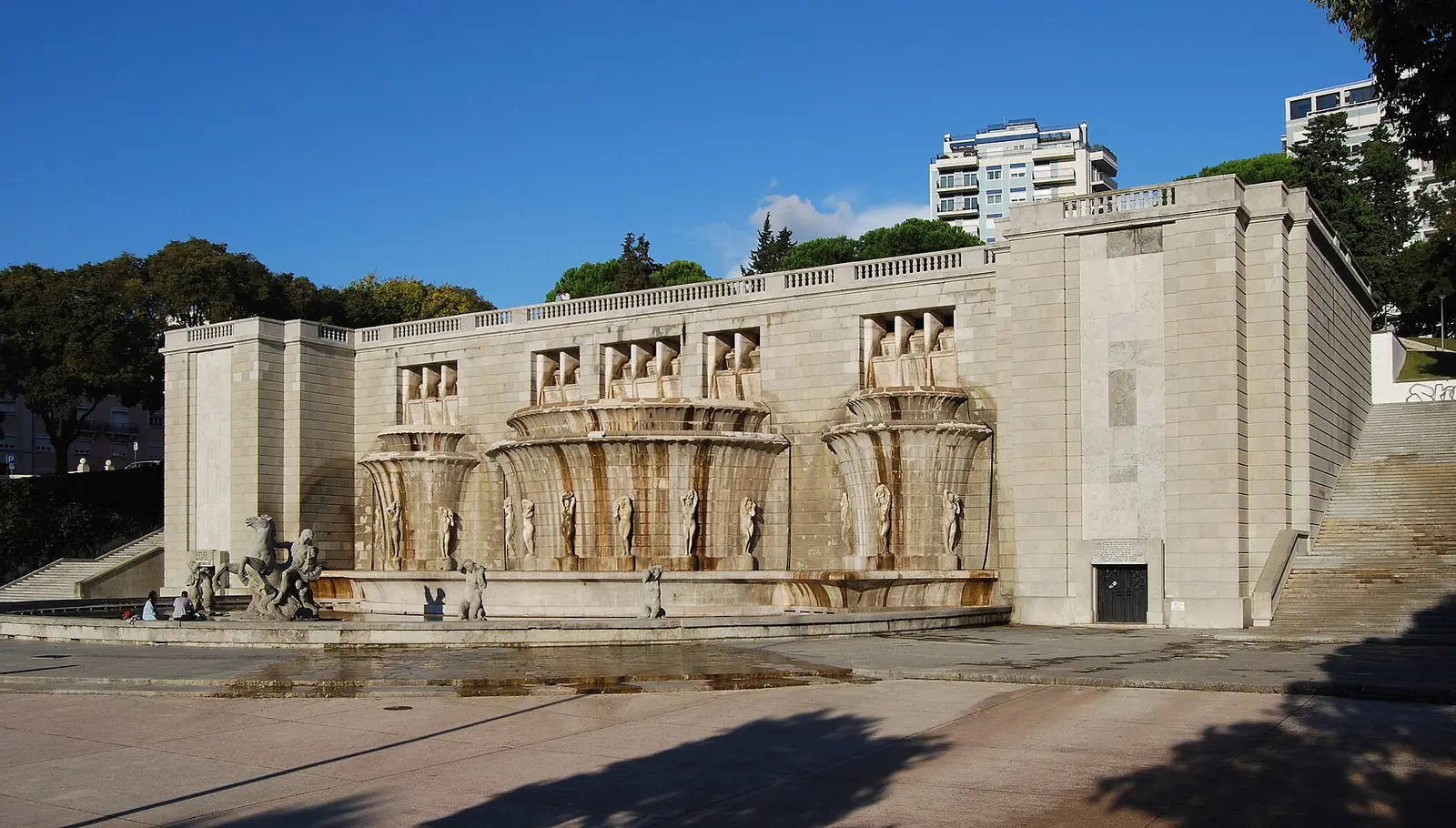
Alameda D. Afonso Henriques and the Fonte Luminosa
Today: Alameda D. Afonso Henriques / the Fonte Monumental (Fonte Luminosa)
Meeting point for the first May Day in freedom, in 1974. On 19 July 1975, the Socialist Party rally that became one of the decisive moments of the Hot Summer was held here, by the Fonte Luminosa.
RevolutionLabour2.4 km · 35 min on foot
Espírito Santo family home — seat of the Centre for African Studies
In 1951 the Centre for African Studies was set up in the house where the São Toméan poet Alda do Espírito Santo lived: Amílcar Cabral, Mário Pinto de Andrade, Francisco José Tenreiro and others met here to “get to know Africa”, away from the eyes of the PIDE.
ColonialismWomenStudents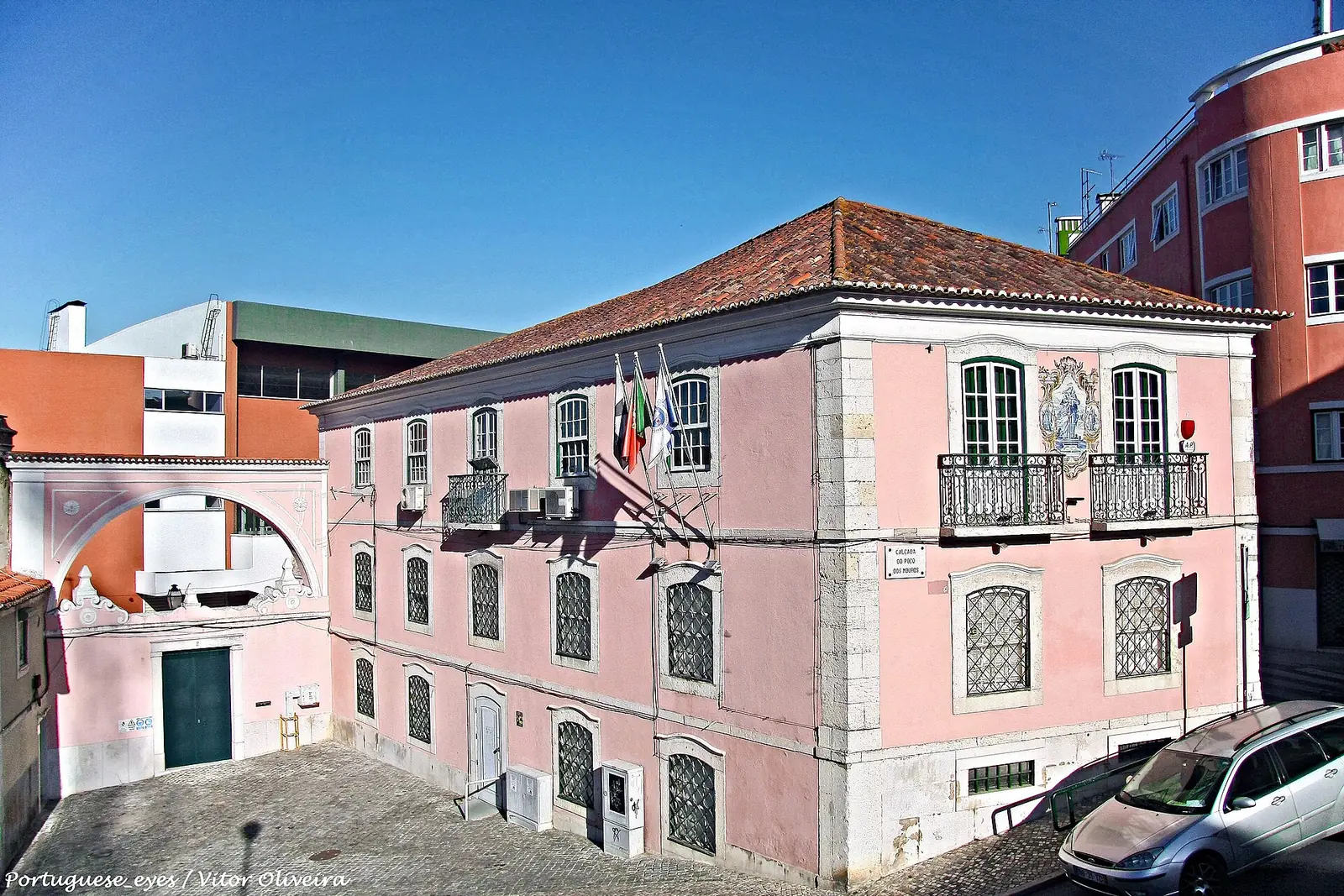
2.6 km · 40 min on foot
Portuguese Legion Command
On 25 April 1974 the general command of the Portuguese Legion — the regime’s militia, created in 1936, with a network of informers and shock troops — stood in Largo da Penha de França. Surrounded by Major Jaime Neves’s column, it surrendered without incident.
RepressionRevolution3.1 km · 45 min on foot
Dr Afonso Costa Republican School Centre — evening classes for women (Calçada de Arroios)
In this republican centre on Calçada de Arroios, while the monarchy still ruled, Maria Veleda set up free evening courses to teach women to read and write; in 1907, the Portuguese Group for Feminist Studies gave classes here to illiterate women.
WomenRepublic


,_Lisboa_001.jpg)
Notes on the sources4
- Exactly where the “Mitra” police post was, and whether it operated within the asylum grounds: the point on the map is that of the palace.
- Whether the “Albergue da Mitra” (Mitra Shelter) of the Aljube Museum and the “Asilo da Mitra” (Mitra Asylum) of Toponímia de Lisboa are the same institution.
- In a 1922 list of Lisbon police stations published by Memória Comum, the 14th Station is in Beato, with posts in Chelas and Olivais, and there is no post at the Mitra.
- The palace’s street number on Rua do Açúcar: 64 (Toponímia de Lisboa) or 56 (OpenStreetMap).
Do you know more, or do you have a document? Tell us.
Sources
- 1O Beco da Mitra junto ao Palácio da Mitra. Toponímia de Lisboa – CML (17/9/2018) — consulted on 2 October 2026
- 2Dia Internacional para a Erradicação da Pobreza. Museu do Aljube Resistência e Liberdade (17/10/2020) — consulted on 2 October 2026
- 3Francisco José Pereira (biografia). Museu do Aljube Resistência e Liberdade — consulted on 2 October 2026
- 4Jacinto de Melo Faria Vilaça (biografia). Museu do Aljube Resistência e Liberdade — consulted on 2 October 2026
- 530 Esquadras de Lisboa. Memória Comum – Memorial aos Presos e Perseguidos Políticos — consulted on 2 October 2026
- 6Os que ficaram pelo caminho (lista, páginas 1 a 7). Memória Comum – Memorial aos Presos e Perseguidos Políticos — consulted on 2 October 2026
- 7Nominatim – OpenStreetMap (geocodificação). OpenStreetMap contributors (ODbL) — consulted on 2 October 2026
Coordinates: OpenStreetMap (Nominatim), consultado a 2 de outubro de 2026.